

A kitchen that smells clean usually is clean. But odors can linger even after you wipe down every counter, especially if the smell is trapped in a drain, an appliance seal, or a piece of soft material like a dish towel. This guide walks through a complete kitchen odor removal routine, from quick fixes for last night's dinner smell to deeper cleaning for stubborn, recurring odors.
For the full routine that covers counters, cabinets, appliances, and floors, check the Back to the complete kitchen cleaning guide. This article focuses specifically on identifying odor sources and clearing them safely.
Fastest Way to Remove Kitchen Odors
If you need a quick answer, here is the short version:
- Find the source first. Spraying air freshener over a dirty sink or full trash can only masks the problem.
- Clean the actual source (drain, appliance, trash can, or surface) with a method suited to that material.
- Ventilate the room by opening a window or running the exhaust fan for 15 to 20 minutes.
- Use a natural absorber, like an open box of baking soda, for ongoing maintenance rather than as a fix for a strong existing odor.
The rest of this guide breaks each of these steps down by odor type and kitchen area.
What Causes Odors in a Kitchen
Most kitchen odors come from organic matter breaking down somewhere you can't easily see. Common sources include:
- Food residue in drains. Grease, coffee grounds, and small food particles cling to pipe walls and decompose slowly.
- Garbage disposals. Trapped scraps under the rubber splash guard rot even when the disposal looks empty.
- Refrigerators. Spilled liquids, expired food, and open containers release odor that circulates every time the fan runs.
- Trash cans. Bags that sit too long, or liners that leak, let bacteria build up on the plastic bin itself.
- Dishwashers. Food particles trapped in the filter or door gasket can smell musty or sour between cycles.
- Cooking residue. Grease on stovetops, range hoods, and cabinet surfaces holds onto smoke and food smells long after cooking ends.
- Damp cloths and sponges. Wet sponges and dish towels left bunched up develop a sour, mildew-like smell within a day or two.
Once you know where the smell is coming from, the rest of the process is much faster. Spraying general cleaner around the room rarely solves an odor that has a specific source.
How Often Should You Clean to Prevent Kitchen Odors
Prevention is easier than removal. A simple kitchen odor removal cleaning checklist, done consistently, keeps most smells from building up in the first place.
|
Task |
Suggested Frequency |
|
Take out kitchen trash |
Every 1 to 2 days, sooner for meat or seafood scraps |
|
Run garbage disposal with cold water |
After every use |
|
Wipe counters and stovetop |
Daily |
|
Deep clean the disposal |
Weekly |
|
Clean the refrigerator interior |
Weekly wipe-down, monthly deeper clean |
|
Replace or sanitize sponges |
Weekly |
|
Clean dishwasher filter and gasket |
Monthly |
|
Wipe down cabinet fronts and range hood |
Monthly |
If odors keep returning even with regular cleaning, that usually points to a source you haven't fully addressed yet, such as a drain that needs a deeper flush or a gasket that has absorbed odor over time.
Kitchen Odor Removal Step-by-Step Guide
Use this general sequence for a full kitchen odor removal session. It works well as a reset when the kitchen smells "off" but you can't pinpoint a single cause.
- Clear and inspect. Remove dishes from the sink, empty the trash, and take stock of anything expired in the fridge or pantry.
- Address the trash and disposal first. These are the most common sources of persistent odor and should be handled before you clean anything else.
- Wipe hard surfaces. Use a mild dish soap and warm water on counters, the stovetop, and cabinet fronts to remove grease film that holds onto smells.
- Flush the drains. Run hot water down the kitchen sink drain for 30 seconds after washing dishes.
- Deodorize soft items. Wash dish towels and change out sponges that smell sour.
- Ventilate. Open a window or run the range hood fan for 15 to 20 minutes to clear lingering smoke or cooking smell from the air.
- Place an absorber if needed. An open box of baking soda in the fridge, or a small dish of it on the counter overnight, helps pull lingering odor from the air in an enclosed space.
A full session like this typically takes 30 to 45 minutes for routine maintenance. A deeper clean involving the disposal, dishwasher filter, and fridge interior can take closer to 60 to 90 minutes, especially if it's the first time in a while.

Photo Credit: RDNE Stock project
Removing Cooking Odors from the Kitchen
Strong cooking smells, like fried food, curry spices, or burnt toast, tend to cling to grease film on surfaces rather than disappearing on their own. Wiping down the stovetop, range hood filter, and nearby cabinet fronts with warm water and dish soap removes the greasy layer that traps odor molecules. A simmering pot of water with a few citrus peels or a cinnamon stick can help neutralize air odor while you clean, though this only masks smell temporarily and doesn't replace wiping down surfaces.
Ventilation matters more than most people realize. Running the range hood fan or opening a window during and after cooking reduces how much odor settles into cabinets, curtains, and soft surfaces in the first place. If your kitchen doesn't vent well, running a portable fan facing an open window for 20 minutes after cooking can make a noticeable difference.
For a full walkthrough of stovetop grease removal, smoke residue, and cabinet surface cleaning, see Removing Cooking Odors from the Kitchen. That guide goes deeper into product choices for greasy buildup specifically.
Removing Fish Odor from the Kitchen
Fish odor is one of the most persistent kitchen smells because the compounds responsible for it are especially good at clinging to porous surfaces, plastic, and fabric. A few targeted steps make a real difference:
- Rinse cookware immediately in cold water before washing with soap. Hot water can set the smell into some plastics and coated pans.
- Wipe counters with a vinegar and water solution (roughly equal parts) after handling raw fish, then rinse and dry. Avoid using vinegar on natural stone counters like marble or granite, since the acid can etch the surface over time.
- Wash cutting boards thoroughly with hot soapy water, and consider a baking soda paste scrub for plastic boards that have absorbed odor.
- Ventilate immediately during and after cooking fish, since the smell spreads through the air quickly and settles into soft surfaces nearby.
If the smell lingers on your hands after prep, rubbing them with a bit of lemon juice or stainless steel (like the back of a spoon) under running water can help before you move on to cleaning surfaces. For more detail on treating fish smell on different kitchen materials, see Removing Fish Odor from the Kitchen.
Removing Kitchen Trash Odor Between Pickups
Trash cans are a leading source of ongoing kitchen odor, especially between pickup days. A few habits keep this under control without requiring daily deep cleaning. Rinse the bin with hot, soapy water whenever you notice residue at the bottom, and let it air dry fully before adding a new liner. Sprinkling a thin layer of baking soda in the bottom of the can absorbs moisture and odor between washes. Double-bagging particularly strong waste, like raw meat trimmings or seafood scraps, prevents leaks that cause the can itself to smell.
If odor keeps returning even with a clean liner, the can itself may have absorbed smell into small scratches or seams in the plastic, which usually means a more thorough scrub is needed. For a complete routine on keeping trash odor under control day to day, see Removing Kitchen Trash Odor Between Pickups.
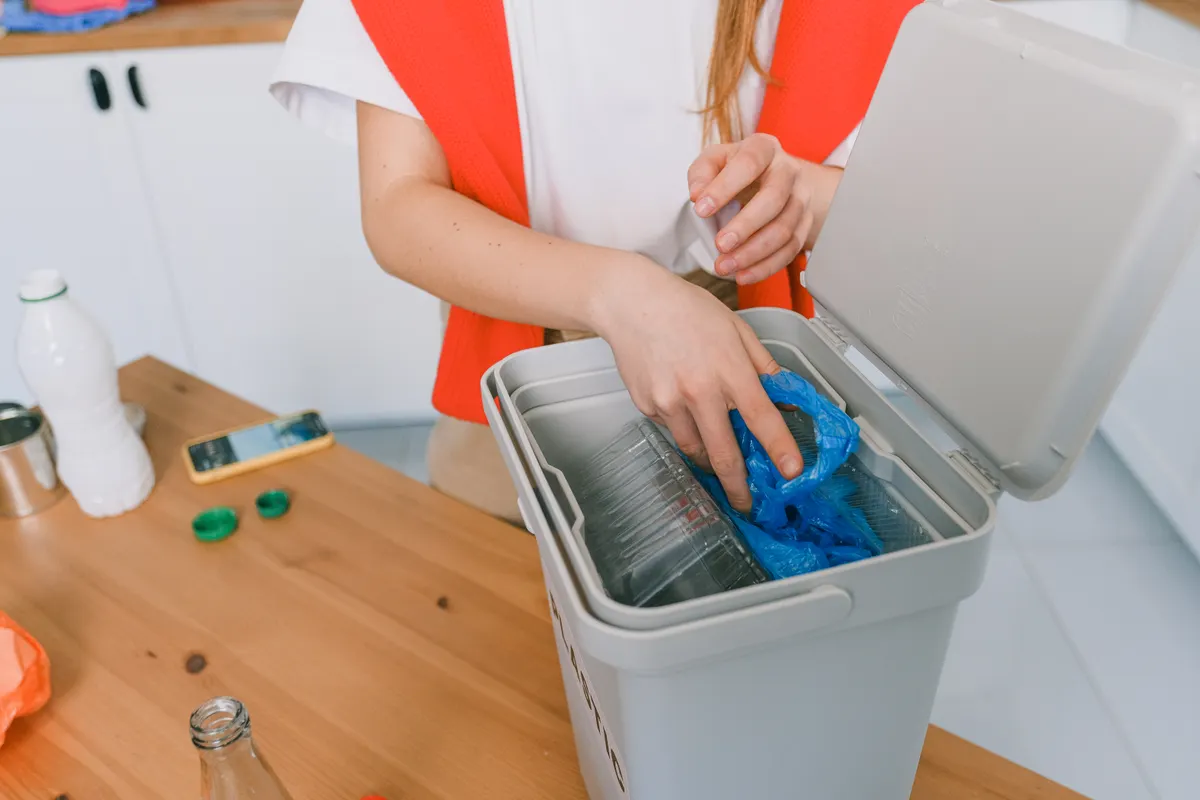
Photo Credit: SHVETS production
Odor Removal by Kitchen Area
Different parts of the kitchen trap odor differently, so a one-size-fits-all approach usually falls short. Here's how to handle the most common trouble spots.
Refrigerator
Remove all items, check for anything expired, and wipe shelves and drawers with warm water and mild dish soap. Dry thoroughly before placing food back in, since trapped moisture encourages mildew smell. An open box of baking soda, replaced every one to two months, helps absorb odor between deep cleans.
Garbage Disposal
Odor usually comes from food trapped under the rubber splash guard. Lift the guard and wipe underneath with a soapy sponge. Running cold water with a few ice cubes and a small amount of dish soap through the disposal helps clear residue from the blades. Avoid pouring bleach directly down the disposal on a regular basis, since it isn't necessary for routine odor control and can be harsh on rubber seals with frequent use.
Dishwasher
Check the filter at the bottom of the tub, which often traps small food particles that rot and smell sour. Remove it according to your manufacturer's instructions, rinse it under hot water, and scrub gently with a soft brush before replacing it. Wipe the door gasket with a damp cloth, since grime builds up in the folds.
Drains
Kitchen sink drains collect grease and food particles that decompose over time. Running hot water after each use helps, but a monthly flush with baking soda followed by hot water gives a deeper clean. Avoid pouring cooking grease down the drain, since it hardens inside the pipe and becomes a long-term odor source.
What Cleaning Products Are Safe for Kitchen Odor Removal
Most kitchen odor problems can be handled with simple, low-risk products. The table below covers common options and where they work best.
|
Product |
Best Use |
Avoid On |
|
Baking soda |
Absorbing odor in fridge, trash cans, drains |
No major restrictions for kitchen use |
|
White vinegar |
Wiping counters, cutting boards, disposal maintenance |
Natural stone (marble, granite, limestone) |
|
Mild dish soap |
General surface and appliance cleaning |
Nothing significant when diluted |
|
Lemon juice |
Neutralizing odor on hands, cutting boards |
Unsealed wood, some stone surfaces |
|
Activated charcoal |
Passive odor absorption in fridge or pantry |
Not a substitute for cleaning the source |
Always check appliance manufacturer instructions before using any cleaning product inside a dishwasher, refrigerator, or garbage disposal, since some interior finishes and rubber components are more sensitive than others.
Never mix bleach with vinegar, ammonia, or other acidic cleaners. This combination can release hazardous fumes. If you use bleach for occasional disinfecting on a hard, non-porous surface, rinse the area thoroughly and let it dry completely before applying any other cleaning product.

Photo Credit: Anna Shvets
What to Avoid When Removing Kitchen Odors
A few common habits make odor problems worse instead of better:
- Masking instead of cleaning. Air fresheners and scented sprays cover smell temporarily but don't remove the source.
- Using bleach as a default fix. Bleach isn't necessary for most odor sources and can damage rubber seals, colored plastics, or stone counters with regular use.
- Skipping ventilation. Cleaning a smelly area without opening a window or running the exhaust fan lets the odor resettle into fabric and cabinets nearby.
- Ignoring the disposal splash guard. This hidden spot is one of the most overlooked odor sources in the whole kitchen.
- Leaving damp cloths bunched up. A wet sponge or towel left in a pile develops mildew smell within a day or two, even in a clean kitchen.
How Can You Clean the Kitchen Without Damaging Surfaces
The safest general approach is to match the cleaning method to the material rather than applying the same product everywhere. Stick with mild dish soap and warm water for daily surface cleaning, since it's gentle enough for most countertops, cabinet finishes, and appliance exteriors. Save stronger products like vinegar or baking soda pastes for specific tasks where they're actually effective, and always test a new product on a small, hidden area first if you're unsure how a surface will react. If you don't know what material a countertop or cabinet finish is made from, a mild soap and water approach is the safer default until you can confirm the material.
How Long a Full Kitchen Odor Removal Clean Takes
Time needed depends on how many areas need attention and how long the odor has been building.
|
Task |
Estimated Time |
|
Quick daily wipe-down and trash check |
5 to 10 minutes |
|
Full counter, stovetop, and sink routine |
20 to 30 minutes |
|
Garbage disposal deep clean |
10 to 15 minutes |
|
Refrigerator interior clean |
20 to 30 minutes |
|
Dishwasher filter and gasket clean |
10 to 15 minutes |
|
Full kitchen odor removal session (all areas) |
60 to 90 minutes |
Most kitchens don't need the full 90-minute session often. Once the routine checklist above becomes a habit, occasional 10 to 15 minute touch-ups are usually enough to keep odors from building up again.
Frequently Asked Questions
What is the best way to clean kitchen odor removal? Start by finding the actual source of the smell, whether that's the disposal, trash can, or fridge, and clean that specific area rather than relying on air freshener. Ventilate the room after cleaning to clear any remaining odor in the air.
How often should you clean the kitchen to prevent odors? Wipe surfaces daily, take out trash every one to two days, and do a deeper clean of the disposal, fridge, and dishwasher filter weekly to monthly, depending on use.
What cleaning products are safe for kitchen odor removal? Mild dish soap, baking soda, and diluted white vinegar handle most kitchen odor sources safely. Avoid vinegar on natural stone counters, and never mix bleach with vinegar or ammonia-based products.
What should you avoid when cleaning kitchen odors? Avoid masking smells with sprays instead of cleaning the source, using bleach as a default cleaner, and skipping ventilation after cleaning a strong odor.
How can you clean the kitchen without damaging it? Use mild soap and water as your default method, match stronger products to specific tasks, and test any new product on a small area first if you're unsure how a surface will react.
What causes odors in or around the kitchen? Most odors come from organic matter breaking down out of sight, such as food trapped in drains, disposal splash guards, trash can liners, or refrigerator spills.
If you want to work through the rest of the kitchen, from countertops to appliances, you can Browse the complete kitchen cleaning guide for the full routine.
A quick safety note: Always check product labels and appliance manufacturer instructions before cleaning, especially inside dishwashers, refrigerators, and garbage disposals. Never mix bleach with vinegar, ammonia, or other acidic cleaners, since this can produce hazardous fumes. Work in a ventilated space when using any strong-smelling cleaning product, and if an odor persists despite thorough cleaning, it may point to a plumbing or appliance issue that's worth having a professional look at.





Leave a Reply