
An oven takes on more baked-on grease and burnt food residue than almost any other kitchen appliance, simply because high heat turns spills into something that won't wipe away with a damp cloth. That buildup doesn't just look bad; it can smoke during future baking sessions and, in some cases, affect how evenly the oven heats. Oven interior deep cleaning is the process of getting past that surface-level grime and back down to the metal and glass underneath, without damaging the coating, the racks, or the door seal in the process. This guide is part of the Oven & Stovetop Cleaning Guide, and it covers the safest way to tackle a deep clean, what products actually work, and how to avoid the mistakes that scratch or dull an oven's interior.
The Best Way to Deep Clean an Oven Interior
Remove the oven racks and set them aside to soak separately, then apply a baking soda paste (roughly three parts baking soda to one part water) across the entire interior, avoiding the heating elements. Let the paste sit for at least 12 hours, or overnight, so it has time to loosen baked-on grease and carbon buildup. Wipe the paste away with a damp cloth, using a plastic scraper for any stubborn spots, then go over the interior once more with a clean, damp cloth to remove any remaining residue. This method avoids the fumes and surface risk that come with harsher oven cleaners, and it works well on most standard oven interiors without needing the self-cleaning cycle.
The sections below go deeper into the full process, rack cleaning, product safety, and how often this level of cleaning is actually needed.
Why Oven Interiors Need a Different Approach Than Everyday Cleaning
Routine oven cleaning, wiping up a fresh spill or a light layer of grease, is straightforward and doesn't need much more than a damp cloth. Deep cleaning is a different task entirely, dealing with buildup that's been baked onto the interior surface over multiple uses, sometimes for months. This buildup often needs time and the right product to loosen before it will actually come off, rather than a quick wipe or spray.
The oven's interior coating also matters here. Most conventional ovens have a porcelain enamel interior, which is fairly durable but can still be scratched by abrasive pads or damaged by certain harsh chemical cleaners used too aggressively or too often. Knowing this ahead of time changes how the deep clean should be approached, favoring patience and gentler products over scrubbing harder.
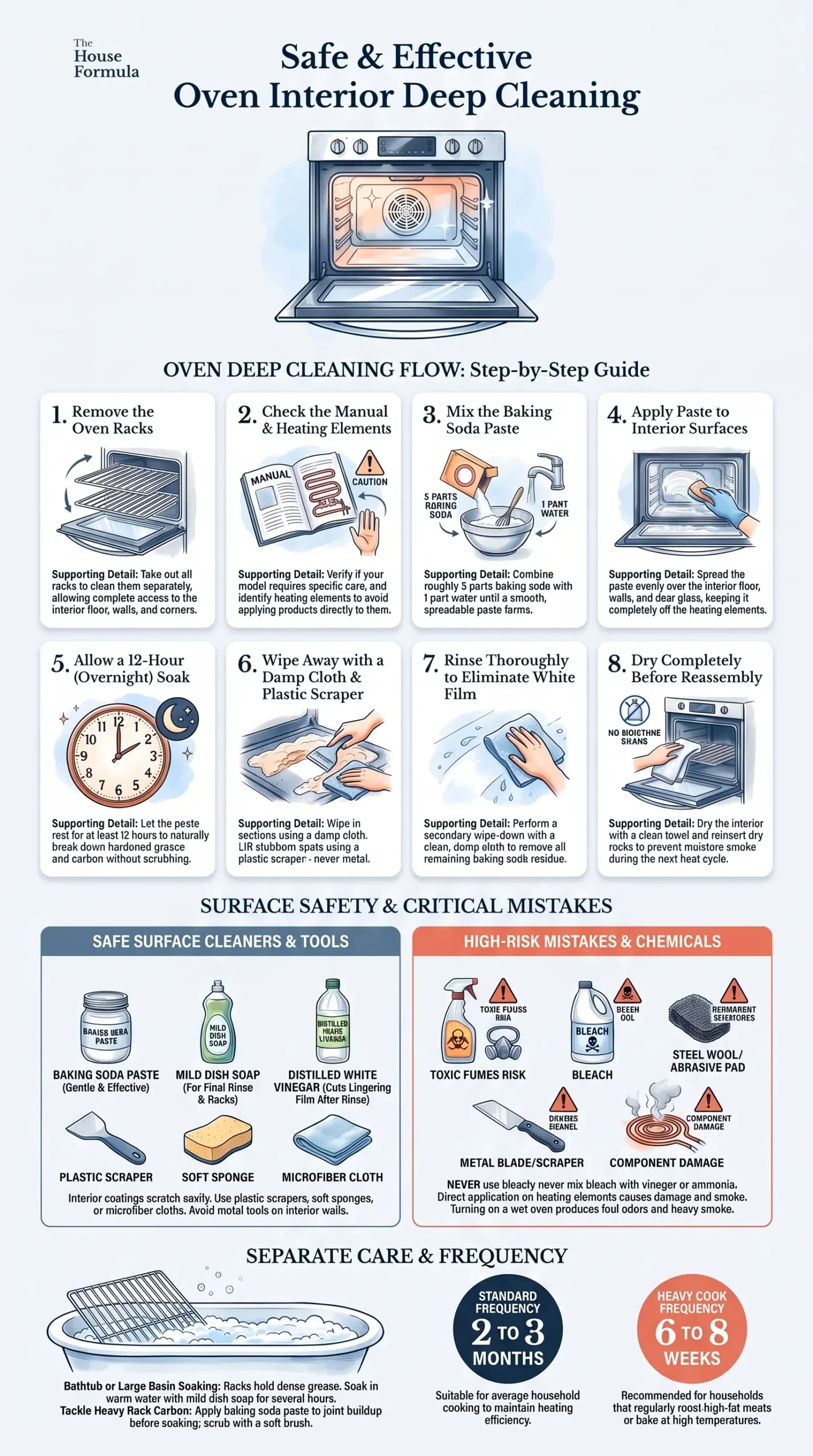
Photo Credit: Hobby Guidebook Editorial
Step-by-Step Deep Cleaning Process
- Remove the oven racks and set them aside. These typically need separate cleaning, since baked-on grime on racks responds differently than the flat interior surface.
- Check your oven's manual for any self-cleaning cycle instructions before proceeding, since some ovens include a built-in cycle that handles deep cleaning differently than a manual approach. If your oven has this feature and you'd rather use it, the Self-Cleaning Oven Cycle Guide covers how that process works and what to expect.
- Mix a baking soda paste, combining roughly three parts baking soda with one part water until it forms a spreadable consistency.
- Spread the paste across the interior surfaces, including the floor, walls, and inside of the door, but avoid direct contact with the heating elements.
- Let the paste sit for at least 12 hours, ideally overnight, giving it time to break down baked-on grease and carbon buildup.
- Wipe the paste away with a damp cloth, working in sections. A plastic scraper (never metal) can help lift stubborn spots without scratching the interior coating.
- Go over the entire interior again with a clean, damp cloth to remove any remaining baking soda residue, since leftover residue can create a white film if not fully rinsed away.
- Dry the interior with a clean towel, then replace the racks once they've been cleaned separately.
This process typically takes about 20 to 30 minutes of active work, spread across the paste application and final wipe-down, with the overnight soak happening in between.
Cleaning the Oven Racks
Oven racks often carry as much buildup as the interior itself, sometimes more, since grease tends to drip and pool along the rack's edges and joints. The most effective approach for most households is soaking the racks in warm water with a few drops of dish soap in a bathtub or a large basin, letting them sit for at least a few hours or overnight alongside the interior paste treatment. After soaking, a scrub brush or a soft abrasive pad (not steel wool, which can scratch chrome or coated racks) usually removes the loosened grime without much extra effort.
For racks with especially stubborn buildup, a layer of baking soda paste applied directly to the rack before soaking can help loosen things further, similar to the interior treatment. Rinse thoroughly and dry before placing the racks back into the oven.
What Cleaning Products Are Safe for Oven Interiors?
Oven interior cleaning involves a mix of gentle household ingredients and, in some cases, commercial products, but not every option is appropriate for every oven type.
- Baking soda and water: safe for most standard oven interiors, effective at loosening baked-on grease without harsh fumes
- Mild dish soap: useful for the final rinse step and for soaking racks separately
- Commercial oven cleaner (spray or gel): can be effective on heavy buildup, but these products often contain strong chemicals and require good ventilation, protective gloves, and strict adherence to the label's contact time and rinsing instructions
- Distilled white vinegar: sometimes used in combination with baking soda for cutting through residue, though it should be applied after the baking soda has done its work rather than mixed directly together in a sealed container, since the combination fizzes and neutralizes some of the cleaning action
Avoid using bleach inside the oven interior. Bleach isn't formulated for this kind of baked-on grease and carbon removal, and heat exposure afterward can create fumes. Never mix bleach with ammonia-based oven cleaners or vinegar under any circumstances, since this produces hazardous gases.
If you prefer to avoid commercial oven cleaners entirely, the Natural & Non-Toxic Oven Cleaning guide covers additional gentle methods and ingredient combinations that work well for lighter to moderate buildup without needing a stronger chemical product.
Cleaning Without Scratching the Surface
Scratches on an oven's interior coating aren't just cosmetic; they can create rough spots where future spills stick more easily and become harder to clean. A few habits keep the surface intact during a deep clean.
- Use a plastic scraper, not metal, for lifting stubborn baked-on spots, since metal tools can scratch porcelain enamel or other interior coatings
- Avoid steel wool or abrasive scouring pads on the interior surface, reserving these only for stubborn spots on racks made specifically of chrome or stainless steel, and even then, testing gently first
- Let the baking soda paste do the work over time rather than scrubbing hard immediately, since patience reduces the pressure needed to remove buildup
- Wipe in the direction that feels natural for the surface, avoiding excessive back-and-forth pressure in one small spot, which can wear down a coating faster than broader, gentler wiping
If your oven has a textured or self-cleaning-specific coating (sometimes called a catalytic liner), check the manufacturer's guidance before applying baking soda paste directly to it, since these liners are designed to break down grease through heat cycles rather than manual scrubbing, and abrasive cleaning can damage the textured surface.
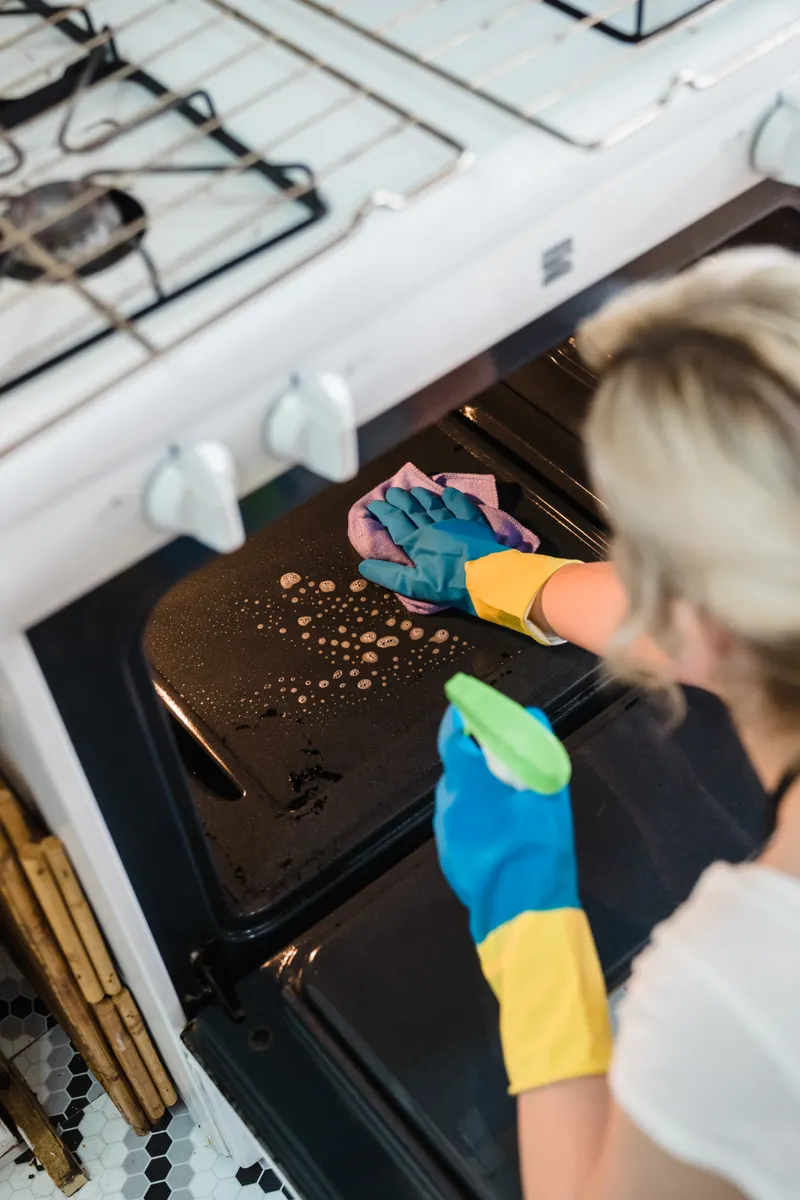
Photo Credit: Liliana Drew
Common Mistakes When Deep Cleaning an Oven Interior
A handful of recurring mistakes account for most of the frustration and damage that comes up during this task.
- Using a metal scraper or knife to remove baked-on residue, which easily scratches porcelain enamel and other interior coatings
- Applying commercial oven cleaner without ventilation, since these products often release strong fumes that need airflow to dissipate safely
- Skipping the rack removal step, which makes cleaning the interior floor and back wall far more difficult and often leaves buildup untouched in the corners
- Not giving the baking soda paste enough time to work, then scrubbing hard out of frustration, which increases the risk of surface scratching
- Applying cleaning paste or spray directly to the heating element, which isn't necessary and can damage this component
- Closing the oven door and using it again before the interior is fully dry, which can create smoke or a burning smell as any remaining moisture or residue heats up
If your oven has a self-cleaning cycle and you choose to use it instead of a manual deep clean, that process comes with its own set of precautions, including strong odor and heat output during the cycle, which the Self-Cleaning Oven Cycle Guide covers in more detail.
How Often Should You Deep Clean an Oven Interior?
A full deep clean, following the process above, works well every two to three months for most households, depending on how often the oven is used and what kind of cooking happens most, since baking sessions with dripping fats or high-heat roasting tend to build up residue faster than lighter, cleaner cooking methods. Wiping up fresh spills as soon as the oven cools down after each use reduces how much buildup accumulates between deep cleans, making the eventual deep clean faster and less intensive. Households that bake or roast frequently may find every six to eight weeks works better than stretching to the full two or three month mark.
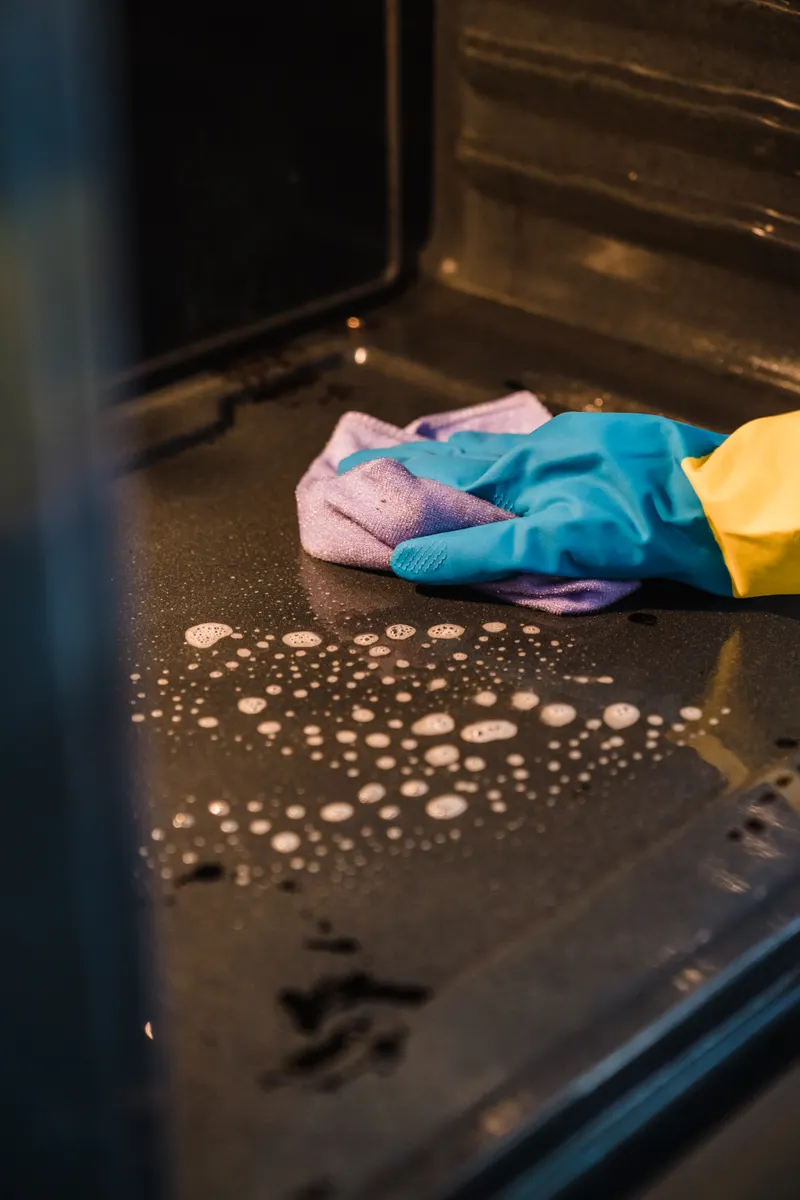
Photo Credit: Liliana Drew
When to Consider the Self-Cleaning Cycle Instead
If baking soda paste isn't cutting through heavy, long-term buildup, or if manually scrubbing the interior isn't practical for your schedule, the built-in self-cleaning cycle offers another option for ovens equipped with one. This cycle uses very high heat to turn residue into ash, which can then be wiped away once the oven cools. It comes with its own considerations, including strong odor, extended cycle time, and the need to remove racks beforehand in most models. The Self-Cleaning Oven Cycle Guide walks through when this method makes sense and how to prepare for it safely.
Frequently Asked Questions
What is the best way to deep clean an oven interior? Remove the racks, apply a baking soda paste to the interior, let it sit at least 12 hours, then wipe away with a damp cloth and a plastic scraper for stubborn spots. Rinse thoroughly and dry before replacing the racks.
How often should you deep clean an oven interior? Every two to three months for most households, or every six to eight weeks for households that bake or roast frequently with dripping fats.
What cleaning products are safe for an oven interior? Baking soda and water work well for most standard interiors. Commercial oven cleaners can handle heavier buildup but require good ventilation and careful label adherence. Avoid bleach inside the oven entirely.
What should you avoid when cleaning an oven interior? Avoid metal scrapers, abrasive pads on the interior coating, applying cleaner directly to the heating element, and using commercial oven cleaner without proper ventilation.
How can you clean an oven interior without damaging it? Use a plastic scraper instead of metal, let baking soda paste sit long enough to loosen buildup on its own, avoid scrubbing hard in one spot, and check manufacturer guidance before cleaning a textured or catalytic liner.
A Quick Note on Safety
Oven interior deep cleaning sometimes involves commercial cleaning products with strong fumes, so good ventilation, such as an open window or running range hood, matters when using anything beyond baking soda and water. Always follow the product label's instructions for contact time and rinsing, and never mix bleach with ammonia-based oven cleaners or vinegar, since this produces hazardous gases. If your oven has a specialized interior coating or a self-cleaning cycle, check the manufacturer's manual before applying any manual cleaning method, since some coatings aren't designed for scrubbing or paste-based treatments.
For more on keeping the rest of your kitchen clean, browse the complete kitchen cleaning guide.





Leave a Reply