

A range hood works quietly in the background, pulling smoke, steam, and grease-laden air up and away from the stovetop every time you cook. Over time, that airborne grease has to land somewhere, and most of it settles onto the hood's exterior, the filter underneath, and the vent opening itself. Range hood cleaning is easy to put off since the buildup isn't always visible from a normal standing height, but a greasy hood and clogged filter make the whole system work harder and can leave a sticky film that eventually drips. This guide is part of the Oven & Stovetop Cleaning Guide, and it covers cleaning the hood's exterior, the filter, and the vent area, along with how to spot when a deeper clean is overdue.
The Best Way to Clean a Range Hood and Vent
Start by removing the filter and soaking it in hot water mixed with dish soap or degreaser for 10 to 15 minutes to loosen grease. While the filter soaks, wipe down the hood's exterior and the underside with a cloth dampened in warm, soapy water, using a stronger degreaser on any thick, sticky buildup. Scrub the filter gently with a soft brush, rinse thoroughly, and let it air dry completely before placing it back. Finish by wiping the vent opening and any visible grille with a damp cloth to remove dust and grease that's settled around the edges.
That covers the routine version of the task. The sections below walk through the full process, filter care specifically, safe products, and how often this needs to happen for most kitchens.
Understanding the Range Hood System
A range hood has a few distinct parts, and each one collects grease and grime a little differently.
- The exterior housing, the visible metal or stainless surface that sits above the stovetop, collects grease vapor and dust from general kitchen use
- The filter, usually a metal mesh or baffle filter sitting just underneath the hood, catches the bulk of airborne grease before it reaches the fan and vent
- The fan and vent opening, which pushes air either outside or through a recirculating filter, depending on the hood type
- Control buttons or knobs, often located on the front or underside of the hood, which can collect grease residue from nearby cooking splatter
Some hoods vent air outside through ductwork, while others recirculate air through a charcoal filter and back into the kitchen. Recirculating models typically need the charcoal filter replaced periodically rather than cleaned, since charcoal doesn't wash and reuse the way a metal mesh filter does. Checking your hood's manual clarifies which type you have, since that affects both the cleaning approach and how often certain parts need attention.
Step-by-Step Cleaning Process
- Turn off the range hood and make sure the stovetop below is cool before starting, for safety and comfort while working underneath it.
- Remove the metal filter, which usually slides or unclips out from the underside of the hood. Check your manual if it isn't obvious how yours releases.
- Soak the filter in hot water with dish soap or a degreasing dish detergent for 10 to 15 minutes. This loosens baked-on grease significantly before scrubbing.
- While the filter soaks, wipe the hood's exterior and underside with a cloth dampened in warm, soapy water. For thicker grease buildup, a degreasing spray designed for kitchen surfaces can cut through it more effectively.
- Scrub the filter gently with a soft brush, working into the mesh or baffle grooves where grease tends to concentrate.
- Rinse the filter thoroughly under running water, checking that no soap residue remains, since leftover soap can affect airflow slightly if it dries inside the mesh.
- Let the filter air dry completely before reinstalling it. A damp filter placed back into a running hood isn't ideal, since moisture combined with grease residue can encourage buildup to reform faster.
- Wipe the vent opening and visible grille with a clean, damp cloth to remove dust and any grease that's settled around the edges.
This full process typically takes 30 to 45 minutes, most of that being the filter soak time running alongside the exterior wipe-down.
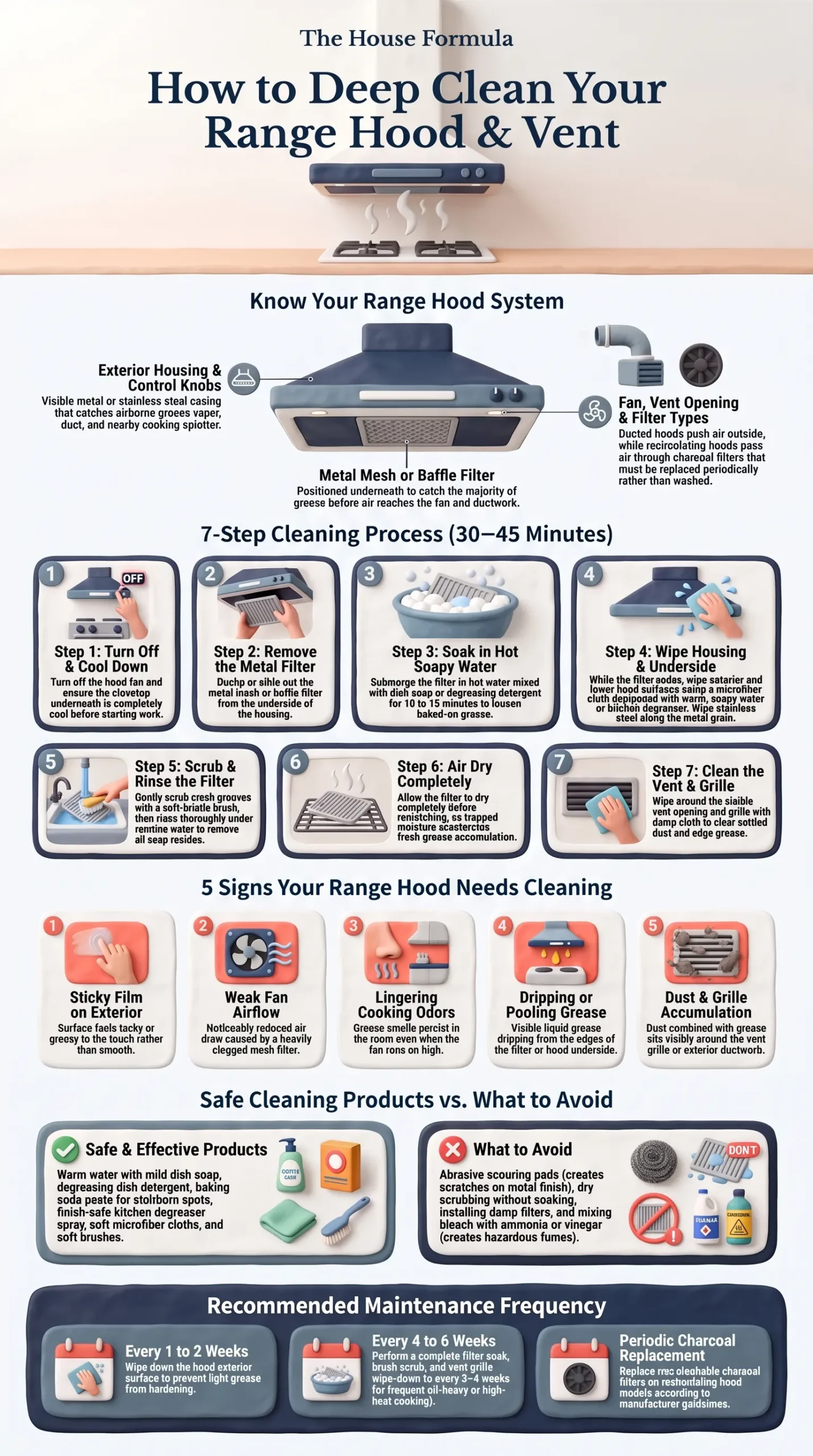
Photo Credit: Hobby Guidebook Editorial
Degreasing the Filter More Thoroughly
A basic soap soak handles light to moderate grease, but filters that haven't been cleaned in several months often need a more thorough degreasing approach to fully cut through what's built up. Baking soda paste, a longer soak time, or a dedicated degreasing product each offer a bit more strength than dish soap alone, and choosing the right one depends on how heavy the buildup actually is. The Degreasing a Range Hood Filter guide walks through these stronger methods in detail, including how to handle a filter that's developed a thick, sticky coating that a quick soak won't touch.
What Cleaning Products Are Safe for Range Hoods and Vents?
A handful of products cover most range hood cleaning needs, though the right choice depends on how much buildup you're dealing with.
- Warm water and mild dish soap: effective for the filter soak and for wiping the hood's exterior during routine cleaning
- Degreasing dish detergent: a stronger option for the filter soak when grease has built up more heavily
- Baking soda and water: useful as a paste for stubborn spots on the exterior or filter that soap alone doesn't fully loosen
- Kitchen degreaser spray: helpful for thick, sticky buildup on the hood's exterior, though check that it's appropriate for your hood's specific finish, since some stronger degreasers aren't suited to certain painted or brushed metal surfaces
- Soft microfiber cloths and a soft-bristle brush: for wiping the exterior and scrubbing the filter without scratching
Avoid abrasive scouring pads on stainless steel or painted hood exteriors, since these can create fine scratches that show up more under kitchen lighting. Never mix bleach with ammonia-based degreasers or vinegar, since this produces hazardous fumes. If your hood's exterior is stainless steel specifically, wiping in the direction of the grain rather than against it helps avoid streaking and keeps the surface looking even.
Eco-Friendly Cleaning for Range Hoods and Vents
Dish soap and hot water handle the vast majority of range hood grease without needing a stronger commercial product, making this one of the more naturally low-impact cleaning tasks in the kitchen. Baking soda paste offers a gentle backup for stubborn spots, using an ingredient most households already have rather than requiring a separate purchase. For anyone looking to minimize chemical use around the kitchen generally, sticking with soap, hot water, and baking soda covers routine range hood maintenance well, reserving stronger degreasers only for buildup that's gone untouched for an extended stretch.
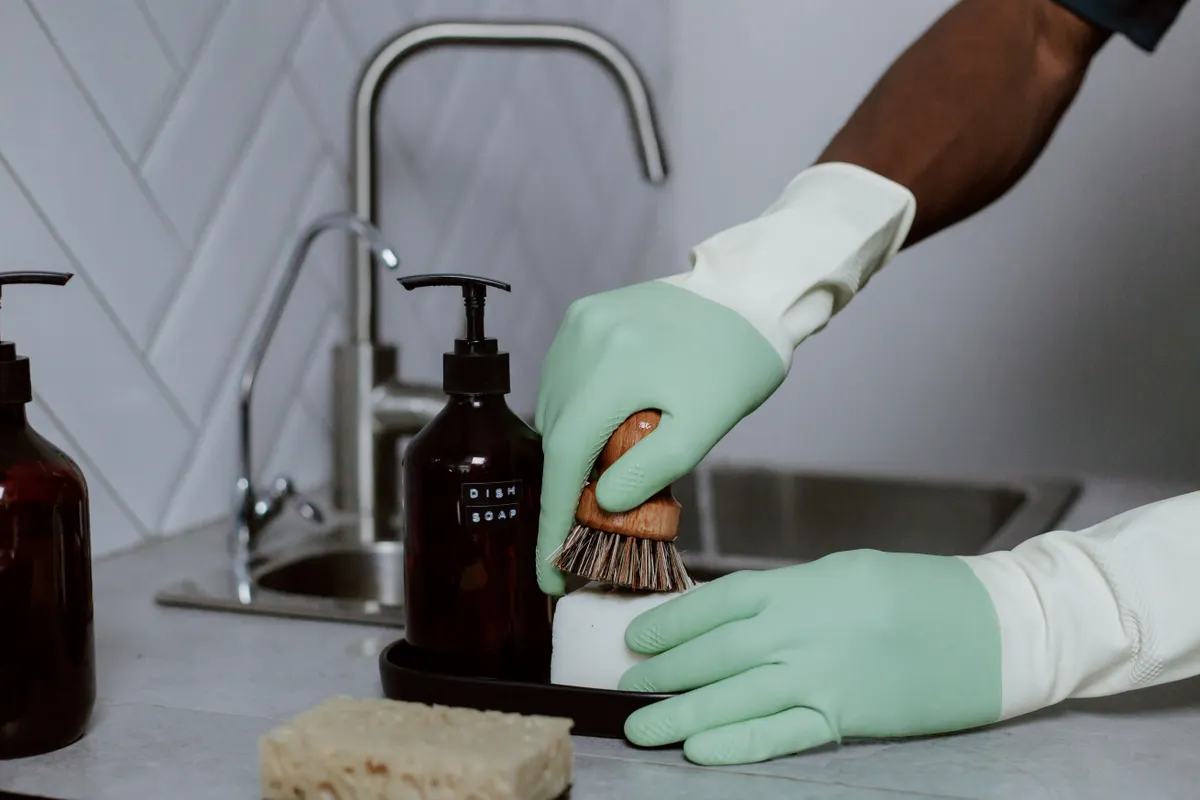
Photo Credit: Ron Lach
How to Tell If Your Range Hood and Vent Need Cleaning
A few signs point to a hood that's overdue for attention.
- A visible film or sticky coating on the exterior surface, especially noticeable when touched rather than just looked at
- Reduced airflow or a noticeably weaker draw when the fan is running, which often points to a clogged filter restricting airflow
- A grease smell that lingers even when the hood is running during cooking, suggesting the filter isn't capturing grease as effectively as it should
- Visible grease dripping or pooling on the underside of the hood or around the filter's edges
- Dust or grease buildup around the vent grille, particularly noticeable on hoods that vent outside through visible ductwork
If none of these apply and the hood looks and smells normal, a lighter wipe-down on a more relaxed schedule is usually enough to keep things in good shape.
What to Avoid When Cleaning a Range Hood and Vent
A few habits tend to cause more harm than good during this task.
- Using abrasive pads on stainless steel or painted surfaces: this leaves fine scratches that become more visible over time
- Skipping the filter soak and going straight to scrubbing: dry scrubbing baked-on grease takes far more effort and risks bending a metal mesh filter
- Reinstalling a damp filter immediately: letting it air dry fully first helps avoid trapping moisture against grease residue
- Using a degreaser not rated for your hood's specific finish: some stronger products aren't appropriate for certain coated or painted surfaces, so checking the label matters
- Ignoring the vent opening itself: focusing only on the visible hood exterior and filter while leaving dust and grease to build up around the grille
How Often Should You Clean a Range Hood and Vent?
A quick wipe of the hood's exterior every week or two keeps light grease from settling in too deeply. The filter itself benefits from a full soak-and-scrub cleaning every four to six weeks for most households, though households that cook frequently with oil-heavy or high-heat methods may find every three to four weeks works better. Checking the vent opening and grille during each filter clean helps catch dust or grease buildup before it starts affecting airflow.

Photo Credit: Daka
Range Hood Cleaning as Part of a Full Kitchen Routine
Range hood cleaning tends to get overlooked because it sits above eye level and isn't touched during everyday cooking the way a stovetop or countertop is. Building it into a regular kitchen routine, alongside other appliance care, helps prevent the kind of heavy buildup that takes real effort to remove later. If you're also due for a deeper clean on the oven itself, the Oven Interior Deep Cleaning guide covers that process in detail and pairs naturally with a range hood cleaning session, since both tasks deal with baked-on grease and benefit from similar patience and gentle products.
Frequently Asked Questions
What is the best way to clean a range hood and vent? Remove the filter and soak it in hot, soapy water while wiping the hood's exterior with a damp cloth. Scrub the filter gently, rinse thoroughly, let it dry completely, then wipe the vent opening before reassembling.
How often should you clean a range hood and vent? Wipe the exterior every week or two, and do a full filter soak-and-scrub every four to six weeks, more often for frequent high-heat or oil-heavy cooking.
What cleaning products are safe for a range hood and vent? Warm water and mild dish soap, degreasing dish detergent, baking soda paste, and kitchen degreaser sprays rated for your hood's finish. Avoid mixing bleach with ammonia or vinegar.
What should you avoid when cleaning a range hood and vent? Avoid abrasive pads on stainless or painted surfaces, dry scrubbing without soaking first, and reinstalling a damp filter.
How can you clean a range hood and vent without damaging them? Use soft cloths and brushes rather than abrasive pads, let the filter soak long enough to loosen grease naturally, check that any degreaser suits your hood's specific finish, and wipe stainless steel in the direction of the grain.
A Quick Note on Safety
Always turn off the range hood and let the stovetop below cool before cleaning. Use good ventilation when working with stronger degreasing sprays, and never mix bleach with ammonia-based products or vinegar, since this produces hazardous fumes. If your hood vents outside through ductwork and you notice reduced airflow even after cleaning the filter, that may point to a duct issue beyond routine cleaning, which is worth having checked by a qualified technician.
For more on keeping the rest of your kitchen clean, browse the complete kitchen cleaning guide.





Leave a Reply