

The kitchen is where we prepare food, so it makes sense to want cleaners that are gentle on people, pets, and the planet. Non-toxic kitchen cleaning means choosing products and methods that lower the risk of harm without giving up a clean, safe kitchen. It is not about one magic recipe. It is about knowing what to look for on a label, which simple methods work, and where "natural" can still cause problems. This guide covers all of that in plain language. It is part of our kitchen series, so if you want the full picture, go Back to the complete kitchen cleaning guide.
What Non-Toxic Kitchen Cleaning Really Means
"Non-toxic" sounds simple, but it is not a strict legal term on most cleaning products. Different brands use it in different ways. In everyday life, it usually means a cleaner that is less likely to irritate skin, eyes, and lungs, does not give off strong fumes, and does not leave harmful residue on surfaces where food is prepared.
It also helps to know that "eco-friendly" and "non-toxic" are not the same thing. Eco-friendly focuses on the planet, such as less packaging or ingredients that break down more easily. Non-toxic focuses on people and pets. The best choices try to do both.
Are natural or homemade cleaners automatically safer?
No. Natural does not always mean safe, and homemade does not always mean gentle. Here are a few examples:
- Vinegar is a common kitchen cleaner, but it is an acid. It can dull or damage natural stone, harm some finishes, and wear down rubber seals over time.
- Essential oils are plant-based, but strong ones can irritate skin and airways, and some are harmful to pets.
- Baking soda is mild, but it can scratch glossy or soft surfaces when used as a scrub.
- Mixing home ingredients can create a risky or useless result. For example, bleach mixed with vinegar or ammonia can release dangerous fumes, and hydrogen peroxide mixed with vinegar can form a harsh substance that irritates skin and lungs.
On the other hand, some products with long chemical names are quite safe when used as directed. The goal is not to avoid every ingredient with a hard name. The goal is to pick the right product for the job, use it the way the label says, and avoid combinations that can cause harm.
A useful rule is this: the safest cleaner is the mildest one that actually does the job. For most kitchen messes, that is warm water and dish soap.
How to Read a Cleaning Product Label
Labels hold more useful information than the front of the bottle. Words like "green," "pure," or "natural" are marketing words. They do not guarantee anything on their own. Here is what to check instead.
What to check on a label
- The intended use. Make sure it says it is for the surface you plan to clean, such as counters, appliances, or floors.
- Food-contact safety. If you plan to use it on cutting boards, high chairs, or surfaces where food sits, check whether the label says to rinse afterward.
- Signal words. "Caution," "Warning," and "Danger" tell you how careful to be. "Danger" means stronger risk.
- Directions and dilution. Follow them exactly. More product is not better.
- Ingredient list. Some brands list every ingredient. Others only list a few. A full list is easier to trust.
- First aid and storage notes. These tell you what to do if the product gets on skin or in eyes, and how to store it.
- Warnings about mixing. Many labels warn against mixing with bleach or other products. Take that seriously.
- A contact number or a way to get safety data. Good brands make this easy to find.
Fragrance-free kitchen cleaners
Fragrance-free kitchen cleaners can be a good choice for people who are sensitive to smells, and for any kitchen where food is prepared. Fragrance is a mix of ingredients that is often not listed in detail. It can bother skin or breathing for some people.
Be careful with two similar labels. Fragrance-free means no fragrance was added. Unscented can mean a masking scent was added to hide the smell of other ingredients. If you want to avoid added scents, choose "fragrance-free" and check the ingredient list.
Certified non-toxic cleaning brands
A third-party certification can be more reliable than a brand's own claims, because an outside group reviewed the product. Examples include the EPA's Safer Choice label in the United States and some independent eco-labels. Each program has its own rules, so look up what a label actually covers on the certifier's website before you trust it. A certification does not make a product safe to mix or to use on every surface. You still need to follow the directions.
I do not recommend specific brands here. Brands change their products over time, so read the current label and, if you can, the maker's safety information. It also helps to compare two or three products side by side before you buy. Look at the ingredient list, the directions, and the warnings, rather than only the front of the bottle. A product that explains itself clearly is usually easier to use safely.
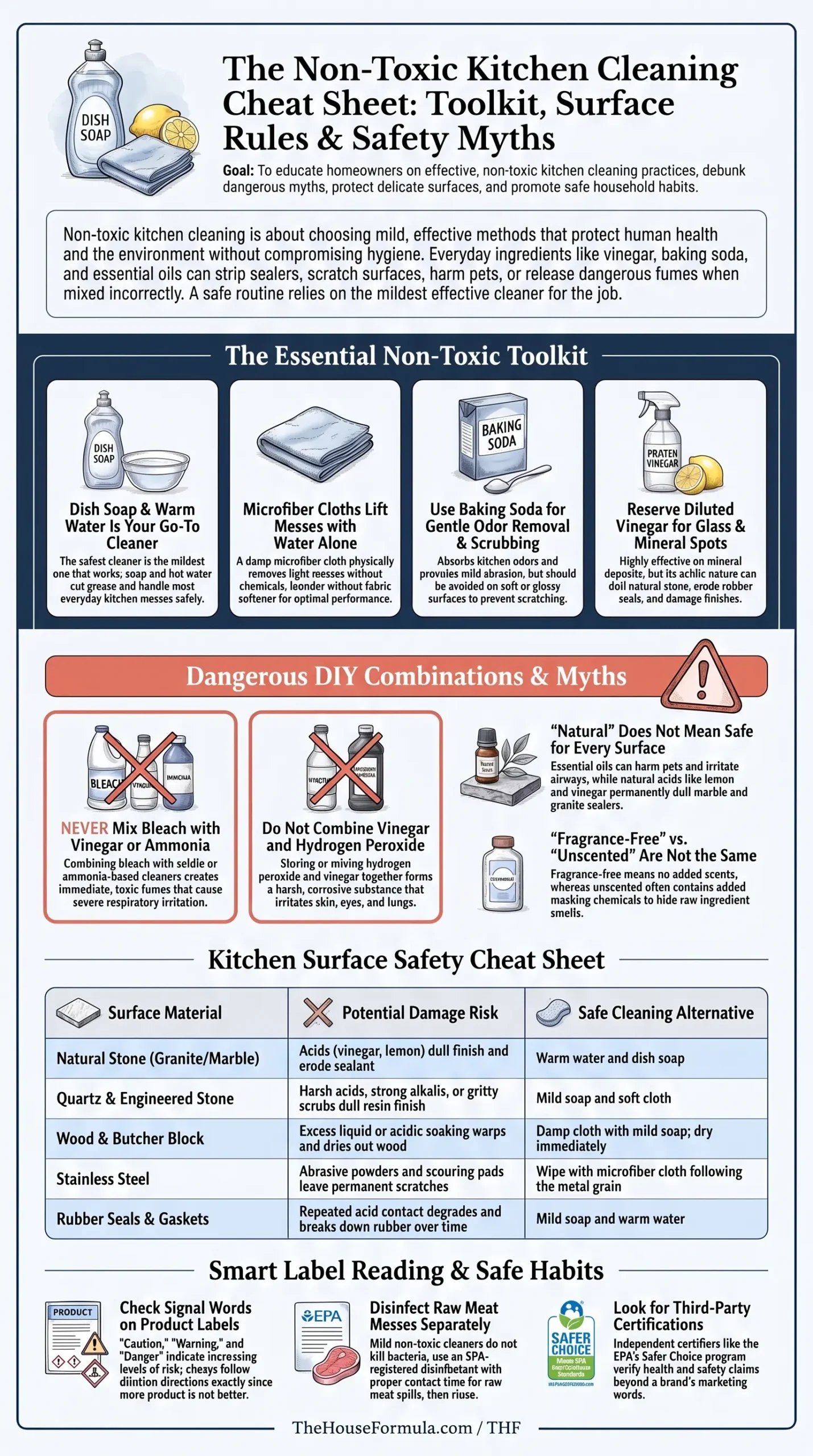
Photo Credit: Hobby Guidebook Editorial
Non-Toxic Kitchen Cleaning Products and a Simple Toolkit
You can handle most kitchen cleaning with a small set of gentle items. Here is a simple starter toolkit and what each one is good for:
|
Item |
Good for |
Where to be careful |
|
Dish soap and warm water |
Grease, food residue, most surfaces |
Rinse so no film stays on food surfaces |
|
Baking soda |
Odors, gentle scrubbing |
Can scratch glossy or soft finishes |
|
White vinegar (diluted) |
Mineral spots on glass and some metals |
Not for natural stone, some finishes, or rubber seals; check the maker |
|
Lemon juice |
Light freshening, mineral spots |
Acidic like vinegar; test first and rinse |
|
Castile soap (plant-based liquid soap) |
General cleaning |
May leave a film in hard water |
|
3 percent hydrogen peroxide |
Lightening stains on white, durable surfaces |
Test first; keep in its dark bottle; never mix with vinegar |
|
Microfiber cloths |
Wiping with little or no product |
Wash them without fabric softener |
|
Plant-based or certified cleaner, fragrance-free |
Convenience and specific jobs |
Follow the label and surface advice |
Microfiber cloths are an underrated low-impact tool. A damp microfiber cloth can lift many light messes with water alone, which means less product and less waste.
If you store cleaners at home, keep them in their original containers, away from food, and out of reach of children. Label every spray bottle you fill yourself, and do not reuse containers that once held another chemical. Our guide on Non-Toxic Kitchen Cleaning for Families with Kids goes deeper on safe storage and child-friendly routines.
None of these products disinfects the way a registered disinfectant does. If you need to kill germs, such as after raw meat touches a counter, use a product that makes a disinfecting claim on its label and follow the contact time. Then rinse food-contact surfaces as the label directs.
Lower-Impact Cleaning Methods That Work in the Kitchen
The most effective low-impact habit is simple: clean often and early. Fresh messes come off with water and a cloth. Old, baked-on messes need stronger products. Beyond that, these methods work well for common jobs.
Everyday counters and appliances
Wipe with a microfiber cloth dampened with warm water and a few drops of dish soap. Rinse with a clean damp cloth and dry. Always check your countertop type first, because stone, wood, and laminate have different needs.
Grease
Dish soap is made to break up grease. Use hot, but not scalding, water for the best results, and wipe with a soft cloth. For baked-on grease, let a warm, damp cloth sit on the spot for a few minutes before wiping.
Stuck-on food
Soften it with warm water or steam before scrubbing. A plastic scraper is gentler than steel wool. Baking soda paste with light pressure helps on durable surfaces.
Odors
Check for the source first. Old food in the fridge, a damp sponge, or a dirty drain are common causes. After you clean, a small open box of baking soda can help in a fridge or cabinet.
Mineral spots
Wipe fresh water drops dry to stop spots from forming. For existing spots on glass or stainless steel, many people use diluted vinegar, but only if the manual or maker allows it. Rinse well afterward and avoid it on natural stone.
Sponges and cloths
Sponges hold moisture and food, so they can build up odor. Rinse them well, let them dry between uses, and replace them when they smell or fall apart. Launder cloths regularly in hot water if the care label allows.
Lower-impact habits that add up
- Use less product than you think you need.
- Choose refills or concentrates when you can.
- Reuse cloths instead of disposable wipes for everyday messes.
- Do not pour leftover chemical products down the drain; follow the label's disposal advice.
- Wash full loads in the dishwasher and use the eco setting if your machine has one.
These steps cut waste and chemical use without making the kitchen less clean. They also save money, because you buy less and replace less. Start with one or two habits, such as using microfiber cloths and cleaning spills right away. Add more once they feel natural. Over time, a kitchen that is cleaned often needs fewer strong products, and that is the real heart of lower-impact cleaning.
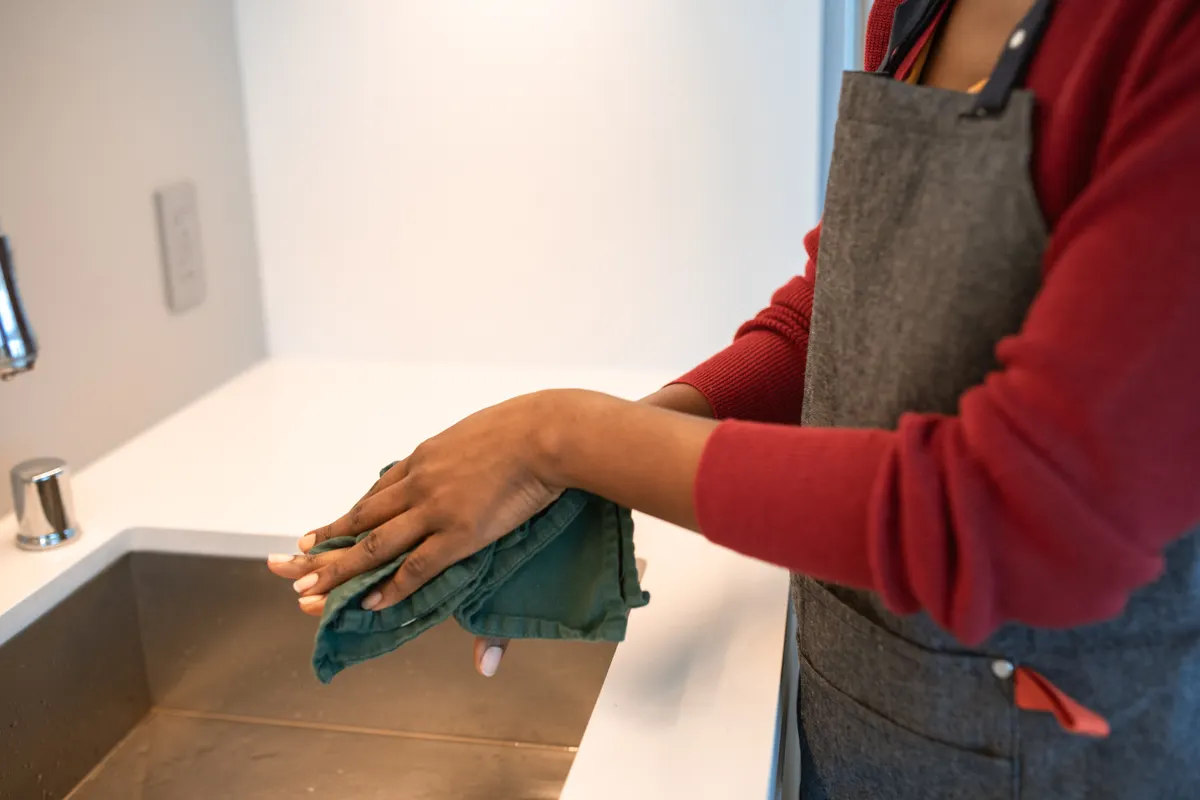
Photo Credit: RDNE Stock project
Can a Homemade Cleaner Damage Your Kitchen?
Yes, it can. Homemade cleaners are mixed by hand, so there is no tested label telling you which surfaces they are safe on. The risk is highest when the recipe includes an acid, an abrasive, or a strong scent.
|
Surface |
Possible problem with homemade cleaners |
|
Natural stone (granite, marble, travertine) |
Acids such as vinegar and lemon can dull the finish or weaken a sealer |
|
Quartz and engineered stone |
Strong acids, harsh alkaline cleaners, and gritty scrubs can dull the resin surface |
|
Wood and butcher block |
Too much water, vinegar, or soaking can warp or dry the wood |
|
Stainless steel |
Abrasives can scratch; wipe with the grain |
|
Cast iron and enameled cookware |
Soaking and harsh cleaners can damage seasoning or enamel |
|
Rubber seals and gaskets |
Frequent acid use can break them down over time |
|
Painted cabinets and walls |
Too much water or abrasive scrubbing can dull or lift the finish |
|
Nonstick coatings |
Abrasive powders and pads can scratch and wear them out |
Because surfaces differ, always check the maker's care guide, test a hidden spot, and start with the gentlest method. If you are unsure what a surface is made of, soap and warm water is the safest choice.
Homemade mixes can also create health risks. Bleach combined with vinegar, ammonia, or other acids can release dangerous gases. Hydrogen peroxide and vinegar should not be stored together in one bottle. Strong essential oils can irritate skin and airways. For households with animals, ask a vet before using essential oils or strongly scented products, since some are harmful to pets. Our guide on Non-Toxic Kitchen Cleaning for Pet Owners explains pet-safe habits in more detail.
If you do make a homemade cleaner, keep it simple. Use one or two ingredients, label the bottle with the contents and date, make small batches, and never mix products that are not meant to be mixed.
Common Mistakes to Avoid When Cleaning Without Harsh Chemicals
Most problems come from a few habits that sound harmless:
- Assuming natural means safe. Check each ingredient against each surface.
- Mixing products for extra power. This is the most dangerous mistake. Never mix bleach with vinegar, ammonia, or other acids.
- Skipping the rinse. Soap, vinegar, and baking soda can all leave residue that attracts dirt or affects food surfaces.
- Using too much product. More soap or more cleaner does not clean better, and it is harder to rinse.
- Using vinegar everywhere. It does not work on every surface, and it is not a disinfectant.
- Skipping the test spot. A hidden patch tells you a lot.
- Storing cleaners in food containers. Someone may mistake them for food or drink.
- Ignoring fragrance sensitivity. If someone in the home gets headaches or irritated airways from scent, choose fragrance-free products and ventilate.
- Relying on natural cleaners when you need to disinfect. Raw meat spills need a proper disinfecting step.
- Keeping old homemade mixes too long. Make small batches and replace them often.
The same thinking applies in other rooms. If you want to bring these habits to your bathroom, see our guide to Eco-Friendly & Non-Toxic Bathroom Cleaning, which covers surfaces and risks that are different from the kitchen.
A calm routine helps you avoid most mistakes. Choose the mildest product that works, read the label or manual, test on a hidden spot, and rinse and dry the surface afterward. Open a window or run a fan when you use any cleaner, especially in a small kitchen. Keep products in their original containers, store them away from food, and put them out of reach of children and pets. Following the same steps each time makes safe cleaning a habit instead of something you have to think about.

Photo Credit: Anna Shvets
When to Seek Professional Help
Most kitchen messes are easy to handle at home. A few situations call for an expert or for emergency help.
- If someone swallowed a cleaner, got it in the eyes, or is having trouble breathing. Call your local emergency number or your poison control center right away, and keep the product container with you. Do not wait for symptoms to get worse.
- If you smell gas. Leave the house, and contact the gas company or emergency services from outside. Do not use switches or appliances.
- If there is sewage backup or a major leak. A plumber or water damage professional should handle it.
- If you see widespread mold, or mold keeps returning after cleaning. A mold or moisture professional can find the cause. Large areas should not be handled with DIY chemicals.
- If an appliance has a damaged cord, sparks, or a burning smell. Stop using it and call the maker or a qualified repair person.
- If a surface is damaged, etched, or flaking. A stone, countertop, or cabinet professional can tell you if it can be repaired.
- If a pest problem keeps coming back. A licensed pest control professional can help. Avoid mixing your own pesticides.
- If a household member has asthma, allergies, or chemical sensitivity and symptoms flare up. Ask a doctor or pharmacist which products to avoid.
When in doubt, stop, ventilate the room, and get advice. It is always better to ask than to guess with chemicals.
Frequently Asked Questions
Are natural or homemade cleaners automatically safer for the kitchen?
No. Some natural ingredients can damage surfaces or irritate skin, eyes, and lungs, and homemade mixes can create harmful fumes if you combine the wrong things. Safer means choosing the mildest product that works on your surface, following directions, and never mixing cleaners.
Which lower-impact cleaning methods work well for the kitchen?
Warm water and dish soap with a microfiber cloth handle most messes. Steam can loosen stuck-on food, baking soda helps with odors and gentle scrubbing, and cleaning spills early reduces the need for strong products. Using less product and reusable cloths also lowers your impact.
What should you check on a cleaning-product label for the kitchen?
Check the intended surface, directions and dilution, warning words, food-contact and rinsing advice, ingredient list, first aid notes, and any warning about mixing. Look at third-party certifications, and choose fragrance-free if scent bothers you.
Can a homemade cleaner damage the kitchen?
Yes. Acids can dull natural stone and harm some seals, abrasives can scratch coatings, and too much water can damage wood. Test first and check the maker's care guide.
What common mistakes should you avoid with kitchen cleaning?
Avoid mixing products, assuming natural means safe, skipping the rinse, using too much product, using vinegar everywhere, and storing cleaners in food containers. Do not rely on natural cleaners when you need to disinfect.
When should you seek professional help with the kitchen?
Get help for poisoning or breathing trouble (call emergency services or poison control), gas smells, sewage or major leaks, widespread or recurring mold, damaged or sparking appliances, damaged surfaces, and repeat pest problems.
Final Thoughts
Non-toxic kitchen cleaning is less about special products and more about smart habits. Use the mildest method that works, read labels, test before you commit, never mix cleaners, and keep products stored safely. Clean a little often so you rarely need anything strong. Back to the complete kitchen cleaning guide for help with every part of your kitchen.
Safety note: Follow product labels and your surface maker's instructions. Never mix bleach with vinegar, ammonia, or other acids, and do not mix hydrogen peroxide with vinegar. Ventilate the room, wear gloves if your skin is sensitive, and keep all cleaners out of reach of children and pets. Natural and homemade cleaners do not replace a disinfectant when you need to kill germs. If someone is exposed to a product and feels unwell, contact poison control or emergency services right away.


Leave a Reply