
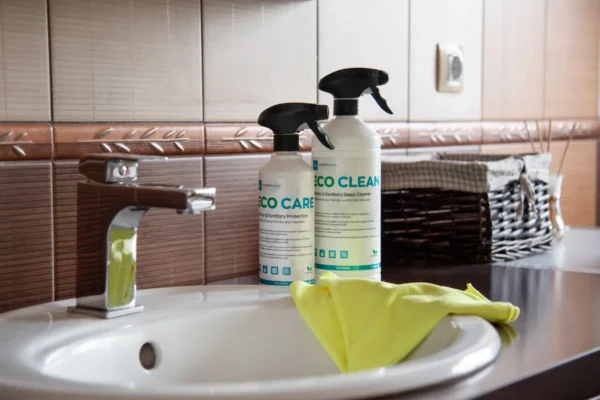
Bathrooms collect a specific mix of problems: soap scum, hard water spots, mildew, and lingering moisture that ordinary living rooms never have to deal with. It's tempting to reach for the strongest product on the shelf to handle all of it at once, but a genuinely effective non-toxic bathroom cleaning routine doesn't require harsh fumes or a cabinet full of warning labels. It requires understanding which ingredients actually work on which surfaces, and which ones only sound safer without actually being gentler.
This guide covers what "non-toxic" really means on a label, which natural ingredients hold up against bathroom-specific problems like mold and hard water, where homemade cleaners can go wrong, and how to build a routine that works without relying on harsh chemical products. If you want the wider view of bathroom care beyond eco-friendly methods specifically, you can go Back to the complete bathroom cleaning guide.
What Makes a Bathroom Cleaner Non-Toxic
A cleaning product is generally considered non-toxic when it's formulated without the harshest chemical classes, things like chlorine bleach, ammonia, phthalates, and strong synthetic fragrances, and when it carries no hazard warnings requiring gloves, eye protection, or ventilation just to use it safely. In short, a non-toxic bathroom cleaner should:
- List its ingredients clearly, rather than hiding behind a vague term like "fragrance" or "cleaning agents"
- Avoid chlorine bleach, ammonia, and phthalates
- Carry no signal words like "Danger," "Poison," or "Corrosive" on the label
- Work without requiring a respirator or heavy ventilation to use safely indoors
- Break down more readily in the environment after it goes down the drain
None of this means a non-toxic cleaner is automatically weaker. Many plant-based surfactants and mineral-based ingredients clean effectively; they're simply formulated without the more aggressive chemistry that creates fumes, skin irritation, or long-term environmental concerns.
Are Natural or Homemade Cleaners Automatically Safer for the Bathroom?
Not automatically, no. "Natural" is not a regulated term on cleaning product labels, and something being homemade doesn't mean it's free of risk. A homemade cleaner can still irritate skin, damage a surface, or, in the wrong combination, produce a genuinely hazardous reaction.
The clearest example is vinegar and baking soda. Mixed together, they mostly just fizz and neutralize each other, which isn't dangerous but also isn't especially effective once the fizzing stops. A more serious concern is combining any acidic ingredient, including vinegar or lemon juice, with a bleach-based product. This can release chlorine gas, which is hazardous to breathe in an enclosed space like a bathroom. Homemade doesn't mean the same safety rules stop applying.
The honest takeaway is that natural and homemade cleaners can absolutely be effective and lower-impact, but they still need to be matched to the right surface and used with the same care as any other cleaning product.
Reading a Bathroom Cleaning Product Label
Since "non-toxic," "green," and "natural" aren't strictly regulated terms, the label itself is where the real information lives. A few things are worth checking before buying or using a bathroom cleaner.
|
What to Check |
Why It Matters |
|
Full ingredient list |
Products that disclose every ingredient are generally more transparent than ones listing only "cleaning agents" |
|
Signal words (Danger, Warning, Caution) |
Indicates the product's hazard level as classified by the manufacturer |
|
Fragrance disclosure |
"Fragrance-free" means no scent added; "unscented" can still contain masking chemicals |
|
Third-party certification |
Independent verification, rather than just a manufacturer's own claim |
|
Directions for use |
Confirms whether ventilation, gloves, or dilution is required |
|
Surface compatibility |
Confirms the product is meant for the material you're cleaning, like tile, grout, or stone |
A genuinely certified non-toxic cleaning brand will typically display a recognizable third-party seal, something reviewed by an outside organization rather than a claim the manufacturer applies to itself. If a product only says "eco-friendly" in marketing copy with no ingredient list and no certification, treat that as a marketing claim rather than a verified fact.
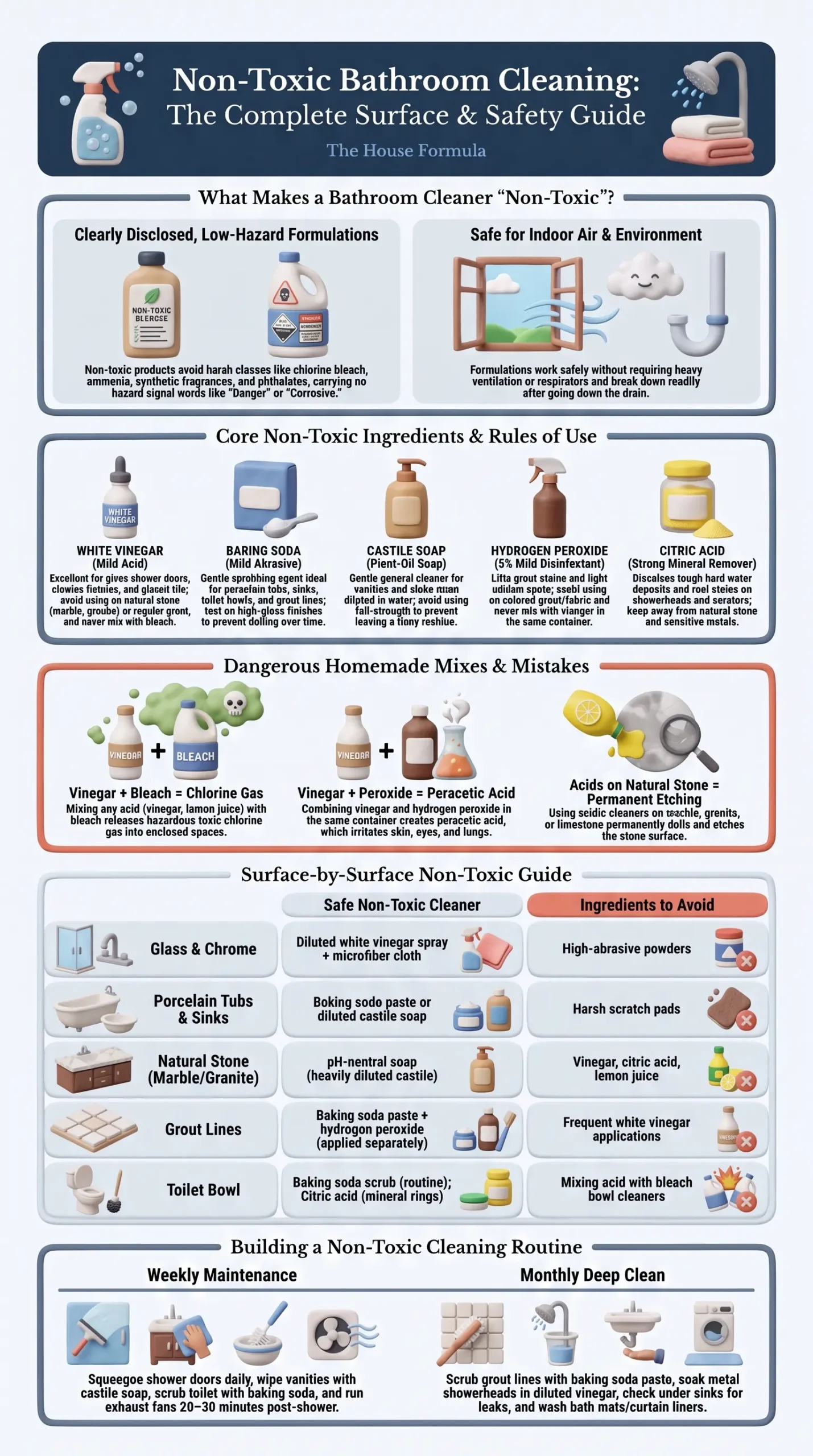
Photo Credit: Hobby Guidebook Editorial
Core Non-Toxic Ingredients for Bathroom Cleaning
A small set of household ingredients cover most bathroom cleaning needs without introducing harsh chemistry. Each one has a specific strength, and importantly, each one has limits worth knowing before you reach for it.
White Vinegar
Vinegar is mildly acidic, which makes it effective against hard water deposits, soap scum, and light mineral buildup on tile, glass, and chrome fixtures. It's generally used diluted with water in a spray bottle for everyday cleaning, or closer to full strength for tougher mineral buildup on non-porous surfaces.
Where it works well: glass shower doors, chrome fixtures, glazed tile, showerheads soaked to dissolve mineral deposits.
Where to avoid it: natural stone like marble, granite, or limestone, since the acidity can etch and permanently dull the surface. Also avoid using it on grout regularly, since repeated acid exposure can wear down grout over time.
Important precaution: never combine vinegar with bleach or any bleach-based product. The reaction can release chlorine gas.
Baking Soda
Baking soda is a mild abrasive and works well as a gentle scrubbing agent for the bathtub, sink basin, and toilet bowl. It's often made into a paste with a small amount of water for spot scrubbing, or sprinkled dry onto a damp surface before scrubbing.
Where it works well: porcelain tubs and sinks, toilet bowls, grout lines that need light scrubbing.
Where to avoid it: high-gloss or delicate finishes, since repeated abrasive scrubbing can dull the surface over time. Test in a small area first if you're unsure how a finish will respond.
Castile Soap
Castile soap is a plant-oil-based liquid soap that works as a general surface cleaner when diluted with water. It's gentle enough for regular use and doesn't leave behind the residue that some detergents do.
Where it works well: vanity surfaces, sinks, general wipe-downs, and as a base ingredient for other homemade sprays.
Where to avoid it: using it at full strength without dilution, which can leave a filmy residue rather than a genuine improvement in cleanliness.
Hydrogen Peroxide
Hydrogen peroxide (typically the 3% concentration found at most stores) has mild disinfecting and stain-lifting properties, making it useful for grout discoloration and some mildew spots.
Where it works well: discolored grout lines, light mildew staining, disinfecting small areas.
Where to avoid it: colored grout or fabric, since it can lighten color over repeated use. It also should never be mixed with vinegar in the same container, since the combination creates peracetic acid, which can be irritating to skin, eyes, and the respiratory system.
Citric Acid
Citric acid, often sold as a powder, is effective against hard water buildup and rust-related staining, similar to vinegar but generally stronger for tough mineral deposits.
Where it works well: heavily mineral-stained fixtures, showerheads, faucet aerators.
Where to avoid it: natural stone surfaces, for the same etching risk as vinegar, and any metal finish not confirmed to tolerate acidic cleaners.
Lower-Impact Cleaning Methods for the Bathroom
Eco-friendly bathroom cleaning isn't only about which product you use. A few methods reduce the need for chemical cleaning altogether, or make whatever product you do use more effective with less of it.
- Microfiber cloths lift dirt and moisture mechanically, meaning many everyday wipe-downs need little to no cleaning product at all.
- Squeegeeing the shower after use prevents the soap scum and hard water buildup that would otherwise require a stronger cleaner to remove later.
- Running the exhaust fan during and after showers reduces the moisture that feeds mold and mildew growth, cutting down how often heavier mold treatment is needed.
- Reusable spray bottles with diluted ingredients reduce plastic waste compared to buying a new bottle of pre-mixed cleaner every time.
- Steam cleaning, where appropriate for the surface, can loosen grime using heat and water alone, though it should be avoided on surfaces sensitive to heat or moisture intrusion, like some laminate or engineered materials.
These methods work best in combination with the right ingredient for the job, rather than as a replacement for cleaning altogether. Prevention reduces how often and how hard you need to clean, but it doesn't eliminate the need entirely.
Surface-by-Surface Non-Toxic Cleaning Guide
Different bathroom surfaces respond differently to the same ingredient, so matching the method to the material matters more than picking one "best" non-toxic cleaner for everything.
Tile and grout: A diluted castile soap solution handles routine grime. For grout discoloration specifically, a baking soda paste with a small amount of hydrogen peroxide (applied separately, never combined in one container) can lift staining with some scrubbing and patience.
Tub and shower (non-stone): Diluted vinegar cuts through soap scum and hard water spots on fiberglass, acrylic, and glazed surfaces. Rinse thoroughly after application.
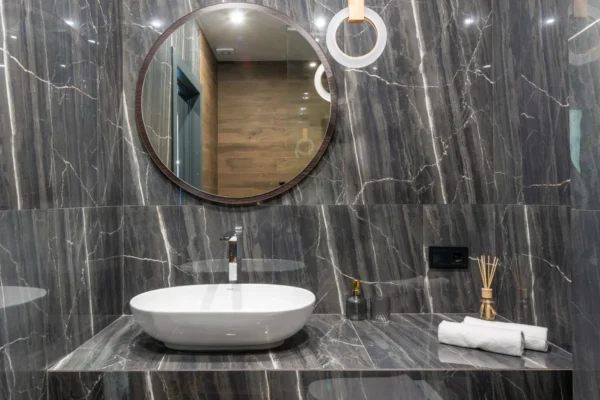
Natural stone surfaces: Skip vinegar and citric acid entirely. A pH-neutral soap, like heavily diluted castile soap, is the safer non-toxic option here, since stone is vulnerable to etching from acidic ingredients.
Toilet: Baking soda combined with a toilet brush handles the bowl well for routine cleaning. For mineral rings at the waterline, a stronger acidic approach like citric acid may be needed periodically, since baking soda alone often isn't enough for set-in mineral deposits.
Sink and vanity: Diluted castile soap or a vinegar-water solution (avoiding stone vanity tops) works for daily wipe-downs and light buildup.
Mirrors and glass: A simple vinegar-water solution with a microfiber cloth typically leaves glass streak-free without needing a dedicated glass cleaner.
Mold and mildew spots: Hydrogen peroxide applied to the affected area, left to sit briefly, then wiped and rinsed, can address small mold and mildew spots. For larger or recurring mold coverage, non-toxic spot treatment alone often isn't enough, and the underlying moisture or ventilation problem needs to be addressed directly.

Photo Credit: Matilda Wormwood
Can a Homemade Cleaner Damage the Bathroom?
Yes, and this is one of the more overlooked risks of DIY bathroom cleaning. A few specific ways homemade cleaners can cause damage:
- Acidic ingredients on natural stone (vinegar, citric acid, lemon juice) can etch and permanently dull marble, granite, limestone, and similar surfaces.
- Repeated abrasive scrubbing with baking soda or salt-based mixtures can wear down glossy finishes over time, leaving them looking duller even though they're clean.
- Undiluted essential oils applied directly to certain plastics or acrylic surfaces can occasionally cause discoloration or a sticky residue, depending on the oil and the surface.
- Leaving acidic solutions on grout too long can gradually erode the grout, making it more porous and more prone to staining and mold in the future.
- Combining incompatible ingredients, most notably vinegar with hydrogen peroxide in the same container, or any acid with bleach, which can create fumes that are hazardous to breathe.
The safest approach is to test any homemade mixture on a small, inconspicuous area first, especially on stone, colored grout, or a finish you're unfamiliar with, and to rinse thoroughly after using anything acidic.
Non-Toxic Bathroom Cleaning for Families with Kids
Households with young kids often want to reduce chemical exposure further, particularly with disinfecting products, bath toys, and surfaces kids touch directly. The core ingredients above still apply, but the priorities shift slightly, with more attention paid to rinse thoroughness, fragrance-free formulations, and safe storage of even mild ingredients like concentrated citric acid or essential oils.
Bath toys and low surfaces also need consideration that adult-focused cleaning routines sometimes skip, since kids interact with these areas more directly and more often. For a full breakdown built specifically around these needs, see Non-Toxic Bathroom Cleaning for Families with Kids.
Non-Toxic Bathroom Cleaning for Pet Owners
Pets bring their own set of bathroom cleaning considerations, from paw contact with freshly cleaned floors to curiosity around spray bottles and cleaning cloths left within reach. Essential oils in particular deserve caution in pet households, since some oils that are fine for humans can be harmful to cats and dogs even in small amounts.
Non-toxic doesn't automatically mean pet-safe, and it's worth understanding that distinction before assuming a product or homemade mixture is fine simply because it's free of harsh chemicals. For guidance specific to homes with pets, including which ingredients to avoid entirely, see Non-Toxic Bathroom Cleaning for Pet Owners.
Certified Non-Toxic Cleaning Brands
For anyone who would rather buy a ready-made product than mix their own, third-party certification is the most reliable way to confirm a non-toxic claim rather than relying on marketing language alone. Certifications from recognized environmental and safety organizations typically involve independent review of ingredients, toxicity, and environmental impact, rather than a manufacturer simply labeling its own product as safe.
When comparing certified options, it's still worth checking the ingredient list and directions for use, since certification generally confirms overall safety standards rather than compatibility with every bathroom surface. A certified non-toxic tile cleaner, for example, may still not be appropriate for natural stone if it contains any acidic component, so surface compatibility remains a separate check even with a trusted certification.
Common Mistakes in Non-Toxic Bathroom Cleaning
A few mistakes come up repeatedly when people switch to natural or non-toxic bathroom cleaning methods.
- Assuming "natural" means "safe for every surface." Vinegar and citric acid, while natural, are still acidic and can damage stone and some finishes.
- Combining ingredients without checking compatibility, especially vinegar with hydrogen peroxide or anything acidic with a bleach-based product.
- Skipping the rinse step. Acidic cleaners left to dry on a surface, rather than rinsed off, are more likely to cause etching or dulling over time.
- Expecting the same strength as harsh chemical cleaners. Non-toxic ingredients often need more contact time or repeated application rather than instant results, especially on set-in stains.
- Using essential oils without checking pet or child safety, since some oils that seem harmless can pose a real risk in households with pets or young kids.
- Ignoring ventilation. Even non-toxic cleaning benefits from good airflow, since moisture is the bathroom's biggest ongoing problem regardless of which products are used.
If your non-toxic routine extends beyond the bathroom, many of these same ingredient principles, and mistakes, apply in the kitchen as well, where grease and food residue create their own set of challenges. The Eco-Friendly & Non-Toxic Kitchen Cleaning guide covers how these methods adjust for that space.

Photo Credit: Tara Winstead
Building a Non-Toxic Bathroom Cleaning Routine
A consistent routine reduces how often you need stronger intervention for mold, hard water buildup, or soap scum. A simple weekly and monthly structure works for most households:
Weekly:
- Squeegee or wipe down shower glass and tile after the last shower of the week to prevent soap scum buildup.
- Wipe down the sink and vanity with a diluted castile soap solution.
- Clean the toilet bowl with baking soda and a toilet brush.
- Run the exhaust fan for at least 20 to 30 minutes after showers throughout the week, or open a window if ventilation is limited.
Monthly:
- Deep clean grout lines with a baking soda paste, addressing any early discoloration before it sets in further.
- Soak the showerhead in diluted vinegar or citric acid solution to clear mineral buildup, if the showerhead is metal or plastic rather than a finish sensitive to acid.
- Check under the sink and around the toilet base for any early signs of moisture or mildew.
- Wash bath mats and shower curtain liners, which can hold onto moisture and mildew even when the rest of the bathroom looks clean.
This structure isn't rigid. Households in humid climates or with heavier bathroom use may need to shift some monthly tasks to a more frequent schedule, particularly ventilation-related ones.
When to Seek Professional Help for the Bathroom
Non-toxic methods handle the large majority of routine bathroom cleaning, but a few situations go beyond what any cleaning approach, natural or otherwise, is meant to solve.
Mold covering a large area or returning repeatedly despite consistent cleaning and good ventilation often points to a moisture source inside a wall or floor that needs professional assessment.
Etched or permanently dulled stone, whether from a homemade acidic cleaner or a store-bought product, generally can't be reversed with more cleaning and may need a surface restoration specialist.
Persistent musty odors with no visible source can indicate hidden moisture that a surface-level clean, non-toxic or not, won't reach.
Any reaction that produces strong or unexpected fumes while cleaning, homemade or store-bought, should prompt immediate ventilation and a pause on using either product until the cause is clear.
When a bathroom problem seems bigger than routine cleaning can reasonably address, treating it as worth a second opinion is a sensible, low-risk choice, regardless of which cleaning products were involved.
Frequently Asked Questions
Are natural or homemade cleaners automatically safer for the bathroom? Not automatically. Natural ingredients like vinegar and citric acid are still acidic and can damage stone and certain finishes, and combining the wrong ingredients, like vinegar with bleach, can still create hazardous fumes.
Which lower-impact cleaning methods work well for the bathroom? Microfiber cloths, daily squeegeeing, running the exhaust fan after showers, and reusable spray bottles with diluted ingredients all reduce the need for heavier cleaning products over time.
What should you check on a cleaning-product label for the bathroom? Look for a full ingredient list, absence of hazard signal words, clear fragrance disclosure, third-party certification, and confirmation that the product is compatible with your specific bathroom surfaces.
Can a homemade cleaner damage the bathroom? Yes. Acidic ingredients can etch natural stone, abrasive mixtures can dull glossy finishes over time, and combining incompatible ingredients like vinegar and hydrogen peroxide, or any acid with bleach, can create hazardous fumes.
What common mistakes should you avoid with the bathroom? Avoid assuming natural means safe for every surface, skipping the rinse step after acidic cleaners, combining incompatible ingredients, and using essential oils without checking pet or child safety.
When should you seek professional help with the bathroom? Seek help for mold that keeps returning despite good ventilation, stone that's been etched or discolored, persistent unexplained odors, or any strong or unexpected fumes during cleaning.
Non-toxic bathroom cleaning works best when it's matched to the right surface and used with the same care as any other cleaning method. For the full picture of bathroom care beyond eco-friendly methods, Explore the complete bathroom cleaning guide.
A Quick Note on Safety
Even non-toxic ingredients carry some precautions worth keeping in mind. Never combine vinegar or other acids with bleach or hydrogen peroxide in the same container, since these combinations can release hazardous fumes. Test acidic cleaners like vinegar or citric acid on a small, hidden area before using them on an unfamiliar surface, and avoid them entirely on natural stone. Keep concentrated ingredients and essential oils stored safely away from children and pets. For mold that won't clear, unexplained odors, or any surface damage that doesn't respond to gentle cleaning, professional evaluation is the more reliable next step.


Leave a Reply