
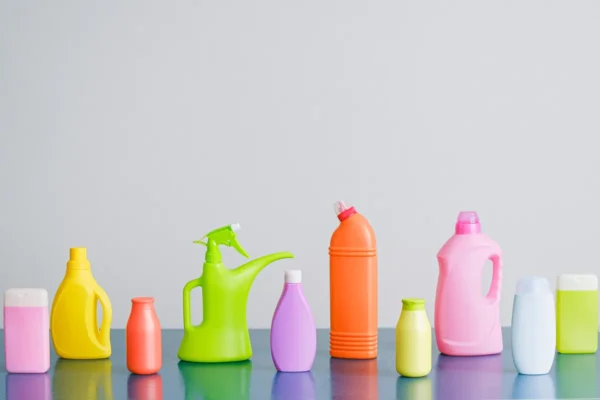
Using too much cleaning product does not mean a cleaner kitchen. In many cases, it means more residue, more rinsing, and a higher chance of damaging a surface or wasting product. A cleaning product dilution ratio chart gives you a quick reference for how much concentrate to mix with water for common kitchen tasks, so you are not guessing every time you fill a spray bottle. This guide is part of the Kitchen Cleaning Reference & Charts collection, built to give you fast, practical answers without digging through product labels every time.
Dilution ratios are not one-size-fits-all. They depend on the product's concentration, the manufacturer's formula, and the task at hand. This chart gives you general starting points used across common kitchen cleaning situations, but the printed label on your specific product always takes priority if the two ever disagree.
What a Useful Kitchen Cleaning Reference Should Include
A dilution chart only earns its place on your fridge or under the sink if it answers the questions you actually have mid-task. At a minimum, a useful reference for kitchen cleaning products should include:
- The product category (all-purpose cleaner, degreaser, sanitizer, and so on)
- A general starting ratio of concentrate to water
- The surfaces or tasks it is meant for
- Any surfaces or materials to avoid
- Basic safety notes, especially around mixing products
Without these five pieces, a chart becomes a list of numbers with no context, which is not much help when you are standing at the sink trying to remember if it was one tablespoon or one capful.
Why Dilution Ratios Matter in a Kitchen
Getting the ratio wrong has real consequences, and they go beyond wasted product. A solution that is too strong can leave streaks on countertops, dull the finish on stainless steel appliances, or leave a sticky film that attracts dust and grease. A solution that is too weak often just moves grime around instead of lifting it, which means more scrubbing and more time spent redoing the job.
There is also a cost angle. Concentrated cleaners are designed to be diluted, often significantly. Using a product at full strength when it is meant to be mixed with water burns through your supply far faster than necessary, without giving you better cleaning results. On the safety side, some concentrates can irritate skin or eyes if handled without dilution, which is one more reason to follow the ratio printed on the bottle rather than eyeballing it.
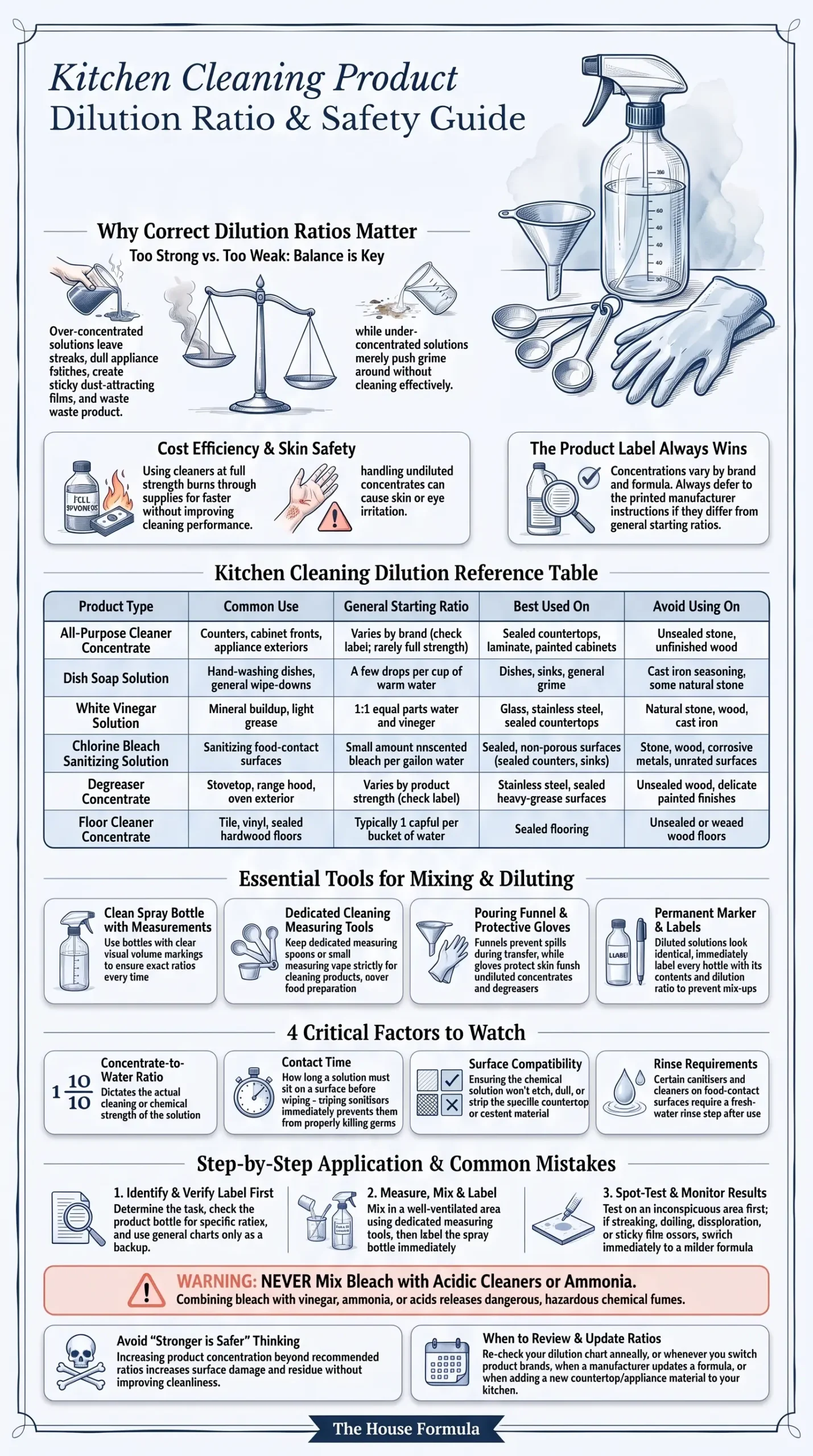
Photo Credit: Hobby Guidebook Editorial
General Kitchen Cleaning Dilution Reference
The table below reflects common starting ratios seen across typical kitchen cleaning products. Concentrations vary by brand and formula, so always check your specific product label first. If the label gives a different ratio than what is listed here, follow the label.
|
Product Type |
Common Use |
General Starting Ratio |
Best Used On |
Avoid Using On |
|
All-purpose cleaner concentrate |
Counters, cabinet fronts, appliance exteriors |
Varies widely by brand; check label (often diluted, not used full strength) |
Sealed countertops, laminate, painted cabinets |
Unsealed stone, unfinished wood |
|
Dish soap solution |
Hand-washing dishes, general wipe-downs |
A few drops per cup of warm water |
Dishes, sinks, general grime |
Cast iron seasoning, some natural stone |
|
White vinegar solution |
Cutting through mineral buildup, light grease |
Typically diluted with an equal amount of water |
Glass, stainless steel, sealed countertops |
Natural stone, wood, cast iron |
|
Chlorine bleach sanitizing solution |
Sanitizing food-contact surfaces |
A small amount of unscented bleach per gallon of water (check label for exact ratio) |
Sealed, non-porous surfaces like sealed countertops or sinks |
Stone, wood, metal that can corrode, any surface not rated for bleach |
|
Degreaser concentrate |
Stovetop, range hood, oven exterior |
Varies significantly by product strength; always check label |
Stainless steel, sealed surfaces with heavy grease |
Unsealed wood, some painted finishes |
|
Floor cleaner concentrate |
Tile, vinyl, sealed hardwood floors |
Manufacturer-specific; typically a capful per bucket of water |
Sealed flooring |
Unsealed or waxed wood floors |
A few of these ratios, especially for bleach sanitizing solutions, are commonly referenced by food safety guidance for sanitizing food-contact surfaces in home kitchens. Even so, bleach concentration differs between brands and countries, so the exact measurement should always come from the product label rather than a general chart.
Tools You Need to Mix and Use Dilutions Correctly
Getting a dilution right is not just about knowing the ratio. It also depends on having the right tools to measure it consistently. A basic kitchen cleaning kit for mixing solutions should include:
- A clean spray bottle with clear measurement markings, if possible
- A measuring spoon or small measuring cup dedicated to cleaning products, not food
- A funnel for pouring concentrate without spills
- Labels or a marker to note what is inside each bottle and the ratio used
- Gloves, especially when handling bleach, degreasers, or anything undiluted
Labeling matters more than people expect. A bottle of diluted bleach solution looks identical to a bottle of diluted all-purpose cleaner once it is in a spray bottle, and mixing them up later can lead to using the wrong product on a surface that cannot handle it, or worse, accidentally combining two products that should never touch.
Which Measurements Matter Most on a Kitchen Chart
Not every measurement carries equal weight. When building or using a dilution chart, the categories that matter most are:
- Concentrate to water ratio, since this determines strength
- Contact time, meaning how long a solution should sit on a surface before wiping, especially for sanitizing
- Surface compatibility, since the same solution that is safe on sealed granite may not be safe on marble or wood
- Rinse requirements, since some solutions need to be rinsed after use on food-contact surfaces and others do not
Contact time is often overlooked but genuinely changes results. A sanitizing solution wiped off immediately after spraying usually has not had enough time to do its job, while leaving a solution on longer than the label recommends can sometimes damage a finish or leave residue behind.
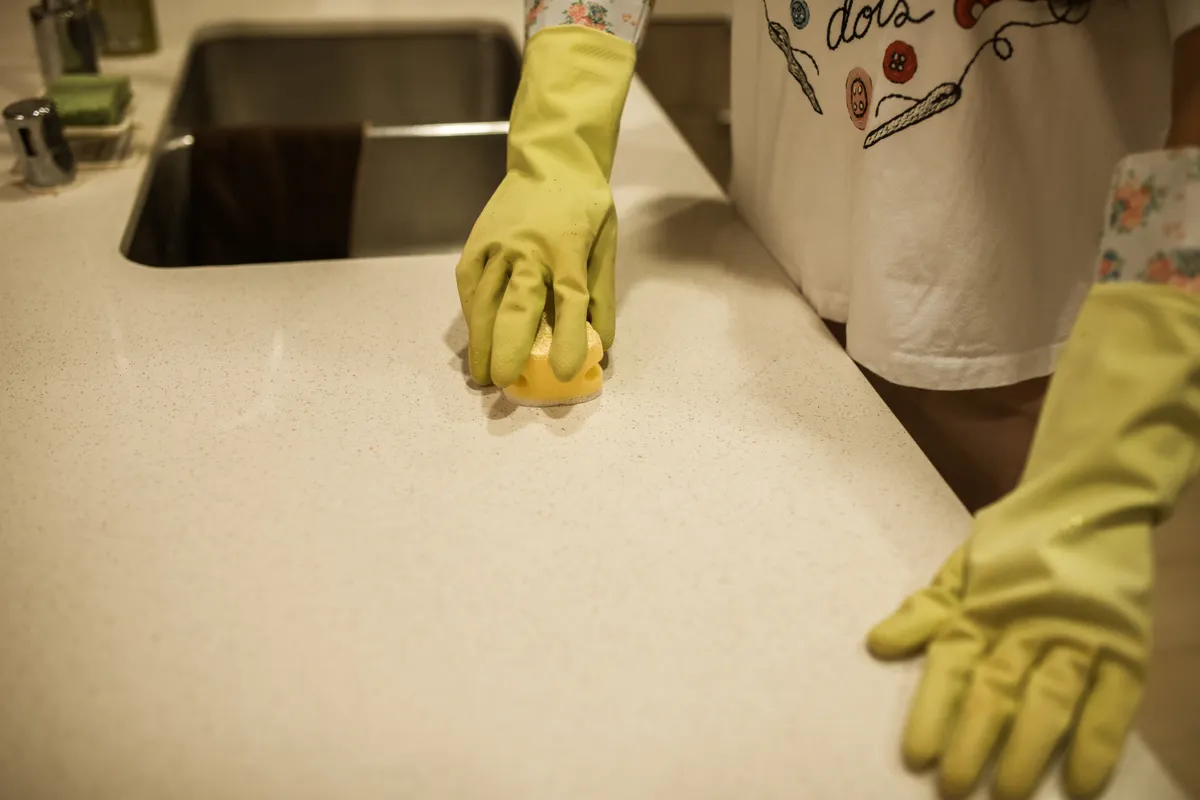
Photo Credit: RDNE Stock project
How to Use a Dilution Chart in Real Kitchen Cleaning
A chart is only useful if it fits into how you actually clean. Here is a simple way to apply it:
- Identify the task, such as sanitizing a countertop after handling raw meat, or degreasing a stovetop.
- Check the product label for its specific dilution instructions first.
- Use the chart as a backup reference if the label is unclear, worn off, or missing, keeping in mind the chart gives general starting points, not exact specifications for every brand.
- Measure carefully using a dedicated measuring tool, not guesswork.
- Mix in a well-ventilated area, especially for bleach or degreaser concentrates.
- Label the mixed solution immediately if it will not be used right away.
- Test on a small, hidden area if you are unsure how a surface will respond, particularly for natural stone, unsealed wood, or older finishes.
Stop and switch to a milder solution if you notice streaking, dulling, discoloration, or a sticky residue after using a mixed solution. These are signs the ratio was too strong for that particular surface, even if it matched the general chart.
For a broader view of how frequently different kitchen areas need attention, pair this dilution reference with the Kitchen Cleaning Frequency Chart, which lays out how often countertops, appliances, and floors should be cleaned in the first place.
How Often a Dilution Chart Should Be Updated
A dilution chart is not something you set once and forget. It is worth revisiting when:
- You switch brands, since concentrations differ even within the same product category
- A manufacturer changes their formula, which can happen without much notice
- You add a new surface or appliance to your kitchen that has different cleaning needs, like a new stainless steel range or a natural stone countertop
- It has been more than a year since you last checked whether your ratios still match current product labels
Checking the chart against current labels once or twice a year is a reasonable habit, especially if you tend to buy whatever concentrate is on sale rather than sticking to one brand consistently.
Common Mistakes When Using Dilution Ratios
A few mistakes come up often enough to call out directly:
- Assuming all concentrates of the same type use the same ratio. A degreaser from one brand may need heavy dilution while another is meant to be used nearly full strength.
- Reusing a bottle without relabeling it after switching what solution is inside.
- Mixing bleach with vinegar, ammonia, or other acidic or ammonia-based cleaners. This combination can release hazardous fumes and should never be done, regardless of what ratio is involved.
- Skipping the rinse step on food-contact surfaces after using a sanitizing solution, when the label calls for one.
- Using a stronger ratio "to be safe." In most cases, this does not improve cleaning results and increases the risk of surface damage or residue.
If you are working with natural ingredients like vinegar or baking soda instead of commercial concentrates, the Natural Cleaning Ingredient Substitution Chart is a useful companion, since it covers which natural options can reasonably stand in for a commercial product and where they fall short.

Photo Credit: Kindel Media
When to Rely on Manufacturer Instructions Instead of a General Chart
General charts like this one are meant to give you a starting point, not a substitute for what is printed on your specific product. Manufacturer instructions should always take priority when:
- The product label gives a different ratio than the chart
- The product is a specialty formula, such as a stainless steel appliance cleaner or an oven-specific degreaser
- You are unsure what a surface is made of and the label offers material-specific guidance
- The product includes disinfecting or sanitizing claims, since those often depend on exact concentration and contact time to work as intended
If a label is missing, faded, or unclear, it is safer to use the mildest reasonable option and test it on a small area rather than assuming a general ratio will work exactly as expected.
If you are setting up similar reference points for another part of the home, the Bathroom Cleaning Product Dilution Ratio Chart covers the same idea applied to bathroom-specific products and surfaces.
Frequently Asked Questions
What should a useful reference for the kitchen include? It should list the product category, a general starting dilution ratio, the surfaces it works best on, surfaces to avoid, and basic safety notes, especially around mixing products.
What information should a useful kitchen reference include? Beyond ratios, it should include contact time where relevant, rinse requirements for food-contact surfaces, and clear notes on which materials the solution is not suited for.
Which measurements or categories matter most for the kitchen? Concentrate-to-water ratio, contact time, surface compatibility, and whether a rinse step is needed after cleaning are the most important categories to track.
How should a kitchen reference or chart be used? Use it as a backup after checking the product label, measure with dedicated tools, test on a small area when unsure, and stop if you notice streaking, dulling, or residue.
How often should a kitchen reference be updated? Review it whenever you switch brands, a manufacturer changes a formula, you add a new surface or appliance, or it has been about a year since your last check.
For more room-by-room cleaning guidance, browse the complete kitchen cleaning guide.
A Note on Safety
Always follow the instructions and warnings printed on your specific cleaning product, since concentration and safe use can vary between brands and formulas. Never combine bleach with ammonia, vinegar, or other acidic cleaners, as this can produce hazardous fumes. Mix concentrated products in a well-ventilated area, wear gloves when handling undiluted concentrate, and test any new dilution on a small, hidden area before applying it more broadly. If you are unsure whether a product is appropriate for a specific surface or situation, or if you are dealing with mold, pests, or a hazard beyond routine cleaning, it is worth consulting the manufacturer's documentation or a qualified professional.




Leave a Reply