
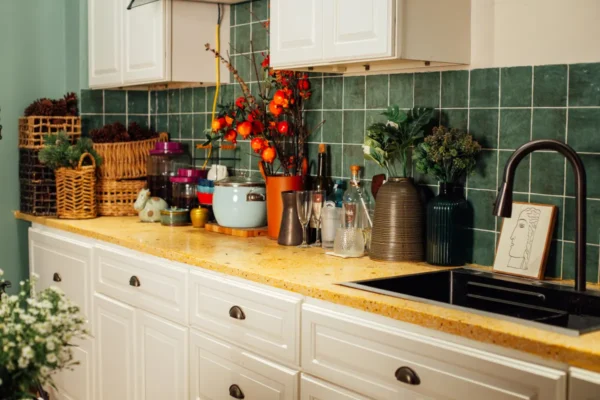
Most kitchen cleaning problems are not really about effort. They are about using the wrong method for the surface, the wrong product for the mess, or skipping a step that would have solved the problem the first time. If you keep scrubbing the same greasy spot, wiping down a counter that never looks truly clean, or wondering whether two products are safe to use together, this guide walks through the most common kitchen cleaning questions and how to work through them safely.
This is meant as a troubleshooting companion, not a replacement for task-specific instructions. For deeper how-to steps on a specific job, head back to the complete kitchen cleaning guide and pick the section that matches your situation.
The Fastest Way to Answer Most Kitchen Cleaning Questions
Before diving into specific problems, most kitchen cleaning questions can be worked through with the same short process:
- Identify the surface (stainless steel, laminate, stone, painted wood, glass, plastic).
- Identify the mess type (grease, food residue, water spots, odor, sticky film).
- Check the manufacturer's care instructions, if the item is an appliance or a finished surface.
- Choose the gentlest effective method first, then escalate only if needed.
- Test any new product on a small, hidden spot before using it on the full surface.
Keeping this order in mind prevents most of the damage and frustration that comes from guessing.
Common Kitchen Cleaning Problems and What Is Really Causing Them
A lot of recurring kitchen problems look like a cleaning failure, but they are usually a mismatch between the product and the mess. Here is a quick breakdown of what is typically behind the most common complaints.
|
Problem |
Usual Cause |
Quick Fix Direction |
|
Counters feel sticky after wiping |
Cleaner residue left behind, not rinsed |
Wipe with plain water after using cleaner |
|
Grease film keeps returning on stovetop or hood |
Cleaner not strong enough for grease, or not degreasing before rinsing |
Use a degreasing dish soap solution, let it sit briefly |
|
Glassware or dishes come out cloudy |
Hard water mineral buildup, not food residue |
Rinse aid or a vinegar rinse cycle can help (see dishwasher-specific guidance for detail) |
|
Cabinets feel gummy near the stove |
Cooking oil vapor settling and mixing with dust over time |
Warm water with a small amount of dish soap, wiped in the direction of the grain |
|
Sink smells even after washing |
Residue trapped in the drain or garbage disposal, not the sink basin itself |
Clean the drain and disposal, not just the visible sink surface |
|
Floor looks streaky after mopping |
Too much cleaner used, or dirty mop water reapplied |
Rinse the mop and use less product per bucket |
Most of these fixes are simple once the actual cause is identified. The mistake homeowners make most often is repeating the same method that already failed, just with more elbow grease.
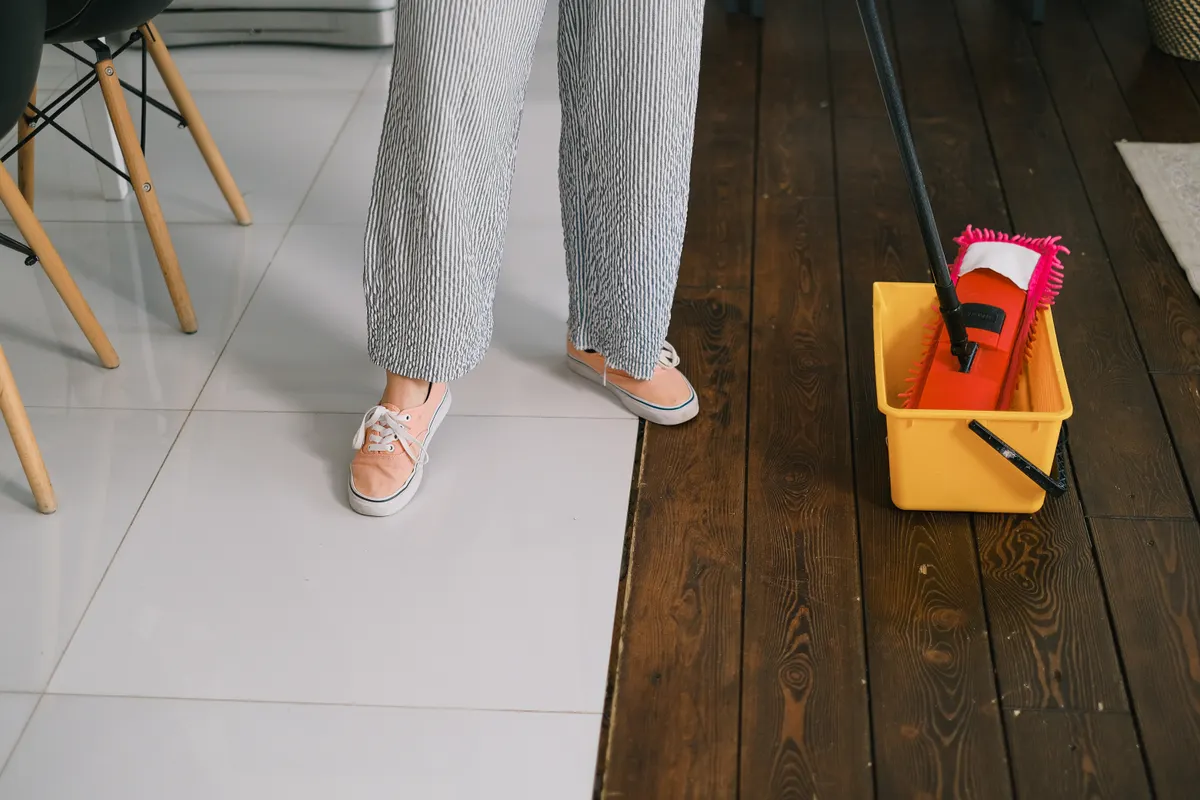
Photo Credit: SHVETS production
Why the Same Kitchen Problem Keeps Coming Back
If a kitchen cleaning problem returns again and again, something in the routine is not addressing the root cause. A few patterns show up repeatedly:
- The product is being rinsed off but the residue is not. Many all-purpose cleaners leave a light film if they are not wiped with a clean, damp cloth afterward. That film attracts dust and grease faster than a bare surface would.
- The cleaning cloth or sponge is doing the redepositing. A greasy sponge wiped across a counter just moves the grease around instead of removing it. Rinse cleaning tools thoroughly, and replace sponges regularly.
- Hard water is being mistaken for dirt. Cloudy glass, spotty stainless steel, and chalky buildup near the faucet are usually mineral deposits, not grime. These respond to a different approach than food residue does.
- The wrong dilution is being used. Too little product will not cut grease. Too much product can leave a sticky residue that makes surfaces look dirty faster.
- The cause is airborne, not surface-level. Cooking oil, steam, and food particles travel through the air and settle on cabinets, walls, and even ceiling areas near the stove. Wiping the counter alone will not stop that buildup from returning.
Once the actual cause is identified, most recurring problems can be solved with a small change in method rather than more frequent cleaning.
How to Troubleshoot a Kitchen Cleaning Problem Step by Step
When something is not coming clean, working through it methodically saves time and protects your surfaces.
- Stop and look at the surface material. Stainless steel, laminate, stone, glass, and painted wood all react differently to acids, abrasives, and heat. If you are not sure what a countertop or cabinet finish is, choose the gentlest method available (warm water and mild dish soap) until you can confirm the material.
- Identify what type of residue you are dealing with. Grease needs a degreaser or dish soap. Water spots need a mild acid like diluted white vinegar (never on natural stone). Burnt food needs soaking and gentle lifting, not aggressive scraping.
- Try the mildest method first. Warm water and dish soap solve more kitchen problems than people expect. Escalate to a stronger product only if this does not work.
- Give the product time to work. Most cleaners need a few minutes of contact time on grease or residue before wiping. Wiping immediately after spraying often just moves the mess around.
- Check the result before repeating. If a method has made no visible improvement after two attempts, stop. Repeating an ineffective method usually means you are using the wrong approach, not that you need more force.
- Know when to stop trying DIY fixes. If a surface is scratching, discoloring, or reacting unexpectedly, stop immediately and rinse the area with plain water.
For questions about whether a specific product is safe on a specific surface, our Can I Clean X With Y? Kitchen Edition FAQ covers dozens of exact product-and-surface combinations in more detail than a general troubleshooting guide can.
Photo Credit: RDNE Stock project
Common Mistakes to Avoid When Cleaning the Kitchen
Some of the most common kitchen cleaning problems are self-inflicted, usually from good intentions applied the wrong way. Watch for these:
- Mixing bleach with ammonia, vinegar, or other acidic cleaners. This combination can release dangerous fumes and should never be attempted, even accidentally. Check labels carefully, since some all-purpose cleaners already contain ammonia.
- Using abrasive scrub pads on nonstick, stainless steel, or glass cooktops. These can scratch the finish permanently, even if the scratches are not visible right away.
- Soaking electrical appliance parts that are not meant to get wet. Toaster interiors, the base of a stand mixer, and microwave control panels should never be submerged.
- Using too much cleaning product. More product does not mean a cleaner result. It often means more residue left behind, which then attracts more dirt.
- Cleaning a hot stovetop or oven immediately after cooking. Some materials, especially glass cooktops, are more prone to cracking or clouding when cleaned while still hot.
- Ignoring the manufacturer's care instructions on appliances and countertops. A method that works well on laminate may damage quartz, and a method safe for stainless steel can dull a matte black finish.
- Skipping ventilation when using strong-smelling products. Open a window or turn on the range hood any time you are using a chemical cleaner, disinfectant, or degreaser.
If your kitchen troubles are less about grime and more about clutter and workflow, our Kitchen Organization Questions & Troubleshooting guide covers a related set of everyday problems that often get mistaken for cleaning issues.
How Often Should You Deep Clean Your Kitchen?
Daily wiping keeps a kitchen looking presentable, but it is not the same as a deep clean. A full deep clean reaches areas that routine wiping skips, like behind appliances, inside the refrigerator, and along cabinet tops.
|
Task |
Suggested Frequency |
|
Wipe counters and stovetop |
Daily |
|
Clean sink and empty trash |
Daily |
|
Wipe down appliance exteriors |
Weekly |
|
Clean inside the microwave |
Weekly |
|
Clean the refrigerator interior |
Monthly |
|
Deep clean the oven |
Every 1 to 3 months, depending on use |
|
Clean behind and under appliances |
Every 3 to 6 months |
|
Full kitchen deep clean (all zones) |
Every 1 to 3 months |
These are general starting points, not fixed rules. A household that cooks daily with oil-heavy meals will need more frequent degreasing than one that cooks lightly. For a complete breakdown by kitchen zone, see How Often Should I Deep Clean My Kitchen?
A full deep clean of an average kitchen, counters, sink, stovetop, cabinet fronts, floor, and a quick appliance wipe, typically takes between one and two hours. Add extra time if the oven or refrigerator has not been cleaned in several months.

Photo Credit: Sarah Chai
When to Stop DIY Cleaning and Call a Professional
Most kitchen cleaning problems are solvable at home, but a few situations call for professional help instead of another round of scrubbing:
- A persistent odor that does not improve after cleaning and checking common sources (drain, disposal, trash area, refrigerator seals) may point to a plumbing issue or something out of sight.
- Mold behind or under appliances should be evaluated carefully, since larger mold growth or a hidden moisture source may need professional attention rather than a surface wipe.
- Appliance malfunctions, such as a dishwasher that will not drain or an oven that will not heat evenly, are mechanical issues, not cleaning issues, and should go to a qualified technician.
- Any smell of gas near a gas range or oven is not a cleaning problem. Turn off the appliance if it is safe to do so, ventilate the area, and contact your gas provider or a professional immediately.
- Stone or specialty countertops with etching, staining, or dulling that does not respond to gentle cleaning may need a professional refinishing service rather than a stronger DIY product.
If you are ever unsure whether a stain, smell, or surface issue is a simple cleaning task or something more serious, it is reasonable to pause and get an informed opinion before applying more product or more pressure.
Frequently Asked Kitchen Cleaning Questions
What are the most common problems with the kitchen?
The most common issues are grease buildup on the stovetop and cabinets, lingering odors from the sink or trash, cloudy dishes from hard water, and sticky counters caused by leftover cleaner residue rather than actual dirt.
Why does the kitchen keep causing the same problem?
Recurring problems usually mean the root cause was never addressed. Leftover cleaner film, a dirty cleaning cloth, hard water minerals, or airborne cooking grease are common reasons a fix does not last.
What is the safest way to troubleshoot the kitchen?
Start by identifying the surface material and the type of mess, then use the mildest effective method first. Warm water and mild dish soap solve a large share of kitchen problems without any risk of damage.
When should you stop DIY work on the kitchen and call a professional?
Stop if you smell gas, notice significant mold growth, see an appliance malfunctioning mechanically, or find that a countertop is etching or discoloring despite gentle cleaning. These situations go beyond routine cleaning.
What common mistakes should you avoid with the kitchen?
Avoid mixing bleach with ammonia or acidic cleaners, using abrasive pads on delicate finishes, soaking electrical appliance parts, using excess product, and skipping ventilation when using strong cleaners.
When should you seek professional help with the kitchen?
Seek professional help for anything involving gas appliances, persistent mold, appliance mechanical failures, or surface damage that does not improve with gentle, appropriate cleaning methods.
A Quick Note on Safety
Some of the situations above involve cleaning chemicals, appliance components, or surfaces that can be damaged by the wrong product. Always follow the manufacturer's instructions for your specific appliance or countertop material, since these take priority over general guidance. Never mix bleach with ammonia, vinegar, or other acidic products, and always ventilate the kitchen when using strong-smelling cleaners. If you are unsure about a surface, a persistent odor, or an appliance issue, it is worth pausing and getting professional input rather than guessing.
For more detailed, task-specific instructions, check out the full kitchen cleaning guide and find the section that matches what you are working on.





Leave a Reply