

Your kitchen sink handles more daily wear than almost any other spot in the house. Food scraps, grease, standing water, and constant hand contact all add up fast. A proper kitchen sink cleaning routine keeps grime, water spots, and bacteria from building up, and it protects the finish on both the basin and the faucet so they last longer.
This guide walks through a full clean from start to finish, explains how sink material and faucet finish change your approach, and covers the mistakes that quietly damage fixtures over time. For a broader view of how this task fits into your weekly routine, head Back to the complete kitchen cleaning guide.
Quick answer: The best way to clean a kitchen sink and faucet is to clear the basin, rinse away loose debris, scrub with a cleaner suited to your sink material, rinse and dry the basin, then wipe the faucet with a soft cloth and a mild cleaner matched to its finish. Finishing with a dry cloth prevents water spots and keeps stainless steel and chrome looking streak free.
How Often Should You Clean Your Kitchen Sink and Faucet?
A kitchen sink gets used dozens of times a day, so it needs more frequent attention than most surfaces in the kitchen. A simple rhythm works better than an occasional deep scrub.
- Daily: Rinse the basin after use and wipe down the faucet handle and spout with a damp cloth. This takes less than two minutes and prevents food residue and water spots from setting in.
- 2 to 3 times a week: Give the sink a light scrub with soap and water, focusing on the drain area and any spots where dishes tend to sit.
- Weekly: Do a full clean, including the basin, faucet, drain, and any surrounding backsplash splatter.
- Monthly: Disinfect the drain and garbage disposal, and check for mineral buildup around the faucet base.
If your household cooks often, has hard water, or uses the sink to wash raw meat or produce, lean toward the more frequent end of that range.
What You'll Need for a Full Kitchen Sink and Faucet Clean (Checklist)
Having the right supplies ready before you start makes the process faster and prevents you from reaching for something that could damage your sink material. This kitchen sink and faucet cleaning checklist covers what most households already have on hand.
- Dish soap (mild, non-abrasive)
- Baking soda
- White vinegar (used carefully, see the section below)
- A soft microfiber cloth or two
- A non-scratch scrub sponge
- An old soft-bristled toothbrush for tight spots
- Rubber gloves
- A dry towel for buffing
You likely won't need every item for every clean. Daily maintenance only needs soap, water, and a cloth. The full list matters more for the weekly deep clean.
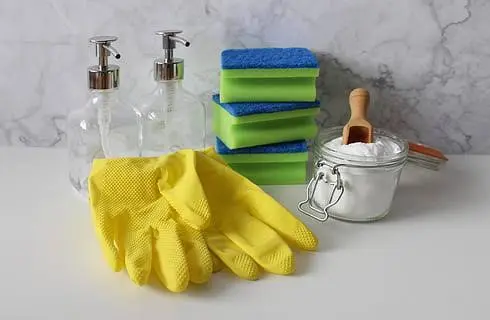
Photo Credit: Internet
How to Clean Your Kitchen Sink and Faucet Step by Step
This is the core routine for a full clean. For most kitchens, the whole process takes 15 to 25 minutes, depending on how much buildup you're dealing with and how detailed you get around the drain and faucet base. If this is your first time doing a proper kitchen sink and faucet cleaning routine, follow these steps in order rather than skipping ahead.
- Clear the sink. Remove dishes, food scraps, and any items sitting in the basin. Run warm water to flush loose debris toward the drain.
- Wet the surface and apply soap. Use a small amount of dish soap on a damp non-scratch sponge and work it across the entire basin, including the sides and around the drain opening.
- Sprinkle baking soda on stubborn spots. For dried-on food or dull, hazy areas, sprinkle a little baking soda directly onto the damp surface and scrub gently with the sponge. Baking soda is mildly abrasive, so use light pressure rather than heavy scrubbing.
- Scrub the drain area with a toothbrush. The rim around the drain and the flange (the ring where the drain meets the basin) collects the most grime. A soft-bristled brush reaches into that gap without scratching the surrounding metal or ceramic.
- Rinse thoroughly. Run warm water over the entire basin until all soap and baking soda residue is gone. Leftover residue can leave a dull film once it dries.
- Dry the basin with a towel. This step matters more than people expect. Air-drying allows water spots and mineral deposits to form, especially in hard water areas. A quick towel dry keeps the surface looking clean longer.
- Clean the faucet separately. Wipe the entire faucet body, spout, and handles with a soft cloth dampened with mild soapy water. Pay attention to the base of the faucet where it meets the counter or sink deck, since grime collects there.
- Buff the faucet dry. Use a dry microfiber cloth to remove any remaining moisture. This step prevents water spots on chrome and stainless finishes and keeps matte finishes from developing streaks.
Once you've done this routine a few times, it becomes muscle memory. The order matters because working from soap application to rinsing to drying prevents streaks and keeps you from re-wetting a surface you just dried. If you're pressed for time, steps 1, 2, 5, and 6 alone will handle most everyday grime, while the toothbrush and baking soda steps are best saved for the weekly deep clean.
Cleaning by Sink Material
Not every sink responds the same way to the same products. What works beautifully on stainless steel can dull a ceramic finish, and what's safe on porcelain can scratch a composite granite sink. Knowing your sink material before you scrub prevents avoidable damage.
Stainless Steel Sinks
Stainless steel is the most common kitchen sink material, and it's fairly forgiving, but it can still scratch, streak, or develop dull spots if the wrong tools are used. Always scrub in the direction of the grain (the faint brushed lines you can see on the surface) rather than in circles, since circular scrubbing can create visible swirl marks. Avoid steel wool and abrasive scouring powders, which can scratch the surface permanently.
For a complete breakdown of products, polishing methods, and how to handle water spots or light rust on this material, see our full Stainless Steel Sink Cleaning guide.
Porcelain & Ceramic Sinks
Porcelain and ceramic sinks have a glossy, glass-like coating that looks great but shows scratches and staining more easily than stainless steel. Non-abrasive cleaners and soft sponges are essential here. Harsh scouring pads can dull the glaze over time, and abrasive powders can leave fine scratches that trap dirt and make the sink look permanently gray.
For material-specific stain removal, chip prevention, and safe whitening methods, see our dedicated Porcelain & Ceramic Sink Cleaning guide.
Composite and Granite Sinks
Composite sinks (made from a blend of granite or quartz particles and resin) are durable but can dull if exposed to strong acids or abrasive cleaners over time. Stick to mild dish soap and a soft sponge for regular cleaning, and rinse and dry the surface after each use to prevent mineral buildup from creating a chalky film. Manufacturer care instructions vary by brand, so check the documentation that came with the sink before using any specialty cleaner.
Cleaning Different Faucet Finishes
Faucets come in a wider range of finishes than sinks do, and each one has its own sensitivities. Using the wrong cleaner on a finish can strip its coating, dull its shine, or leave permanent spotting.

Photo Credit: Internet
Chrome and stainless faucets are the most tolerant of everyday cleaners and can generally handle a light vinegar solution for mineral deposits. Brushed nickel and matte black finishes are more delicate: abrasive scrubbing or strong acidic cleaners can wear away the coating and expose the metal underneath, leaving a patchy appearance that can't be reversed. Brass and bronze finishes, especially "living" finishes that are meant to change with age, should be cleaned with plain soap and water only, since chemical cleaners can strip the protective coating unevenly.
|
Faucet Finish |
Safe for Vinegar Soak |
Best Cleaner |
Special Care |
|
Chrome |
Yes, short soak |
Mild soap or diluted vinegar |
Dry immediately to prevent spotting |
|
Stainless Steel |
Yes, short soak |
Mild soap |
Wipe with the grain |
|
Brushed Nickel |
Avoid prolonged soaking |
Mild soap and soft cloth |
Never use abrasive pads |
|
Matte Black |
No |
Mild soap and soft cloth only |
Avoid vinegar and bleach, which can dull the coating |
|
Brass/Bronze |
No |
Plain soap and water |
Avoid all acidic cleaners |
If you're unsure of your faucet's finish, check the manufacturer's care instructions first. Many faucet brands include cleaning guidance in the installation manual or on their website, and that information should take priority over general advice when the two conflict.
Products That Are Safe (and Ones to Avoid)
Most everyday kitchen sink cleaning doesn't require anything beyond dish soap, baking soda, and water. These are safe for nearly every sink material and faucet finish, and they're gentle enough for daily use.
Generally safe:
- Mild dish soap
- Baking soda (light abrasive, safe for most surfaces in moderation)
- Diluted white vinegar (fine for stainless steel and porcelain, but avoid on natural stone, matte black finishes, and brass)
- Isopropyl alcohol on a cloth for disinfecting faucet handles
Avoid or use with caution:
- Steel wool and abrasive scouring pads: These scratch stainless steel, porcelain, and composite surfaces.
- Bleach on composite or natural stone sinks: It can discolor or weaken the surface over time. Always check manufacturer guidance first.
- Undiluted vinegar on stone, matte finishes, or brass: The acidity can etch or strip the coating.
- Bar Keepers Friend or similar acidic cleaners on matte black faucets: These can dull the finish permanently.
A safety note worth repeating: never mix bleach with ammonia, vinegar, or other acidic cleaners. Combining bleach with an acid produces toxic chlorine gas, and combining it with ammonia produces chloramine vapors, both of which are dangerous to breathe. If you use bleach anywhere near the sink, rinse the area thoroughly before switching to a different product.
Common Mistakes to Avoid
Even a well-meaning cleaning routine can slowly damage a sink or faucet if a few habits go unchecked. Here's what tends to cause the most harm over time.
- Letting the sink air-dry instead of towel-drying it. This leads to water spots and mineral film, especially in hard water areas.
- Using the wrong cleaner for the finish. Acidic or abrasive products can strip protective coatings on matte black, brushed nickel, and composite surfaces.
- Scrubbing stainless steel in circles instead of with the grain. This creates visible scratch patterns that catch the light.
- Leaving standing water in the basin overnight. This encourages mineral buildup and, in porcelain sinks, can contribute to staining.
- Skipping the drain and faucet base during regular cleaning. These spots collect grime fastest and are often the last places people think to clean.
- Mixing cleaning products without checking compatibility. Combining the wrong chemicals, especially bleach with vinegar or ammonia, creates a genuine safety hazard.
How to Clean Without Damaging Your Sink or Faucet
Avoiding damage mostly comes down to matching the cleaner to the material and using the least abrasive method that actually gets the job done. Start with the gentlest option, mild soap and a soft sponge, and only move to something stronger, like baking soda or a diluted vinegar solution, if that doesn't clear the buildup. Always test a new product on a small, hidden area first, such as the back corner of the basin, before applying it across the whole sink. This is especially important with composite sinks, natural stone, and colored or matte faucet finishes, since damage on these materials often can't be reversed.
Rinsing and drying after every clean also protects the finish long term. Mineral deposits and soap film are far easier to prevent than to remove once they've bonded to the surface, particularly on porcelain and composite materials.

Photo Credit: Internet
A Simple Maintenance Routine to Keep It Clean Longer
Prevention saves far more time than deep cleaning does. A few small habits keep your sink and faucet looking fresh between full cleans:
- Wipe down the basin and faucet after each use, especially after cooking with oil or sauce.
- Keep a small dish or caddy for sponges and soap so they don't sit directly on the sink surface, which can trap moisture underneath.
- Run the garbage disposal with cold water after use to help flush food particles.
- Dry the faucet after washing dishes to prevent water spots from setting.
- Do a full clean weekly rather than letting buildup accumulate for a month.
Frequently Asked Questions
What is the best way to clean kitchen sink and faucet? Clear the basin, scrub with a cleaner suited to your sink material, rinse thoroughly, then dry both the basin and faucet with a towel. Cleaning the faucet separately with a soft cloth prevents cross-contamination of cleaners between different finishes.
How often should you clean kitchen sink and faucet? Wipe daily, do a light scrub two to three times a week, and complete a full clean weekly. Disinfect the drain monthly, or more often if your household handles raw meat frequently.
What cleaning products are safe for kitchen sink and faucet? Mild dish soap and baking soda are safe for nearly all sink materials and faucet finishes. Diluted vinegar works well on stainless steel and porcelain but should be avoided on natural stone, matte black, and brass finishes.
What should you avoid when cleaning kitchen sink and faucet? Avoid steel wool, abrasive scouring powders, undiluted vinegar on delicate finishes, and mixing bleach with acidic or ammonia-based products. These combinations and tools risk permanent scratching, staining, or hazardous fumes.
How can you clean kitchen sink and faucet without damaging them? Match the cleaner to the material, start with the gentlest option first, test new products in a hidden spot, and always dry the surface after rinsing to prevent mineral buildup and water spots.
What common mistakes should you avoid with kitchen sink and faucet? The biggest ones are air-drying instead of towel-drying, using acidic cleaners on delicate faucet finishes, scrubbing stainless steel against the grain, and neglecting the drain area during regular cleaning.
A Quick Safety Note
Some steps in this guide involve baking soda, vinegar, and general household cleaners. These are low-risk when used as described, but a few precautions are worth keeping in mind. Never mix bleach with vinegar, ammonia, or other acidic products, since this can release hazardous fumes. Always check the manufacturer's care instructions for your specific sink material and faucet finish, since those instructions take priority over general guidance when they differ. Work in a ventilated space when using any stronger cleaning product, and test unfamiliar cleaners on a small, hidden area before applying them to the full surface.
A clean sink and faucet don't require anything complicated, just the right products, a little consistency, and attention to the material you're working with. For more tasks that keep the rest of your kitchen in shape, see the full kitchen cleaning guide.





Leave a Reply