

A bathroom rarely gets dirty all at once. It builds slowly, a little soap scum here, a ring around the sink there, until one day the whole room needs a deep clean just to feel normal again. A solid bathroom cleaning schedule prevents that slow buildup by breaking the work into small, manageable pieces done at the right frequency, instead of leaving everything for one long weekend session.
Bathrooms need this kind of routine more than most rooms in the house because of moisture. Water on the floor, steam on the mirror, and dampness in the grout create conditions that other rooms simply don't deal with daily. Left unmanaged, that moisture turns into mildew, hard water spots, and soap scum that only get harder to remove the longer they sit. A schedule built around that moisture, rather than a generic once-a-week wipe-down, tends to hold up much better over time.
This guide breaks down a practical bathroom cleaning routine into daily, weekly, and monthly tasks, explains what order to do them in, and covers how to build a schedule that actually holds up over time. If you want the broader picture of bathroom care beyond scheduling, you can go Back to the complete bathroom cleaning guide.
How to Build a Practical Bathroom Cleaning Routine
The most workable bathroom routines follow a simple structure: quick daily resets, a more thorough weekly clean, and occasional monthly or seasonal deep-cleaning tasks. In short:
- Daily: Quick wipe-downs and drying to stop moisture and grime before they set
- Weekly: Full cleaning of toilet, sink, tub or shower, mirror, and floor
- Monthly: Deeper tasks like grout cleaning, descaling, and exhaust fan maintenance
This structure works because it matches effort to how fast each type of buildup actually happens. Water spots and hair on the counter accumulate daily, so they need daily attention. Soap scum and toilet grime build more slowly, so a weekly clean handles them well. Mineral deposits inside a showerhead or mold in a grout line take longer to develop, which is why those tasks fit a monthly rhythm instead.
Trying to collapse all three levels into one big weekly session usually backfires. The daily moisture issues still build up between cleanings, and the monthly tasks either get squeezed in awkwardly or skipped altogether because there's never quite enough time in a single weekly block.
How Often Should You Reset the Bathroom
"How often" depends partly on how many people use the bathroom and how much moisture the room holds onto after each use. A single-person bathroom with good ventilation can sometimes stretch these intervals slightly, while a shared family bathroom, especially one without a working exhaust fan, usually needs the weekly tasks handled closer to twice a week.
As a general guide:
|
Frequency |
Best For |
|
Daily |
High-traffic bathrooms, bathrooms with poor ventilation, households prone to hard water spots |
|
Weekly |
Most standard household bathrooms |
|
Twice weekly |
Bathrooms used by three or more people daily |
|
Monthly |
Deep tasks not needed on a weekly basis, regardless of household size |
The goal isn't to clean constantly. It's to catch moisture-related buildup, soap scum, and grime before they need more aggressive scrubbing or stronger products to remove. A bathroom that's reset daily and cleaned weekly rarely needs an emergency deep clean, since nothing has the chance to build up past the point a normal routine can handle.
Daily Bathroom Tasks
Daily tasks are short by design, usually five minutes or less, and they focus almost entirely on managing moisture before it turns into a bigger problem.
A useful daily routine includes:
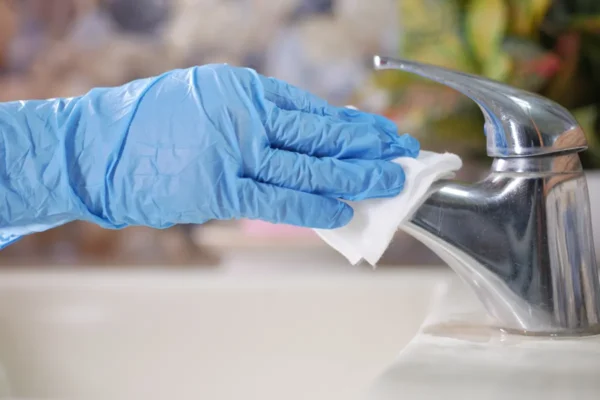
- Wipe down the sink and counter after use, especially toothpaste splatter and standing water.
- Squeegee the shower glass or tile right after a shower, while the water hasn't had time to dry into spots.
- Hang the towel and bath mat to dry fully instead of leaving them bunched or damp on the floor.
- Run the exhaust fan during and for a while after a shower to clear humidity from the room.
- Wipe the toilet seat and rim quickly if visibly needed.
None of these steps take long, but skipping them regularly is usually what leads to a bathroom that feels like it needs a deep clean every single week. For the fuller daily breakdown, including which tasks matter most in humid climates, see the Daily Bathroom Cleaning Checklist.
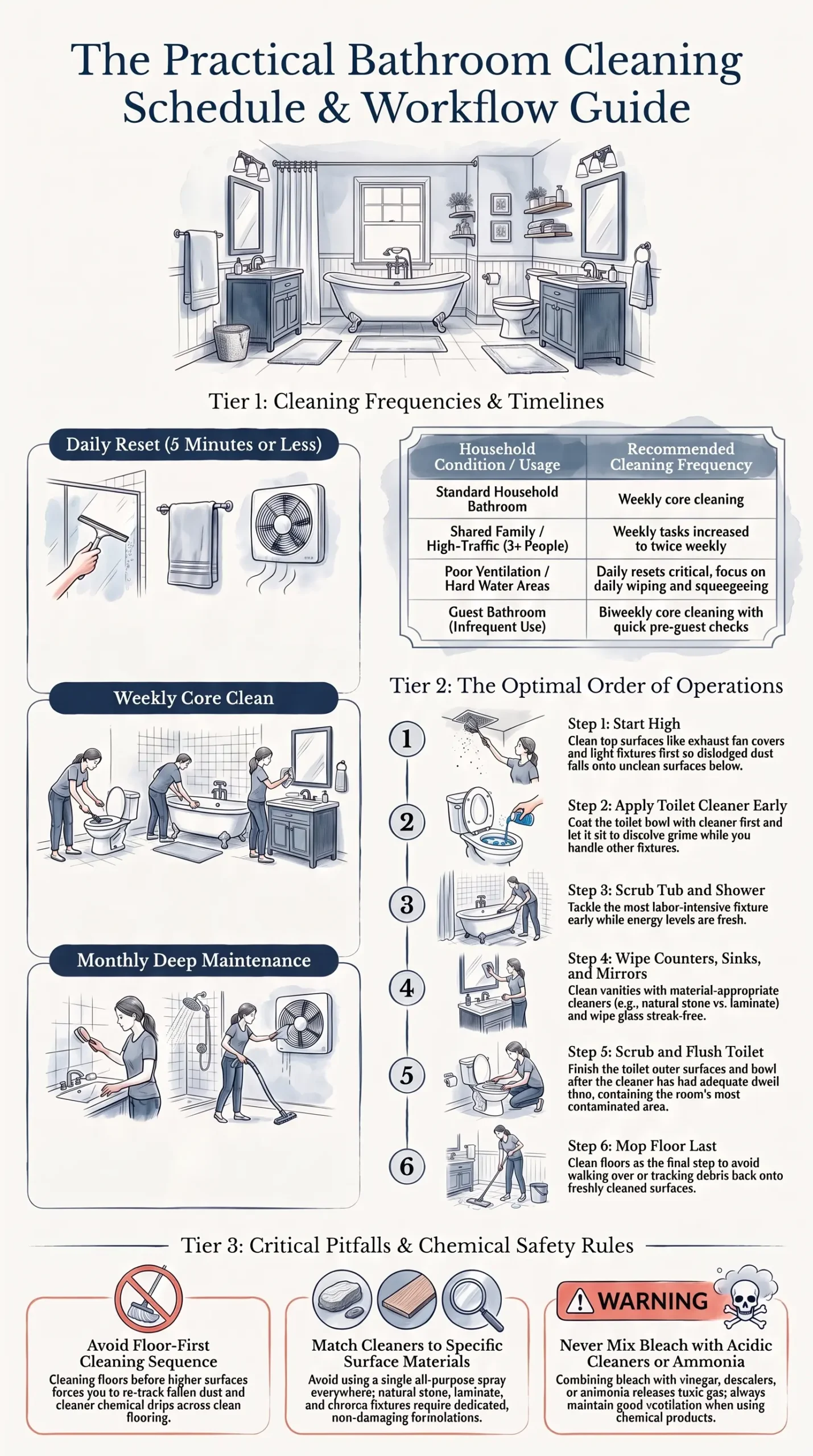
Photo Credit: Hobby Guidebook Editorial
Weekly Bathroom Tasks
The weekly clean is where most of the actual scrubbing happens. This is the session that keeps the bathroom genuinely clean, not just tidy.
A standard weekly routine covers:
- Clean the toilet inside and out, using a toilet bowl cleaner for the bowl and a general cleaner for the seat, lid, and base.
- Scrub the tub or shower, focusing on soap scum buildup along walls, corners, and around the drain.
- Wipe down the sink, counter, and vanity, checking the surface material before choosing a cleaner, since natural stone needs a different product than laminate.
- Clean the mirror and glass with a streak-free glass cleaner.
- Mop or clean the floor, paying particular attention to corners and around the base of the toilet.
- Wash bath mats and shower curtain liners on a rotating basis, since both hold onto moisture and can develop mildew if left too long between washes.
Doing these tasks in a consistent order each week, rather than jumping between fixtures, tends to save time and avoid missed spots. For the complete weekly checklist with more detail on each step, see the Weekly Bathroom Cleaning Checklist.
A Sample Weekly Schedule Spread Across the Week
Some households prefer splitting the weekly tasks across several short sessions rather than tackling everything in one sitting. This works especially well for anyone short on time or cleaning a bathroom alone.
|
Day |
Task |
|
Monday |
Clean toilet, apply cleaner and let it sit while wiping the sink |
|
Wednesday |
Scrub tub or shower, wipe down glass |
|
Friday |
Mop floor, clean mirror, quick surface wipe-down |
|
Weekend |
Wash bath mats and shower curtain liner, quick overall check |
This isn't the only way to split the week, and some households genuinely prefer one longer session over several short ones. The point of spreading tasks out is simply to make the routine easier to stick with, not to add complexity to something that could otherwise be done in one sitting.
Monthly and Occasional Bathroom Tasks
Some bathroom tasks don't need weekly attention, but skipping them for too long lets buildup become a much bigger job later.
Monthly or seasonal tasks generally include:
- Deep cleaning grout lines, using a grout brush and a mild cleaner or baking soda paste for buildup that a weekly wipe doesn't fully remove.
- Descaling the showerhead and faucets, using a descaling cleaner appropriate for the fixture's finish, since hard water minerals accumulate gradually and are easier to remove before they harden further.
- Cleaning the exhaust fan cover, since dust buildup on the cover reduces how well the fan actually clears moisture from the room.
- Wiping down cabinet interiors, checking for any leaks, spills, or expired products while you're in there.
- Washing the shower curtain (fabric versions) or giving a vinyl liner a more thorough clean than the weekly wipe-down provides.
Skipping these monthly tasks doesn't usually create an immediate problem, but a grout line that goes unaddressed for several months, or a showerhead that's never descaled, both take noticeably more effort to bring back once buildup has had time to set. Setting a recurring reminder, whether on a phone calendar or a paper checklist taped inside a cabinet, is a simple way to keep these less frequent tasks from slipping past unnoticed.
What Order Should Bathroom Cleaning Tasks Follow
Order matters more than it might seem, mostly because working top to bottom and dirtiest to cleanest prevents redoing work you already finished.
A practical sequence looks like this:
- Start with the highest surfaces, like the exhaust fan cover or light fixtures, so any dust falls downward before you clean lower surfaces.
- Apply cleaner to the toilet first and let it sit while you clean other areas, since most toilet cleaners need a few minutes of contact time to work.
- Clean the tub or shower next, since this is usually the most time-consuming task and benefits from doing it while your energy is fresh.
- Wipe the sink and counter, then move to the mirror and glass.
- Scrub and flush the toilet last among the fixtures, since it's the most contaminated surface in the room.
- Finish with the floor, mopping last so you're not walking over a clean floor while finishing other tasks.
This order isn't a rigid rule, but it reflects a logical flow that avoids the common mistake of cleaning the floor first and then tracking dust or cleaner residue back onto it while finishing the rest of the room.

Photo Credit: Castorly Stock
How to Make a Bathroom Routine Easier to Maintain
A schedule only works if it's realistic enough to actually follow. A few habits make that more likely.
Keep supplies within reach. A caddy or bin under the sink with the core cleaning kit means there's no delay between deciding to clean and actually starting. Digging through a cluttered cabinet for a toilet brush is a small friction point that adds up over time.
Attach tasks to existing habits. Wiping the sink after brushing your teeth or squeegeeing the shower right after stepping out takes seconds and prevents the task from ever becoming a separate chore on its own.
Split weekly cleaning into smaller sessions if a full session feels like too much at once. Cleaning the toilet and sink one day, then the tub and floor another, still covers the same ground without requiring one long block of time.
Involve the household, particularly in a home with multiple people sharing the bathroom. A quick daily reset takes far less resentment to maintain when it's not falling on one person every time.
Set a visible reminder for monthly tasks. These are the ones most likely to be forgotten simply because they aren't part of the weekly rhythm. A note on the calendar, or pairing the task with another monthly habit like changing an air filter, helps it actually happen.
Revisit the schedule occasionally. A routine built for one person living alone won't hold up the same way once more people are using the same bathroom daily, so checking in on whether the current schedule still fits is worth doing every few months.
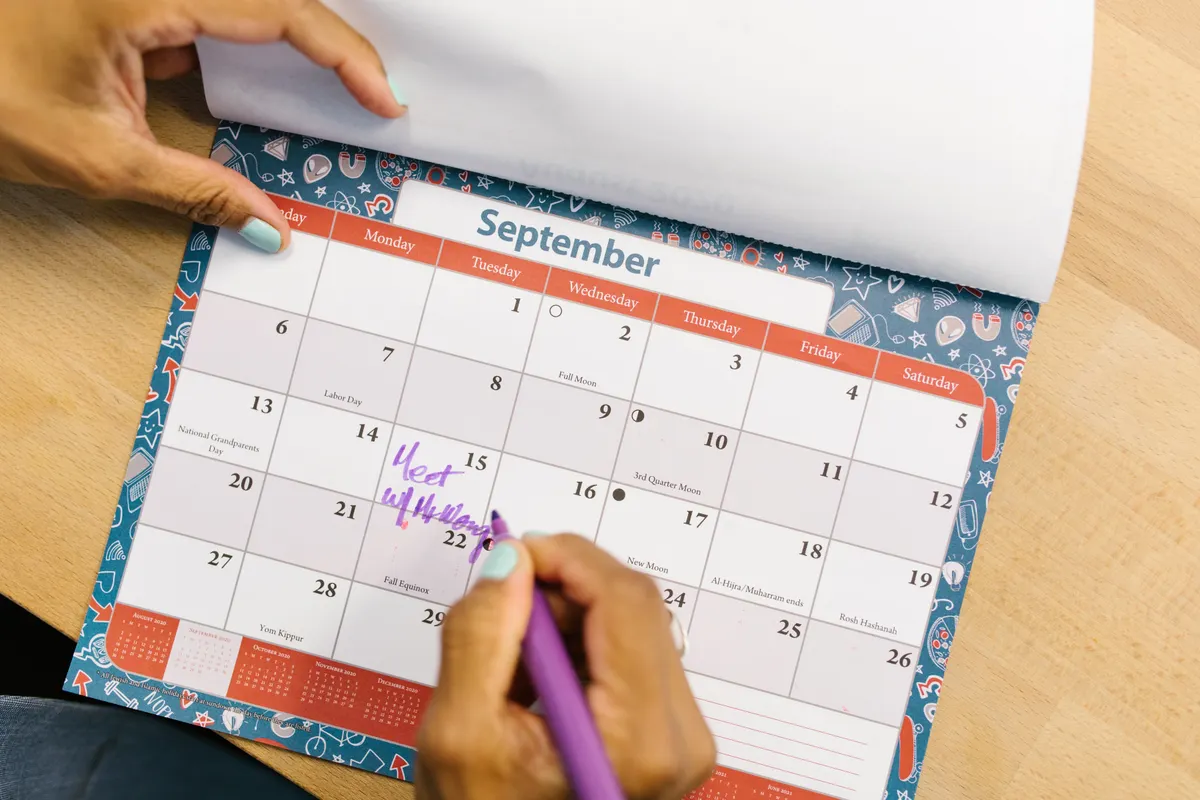
Photo Credit: RDNE Stock project
Adjusting the Schedule for Your Household
Not every bathroom needs the exact same schedule. A few situations call for adjusting the general guidance above:
- Hard water areas benefit from more frequent wiping of glass, chrome, and fixtures, since mineral spots set faster in hard water than in soft water.
- Poor ventilation (no window, weak or missing exhaust fan) generally means daily tasks matter more, since moisture has fewer ways to leave the room on its own.
- Multiple daily users often need weekly tasks bumped to twice a week, particularly the tub or shower and the floor.
- Guest bathrooms used infrequently can usually stretch weekly tasks to biweekly, since less use means less buildup, though a quick check before guests arrive is still worth doing.
- Bathrooms attached to a bedroom (en suites) sometimes get overlooked in a household's rotation simply because they're less visible to guests. Keeping them on the same schedule as a main bathroom, rather than an afterthought, prevents buildup that's easy to miss day to day.
There's no single "correct" schedule that fits every bathroom. The frequencies above are a reasonable starting point, adjusted based on how the room is actually used.
Common Mistakes to Avoid With a Bathroom Routine
A few habits tend to undo an otherwise reasonable bathroom cleaning schedule.
- Skipping daily tasks entirely and relying only on the weekly clean. This is usually what turns a five-minute weekly job into a much longer one, since moisture-related buildup compounds fast in a bathroom.
- Cleaning the floor before other surfaces, which means re-tracking dust and cleaner residue onto a floor that's already been done.
- Using one all-purpose cleaner on every surface without checking whether it's appropriate for stone, laminate, or specific fixture finishes.
- Letting monthly tasks slide indefinitely. Grout, showerheads, and exhaust fans that go unaddressed for many months take considerably more effort to bring back to a clean state.
- Building an unrealistic schedule. A daily routine that takes twenty minutes rarely survives more than a couple of weeks; shorter, more consistent tasks tend to hold up better long term.
Frequently Asked Questions
How should you build a practical routine for the bathroom? Split tasks into daily resets, a thorough weekly clean, and monthly deep-cleaning tasks, matching the frequency to how fast each type of buildup actually happens.
How often should you do or reset the bathroom? Most bathrooms need daily quick wipe-downs, a full weekly clean, and monthly attention to grout, showerheads, and exhaust fans. Heavily used or poorly ventilated bathrooms may need weekly tasks done twice a week.
What should be done daily, weekly, and monthly for the bathroom? Daily tasks focus on managing moisture (wiping surfaces, squeegeeing glass, running the fan). Weekly tasks cover full cleaning of the toilet, tub, sink, and floor. Monthly tasks include grout cleaning, descaling, and exhaust fan maintenance.
What order should the tasks follow for the bathroom? Work top to bottom and dirtiest to cleanest: start high surfaces first, apply toilet cleaner early to let it sit, clean the tub or shower, then sink and mirror, then finish with the toilet and floor.
How do you make bathroom routines easier to maintain? Keep supplies within reach, attach quick tasks to existing habits, split weekly cleaning into smaller sessions if needed, and involve everyone who uses the bathroom.
What common mistakes should you avoid with the bathroom? Avoid skipping daily resets, cleaning the floor too early in the process, using one cleaner on every surface, letting monthly tasks slide, and setting an unrealistic daily routine that's hard to sustain.
For more detailed checklists, product guidance, and troubleshooting beyond scheduling, Check out the full bathroom cleaning guide.
A Quick Note on Safety
Some tasks in this routine, like descaling fixtures or deep cleaning grout, may involve acidic cleaners or bleach-based products. Always follow the manufacturer's label for use, contact time, and ventilation. Never combine bleach with ammonia, vinegar, or other acidic cleaners, since this can release harmful fumes. Make sure the bathroom has adequate airflow when using stronger products, and if mold or mildew keeps returning despite a consistent routine, it may point to a ventilation issue worth having checked professionally.



Leave a Reply