
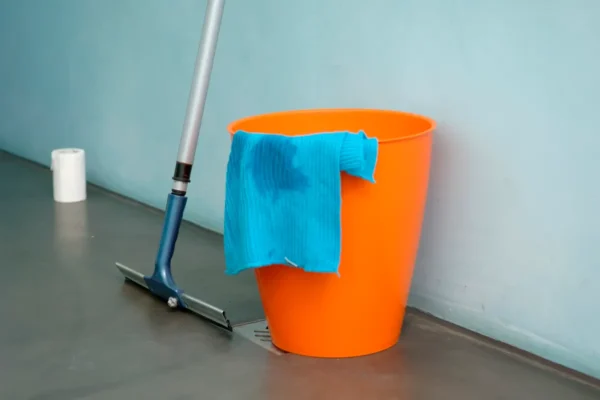
Most bathrooms don't need a cabinet full of products to stay clean. They need the right handful of tools and cleaners, chosen for the specific problems bathrooms deal with: soap scum, hard water spots, mildew, and grime that builds up fast in a small, damp space. Having the wrong supplies, or too many overlapping ones, usually just means more clutter under the sink and no clearer sense of what to actually reach for when it's time to clean.
Bathrooms are also unlike most other rooms in the house because of moisture. A kitchen counter dries quickly after wiping, but a shower wall or grout line can stay damp for hours, which is exactly the environment mold and mildew need to take hold. That's part of why bathroom cleaning supplies often include products, like mold-specific cleaners and descalers, that other rooms rarely need at all.
This guide covers the essential bathroom cleaning supplies worth keeping on hand, how to choose products that are safe for different bathroom surfaces, and what to keep under the bathroom sink so cleaning day doesn't turn into a search for the right bottle. If you want the full picture of bathroom care beyond tools and products, you can go Back to the complete bathroom cleaning guide.
What Tools and Supplies You Actually Need
A basic bathroom cleaning kit covers four jobs: scrubbing, wiping, disinfecting, and drying. At minimum, that means:
- A toilet brush and holder
- A scrub brush or sponge for tile, tub, and sink surfaces
- Microfiber cloths for wiping and buffing
- An all-purpose bathroom cleaner
- A glass or mirror cleaner
- Rubber gloves
Everything else, from grout brushes to squeegees to specialty descalers, is useful depending on your bathroom's specific problems, but this short list handles the core routine most homes need weekly. A single bathroom used by one or two people generally needs less product volume and fewer specialty items than a shared family bathroom, so it's worth building your kit around how the room is actually used rather than copying a generic list exactly.
Essential Bathroom Cleaning Supplies
Beyond the basic kit, a few more items make regular bathroom cleaning faster and more effective, especially for tackling the moisture-related buildup this room is prone to.
|
Supply |
Best Use |
Notes |
|
All-purpose bathroom cleaner |
Countertops, sink, tub, general surfaces |
Check the label for material compatibility before use on natural stone |
|
Toilet bowl cleaner |
Inside the toilet bowl |
Formulated for porcelain, not meant for other surfaces |
|
Glass and mirror cleaner |
Mirrors, shower glass, chrome fixtures |
A streak-free formula saves time on glass surfaces |
|
Mold and mildew cleaner |
Grout lines, caulk, shower corners |
Often bleach-based; ventilate the room well during use |
|
Descaling or hard water cleaner |
Faucets, showerheads, glass with mineral buildup |
Typically acidic; avoid on natural stone unless labeled safe |
|
Disinfecting wipes or spray |
High-touch surfaces like handles and light switches |
Useful for quick daily touch-ups between full cleans |
Not every bathroom needs every product on this list. A household without hard water, for example, may never need a descaling cleaner, while a bathroom with poor ventilation might rely on a mold-specific cleaner more often than most. Climate plays a role too: homes in humid regions tend to go through mold and mildew cleaners faster than homes in dry climates, simply because the air itself holds more moisture to begin with. For a longer, room-by-room breakdown of what to stock and how much of each product a typical bathroom actually goes through, see the full Essential Bathroom Cleaning Tool Checklist.
How to Choose Products That Are Appropriate for the Bathroom
Picking the right product comes down to matching the cleaner to the surface, not just grabbing whatever's labeled for bathrooms in general.
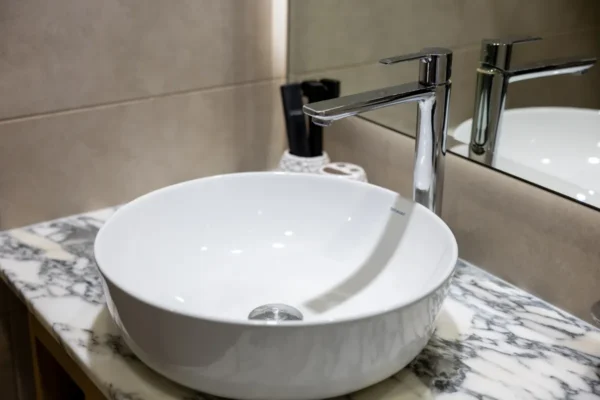
- Check the surface material first. Natural stone countertops, for instance, need a pH-neutral cleaner, since acidic products like vinegar or many descalers can etch or dull the finish over time.
- Read the label for intended use. A toilet bowl cleaner is formulated differently than an all-purpose cleaner, and using one in place of the other often means weaker results or unnecessary surface risk.
- Consider ventilation before choosing a stronger product. Bleach-based mold cleaners and some heavy-duty descalers release fumes that need airflow to clear safely, so a small bathroom without a window or working exhaust fan may call for a milder product used more frequently instead.
- Avoid assuming two products are safe to combine. Mixing bleach with ammonia, vinegar, or other acidic cleaners can release harmful fumes, so it's safest to use one product at a time and rinse the surface between different cleaners.
- Match the cleaner's strength to the actual buildup. A heavy-duty formula isn't automatically better for routine cleaning, and using more product than the job needs generally means more fumes and more surface exposure without a meaningful improvement in results.
If you're ever unsure whether a specific surface, like a stone vanity top or a colored grout, can handle a particular product, testing in a small, hidden spot first is a simple way to avoid a larger problem. This matters especially with newer or unfamiliar products, since even cleaners marketed as gentle can still react differently depending on the exact finish or sealant used on a surface.
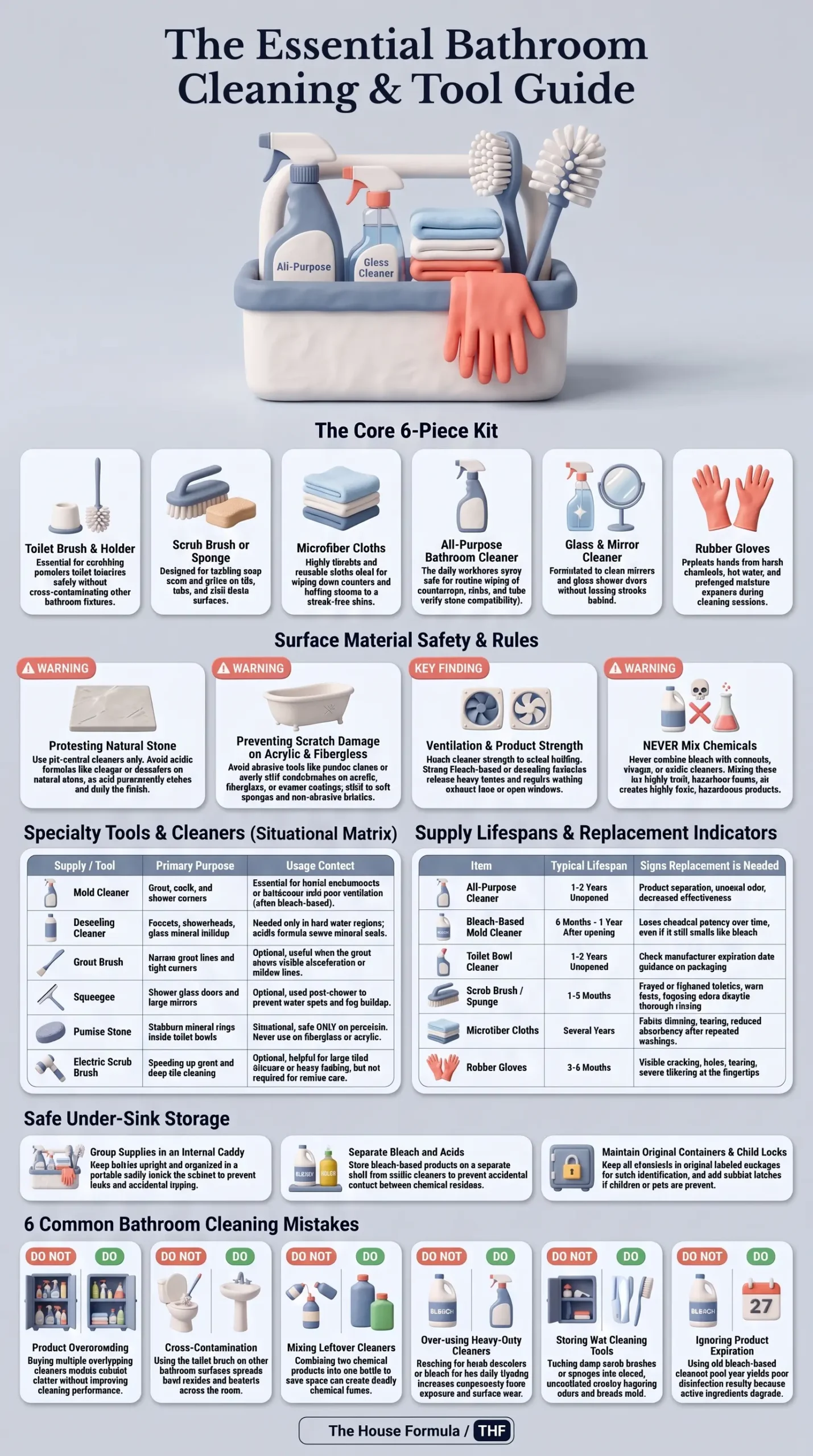
Photo Credit: Hobby Guidebook Editorial
Which Tools Are Useful and Which Are Optional
Not every tool sold for bathroom cleaning earns a permanent spot under the sink. Here's a general breakdown of what tends to be worth keeping versus what's more situational.
|
Tool |
Useful For Most Bathrooms |
Optional / Situational |
|
Toilet brush |
Yes, essential |
— |
|
Microfiber cloths |
Yes, essential |
— |
|
Scrub brush or sponge |
Yes, essential |
— |
|
Grout brush |
Situational |
Useful if grout lines show visible mold or discoloration |
|
Squeegee |
Situational |
Helpful for glass shower doors and fogged mirrors |
|
Pumice stone |
Situational |
Only for stubborn mineral rings in toilets, and only on porcelain |
|
Extendable duster |
Situational |
Useful for ceiling corners and exhaust fan covers |
|
Electric scrub brush |
Optional |
Speeds up grout and tile cleaning but not required |
A pumice stone deserves a specific caution: it's safe on porcelain but can scratch fiberglass, acrylic, or enamel-coated surfaces, so it's worth confirming what a fixture is made of before reaching for one. If you're not sure, a less abrasive approach, like a longer soak with a descaling cleaner, is the safer starting point before trying anything that involves physical abrasion.
An electric scrub brush is a good example of an optional tool that's genuinely useful for some households but unnecessary for others. It speeds up grout cleaning noticeably, which matters if you're dealing with a large tiled shower or heavily soiled lines, but a household with smaller tile areas or lighter buildup may never feel the need for one.
Choosing the Right Brushes and Scrubbers
Brush choice matters more than it might seem, since the wrong bristle stiffness can scratch a surface just as easily as the right one can clean it.
Stiffer bristles work well on grout lines and heavily soiled tile, but that same stiffness can leave fine scratches on acrylic tubs, fiberglass showers, or enamel-coated fixtures. Softer brushes and non-abrasive sponges are the safer default for painted, coated, or polished surfaces, even if they take a little more scrubbing time to get the same result. Toilet brushes are a category of their own and shouldn't be swapped with a general scrub brush, since bowl cleaner residue left on a brush used elsewhere can damage other surfaces.
It's also worth paying attention to how a brush is stored between uses. A damp brush left sitting in a closed holder without airflow can develop its own odor or mildew, which somewhat defeats the purpose of using it to clean in the first place. Rinsing a brush thoroughly and letting it air dry, rather than tucking it away wet, keeps it usable longer and avoids adding a new smell to the room.
For a closer look at bristle types, which brush works best on which bathroom material, and how often to replace a worn scrub brush, see the Choosing Bathroom Cleaning Brushes & Scrubbers guide.
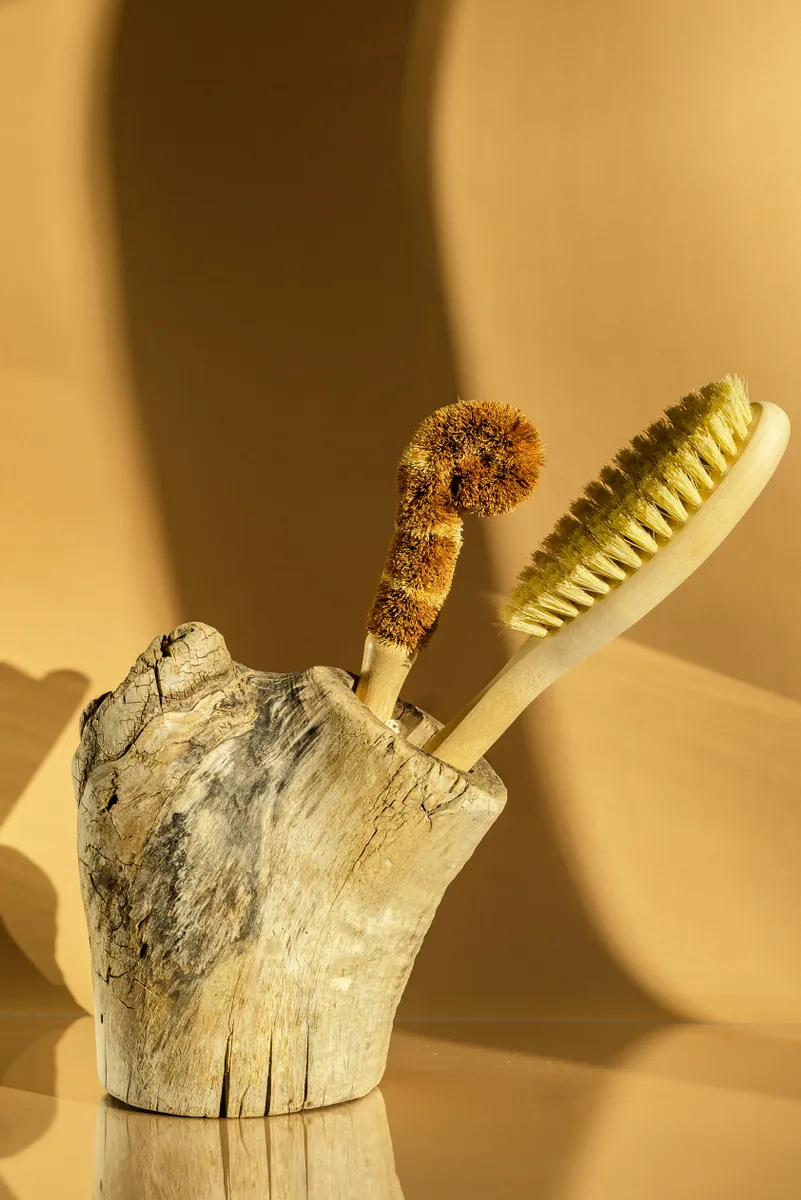
Photo Credit: Mikhail Nilov
Building a Budget Bathroom Cleaning Kit
A full bathroom cleaning kit doesn't need to be expensive. A budget bathroom cleaning kit can cover most routine needs with just a handful of items:
- One all-purpose cleaner for counters, sinks, and tub surfaces.
- One toilet bowl cleaner, kept separate from everything else.
- A basic scrub brush and toilet brush, both inexpensive and long-lasting with proper care.
- A few microfiber cloths, which are reusable and outlast paper towels many times over.
- Rubber gloves, a small cost that protects hands during regular cleaning.
Specialty products like descalers, mold-specific cleaners, or streak-free glass formulas are worth adding only if your bathroom's specific problems call for them. A household without hard water, for example, can skip the descaler entirely and put that money toward something more useful for their situation.
Buying concentrated cleaners and diluting them according to the label is another way to stretch a budget kit further, since a small bottle of concentrate often covers far more cleaning sessions than an equivalent amount of a pre-diluted spray. Reusable microfiber cloths offer a similar advantage over time, since they can be washed and reused hundreds of times before needing replacement, unlike disposable wipes that need continual restocking.
How Long Bathroom Cleaning Supplies Actually Last
Knowing roughly how long a product lasts helps avoid both running out mid-clean and letting something sit unused past its effective window.
|
Supply |
Typical Lifespan |
Signs It Needs Replacing |
|
All-purpose cleaner |
1 to 2 years unopened |
Separation, unusual smell, or reduced cleaning effect |
|
Bleach-based mold cleaner |
About 6 months to 1 year after opening |
Loses effectiveness even if it still smells like bleach |
|
Toilet bowl cleaner |
1 to 2 years unopened |
Check label for expiration guidance |
|
Scrub brush or sponge |
1 to 3 months with regular use |
Frayed bristles, lingering odor despite rinsing |
|
Microfiber cloths |
Several years with proper washing |
Thinning fabric, reduced absorbency |
|
Rubber gloves |
3 to 6 months with regular use |
Visible cracks, tears, or thinning at fingertips |
Bleach-based products in particular lose potency faster than most people expect, so a bottle that's been open for over a year may not perform as well as the label suggests, even if it still looks and smells normal. Checking the manufacturer's guidance on shelf life, rather than assuming a product lasts indefinitely, is a simple habit that keeps a cleaning routine actually effective.
What to Keep Under the Bathroom Sink
The space under a bathroom sink is convenient storage, but it's also often damp, cramped, and within reach of children or pets, so what goes there and how it's arranged both matter.
Reasonable items to keep under the sink include the core cleaning kit (all-purpose cleaner, toilet cleaner, gloves, cloths), extra toilet paper, and a small trash bin. It's generally better to avoid storing anything you use daily but don't want exposed to moisture, since the area under a sink can collect condensation from the pipes above it.
A small caddy or bin inside the cabinet also makes a real difference, since it keeps bottles upright and grouped together rather than tipping over every time the cabinet door opens. This small step saves time during weekly cleaning and reduces the chance of a spilled or leaking bottle going unnoticed for days.

Photo Credit: Lisa Anna
How to Store Bathroom Cleaning Supplies Safely
A few habits keep cleaning supplies both effective and safe to have in the house.
- Store chemicals upright with lids fully closed to prevent leaks and evaporation.
- Keep bleach-based and acid-based products on separate shelves, since even accidental contact between residue on containers can be a concern.
- Use a lock or latch on the cabinet if young children or pets have access to the bathroom.
- Keep products in their original containers with labels intact, since an unlabeled bottle is a genuine safety risk if anyone else in the household needs to identify it quickly.
- Check expiration dates periodically, particularly on bleach-based products, which lose effectiveness over time even if they still look and smell the same.
For a more detailed system on organizing a bathroom cabinet, including bins, labeling, and keeping daily-use items separate from deep-clean supplies, see the Organizing Bathroom Cleaning Supplies guide.
Common Mistakes to Avoid
A few habits show up again and again in bathrooms that feel harder to clean than they should be.
- Buying too many overlapping products. Three different all-purpose cleaners doing the same job just take up space and make it harder to grab the right one quickly.
- Using the toilet brush for other surfaces. This spreads bowl cleaner residue where it doesn't belong and risks cross-contamination.
- Mixing leftover cleaners in one container to save space. This is never worth the risk, since combining products, especially anything bleach-based, can create dangerous fumes.
- Storing everything under the sink without a system. A cluttered cabinet makes it easy to lose track of what's expired or what's actually being used.
- Choosing the strongest product for every job. A heavy-duty descaler or bleach-based cleaner isn't necessary for routine wiping, and using it more than needed just increases fume exposure and surface risk over time.
- Letting scrub brushes and sponges sit wet. A damp tool tucked into a closed cabinet is a common source of lingering odor that has nothing to do with the bathroom itself.
Frequently Asked Questions
What tools and supplies do you actually need for the bathroom? A toilet brush, scrub brush or sponge, microfiber cloths, an all-purpose cleaner, glass cleaner, and rubber gloves cover most routine bathroom cleaning needs.
What are the essential tools or supplies for the bathroom? Beyond the basic kit, a mold and mildew cleaner and a descaling cleaner are worth having if your bathroom deals with mildew or hard water buildup regularly.
How do you choose products that are appropriate for the bathroom? Match the cleaner to the surface material, check the label for intended use, and consider your bathroom's ventilation before choosing a stronger, fume-heavy product.
Which tools are useful and which are optional for the bathroom? A toilet brush, scrub brush, and microfiber cloths are essential for nearly every bathroom. Tools like a grout brush, squeegee, or pumice stone are useful only for specific problems.
How should products or supplies for the bathroom be stored safely? Keep containers upright and sealed, store bleach and acidic products on separate shelves, use original labeled containers, and add a childproof latch if needed.
What common mistakes should you avoid with the bathroom? Avoid buying redundant products, using the toilet brush on other surfaces, combining leftover cleaners in one container, and reaching for the strongest product when a milder one would do.
For the full room-by-room approach to bathroom care, Browse the complete bathroom cleaning guide.
A Quick Note on Safety
Several products covered here, including mold and mildew cleaners and hard water descalers, can contain bleach or acidic ingredients. Always follow the manufacturer's label for use and ventilation, and never combine bleach with ammonia, vinegar, or other acidic cleaners, since this can release harmful fumes. Keep all cleaning products in their original, labeled containers, store them out of reach of children and pets, and make sure the bathroom has adequate airflow when using stronger formulas. If a product causes an unexpected reaction on a surface or you're unsure whether two products are safe to use in the same space, stop and check the label or contact the manufacturer before continuing.



Leave a Reply