

Most bathroom cleaning follows a normal weekly rhythm, but some situations call for a different approach entirely. Moving into a new place, recovering from an illness, dealing with water damage, or cleaning up after a renovation all involve conditions a routine clean isn't built to handle. Knowing when you need a bathroom deep clean for special situations, rather than your usual routine, makes the difference between a bathroom that's actually clean and one that just looks that way.
This guide walks through the most common special situations bathrooms face, what changes about the cleaning approach in each one, and when the job is better handed off to a professional. If you want the broader picture of regular bathroom care, you can go Back to the complete bathroom cleaning guide.
When a Bathroom Needs More Than a Normal Clean
A few signs point to a situation that needs special handling instead of a standard weekly routine:
- The bathroom has been unused for weeks or months, allowing dust, stagnant water in traps, or mildew to settle in.
- Someone in the household has recently been sick, especially with a contagious illness.
- The bathroom went through recent construction, renovation, or repair work.
- There's been water damage, from a leak, overflow, or flooding.
- You're moving into or out of a home, and the bathroom's cleaning history is unknown or needs to meet a specific standard.
- There's visible mold covering a significant area, beyond a small spot a routine clean usually handles.
In each of these situations, the surface-level grime isn't the only concern. There's often a layer underneath, whether that's dust from drywall work, lingering bacteria from illness, or moisture that's had time to cause real damage, that a normal wipe-down won't fully address.
The table below gives a quick sense of how these situations differ from each other and from routine cleaning.
|
Situation |
Main Concern |
Typical Extra Time Needed |
|
Routine weekly clean |
Everyday grime, soap scum |
Baseline |
|
Move-in / move-out |
Unknown history, deep buildup |
2 to 4 times longer |
|
After renovation |
Fine construction dust |
1.5 to 2 times longer |
|
After illness |
Germs on touch points |
Slightly longer, more targeted |
|
Water damage or leak |
Moisture inside materials |
Ongoing, days of monitoring |
|
Extended vacancy |
Stagnant traps, mildew |
Moderate, one-time deep pass |
This isn't a precise formula, since actual time depends heavily on the size of the bathroom, how long a problem went unaddressed, and what materials are involved. Treat it as a general sense of scale rather than an exact estimate.
General Approach to Special-Situation Bathroom Cleaning
Before getting into specific scenarios, a few principles apply across most special situations:
- Assess before you clean. Look for damage, mold, or anything unusual before starting, rather than diving straight into your normal routine. A few minutes spent looking around can change the entire plan for the clean.
- Ventilate the space first. Open a window or run the exhaust fan, especially if the bathroom has been closed up or if you'll be using stronger cleaning products.
- Work from clean to dirty and top to bottom, just as you would with a regular clean, but expect this to take longer than usual and to require more product changes along the way.
- Use appropriate protection. Gloves are worth wearing in most special situations, and a mask may be appropriate when dealing with dust, mold, or strong fumes.
- Know your stopping point. If you find something that looks like structural damage, extensive mold, or a plumbing issue mid-clean, that's a sign to pause and consider professional input rather than pushing through.
- Plan for more than one pass. Many special situations, particularly renovation dust and water damage, aren't fully resolved by a single cleaning session, even a thorough one.
This framework applies loosely to each situation below, adjusted for what that particular scenario actually involves.
Move-In and Move-Out Bathroom Cleaning
Whether you're leaving a home or arriving at a new one, the bathroom usually needs a full reset rather than a routine wipe-down. You don't know the cleaning history of a bathroom you're moving into, and if you're moving out, a landlord or new owner will expect it left in genuinely clean condition, not just tidy.
This typically means addressing areas that don't get touched in a normal weekly clean: behind and around the toilet base, inside cabinets and drawers, the exhaust fan cover, and any grout or caulk lines that may have been neglected by a previous occupant. It's also worth checking for anything left behind, from hair in drains to expired products in cabinets, before starting.
Move-in and move-out cleans benefit from more time than people usually budget for them, since you're often cleaning years of accumulated buildup in areas that were never part of someone else's routine. For a complete room-by-room checklist built specifically for this transition, see the full guide on Move-In & Move-Out Bathroom Cleaning.

Photo Credit: Hobby Guidebook Editorial
Bathroom Cleaning After a Renovation
Renovation dust is different from ordinary household dust. It's finer, it settles into places you wouldn't expect, and it can linger in the air for a while after visible work is done. A normal wipe-down often just moves this dust around rather than actually removing it.
After any bathroom renovation, plan to:
- Vacuum before wet cleaning, using a vacuum with a fine filter if available, to lift loose dust before it turns into paste once water is introduced.
- Wipe every surface, including ones you wouldn't normally touch weekly, like light fixtures, cabinet tops, and the exhaust fan cover, since construction dust settles everywhere.
- Check new grout and caulk before exposing them to moisture. Fresh grout and caulk typically need a curing period, often at least 24 to 72 hours depending on the product, before the shower should be used normally. Follow the installer's or manufacturer's specific guidance here rather than guessing.
- Flush new fixtures before regular use, since plumbing lines can hold debris from installation work that needs to clear out first.
Renovation cleanup often takes longer than people expect, partly because dust has a way of resettling if it isn't fully removed the first time. A second pass a day or two after the initial clean often catches dust that wasn't visible right away. For more detail on this specific process, see Bathroom Cleaning After a Renovation.
Bathroom Cleaning After Illness
When someone in the household has been sick, especially with something contagious like a stomach virus or the flu, the bathroom needs more than a routine wipe. The goal here shifts from general tidiness to actually reducing the presence of germs on frequently touched surfaces, since these areas see repeated contact in a short window of time.
Focus extra attention on:
- The toilet, including the flush handle, seat, and surrounding floor area
- Light switches and doorknobs, which get touched constantly and are easy to overlook
- Faucet handles and any surface touched with unwashed hands
- Towels and bath mats, washed in hot water separately from other laundry
A disinfectant appropriate for the surface, used according to its label's contact time, is more effective here than a general all-purpose cleaner. Disinfectants need to stay wet on a surface for a specific amount of time to actually work, so wiping it off too quickly reduces its effectiveness. Always check that a disinfecting product is appropriate for the surface you're using it on, since some formulas aren't safe for certain finishes, and confirm whether the product needs a rinse afterward on surfaces that will contact skin.
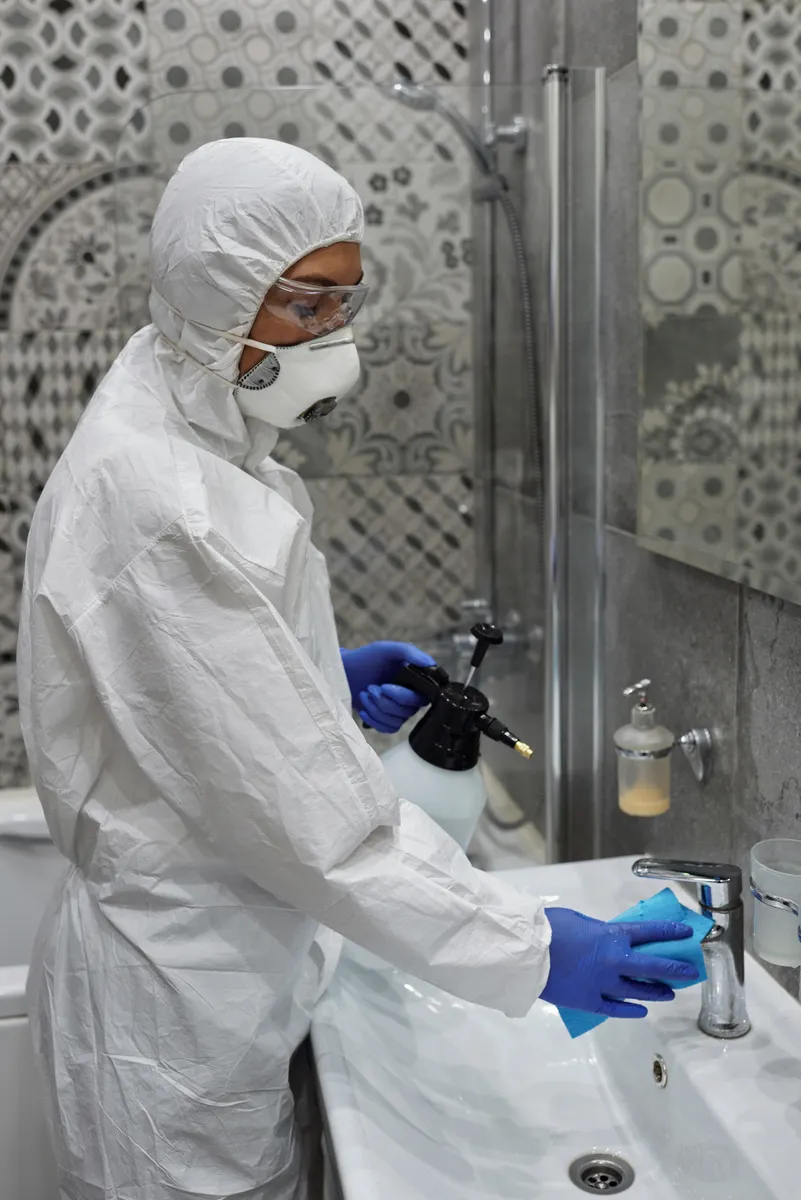
Photo Credit: Matilda Wormwood
What Mistakes to Avoid in Special-Situation Cleaning
A few mistakes show up repeatedly across these situations, regardless of which one you're dealing with.
- Rushing the process. Special situations almost always take longer than a normal clean, and cutting that time short usually means missing something that matters.
- Skipping ventilation. Whether it's construction dust, illness-related cleaning, or mold, fresh air matters more in these situations than during routine cleaning.
- Mixing products without checking labels. Special situations sometimes tempt people to combine cleaners for extra strength, but this is exactly when checking ingredients matters most. Never combine bleach with ammonia, vinegar, or other acidic cleaners, since this can release hazardous fumes.
- Ignoring less visible areas. Cabinet interiors, exhaust fan covers, and grout lines are easy to skip in a rush but are often where the real buildup from a special situation has settled.
- Assuming a wipe-down is enough after water damage. Surface cleaning doesn't address moisture that may have gotten into flooring, drywall, or cabinetry.
- Treating every situation the same way. A move-out clean, a post-illness clean, and a post-renovation clean call for different priorities, even though they all fall outside a routine wipe-down.
Clutter tends to make several of these mistakes more likely, since a crowded cabinet or a pile of unsorted supplies makes it harder to find what you need mid-clean, especially during a move or right after a renovation when everything is already disrupted. If keeping supplies organized through these transitions is part of the challenge, the Bathroom Organization Special Situations Guide covers how to set up storage that holds up under these conditions.
Bathroom Cleaning After Water Damage or a Leak
Water damage changes the priority from cleaning to drying, at least at first. Standing water or a slow leak that's gone unnoticed for a while can allow mold to start developing within a couple of days in the right conditions, so addressing moisture quickly matters more than the cleaning itself in the early stages.
- Stop the source of water if it's an active leak, and shut off the relevant water supply if needed.
- Remove standing water with towels, a wet vacuum, or a mop, depending on how much there is.
- Increase airflow with fans and an open window or exhaust fan to speed up drying.
- Check materials that stayed wet for an extended period. Drywall, particleboard cabinetry, and some flooring materials can hold moisture internally even after the surface looks dry.
- Watch for a musty smell or visible mold over the following days, since this can indicate the area didn't dry as thoroughly as it appeared to.
- Avoid closing the space back up too soon. Reinstalling trim, caulk, or cabinetry before materials have fully dried can trap moisture where it's harder to detect and address later.
If water damage affected a wall cavity, subfloor, or a large area, or if you're not confident the space has fully dried, this is a situation where professional water damage assessment is worth considering rather than relying on visual inspection alone.
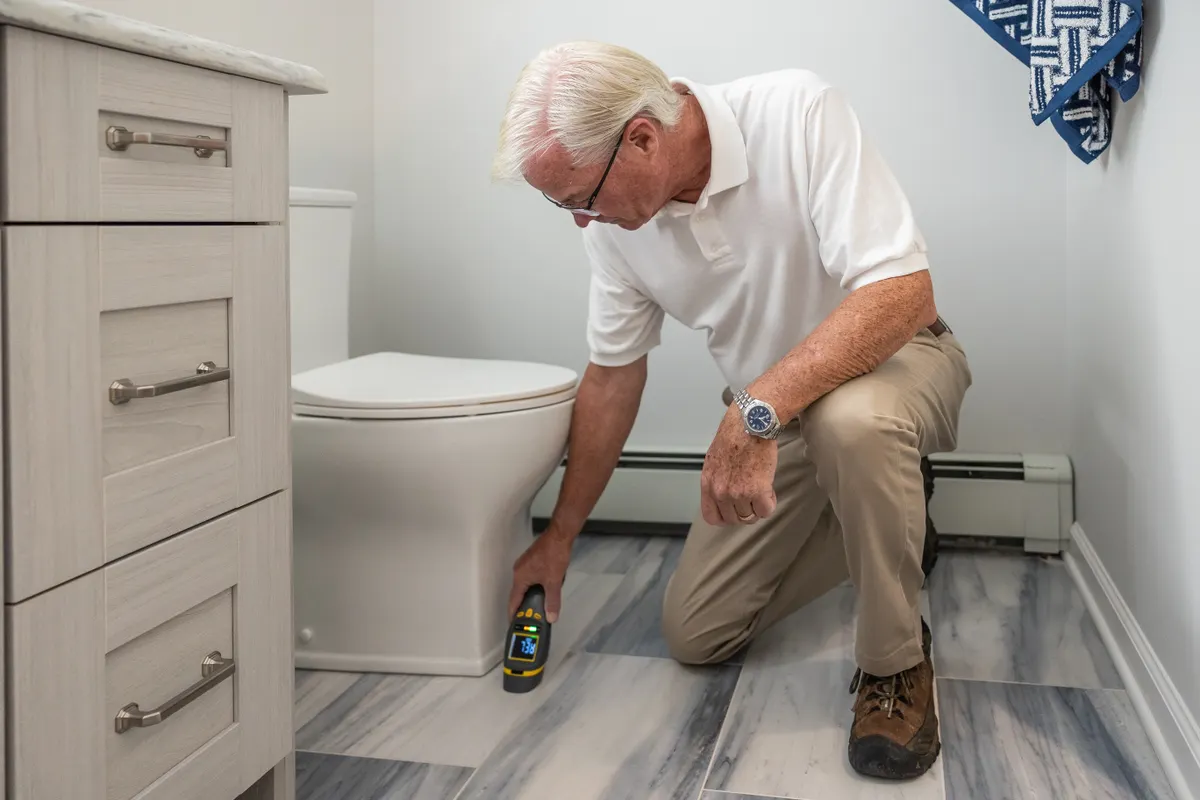
Photo Credit: Kathleen Austin Kuhn
When Professional Help Is the Right Call
Most special-situation bathroom cleaning can be handled at home with enough time and the right approach, but a few signs point toward bringing in a professional instead.
Extensive mold coverage. A small, isolated mold spot is generally manageable with a household cleaner, but mold covering a large area, or mold that keeps returning after proper cleaning and drying, often needs professional remediation, particularly if you're unsure how far it extends behind a surface.
Water damage affecting structural materials. If drywall, subflooring, or cabinetry stayed wet long enough that you're unsure whether it's dried out completely, a professional assessment can catch problems that aren't visible from the surface.
Persistent odors with no identifiable source, especially after addressing the obvious causes, can point to something inside a wall or floor cavity that needs specialized equipment to locate.
Any situation involving sewage backup or contaminated water should be treated as a professional job from the start, given the health risks involved in handling contaminated water without the right protective equipment and cleaning protocols.
Uncertainty about a chemical reaction or strong, unexplained fumes during cleaning is a sign to stop, ventilate the area immediately, and avoid continuing until you understand what happened.
When a special situation feels bigger than a thorough clean can reasonably fix, treating it as worth a second opinion is a reasonable, low-risk choice.
Frequently Asked Questions
What should you do first when dealing with the bathroom in this situation? Assess the space before cleaning. Look for damage, mold, or lingering moisture, and ventilate the room before starting, especially if it's been closed up or you'll be using stronger products.
How does the normal approach to the bathroom change in this situation? Special situations usually call for more time, closer attention to less visible areas like cabinet interiors and exhaust fan covers, and sometimes different products, like disinfectants after illness or dust-specific methods after renovation.
What mistakes should you avoid with the bathroom in this situation? Avoid rushing, skipping ventilation, mixing cleaning products without checking labels, ignoring hidden areas, and assuming a surface wipe-down is enough after water damage.
When is professional help appropriate for the bathroom? Professional help is appropriate for extensive mold, water damage affecting structural materials, sewage contamination, persistent unexplained odors, or any unclear chemical reaction during cleaning.
What common mistakes should you avoid with the bathroom? The most frequent mistakes are cleaning too quickly, missing hidden or less visible areas, and combining cleaning products without confirming they're safe to use together.
When should you seek professional help with the bathroom? Seek professional help when mold keeps returning, when materials have been wet long enough that drying isn't certain, or when a situation involves contaminated water or unexplained chemical fumes.
Most special-situation bathroom problems come down to giving the space enough time and the right method, rather than forcing a routine clean to cover conditions it wasn't built for. For more detailed guidance on regular bathroom upkeep, See the full bathroom cleaning guide.
A Quick Note on Safety
Special-situation cleaning often involves disinfectants, mold cleanup, or materials affected by water damage, all of which carry more risk than routine cleaning. Always follow the product label for disinfectants, including required contact time. Never combine bleach with ammonia, vinegar, or other acids, since this can release hazardous fumes. Wear gloves and, when dealing with dust, mold, or strong odors, appropriate ventilation or a mask. For extensive mold, structural water damage, or sewage contamination, professional help is the safer and more reliable option.



Leave a Reply