
A smelly or sluggish garbage disposal often points to grime on the parts inside, and many people want a safe way to reach it. This guide covers cleaning garbage disposal blades without putting your hands at risk, using simple tools and gentle products. It is Part of Garbage Disposal Cleaning & Deodorizing, so you can use it with your regular disposal care.
What Is Inside Your Disposal and Why It Gets Dirty
Under the sink, a garbage disposal has a chamber with a spinning plate. This plate has small metal pieces that fling food against the chamber wall and break it into tiny bits. Most people call these pieces blades. In many models they are blunt lugs or impellers rather than sharp knife edges, but the exact parts depend on the brand and model. Either way, the same rule applies: treat the inside as dangerous, and never reach in.
Food waste, grease and soap film cling to the chamber wall, the spinning parts and the rubber splash guard at the top. When food residue sits there, it rots and the smell rises into your kitchen. You usually cannot see the worst of it, because it hides below the opening.
So how can you tell the inside needs cleaning? Watch for a sour or rotten smell that returns soon after you run the disposal. Look for slime or dark film on the splash guard. Listen for odd sounds or slow grinding, and notice if food seems to linger. Water that drains slowly can also point to buildup, although a clog further down the pipe can cause that too.
The good news is that you can clean the inside without touching it. Cold water, ice, a few simple ingredients and a long-handled brush are usually enough for a normal case.

Photo Credit: Hobby Guidebook Editorial
Safety First: Power Off and Keep Hands Out
This is the most important part of the job. A disposal can start without warning if it is switched on by mistake, and the parts inside can injure you even when they are not sharp.
- Turn off the wall switch before you clean the chamber opening or the splash guard.
- Unplug the disposal if the plug is reachable under the sink. If it is hard-wired, switch off its circuit at the breaker panel.
- Never put your hand or fingers into the chamber, even when it is off.
- Use tools, not hands, to remove any object that is stuck. Use long tongs or pliers, and only after the power is off.
If you cannot reach a stuck item safely, or if the disposal hums but does not spin, stop and read your model's manual. Call a plumber or an electrician when you are unsure. Do not guess with a power tool that sits under your sink.
Best Product and Tools for Cleaning the Disposal
The best product for garbage disposal blades is usually the mildest one that works. For most kitchens that means dish soap, baking soda, and white vinegar used on its own. Citrus peels and ice are also common helpers. Here is what you may need:
- Rubber gloves
- Dish soap and warm water
- Baking soda
- White vinegar, used separately, never mixed with bleach
- Ice cubes, and rock salt if you like (check your manual first)
- Citrus peels such as lemon or orange
- A long-handled bottle brush or a stiff toothbrush for the splash guard
- A flashlight to see into the opening
Ice can help knock loose residue from the chamber walls. Baking soda is a gentle deodorizer. Citrus gives a fresh scent, but it does not clean deeply on its own. Some disposal makers have their own cleaning products or tell you what to avoid, so check the manual before you try anything new.
Eco-friendly options like baking soda and vinegar are fine for most disposals. They still need rinsing, so run cold water afterward.
How to Clean Garbage Disposal Blades Step by Step
Work with the power off and your hands outside the chamber. Follow these steps:
- Turn off power. Switch off the disposal, then unplug it or turn off the breaker.
- Look inside. Shine a flashlight into the opening. Remove any visible objects with tongs, not your hands.
- Scrub the splash guard. Lift the rubber flap and scrub both sides with a brush, dish soap and warm water. This is often the smelliest spot.
- Scrub what you can reach. Use the long-handled brush on the upper chamber walls, keeping your hands above the opening.
- Restore power. Plug the unit back in or switch the breaker on.
- Run ice. Drop in a cup or two of ice cubes. Run cold water and switch on the disposal for about 15 to 30 seconds, until the grinding sound softens.
- Deodorize. Sprinkle about a quarter cup of baking soda into the opening and let it sit a few minutes. Then run cold water and the disposal briefly.
- Freshen with citrus. Toss in a few small citrus peels, run cold water and switch the disposal on. The peels help freshen the smell.
- Flush. Let cold water run for 30 seconds more to carry everything away.
Use cold water for grinding, because it keeps grease firm so it can be washed away more easily.
Sometimes the smell comes from the drain pipe, not the disposal. If the odor stays after cleaning, our guide on Kitchen Sink Drain Cleaning can help you check that part of the system.
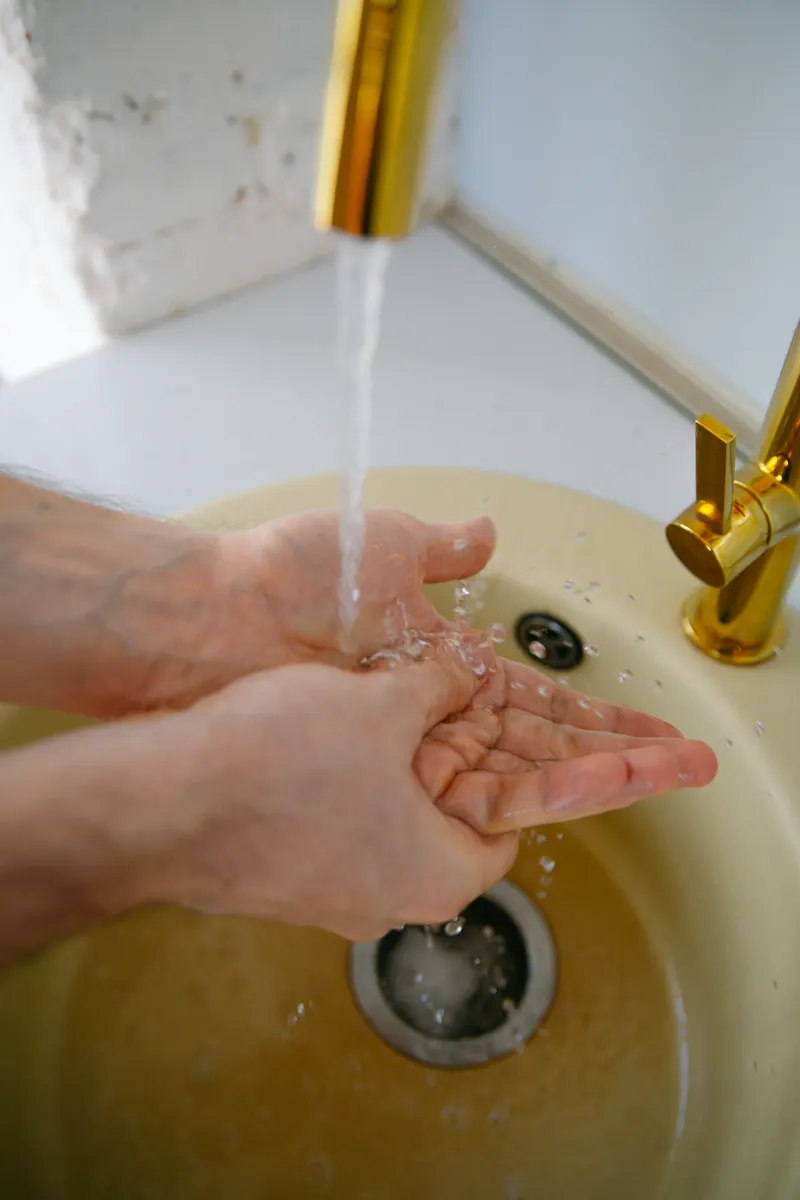
Photo Credit: Polina Zimmerman
What to Avoid When Cleaning a Garbage Disposal
Most problems come from shortcuts. Skip these:
- Never put your hand in the disposal, not even when it is off.
- Never mix bleach with vinegar, ammonia or other acids. The mix can release dangerous fumes. Do not pour several products into the drain one after another.
- Do not use strong drain cleaners unless your disposal's manual says they are safe. Harsh chemicals can damage parts and splash back.
- Do not grind hard or tough items to clean it, such as bones, glass, metal or large amounts of fibrous food.
- Do not pour grease or oil down the drain. It cools, sticks and builds up.
- Do not use hot water for grinding. Cold water works better with a running disposal.
- Do not use sharp tools or force parts when the power is on.
Be careful with salt. Rock salt is a common cleaning trick, but some makers advise against it, so only use it if your manual allows.
After cleaning the disposal, wipe the sink itself, because the area around the drain collects germs and splashes. Our guide on Disinfecting the Kitchen Sink shows how to do that safely.
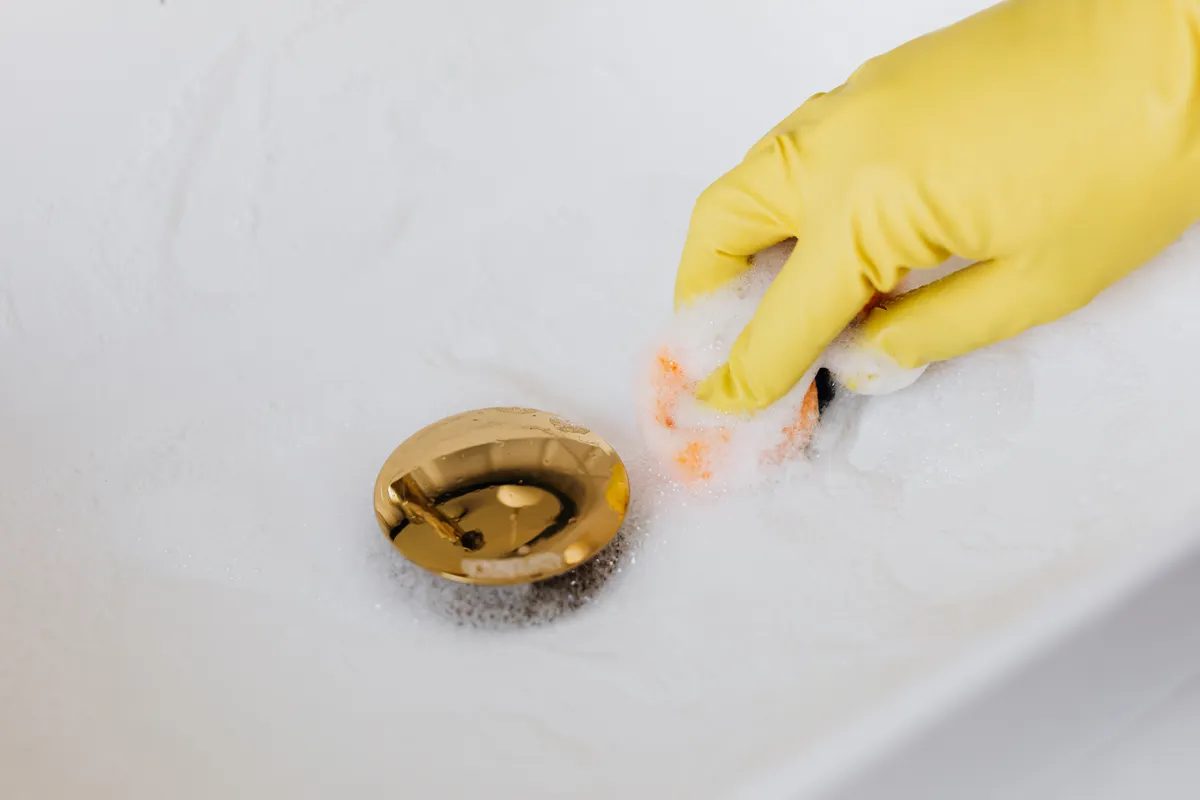
Photo Credit: https://kaboompics.com/
How Often to Clean and How to Prevent Buildup
A light clean once a week keeps odors away for most households. Run cold water with a handful of ice or a few citrus peels, then flush well. Do a deeper clean, with the splash guard scrub and the baking soda step, about once a month. If you cook often or have a large family, you may need to clean more often. Let your nose and the signs listed earlier guide you.
A few habits help between cleanings. Scrape plates into the trash first. Run cold water before, during and for a short time after using the disposal. Feed it small amounts at a time, not a big pile. Keep grease and oil out of the drain, and do not grind items your manual says to avoid.
These small steps keep the inside cleaner and cut down on how often you need to scrub.
Frequently Asked Questions
What is the best way to clean garbage disposal blades safely?
Turn off the power and unplug the unit first. Scrub the splash guard and reachable walls with a long brush, then run cold water with ice and add baking soda to deodorize. Never put your hand inside.
How often should you clean garbage disposal blades safely?
Do a quick ice and cold water rinse weekly and a deeper clean monthly. Clean sooner if you notice a bad smell, slime or slow grinding.
What cleaning products are safe for garbage disposal blades safely?
Dish soap, baking soda and white vinegar (used on their own, never mixed with bleach) are good starting options. Ice and citrus peels also help. Check your disposal's manual, since some makers limit certain products.
What should you avoid when cleaning garbage disposal blades safely?
Avoid putting hands inside, mixing bleach with vinegar or ammonia, strong drain cleaners, grinding hard items, pouring grease down the drain and cleaning while the power is on.
Final Thoughts
Cleaning your disposal is mostly about safety and patience. Turn off the power, scrub what you can reach with a long brush, and use ice, baking soda and cold water to do the rest. A quick weekly habit keeps smells away. For more kitchen care ideas, View the full kitchen cleaning guide.
Safety note: Always turn off and unplug the disposal before cleaning, and never put your hand inside. Never mix bleach with vinegar, ammonia or other acids, because this can create harmful fumes. Wear gloves, keep the room ventilated, and follow your disposal maker's manual and product labels. If the unit hums, jams or will not run, call a plumber or electrician.



Leave a Reply