

The tile may look clean, but the lines between the tiles tell a different story. Grout is the first place that dirt, grease and spills settle on a kitchen floor, and it can turn gray or brown fast. This guide covers cleaning kitchen floor grout safely, with simple tools and gentle products that will not scratch the tile or harm the grout. It is Part of Tile Kitchen Floor Cleaning, so you can use it together with your regular floor routine.
Why Kitchen Grout Gets Dirty So Fast
Grout is the material that fills the gaps between tiles. Most grout is porous, which means it has tiny holes that soak up liquid, much like a sponge. Grease, sauces, coffee, juice and mop water can all sink into it. Once that happens, a regular mop will not lift the stain, because the dirt is down inside the surface, not on top of it.
Kitchens make it worse. Cooking splatters land on the floor, people walk in with outdoor dirt, and spills happen daily. Grout also sits a little lower than the tile, so crumbs and grime collect in the lines. Over time, light grout can look gray, yellow or brown.
Some grout is sealed, meaning it has a protective coating that makes it less absorbent. Sealed grout is easier to clean, but the sealer can wear down with time and cleaning. A quick way to check is to put a few drops of water on a clean grout line. If the water beads up, the grout is likely sealed. If it soaks in and darkens the line, it is probably not.
Knowing this helps you choose the right method. Sealed grout can usually take a gentle scrub. Unsealed or old grout may need more patience and gentle products, since harsh ones can wear it down.
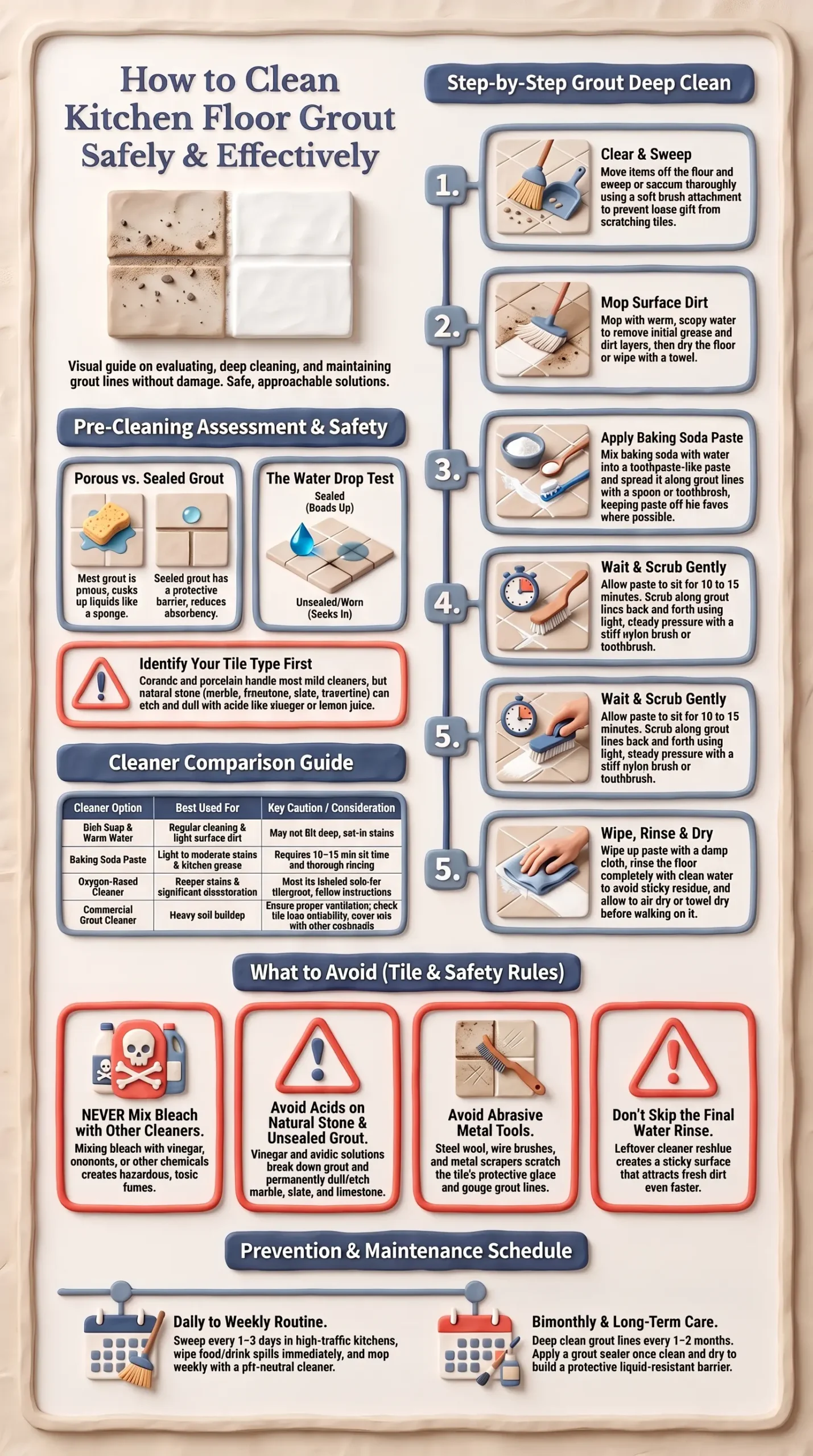
Photo Credit: Hobby Guidebook Editorial
Tools and Safe Products for Grout Lines
You likely have most of what you need at home:
- A broom or vacuum with a soft brush attachment
- Mild dish soap and warm water
- Baking soda
- Oxygen-based cleaner (also called oxygen bleach), if the label allows it for your tile and grout
- A stiff nylon brush or an old toothbrush for the grout lines
- A soft sponge or microfiber mop
- Clean cloths or towels
- Rubber gloves and knee pads
- A spray bottle
Before you pick a product, find out what type of tile you have. Ceramic and porcelain tiles can usually handle mild cleaners. Natural stone, such as marble, travertine, limestone or slate, is more sensitive. Acids such as vinegar and lemon juice can dull or etch (eat into) the stone and wear down grout. If you are not sure what your tile is, stick with warm water and a mild, pH-neutral soap, and test a small hidden spot first.
Baking soda and dish soap are the safest starting points for most floors. Check any commercial product's label to make sure it is safe for your tile and for grout.
How to Clean Kitchen Floor Grout Step by Step
Plan for about an hour for a typical kitchen, plus drying time. Work in small sections so cleaners do not dry on the floor.
- Clear and sweep. Move items off the floor. Sweep or vacuum well so loose grit does not scratch the tile.
- Mop with warm soapy water. Remove surface grease and dirt first. Let the floor dry or wipe it with a towel.
- Make a paste. Mix baking soda with a little water until it feels like thick toothpaste.
- Apply to the grout. Spread the paste along the grout lines with a spoon or an old toothbrush. Keep it off the tile when you can.
- Wait. Let the paste sit for about 10 to 15 minutes.
- Scrub gently. Use a stiff nylon brush or toothbrush along the grout line, back and forth. Use steady, light pressure.
- Wipe up. Use a damp sponge or cloth to lift the paste and loosened dirt. Rinse the cloth often.
- Rinse the floor. Wipe or mop with clean water to remove residue.
- Dry. Use towels or let the floor air dry fully before walking on it.
- Repeat if needed. Stubborn spots may need a second round.
If your kitchen floor meets another floor type, protect it from wet tools and drips. For example, our guide on Hardwood Kitchen Floor Cleaning explains how to care for wood without too much moisture.
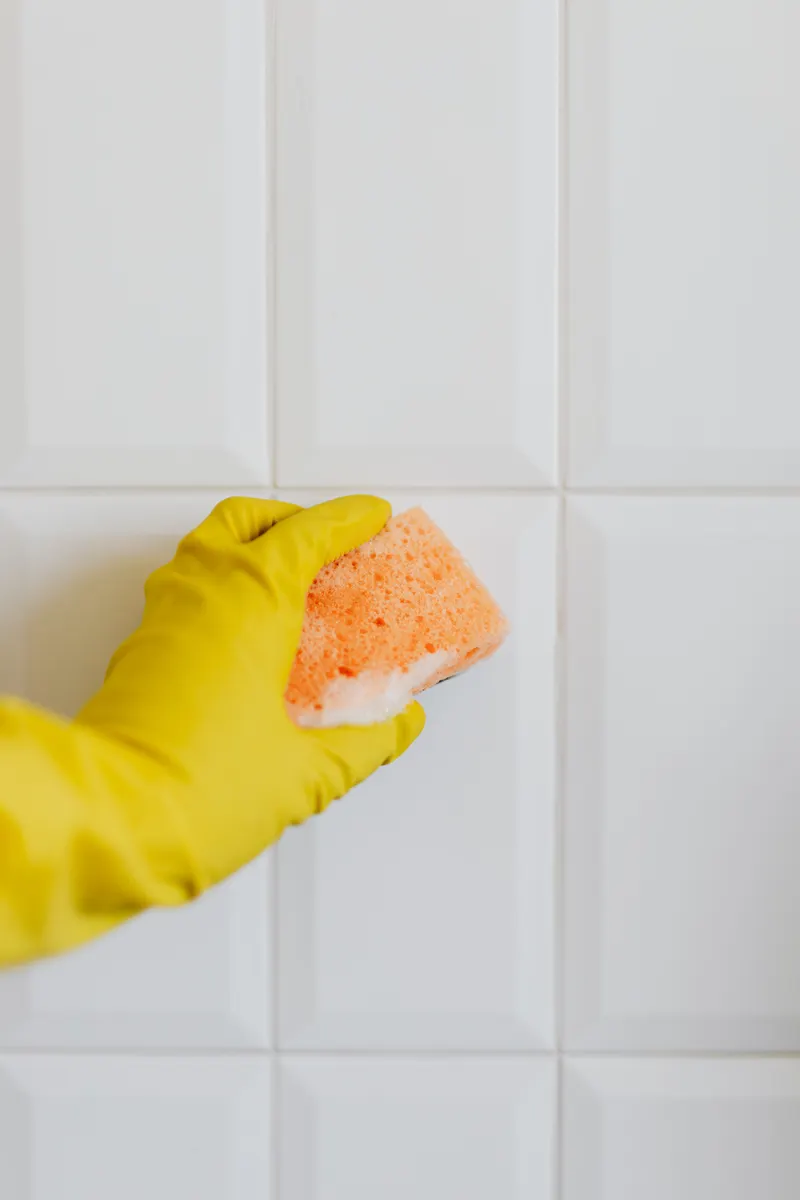
Photo Credit: https://kaboompics.com/
Commercial Cleaner or Natural Method, Without Scratching
Both options have a place. The right choice depends on how dirty the grout is and what type of tile you have.
|
Option |
Best for |
Things to watch |
|
Dish soap and warm water |
Regular cleaning and light dirt |
May not lift deep stains |
|
Baking soda paste |
Light to moderate stains and grease |
Needs scrubbing and rinsing |
|
Oxygen-based cleaner |
Deeper stains and discoloration |
Must be labeled for your tile and grout; follow directions; rinse well |
|
Commercial grout cleaner |
Heavy buildup |
Check label for tile type; ventilate; never mix with other products |
Natural methods are gentle and low in fumes, so they are a good first step. If stains remain, an oxygen-based cleaner is often a milder step up than chlorine bleach. Always follow the label, wear gloves and test a small hidden area first.
To clean without scratching, use soft tools: a nylon brush, a toothbrush or a soft sponge. Skip wire brushes and steel wool. Let the product and the waiting time do the work instead of pressing hard, since scrubbing too hard can wear grout away and scratch the tile glaze (the shiny top layer).
If you also have vinyl or linoleum in another part of the kitchen, our guide on Vinyl & Linoleum Kitchen Floor Cleaning covers methods that suit those floors, since they are cleaned differently from tile.
What to Avoid When Cleaning Grout
These mistakes can harm your grout or your tile:
- Never mix bleach with vinegar, ammonia or other cleaners. The mix can release dangerous fumes.
- Do not use vinegar or other acids on natural stone tile or on unsealed grout unless the maker says it is safe. Acids can etch stone and break down grout.
- Do not use steel wool, wire brushes or metal scrapers. They scratch tile and gouge grout.
- Do not use strong chemical cleaners without reading the label. Some are made for specific tile types only.
- Do not leave cleaner on too long. Follow the label, then rinse well.
- Do not skip the rinse. Leftover cleaner can leave a sticky film that attracts dirt.
- Do not walk on wet or slippery floors. Keep children and pets away until the floor is dry.
Also keep the room ventilated if you use any commercial product. Open a window or run a fan.
If grout is cracked, crumbling or missing, cleaning will not fix it. Water can get under the tile and cause bigger damage. That is a job for regrouting, so contact a tile professional.
Photo Credit: Filipp Romanovski
How Often to Clean, Sealing and Prevention
Sweep or vacuum often, ideally every day or two in a busy kitchen. Mop weekly with warm water and mild soap. Wipe spills as soon as they happen, especially oils, coffee, wine and sauces. Do a deeper grout clean every month or two, or when you see the lines darken.
Sealing can help. Once grout is clean and fully dry, a grout sealer adds a protective coat that makes it less absorbent. Read the product label for how long to wait before and after applying, and for how often to reapply. Natural stone tile may need a different sealer, so check what is right for your type.
Some habits help prevent dirt. Put mats at the sink and stove. Use a doormat at the entry. Choose a pH-neutral cleaner for regular mopping. A little prevention makes the deeper work easier and less frequent.
Frequently Asked Questions
What is the best way to clean grout lines on kitchen tile floors?
Sweep and mop the floor first, then spread a baking soda and water paste along the grout lines. Let it sit 10 to 15 minutes, scrub gently with a nylon brush or toothbrush, wipe up and rinse well. Dry the floor fully.
How often should you clean grout lines on kitchen tile floors?
Mop weekly and wipe spills right away. Do a deeper grout clean every month or two, or sooner if the lines look dark or feel greasy.
What cleaning products are safe for grout lines on kitchen tile floors?
Dish soap with warm water and baking soda paste are safe for most ceramic and porcelain tile. Oxygen-based cleaners can work if the label allows them for your tile and grout. Avoid acids on natural stone, and check your tile maker's advice.
What should you avoid when cleaning grout lines on kitchen tile floors?
Avoid mixing bleach with vinegar or ammonia, acids on natural stone, steel wool and wire brushes, strong cleaners you have not tested, and leaving cleaner on the grout without rinsing.
Final Thoughts
Cleaning kitchen floor grout is mostly about patience and gentle tools. Start with soap, water and baking soda, test any stronger product first and rinse well. Know your tile type, and keep acids away from natural stone. Regular sweeping, mopping and a sealed finish keep the lines cleaner for longer. To keep the rest of your kitchen in good shape, Back to the complete kitchen cleaning guide.
Safety note: Never mix bleach with vinegar, ammonia or other cleaners, because this can create harmful fumes. Wear gloves, ventilate the room when using commercial products, and keep wet floors off limits until dry. Follow your tile maker's advice and the product label, and call a tile professional if grout is crumbling or the tile is loose.



Leave a Reply