

A fireclay farmhouse sink is tough, glossy, and easy to care for, but it still needs the right cleaning method. The hard glaze resists most daily messes. It can still show stains, metal marks, and a dull film if you clean it the wrong way or not often enough. This guide covers fireclay sink cleaning from the daily wipe to stubborn stains, with safe products and clear steps.
This page is Part of Farmhouse Sink Cleaning, and it focuses on fireclay specifically, not other sink materials.
What a Fireclay Sink Is, and How to Tell It Needs Cleaning
Fireclay is a type of ceramic. Clay is shaped, coated with a glaze (a glass-like coating), and fired at a high temperature. The result is a hard, smooth, non-porous surface that resists many stains. The apron front, the wide front panel that gives a farmhouse sink its look, is part of the same glazed piece.
That glaze is what you are cleaning. It is strong, but it is not unbreakable. A hard knock can chip it, and harsh scrubbing can dull it over time. Cleaning methods should be gentle enough to protect the glaze.
Here is how to tell a fireclay sink needs cleaning:
- The surface looks dull or cloudy instead of glossy
- A gritty or slightly sticky film shows up when you run a hand over it
- White rings or chalky patches appear (often hard water minerals)
- Gray or dark lines show where pots and utensils rubbed the glaze
- Brown or yellow stains build up around the drain or basin floor
- Food smells linger, especially near the drain
A clean sink should feel smooth, look glossy, and drain without a smell. If you see two or more of these signs, it is time for a full clean. If you only see a few, a quick wash with soap and warm water may be enough. Dull spots are often a film, not damage, and they usually come off with gentle cleaning.

Photo Credit: Hobby Guidebook Editorial
Tools and Products: Commercial Cleaner vs Natural Method
You can clean a fireclay sink with items you probably own. This table compares the common choices.
|
Option |
Best for |
Limits |
|
Dish soap and warm water |
Daily grease and food film |
Will not lift heavy stains or minerals |
|
Baking soda paste |
Light stains and gentle scrubbing |
Needs a rinse; slow on old stains |
|
Diluted white vinegar |
Hard water rings and mineral film |
Short contact only; never mix with bleach |
|
Non-abrasive commercial cleaner |
Tougher stains, quick results |
Must be labeled safe for ceramic or glazed surfaces |
|
Bleach (only if the maker allows) |
Occasional disinfecting of stains |
Strong fumes; never mix with vinegar, ammonia, or acids |
For tools, you need soft sponges, microfiber cloths, a soft-bristle brush, rubber gloves, and a dry towel. Natural methods are usually the best place to start because they are gentle on the glaze. A commercial cleaner can help with stubborn stains, but only when the label lists ceramic or glazed surfaces. Check your sink maker's care guide first, since makers sometimes list approved and banned products.
How to Clean a Fireclay Farmhouse Sink with Vinegar and Baking Soda
This method works for most dull film, mineral rings, and light stains. Plan on about 20 minutes.
- Clear the sink and rinse away loose food bits.
- Wash with soap. Use a soft sponge, dish soap, and warm water. Scrub the basin, the apron front, and the drain edge. Rinse.
- Sprinkle baking soda over the damp surface, focusing on stained or dull areas.
- Scrub gently with a soft sponge or brush in small circles. Let the baking soda do the work. Do not press hard.
- Rinse the baking soda off with clean water.
- Treat mineral rings with vinegar. Mix equal parts white vinegar and water. Wipe it onto the spots and let it sit for a few minutes only. Rinse well.
- Rinse the whole sink thoroughly with clean water.
- Dry with a soft cloth. Drying prevents new water spots and keeps the glaze glossy.
Use one product at a time and rinse between steps. Do not add bleach at any point in this method, and never mix bleach with vinegar. For the drain edge and strainer, use a brush and a little soap. If smells linger near the drain, the odor may come from the pipe or disposal rather than the sink. See Garbage Disposal Cleaning & Deodorizing for that.
Go slowly, and stop when the glaze looks clean and glossy. The surface should feel smooth when you run a dry hand over it. If it still feels rough or looks cloudy after two rounds, move to the stain section below rather than scrubbing harder.

Photo Credit: Elijah O’Donnell
Stains, Metal Marks, Rust, and Chips
Different marks need different treatment:
- Gray or black lines from pots and utensils: These are usually metal left on the glaze, not scratches. A baking soda paste on a damp cloth often lifts them. Rub lightly and rinse.
- Coffee, tea, and food stains: Soap and baking soda usually work. For stubborn spots, a non-abrasive cleaner labeled for ceramic can help.
- Rust marks: These often come from metal cans, wet pans, or old pipes. Try baking soda paste first. A rust remover can help, but only if the label says it is safe for glazed ceramic. Ventilate the room, wear gloves, and rinse well.
- Hard water film: Use the diluted vinegar step with a short contact time.
- Chips and cracks: Cleaning will not fix these. A damaged glaze can trap dirt and stain more easily. Ask the sink maker or a professional about repair options.
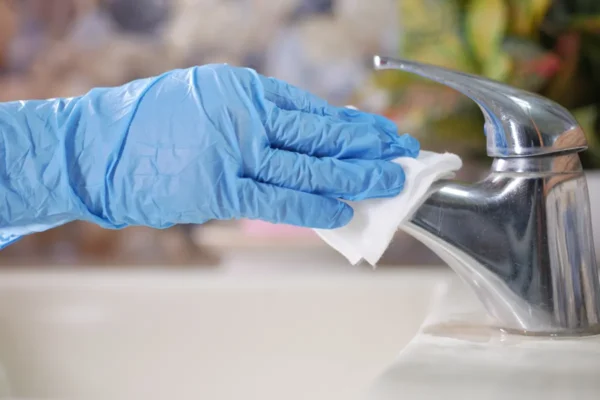
For the area around the sink, keep the faucet clean too, since drips and mineral buildup from it often land in the basin. See Kitchen Faucet Cleaning for how to handle that.
What to Avoid When Cleaning a Fireclay Sink
- Abrasive pads, steel wool, and gritty powders. They scratch and dull the glaze.
- Bleach left on the surface. If your maker allows bleach at all, use it rarely, dilute it, and rinse well. Never mix bleach with vinegar, ammonia, or other acids, because the mix can release dangerous gases.
- Leaving vinegar to sit. Long contact can dull some glazes and affect the grout or caulk around the sink.
- Strong or harsh chemicals. Drain openers and heavy-duty cleaners can damage the glaze and are unsafe to splash.
- Dropping heavy pots. Fireclay is hard but can chip from sharp impacts.
- Leaving metal items in the basin. Wet cans and pans can leave rust or gray marks.
- Scrubbing hard. Pressure does not remove stains faster and can wear the glaze.
- Skipping the rinse. Residue can leave a film.
When unsure about a product, test it on a small spot near the bottom of the basin and let it dry. A sink grid or mat on the basin floor helps protect the glaze from impacts and metal marks. Gentle cleaning done often protects fireclay better than strong cleaning done rarely. Always follow the sink maker's care guide, since it can differ by brand and glaze.

Photo Credit: Lisa Fotios
How Often to Clean a Fireclay Sink and How to Prevent Buildup
Regular light cleaning keeps the glaze glossy and prevents stains from setting.
- After each use: Rinse the basin and wipe the drain edge. Dry the sink when you can.
- Daily or every other day: Wash with soap and warm water, then rinse.
- Weekly: Do a full clean with soap and baking soda. Rinse and dry.
- Monthly or as needed: Treat mineral rings with diluted vinegar, using short contact time.
- Anytime: Remove metal items and wet cans from the basin.
How often you need to clean depends on how heavily you use the sink, how hard your water is, and what goes into it. A busy kitchen sink may need daily care. A lightly used one may need less. A basin grid, quick rinsing, and drying after use will do more for long-term shine than occasional deep scrubbing.
Fireclay Sink Cleaning FAQs
What is the best way to clean a fireclay farmhouse sink?
Wash with soap and warm water, scrub gently with baking soda on a soft sponge, rinse, treat mineral rings with diluted vinegar for a few minutes, rinse again, and dry. Use one product at a time and avoid abrasives.
How often should you clean a fireclay farmhouse sink?
Rinse after each use, wash daily or every other day, and do a full baking soda clean weekly. Treat mineral rings and stains as soon as you notice them.
What cleaning products are safe for a fireclay farmhouse sink?
Dish soap, baking soda, diluted white vinegar, and non-abrasive cleaners labeled safe for ceramic or glazed surfaces are the safest choices. Check your maker's care guide, and never mix cleaners.
What should you avoid when cleaning a fireclay farmhouse sink?
Avoid abrasive pads, steel wool, gritty powders, harsh chemicals, leftover bleach, long vinegar contact, and hard scrubbing. Do not leave metal items sitting in the basin.
Final Thoughts
A fireclay sink rewards simple care: soap, baking soda, a short vinegar rinse when needed, and a dry cloth. Protect the glaze from scratches and impacts, and the sink will stay glossy for years. See the full kitchen cleaning guide for more kitchen care.
Safety note: Follow product labels and the sink maker's instructions first. Do not mix cleaning products, and never combine bleach with vinegar, ammonia, or other acids. Ventilate the room and wear gloves when you use stronger cleaners. If you see cracks, deep chips, or damage you are unsure about, contact the manufacturer or a qualified professional



Leave a Reply