
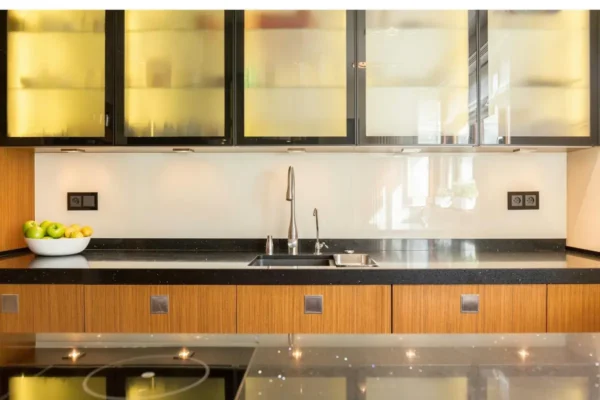
A glass or mirrored backsplash shows every mark in a way that tile never does. A single grease fingerprint or a light water spot stands out immediately against that reflective surface, which makes streak-free cleaning more of a priority here than with almost any other kitchen wall material. Glass backsplash cleaning isn't difficult once you know which products actually leave a clear finish and which ones leave a haze behind.
This guide covers the best way to clean glass and mirrored backsplashes, which products are genuinely safe for these surfaces, and how to avoid the scratches and streaking that show up so easily on glass. It's part of the Kitchen Wall & Backsplash Cleaning Guide, which also covers tile and painted wall surfaces common throughout the kitchen.
The Best Way to Clean a Glass or Mirrored Backsplash (Quick Answer)
For most glass and mirrored backsplashes, this approach works well:
- Dust the surface first with a dry microfiber cloth to remove loose debris before anything gets wet.
- Spray a glass cleaner or a diluted dish soap solution directly onto the surface, working in manageable sections.
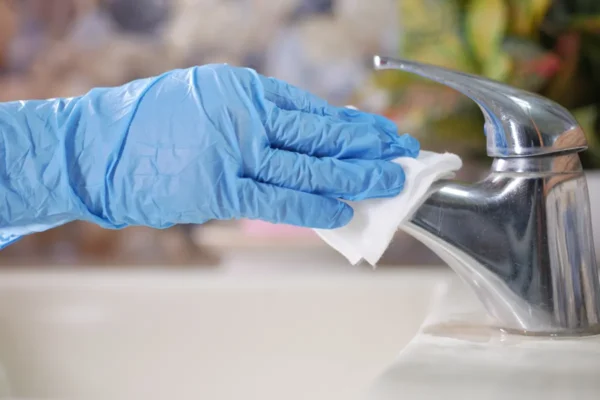
- Wipe with a clean, lint-free microfiber cloth using straight, top-to-bottom strokes rather than circular motions.
- Buff dry immediately with a second clean, dry cloth to prevent streaking as the surface air-dries.
- Check the surface at an angle under kitchen lighting to catch any missed streaks before considering the job done.
The exact cleaner can vary slightly between plain glass and mirrored panels, but this basic sequence, dust, spray, wipe, buff dry, applies to both.
Why Glass and Mirrored Backsplashes Need a Different Approach
Glass and mirror are non-porous, which means grease and grime sit right on the surface rather than soaking in the way it can with grout or unsealed stone. That's actually good news, since it means most residue lifts off fairly easily. The challenge is that any leftover streaks, lint, or soap film show up far more visibly on a reflective surface than they would on tile or a painted wall.
Mirrored backsplashes carry one extra consideration. The reflective backing sits just behind the glass surface, and if water consistently gets behind the edges or into any seams where the mirror meets the wall or trim, it can eventually cause the backing to deteriorate and create dark spots or a cloudy patch that doesn't clean away. Keeping moisture on the surface itself, rather than letting it pool at the edges, matters more with mirror than with plain glass.
What Cleaning Products Are Safe for Glass and Mirrored Backsplashes
|
Product |
Best Use |
Considerations |
|
Commercial glass cleaner |
Everyday cleaning on both glass and mirrored panels |
Look for a streak-free, ammonia-based or ammonia-free formula depending on preference |
|
Mild dish soap and water |
Cutting through grease near the stove |
Rinse thoroughly to avoid a soapy film |
|
Diluted vinegar and water |
Occasional use on plain glass |
Can be effective, but avoid on mirrored backing edges where moisture could seep in |
|
Microfiber cloth (dry) |
Daily dusting and final buffing |
Prevents lint and reduces the need for wet cleaning |
A dedicated glass cleaner is generally the most reliable everyday option, since it's formulated specifically to evaporate cleanly without leaving residue. For households that prefer fewer commercial products, a mild dish soap and water solution works well for cutting grease, as long as it's followed by a thorough dry buff to prevent a dull film from forming.

Photo Credit: Hobby Guidebook Editorial
Using Vinegar and Baking Soda on Glass or Mirrored Panels
Diluted vinegar can be a reasonably effective option on plain glass, since it cuts through grease and water spots without leaving a heavy residue. It should be used more cautiously on mirrored backsplashes, particularly near the edges, since repeated moisture exposure at the seams is exactly the situation that can lead to backing damage over time. If vinegar is used on a mirror, keep it away from the edges and any visible seams, and dry those areas thoroughly right after cleaning.
Baking soda isn't typically necessary for glass or mirror cleaning, since these surfaces don't usually develop the kind of stuck-on grime that needs a mild abrasive. On the rare occasion a stubborn spot doesn't lift with glass cleaner alone, a very small amount of baking soda paste can help, but it should be applied gently with a soft cloth and never with anything textured, since glass scratches more easily than most people expect. Baking soda and vinegar shouldn't be combined in the same cleaning step, since the reaction between them cancels out much of what each ingredient does on its own.
Step-by-Step Cleaning Technique
1. Dust First
Wipe the surface with a dry microfiber cloth to remove loose dust or crumbs. This step matters more on glass than on most other kitchen surfaces, since dry grit dragged across the surface during wet cleaning is one of the more common causes of fine scratches.
2. Apply Cleaner in Sections
Spray glass cleaner or your soap solution onto a manageable section rather than covering the entire backsplash at once. This keeps the product from drying before you've had a chance to wipe it off, which is one of the main causes of streaking.
3. Wipe with Straight Strokes
Use a clean, lint-free microfiber cloth and wipe in straight lines, top to bottom, rather than circular motions. Circular wiping tends to leave faint swirl marks that become visible once the light hits the surface at certain angles.
4. Buff Dry Right Away
Follow immediately with a second dry, clean cloth to remove any remaining moisture. Letting the surface air-dry on its own is more likely to leave water spots or a light haze, especially with harder water.
5. Check at an Angle
Step back and check the surface at an angle under your kitchen lighting. Streaks that aren't visible head-on often show up clearly from the side, and catching them now saves a second full cleaning pass later.
Photo Credit: Alesha
Handling the Stove Splash Zone
The section of a glass or mirrored backsplash directly behind the stove takes on far more grease than any other part of the wall, and it usually needs a slightly different approach than the rest of the surface. Grease film in this area can build up quickly if it's not addressed soon after cooking, and it tends to need a stronger degreasing pass than plain glass cleaner alone provides. Our guide on Cleaning Around the Stove Splash Zone covers how to handle this specific area in more detail, including how often it typically needs attention compared to the rest of the backsplash.
Cleaning Without Scratching the Surface
- Always use a soft microfiber cloth, never a rough sponge or anything with a textured surface.
- Avoid abrasive powders or scouring pads entirely, since these are one of the fastest ways to leave permanent scratches on glass.
- Check for grit before wiping, since a single stray crumb dragged under a cloth can scratch a wide path across the surface.
- Use minimal pressure, letting the cleaner do the work of loosening grease rather than pressing harder to compensate.
- Keep ammonia-based cleaners away from any tinted or coated decorative glass, since some specialty finishes can be affected by strong ammonia over repeated use. Check the manufacturer's care instructions if the glass has any kind of tint, frosting, or decorative coating.
What to Avoid When Cleaning Glass or Mirrored Backsplashes
- Using paper towels regularly. They can leave lint and, in some cases, contribute to fine scratching over repeated use. A microfiber cloth is the more reliable choice.
- Letting cleaner dry before wiping. This is one of the most common causes of streaking on glass.
- Oversaturating mirror edges. Moisture that lingers at the seams can lead to backing damage over time.
- Combining vinegar and baking soda in the same step. Use each separately, for its own purpose.
- Skipping the dry-buff step. Air-drying alone often leaves spots, especially with hard water.
Photo Credit: Curtis Adams
How Often Should You Clean a Glass or Mirrored Backsplash
- Wipe down the stove area after cooking sessions prone to splatter, since fresh grease comes off far more easily than residue that's had time to set.
- Do a full glass cleaner pass once a week, even if the surface doesn't look visibly dirty, since fingerprints and light grease film build up gradually.
- Check mirror edges periodically for any signs of moisture buildup or early cloudiness, since catching this early is easier to manage than addressing it once the backing has started to deteriorate.
Comparing to Tile Backsplashes
Glass and mirror are non-porous and generally easier to keep streak-free once you've got the technique down, but they show every smudge immediately in a way tile doesn't. Tile, by comparison, hides light grease film more easily but deals with grout lines that trap grime differently. If your kitchen has both surfaces, or you're deciding between them for a renovation, our guide on Tile Backsplash Cleaning covers the material-specific approach for ceramic, porcelain, and stone tile in more detail.
FAQ
What is the best way to clean a glass and mirrored backsplash? Dust first, apply a glass cleaner or diluted soap solution in sections, wipe with straight strokes using a microfiber cloth, then buff dry immediately to prevent streaking.
How often should you clean a glass and mirrored backsplash? Wipe down the stove area after cooking sessions prone to splatter, and do a full cleaning pass about once a week to catch fingerprints and light grease film.
What cleaning products are safe for a glass and mirrored backsplash? A commercial glass cleaner is the most reliable everyday option. Mild dish soap and water also works well for grease, and diluted vinegar can be used occasionally on plain glass.
What should you avoid when cleaning a glass and mirrored backsplash? Avoid paper towels, letting cleaner dry before wiping, oversaturating mirror edges, abrasive pads, and combining vinegar with baking soda in the same step.
How can you clean a glass and mirrored backsplash without damaging it? Use a soft microfiber cloth, check for grit before wiping, keep moisture away from mirror edges, and always buff the surface dry right after cleaning.
For more surface and appliance care throughout the kitchen, check out the full kitchen cleaning guide for additional routines and schedules.


Leave a Reply