

A grease film on a painted kitchen wall is a thin, sticky layer that builds up from cooking. You may not see it at first. Then the wall near the stove starts to look yellow, dull, or tacky, and dust sticks to it. This guide shows you how to remove a grease film from a painted kitchen wall safely, without harming the paint. It is part of our Part of Painted Kitchen Wall Cleaning series.
How to Tell the Wall Needs Cleaning
Cooking sends tiny drops of oil into the air along with steam. They land on nearby walls, cool down, and form a film. Walls close to the stove, the range hood, and the toaster get it first.
Here are signs the wall needs cleaning:
- The paint looks yellow or darker than the same paint in another room.
- The wall feels slightly sticky or slick when you touch it.
- Dust and lint cling to one area.
- A damp cloth leaves a brown or yellow streak.
- Splatter marks stay visible after a quick wipe.
A simple test helps. Wipe a small, hidden spot with a clean, damp white cloth. If the cloth picks up a yellow or brown tint, you have grease film. If nothing comes off but the color still looks off, the paint may be fading or may need a fresh coat instead.
Also think about the paint type. Flat or matte paint is softer and marks more easily when rubbed. Satin, semi-gloss, and gloss paints usually handle washing better. If you do not know your paint, take the gentlest approach and test first.
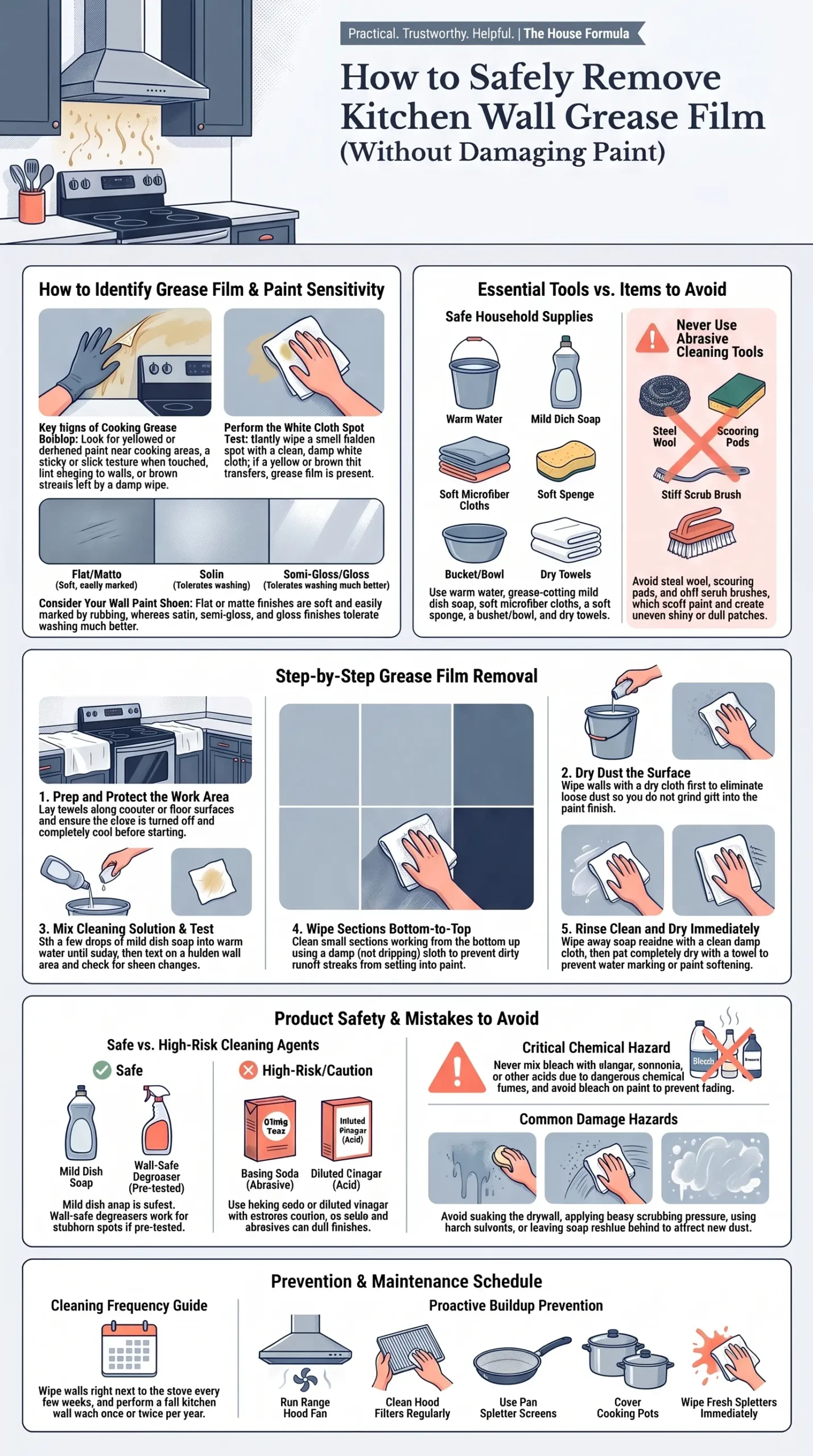
Photo Credit: Hobby Guidebook Editorial
What You Need
You do not need strong chemicals for most grease film. These simple supplies work well:
- Warm water
- Mild dish soap that cuts grease
- Two or three soft microfiber cloths
- A soft sponge (not a scouring pad)
- A bucket or large bowl
- A dry towel
- A mild degreasing spray made for painted walls, if you want one
Soft cloths are the key to cleaning grease film from painted kitchen walls without scratching the surface. Avoid rough sponges, steel wool, and scrub brushes. They can scuff the paint and leave shiny or dull patches.
Step-by-Step: How to Remove Grease Film
Work from the bottom of the wall to the top. This may sound odd, but dirty water can run down a wall and leave streaks that are hard to remove. Starting low keeps those streaks from setting into the paint.
- Protect the area. Lay a towel along the counter or floor. Turn off and cool the stove first.
- Dust the wall. Wipe with a dry cloth so you are not rubbing grit into the paint.
- Mix the cleaner. Add a few drops of dish soap to a bowl of warm water. Stir until slightly sudsy.
- Test a hidden spot. Wipe a small area, rinse, dry, and check the paint. If color comes off or the sheen changes, stop and read the paint label.
- Wipe in small sections. Wring out your cloth well. The cloth should be damp, not dripping. Wipe with light pressure in gentle strokes.
- Rinse. Use a second cloth with clean water to remove soap. Leftover soap can attract dirt.
- Dry right away. Pat the wall with a dry towel. Water sitting on paint can cause marks.
- Repeat if needed. Old, thick grease may take two or three light rounds.
Do not scrub hard. Patience protects the paint better than force. If grease sits above the stove, the ceiling may have the same film, and our Removing Grease from a Kitchen Ceiling guide covers that.

Photo Credit: https://kaboompics.com/
Which Cleaning Products Are Safe
Mild dish soap and warm water are the safest place to start. Dish soap is made to break down grease, and it is gentle on most finished paint.
If the film is stubborn, you can try a store-bought degreaser. Pick one that says it is safe for painted walls, and follow the label for dilution and contact time. Always test it in a hidden spot first. Some products can dull flat paint or lift color.
Some people like a mix of baking soda and water for sticky spots. Baking soda is a mild abrasive, so use it only on durable paint, with very light pressure. Skip it on flat or matte finishes.
Vinegar is another popular choice, but results depend on the paint and finish. It is an acid, and it may dull some paints. If you try it, dilute it, test it first, and rinse well. It is not needed for most grease film, so soap is the simpler choice.
Common Mistakes to Avoid
A few habits cause most of the damage:
- Soaking the wall. Too much water can soften paint and drywall.
- Scrubbing hard. This can leave shiny patches or strip paint.
- Using abrasive pads or powders. They scratch and scuff.
- Skipping the test spot. Paint types react differently.
- Leaving soap behind. Residue gets sticky and traps dust.
- Using harsh solvents. Strong chemicals can dissolve paint.
- Mixing cleaners. Never mix bleach with vinegar, ammonia, or other acids. The fumes can be dangerous.
Also avoid bleach on painted walls unless the paint maker says it is safe, because it can fade color.
If the paint peels, bubbles, or comes off on your cloth, stop cleaning. The wall may need touch-up paint or a new coat.
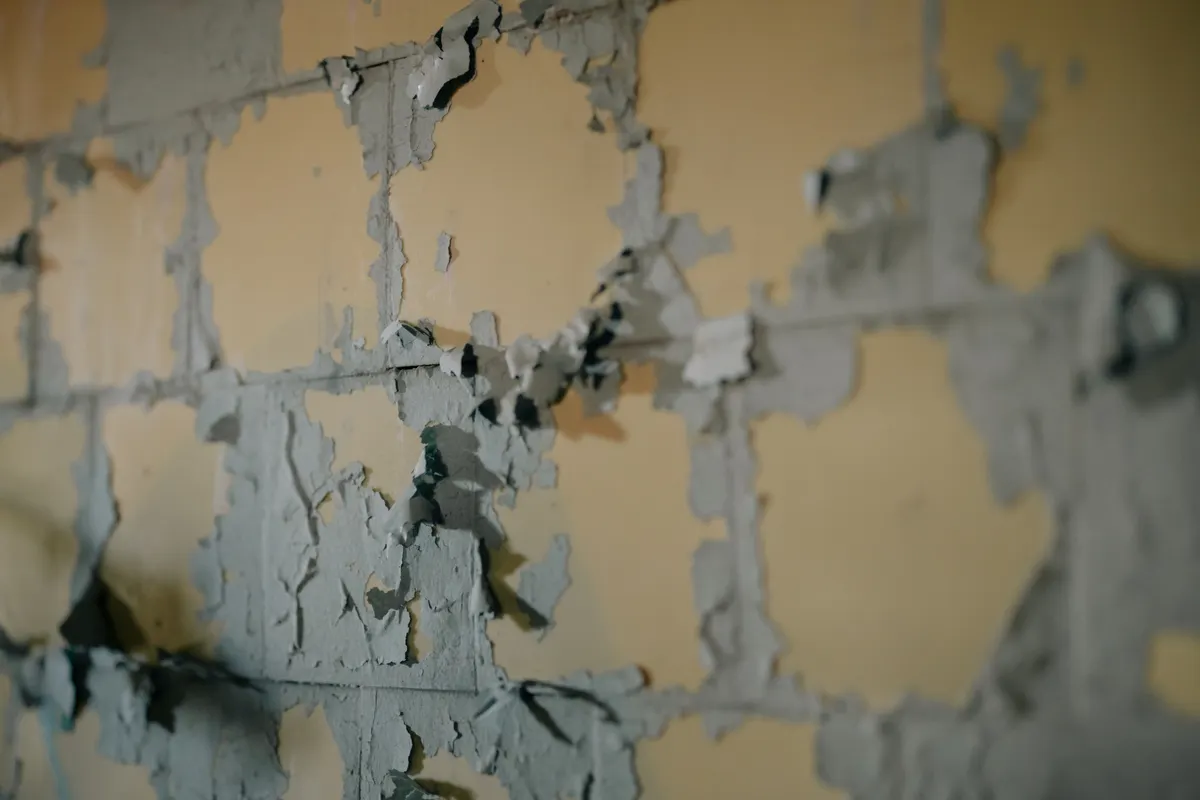
Photo Credit: cottonbro studio
How Often to Clean and How to Prevent Buildup
Walls near the stove collect grease faster than walls across the room. A quick wipe of the wall beside the stove every few weeks keeps the film thin and easy to remove. A fuller wash of the kitchen walls once or twice a year is often enough, though heavy frying may call for more.
Prevention helps a lot. Run the range hood fan while you cook, and keep its filter clean. Use splatter screens on pans. Cover pots when you can. Wipe fresh splatters while they are still soft, since new grease comes off far more easily than old.
Kitchen windows pick up the same oily haze, so the Removing Grease Film from a Kitchen Window guide is a useful companion. If a backsplash with glass or mirror sits near the stove, see Glass & Mirrored Backsplash Cleaning too.
Frequently Asked Questions
How do you remove grease film from painted kitchen walls?
Dust the wall, then wipe it with a soft cloth dampened in warm water and a few drops of dish soap. Work in small sections from the bottom up. Rinse with a clean damp cloth and dry with a towel. Test a hidden spot first.
How often should you clean grease film from painted kitchen walls?
Wipe the wall near the stove every few weeks. Wash the rest of the kitchen walls once or twice a year, or more often if you fry food a lot. Clean sooner if the wall feels sticky or looks yellow.
What cleaning products are safe for grease film from painted kitchen walls?
Mild dish soap and warm water are the safest choice. A degreaser labeled safe for painted walls can help on stubborn spots. Always follow the label and test in a hidden area first.
What should you avoid when cleaning grease film from painted kitchen walls?
Avoid hard scrubbing, steel wool, abrasive powders, soaking the wall, and harsh solvents. Do not use bleach on paint unless the maker approves it. Never mix cleaning products.
Final Thoughts
A grease film on painted kitchen walls is easy to treat when you use soft cloths, mild soap, and a light touch. Test first, dry the wall, and clean a little often rather than a lot rarely. For more help with every part of your kitchen, Browse the complete kitchen cleaning guide.
Safety note: Follow product labels and your paint maker’s advice. Never mix bleach with vinegar, ammonia, or other acids. Open a window or run a fan when using any cleaner, and wear gloves if your skin is sensitive. Make sure the stove is off and cool, and keep water away from outlets and switches.


Leave a Reply