

A greasy film on a wood floor can look cloudy, feel tacky and attract dirt. This guide shows how to deal with grease on a hardwood kitchen floor safely, using gentle products and very little water. It is Part of Hardwood Kitchen Floor Cleaning, so you can use it with your regular floor care.
Why Grease Builds Up on a Wood Kitchen Floor
Every time you cook, tiny droplets of oil float in the air and settle on nearby surfaces, including the floor. Add splatters from the stove, dropped food and cooking oil that drips from pans, and a thin film can build up, especially near the stove, the sink and the fridge. Shoes carry it around, too.
Wood is more sensitive than tile. Too much water can seep into the seams and make boards swell, cup or lose their finish. Strong cleaners can dull the surface or cloud it. This is why the method matters as much as the product.
How can you tell grease needs cleaning? Look for these signs:
- A dull, hazy or cloudy look in the cooking area
- A sticky or slick feel under your socks or shoes
- Dirt and dust that stick to the floor
- Dark, shiny spots where drips landed
- Smudges that return soon after mopping
- A lingering smell of cooking oil
A slick floor can also be a slip risk, so it is worth dealing with early.
Before you pick a method, learn what kind of finish your floor has. Most hardwood floors are sealed with a surface finish such as polyurethane, which forms a protective layer on top. Others have an oil or wax finish, which soaks in and needs different care. If you are not sure, check any paperwork from the installer or the floor maker. A simple test is to put a drop of water in a hidden spot. If it beads up and stays on top, the floor likely has a surface seal. If it soaks in or darkens the wood, it may have an oil or wax finish, and you should be extra careful.
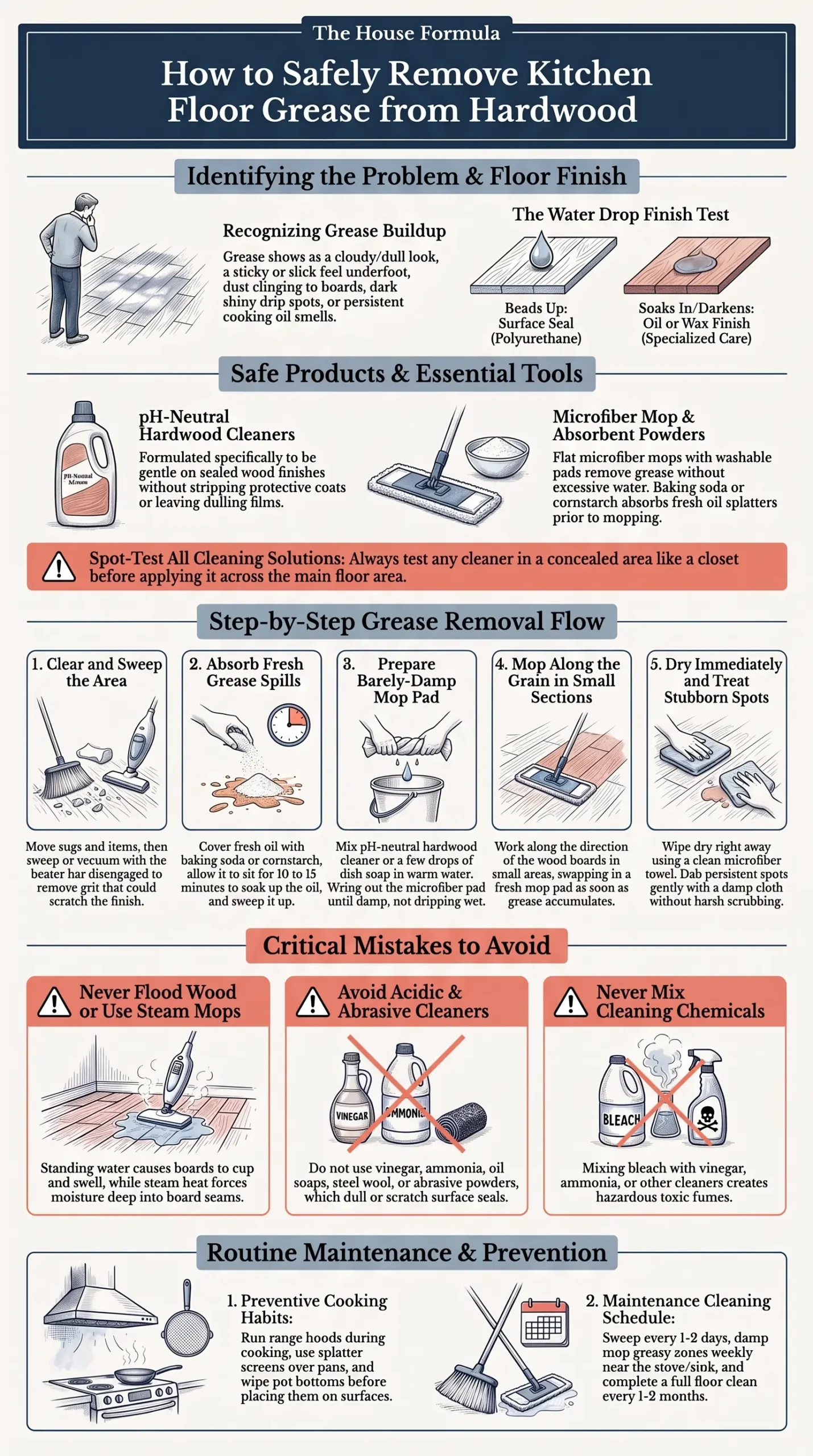
Photo Credit: Hobby Guidebook Editorial
Safe Products and Tools for Greasy Hardwood
For a sealed hardwood floor, mild is best. Gather these supplies:
- A soft broom or a vacuum made for hard floors (with the beater bar off)
- A flat microfiber mop with washable pads
- A pH-neutral cleaner made for hardwood floors, following the label
- Mild dish soap, used in very small amounts, if your floor maker allows it
- Clean, soft cloths or towels
- A bucket
- Paper towels
- Baking soda or cornstarch for fresh spills
- Rubber gloves
Best product: A cleaner made for hardwood floors is the safest choice, since it is made to be gentle on wood finishes. If you would rather use dish soap, mix only a small amount into warm water, since too much can leave a film. Check your floor maker’s care guide first.
Eco-friendly option: A damp microfiber mop with a small amount of mild soap in warm water is low in waste and avoids strong fragrances. Washable pads reduce paper use.
Always test any product in a hidden spot first, such as inside a closet or under a rug, and wait until it dries to check for dulling or color change.
How to Remove Grease from a Hardwood Kitchen Floor Step by Step
Work in small sections, and keep the floor from getting wet.
- Clear the area. Move rugs, mats and small items from the greasy zone.
- Sweep or vacuum. Remove grit first. Grit can scratch the finish when you mop.
- Blot fresh grease. If the grease is fresh, cover it with baking soda or cornstarch, let it sit 10 to 15 minutes to absorb the oil, then sweep it up.
- Prepare your cleaner. Mix a hardwood floor cleaner as the label directs, or use warm water with a few drops of mild dish soap.
- Dampen the mop pad. Wring it out well. It should be damp, not dripping.
- Mop with the grain. Work along the direction of the boards, one small section at a time.
- Change the pad. When the pad looks greasy, switch to a clean one so you do not spread the grease around.
- Dry right away. Follow with a clean, dry microfiber cloth or towel. Do not let water sit on the wood.
- Treat stubborn spots. Dab a soft cloth lightly dampened with your cleaner on the spot and rub gently. Do not scrub hard.
- Check the result. Look at the floor from a low angle in good light. Repeat on any hazy spots.
Kitchens often have more than one floor type. If part of your kitchen has vinyl or linoleum, our guide on Vinyl & Linoleum Kitchen Floor Cleaning explains how to clean those, since the methods are different from wood.
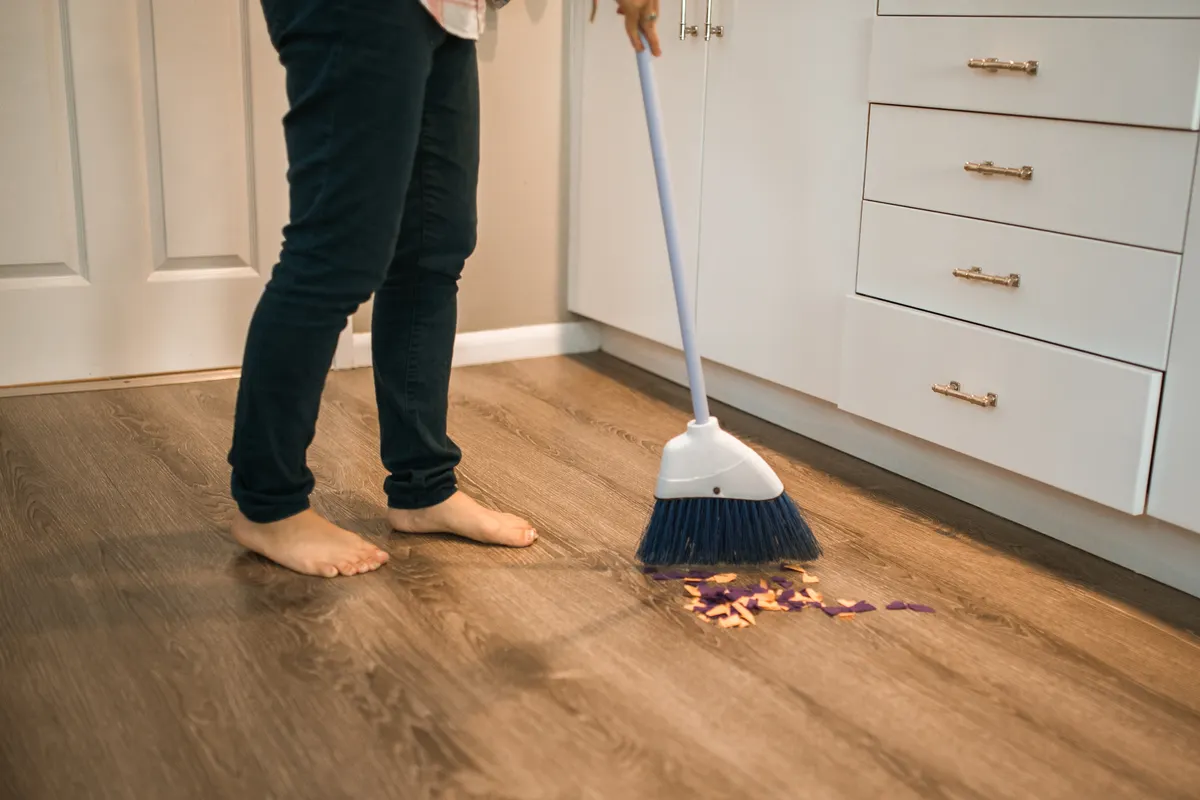
Photo Credit: RDNE Stock project
Oil or Wax Finishes and Other Special Cases
If your floor has an oil or wax finish, grease removal needs extra care. These finishes are not sealed on top, so liquid can soak in. Use as little moisture as you can, and follow the floor maker’s guide. Some makers suggest a product made for that finish. Avoid cleaners that are not made for oil or wax finishes, since they can strip the protective layer.
For very old grease, do not escalate to strong products. Instead:
- Repeat the gentle method over several days.
- Switch to a fresh microfiber pad each time.
- Dry the floor well after each pass.
- Ask the floor maker or a flooring professional for advice if the film will not budge.
If the grease has soaked deep, left dark patches or the finish looks worn, cleaning may not fix it. A flooring professional may be able to recoat or refinish the floor. What this costs depends on your area, the size of the floor, the finish and the provider, so ask for a quote and what it includes before you book. I cannot give a reliable number without those details.
What to Avoid on Hardwood Floors
Many problems come from using the wrong product or too much water:
- Never mix bleach with vinegar, ammonia or other cleaners. The mix can release dangerous fumes.
- Do not use a steam mop on hardwood unless your floor maker allows it. Steam and heat can force moisture into the seams.
- Do not flood the floor. Standing water can damage wood.
- Do not use vinegar, ammonia or bleach unless your maker approves them. Many wood floor makers advise against acids and harsh cleaners, since they can dull the finish.
- Do not use oil soaps or wax products on a surface-sealed floor. They can leave a film that attracts dirt and makes grease problems worse.
- Do not use steel wool, scouring pads or hard brushes. They scratch the finish.
- Do not use abrasive powders.
- Do not leave spills sitting. Wipe them up soon.
If you also have laminate floors in or near the kitchen, they need different care too. Our guide on Laminate Kitchen Floor Cleaning explains the safe method for that surface.

Photo Credit: Max Vakhtbovych
How Often to Clean and How to Prevent Grease
Wipe up spills as soon as they happen. Sweep or vacuum the kitchen every day or two, since grit makes grease harder to remove. Do a damp mop of the greasy zone once a week or so, especially near the stove and sink. Do a fuller clean of the whole floor every month or two, or sooner if you cook with a lot of oil. If you see a hazy film, it is time.
A few habits help keep grease from building up:
- Use a splatter screen or lid when frying.
- Turn on the range hood while you cook.
- Place a washable rug or mat in front of the stove and sink, with a non-slip backing that is safe for wood floors.
- Wipe the stovetop and counters so grease does not drip down.
- Take shoes off at the door.
- Wipe the bottoms of pots and pans before setting them down.
These small steps keep the floor cleaner and make the weekly job much quicker.
Frequently Asked Questions
How do you remove grease from hardwood kitchen floors?
Sweep first, absorb fresh grease with baking soda or cornstarch, then mop along the grain with a well-wrung microfiber pad and a hardwood floor cleaner or a very small amount of mild soap in warm water. Dry immediately with a clean cloth.
How often should you clean grease from hardwood kitchen floors?
Wipe spills right away, sweep every day or two and damp mop greasy areas weekly. Do a fuller clean every month or two, or when the floor looks hazy or feels sticky.
What cleaning products are safe for grease from hardwood kitchen floors?
A pH-neutral cleaner made for hardwood floors is the safest choice. A small amount of mild dish soap in warm water may be fine if your floor maker allows it. Baking soda or cornstarch can absorb fresh grease. Always test in a hidden spot.
What should you avoid when cleaning grease from hardwood kitchen floors?
Avoid steam mops, soaking the floor, vinegar or harsh cleaners unless the maker approves them, mixing bleach with vinegar or ammonia, oil soaps on sealed floors, steel wool and leaving spills to sit.
Final Thoughts
Grease on a hardwood floor is easy to handle when you keep things gentle and dry. Absorb fresh spills, mop with a barely damp pad, and dry the floor right away. Know your finish, test first and stay away from harsh products. A little prevention near the stove saves a lot of work later. To keep the rest of your kitchen in good shape, See the full kitchen cleaning guide.
Safety note: A wet or greasy floor can be slippery, so keep people and pets off it until it is dry. Never mix bleach with vinegar, ammonia or other cleaners, because this can create harmful fumes. Wear gloves, ventilate the room when you use any cleaner, and follow your floor maker’s care guide and the product label. Call a flooring professional if the finish is damaged or the grease will not come off.


Leave a Reply