
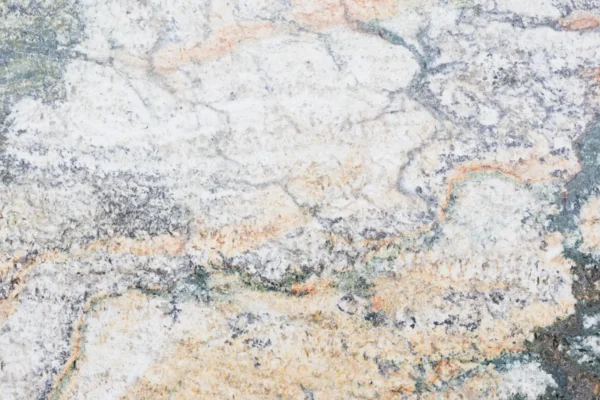
Hard water spots on a quartz countertop look like small white rings, cloudy patches, or a dull film near the sink. They are leftover minerals from tap water. The good news is that quartz is a tough, non-porous surface, so most spots come off with gentle cleaning. This guide shows you how to remove hard water spots from a quartz countertop without harming the finish. It is part of our Part of Quartz Countertop Stain Removal series.
Why Hard Water Spots Form on Quartz
Tap water often carries dissolved minerals, such as calcium and magnesium. When a drop of water dries on your counter, the water evaporates but the minerals stay behind. One drop leaves a tiny spot. Many drops over weeks build a chalky ring or a hazy film.
Quartz countertops are made from crushed quartz mixed with resin, which is a type of plastic binder. This makes the surface hard and sealed, so water does not soak in. That is helpful, because the minerals sit on top and are easier to wipe off than they would be on a porous stone.
The resin is also the reason you need to be careful. Harsh chemicals, strong acids, and rough scrubbing can dull or mark it. Spots are most common around the sink, the faucet base, the coffee maker, and anywhere a wet glass or dish rack sits. If you see a ring that returns in the same place, standing water is usually the cause.
How to Tell Hard Water Spots from Other Marks
Not every white mark is a mineral spot. A quick check saves time.
- Hard water spots look chalky or cloudy and often have a ring shape. They feel slightly rough or crusty.
- Grease or soap film feels slick or sticky and may collect dust.
- Dried food is raised and may flake when you scrape it with a fingernail.
- Damage such as etching or heat marks does not wipe off and looks like a permanent dull patch.
Wipe the spot with a damp cloth and a little dish soap. If it fades, it was likely film or residue. If it stays, it is probably minerals, and the steps below should help. If it does not budge at all, it may be a surface mark that needs the maker’s advice.
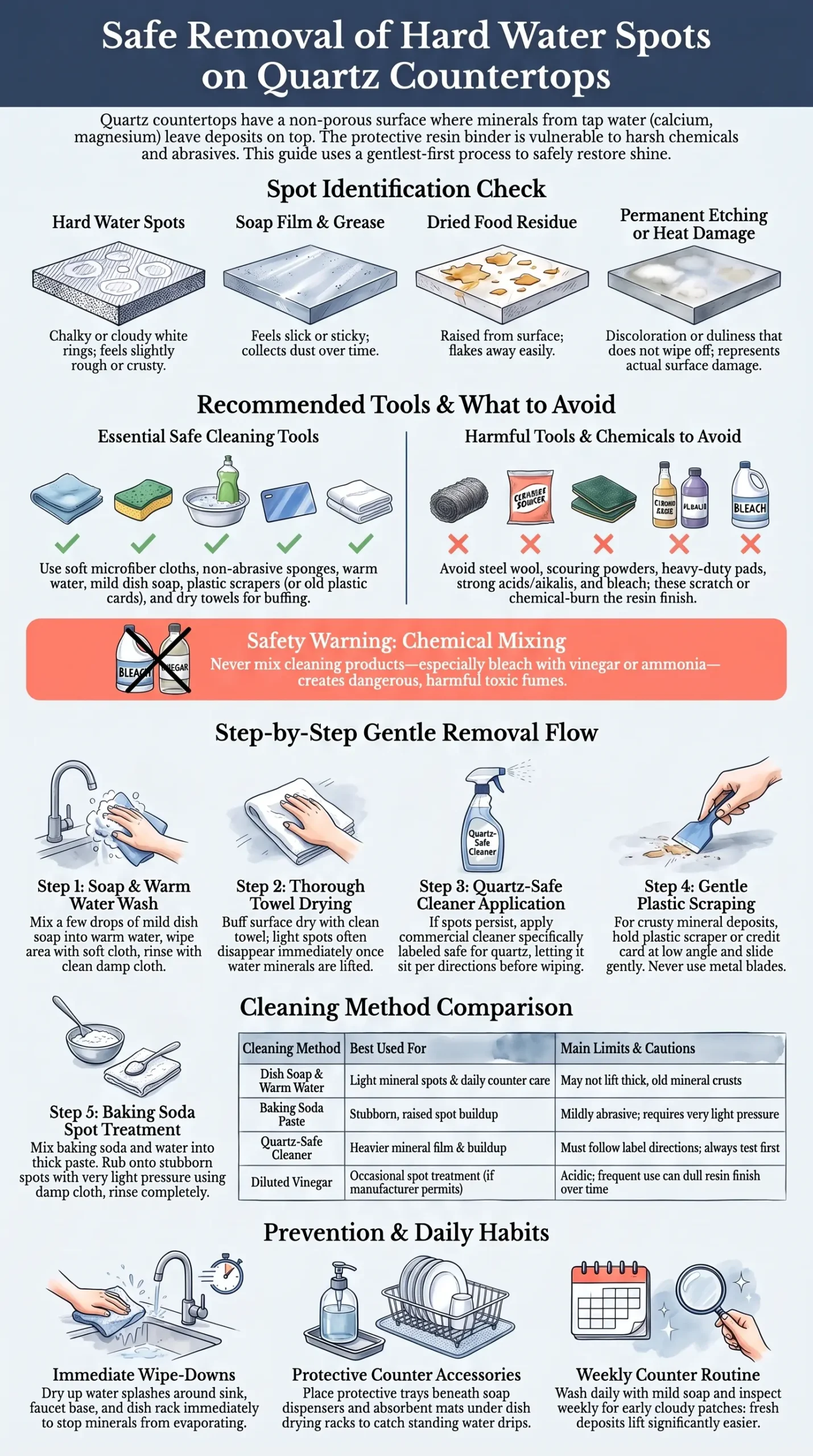
Photo Credit: Hobby Guidebook Editorial
What You Need
Quartz does not need much. These simple items cover most spots:
- Warm water
- Mild dish soap
- Soft microfiber cloths
- A soft sponge (never a scouring pad)
- A plastic scraper or an old plastic card for crusty buildup
- A cleaner made for quartz or a pH-balanced all-purpose cleaner, if you want one
- A dry towel for buffing
Skip steel wool, scouring powders, and any pad marked “heavy duty.” They can scratch the surface and leave dull streaks that look worse than the spots.
How to Clean Hard Water Spots Step by Step
Start with the gentlest option. Move up only if the spot stays.
- Clear the counter. Move items away from the spotted area.
- Wipe with soap and water. Mix a few drops of dish soap into warm water. Wipe with a soft cloth, then rinse with a clean damp cloth.
- Dry the surface. Buff dry with a towel. Many light spots disappear here, since drying stops new minerals from settling.
- Use a quartz-safe cleaner. If marks remain, spray a cleaner that lists quartz on the label. Let it sit for the time the label gives, then wipe and rinse.
- Lift crust gently. If you feel a raised crust, hold a plastic scraper at a low angle and slide it over the spot with light pressure. Never use metal blades.
- Try a baking soda paste on stubborn spots. Mix baking soda with a little water until it feels like thick cream. Rub it on with a damp cloth using very light pressure, then rinse well. Baking soda is a mild abrasive, so do not scrub hard, and stop if the surface starts to look dull.
- Rinse and dry. Wipe with clean water and buff dry.
Always test any new product in a hidden spot first, such as a corner behind the faucet. Wait a few minutes, rinse, and check that the finish looks the same. Gentle, repeated cleaning works better than one hard scrub.

Photo Credit: RDNE Stock project
Eco-Friendly Options and Commercial Cleaners
Many people want a gentle, low-waste way to clean. Warm water, mild dish soap, and a microfiber cloth are the most eco-friendly choice, and they handle most light spots. Baking soda paste is another low-cost option for tougher spots.
Vinegar and lemon juice are popular because they dissolve minerals. But they are acids, and many quartz makers advise against using acidic cleaners often, since they may dull the resin over time. If you decide to try diluted vinegar, check your maker’s care guide first, test a hidden spot, keep contact short, and rinse right away. The soap method is the safer first choice.
Here is a simple way to compare the choices:
|
Option |
Best for |
Main limit |
|
Dish soap and water |
Light spots and daily care |
May not lift old crust |
|
Baking soda paste |
Stubborn spots |
Mild abrasive; use light pressure |
|
Quartz-safe commercial cleaner |
Heavier buildup |
Must follow the label; test first |
|
Diluted vinegar |
Occasional use, only if the maker allows |
Acid can dull the finish |
A commercial cleaner is not always stronger than a natural method. What matters is whether the label says it is safe for quartz and whether you follow the directions. Avoid products that contain strong acids, bleach, or oven-cleaner chemicals.
Never mix cleaning products. In particular, do not combine bleach with vinegar, ammonia, or other acids, because the fumes can be dangerous.
What to Avoid
A few habits cause most of the damage on quartz:
- Abrasive pads and powders. They scratch the surface.
- Strong acids or alkalis. Heavy-duty bathroom cleaners, drain cleaners, and oven cleaners can harm the resin.
- Bleach used often or left to sit. It can discolor some finishes.
- Hot pots and pans. Heat can mark or crack quartz. Use trivets.
- Letting water air-dry. Standing water is what makes spots.
- Skipping the test spot. Brands differ, so check the care guide.
If a spot will not come off after a few gentle tries, stop. Contact the installer or the countertop maker and ask what they advise for your exact product. If the surface looks etched or damaged, a stone care professional can tell you whether it can be repaired. For other stone types, the advice is different, so see our Marble Countertop Cleaning guide, since marble reacts to acids far more than quartz does.
Photo Credit: RDNE Stock project
How Often to Clean and How to Prevent Spots
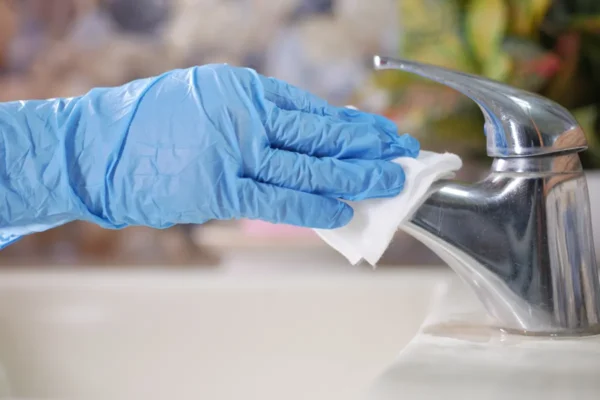
The best way to deal with hard water spots is to stop them from forming. Wipe up splashes with a dry towel soon after you notice them. This takes seconds, and it keeps minerals from drying onto the surface. Pay extra attention to the area around the sink and faucet.
For regular care, wash the counter with mild soap and water once a day or as needed. Do a closer check each week for cloudy rings. Treat new spots right away, because fresh minerals are far easier to remove than old buildup.
A few small habits help:
- Dry the counter after washing dishes.
- Put a tray under soap pumps and a mat under the dish rack.
- Wipe drips from the faucet base after use.
- Use a water softener or filter if your home has very hard water and spots keep returning.
Hard water leaves marks on other smooth surfaces too. If you notice the same haze on shower doors or windows, our Removing Hard Water Spots from Glass guide covers the best way to handle it. If your kitchen has a different counter type elsewhere, such as in a pantry or bar area, our Laminate Countertop Cleaning guide explains why laminate needs even less water and no rough scrubbing.
Frequently Asked Questions
What is the best way to clean hard water spots on quartz countertops?
Start with a soft cloth, warm water, and a few drops of mild dish soap. Rinse and dry the area well. If spots remain, use a cleaner labeled safe for quartz or a gentle baking soda paste with light pressure. Lift crust with a plastic scraper, never metal. Test any new product in a hidden spot first.
How often should you clean hard water spots on quartz countertops?
Wipe splashes dry as they happen, and wash the counter with mild soap and water daily or as needed. Do a closer check once a week. Treat new spots right away, since fresh minerals come off more easily than old ones.
What cleaning products are safe for hard water spots on quartz countertops?
Mild dish soap and warm water are the safest choice. Cleaners labeled for quartz are also suitable if you follow the label. Baking soda paste can help on stubborn spots when used gently. Check your countertop maker’s care guide, since brands can differ.
What should you avoid when cleaning hard water spots on quartz countertops?
Avoid steel wool, scouring powders, strong acids, harsh alkaline cleaners, and frequent bleach use. Do not set hot pans on the surface, and do not let water dry on the counter. Never mix cleaning products, especially bleach with vinegar or ammonia.
Final Thoughts
Hard water spots on quartz are annoying, but they are usually easy to fix. Use soft cloths, mild soap, and a light touch, and dry the counter after splashes. Test first, follow your maker’s care guide, and avoid harsh chemicals and rough pads. Small daily habits keep the surface smooth and clear. Return to the complete kitchen cleaning guide for help with the rest of your kitchen.
Safety note: Follow product labels and your countertop maker’s instructions. Never mix bleach with vinegar, ammonia, or other acids, because the fumes can be dangerous. Ventilate the room when using any cleaner, wear gloves if your skin is sensitive, and test products in a hidden spot first.


Leave a Reply