

Laminate flooring holds up well in a kitchen, handling foot traffic and the occasional spill better than many people expect. But that tough wear layer isn't invincible, and it reacts badly to a few common cleaning habits that seem harmless on the surface. Laminate kitchen floor cleaning is easy once you understand that water is the real enemy here, not dirt or grease.
This guide covers the safest way to clean laminate in a kitchen setting, which products actually work well, and how often the floor really needs attention. It's part of the Kitchen Floor Cleaning Guide, which covers care for other common kitchen floor materials beyond laminate.
The Best Way to Clean a Laminate Kitchen Floor (Quick Answer)
For most laminate kitchen floors, this approach works well:
- Sweep or vacuum first to remove grit and crumbs before any wet cleaning begins.
- Damp mop with a laminate-safe cleaner, keeping the mop barely damp rather than wet.
- Dry the floor immediately with a clean cloth or dry mop head.
- Wipe up spills right away, since standing liquid is the fastest way to damage laminate.
Laminate is made of a printed image layer sealed under a hard protective coating, sitting on top of a composite core. That core is the part that suffers most from water, since moisture that seeps through the seams can cause swelling, warping, or a soft, spongy feel underfoot that doesn't reverse once it happens.
Daily and Weekly Care
A kitchen floor takes on more daily wear than laminate in any other room, so a slightly more frequent routine pays off here.
- Sweep or dry mop daily, especially after cooking, since food crumbs and cooking grit are far more common in a kitchen than elsewhere in the house.
- Vacuum with a hard floor setting once or twice a week to pull dust and grit from corners and along baseboards that a broom sometimes misses.
- Damp mop once a week, using a well-wrung microfiber mop or pad that's only lightly dampened, never soaked.
- Dry the floor right after mopping with a clean cloth or dry mop head, since it's the lingering moisture that causes damage, not the brief contact of a damp cloth.
Grit is one of the most overlooked causes of scratches on laminate, since dragging a mop over small particles can grind them into the surface. Sweeping before every mop session prevents this.
What Cleaning Products Are Safe for Laminate
A cleaner formulated specifically for laminate floors is the safest everyday choice, since it's designed to clean without leaving a residue or affecting the protective wear layer.
|
Product |
Best Use |
Considerations |
|
Laminate-specific floor cleaner |
Regular weekly cleaning |
Follow label dilution instructions; formulated for the wear layer |
|
Microfiber dry mop |
Daily dust and crumb removal |
No moisture involved; safest daily option |
|
Diluted vinegar and water |
Occasional light cleaning, used sparingly |
Many manufacturers advise against regular use; can dull the finish over time |
|
Baking soda paste |
Spot treatment for stuck-on residue |
Use sparingly and wipe fully dry afterward |
Manufacturer instructions matter more with laminate than with most other flooring, since different brands use different wear layer coatings, and what's safe for one product line may dull or damage another. Checking the flooring manufacturer's care guide before settling on a regular cleaner is worth the extra few minutes, especially before trying anything beyond plain water and a laminate-approved cleaner.

Photo Credit: Hobby Guidebook Editorial
Using Vinegar and Baking Soda on Laminate
Vinegar comes up often as a natural cleaning option, and while a well-diluted solution used occasionally is unlikely to cause visible harm on most sealed laminate, many manufacturers specifically advise against regular vinegar use. The mild acidity can gradually dull the protective coating with repeated exposure, even if a single use looks fine. If vinegar is used at all, keeping it heavily diluted and limiting it to occasional cleaning rather than a weekly habit is the safer approach.
Baking soda is better suited to spot treatment than full-floor cleaning. A small amount made into a paste can help lift a stuck-on food spill or light scuff, applied gently with a soft cloth and wiped completely dry afterward so no moisture lingers in the seams. Baking soda and vinegar shouldn't be combined directly in the same cleaning step, since the reaction between them fizzes and neutralizes both before they've done much cleaning work. Using each one separately, for its own specific job, keeps both useful without wasting either.
Getting the Mopping Technique Right
How a floor gets mopped matters just as much as which product goes into the bucket, and laminate is less forgiving of a heavy-handed mopping style than tile or vinyl. A mop that's too wet is the single biggest risk factor for laminate damage in a kitchen, since water sitting in the seams between planks has nowhere to go and can seep down into the core layer before it evaporates. Wringing the mop out until it feels only slightly damp, working in smaller sections, and following behind with a dry cloth all reduce that risk significantly. Our guide on Mopping Techniques for Kitchen Floors covers this in more detail, including how the right technique differs depending on the flooring material underfoot.
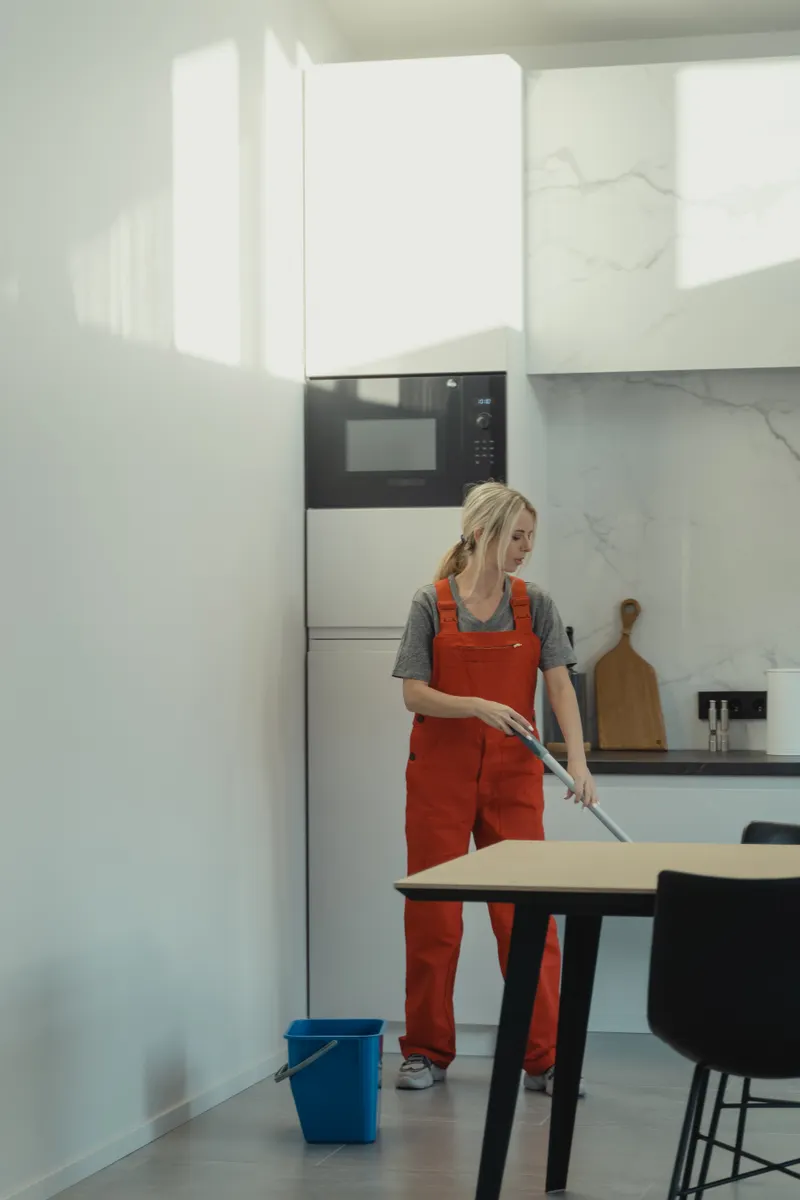
Photo Credit: Tima Miroshnichenko
Cleaning Without Scratching or Damaging the Surface
Laminate's wear layer is tougher than it looks, but a few habits can wear it down faster than expected.
- Use a soft microfiber mop head rather than a string mop or anything with a rough texture.
- Avoid steam mops on laminate entirely, since heat and moisture together are one of the fastest ways to damage the core layer, and most manufacturers explicitly warn against steam cleaning.
- Place felt pads under chair and table legs, since dragging furniture is one of the most common causes of visible scratches in a kitchen.
- Keep a doormat at entry points to reduce grit that gets tracked in and ground into the surface over time.
- Never use abrasive scrubbing pads, even on stuck-on spots, since these can wear through the protective coating and expose the printed layer underneath.
If a cleaning method leaves the floor looking hazy or slightly duller than before, that's usually a sign of either leftover product residue or a cleaner that isn't suited to the specific wear layer. Switching to a plain, well-wrung damp mop with clean water can help confirm which one is the issue.
What to Avoid When Cleaning a Laminate Kitchen Floor
- Using too much water. Standing water is the fastest way to cause swelling or warping along the seams.
- Using vinegar too frequently. Occasional, well-diluted use is generally tolerated, but regular use can dull the wear layer over time.
- Skipping the sweep before mopping. Grit left on the floor gets ground into the surface during mopping, creating fine scratches.
- Using a steam mop. Heat and moisture together are a poor combination for laminate's composite core.
- Combining vinegar and baking soda in the same step. Keep them separate and use each for its own purpose.
How Often Should You Clean a Laminate Kitchen Floor
A kitchen floor generally needs more frequent attention than laminate elsewhere in the home, given the food debris, grease, and foot traffic it deals with daily.
- Sweep or dry mop daily, especially after cooking or meal prep involving crumbs or splatter.
- Damp mop once a week with a laminate-safe cleaner, using minimal water and drying thoroughly afterward.
- Spot-clean spills immediately, regardless of the regular cleaning schedule, since letting liquid sit is what causes most laminate kitchen floor damage.
If the floor starts looking dull or shows a slight haze right after cleaning, that's usually a sign to reassess the product being used rather than clean more often.

Photo Credit: Max Vakhtbovych
Caring for Laminate in Other Rooms
Laminate care doesn't stop at the kitchen door, and a bathroom brings its own set of moisture challenges that call for extra caution around sinks, tubs, and toilets. Our guide on Laminate Bathroom Floor Cleaning covers how to manage that added humidity and splash exposure without letting water sit in the seams.
Caring for Other Kitchen Floor Materials
Not every kitchen has laminate, and knowing how care differs between materials helps avoid using the wrong method on the wrong surface. Stone floors handle moisture very differently and come with their own sealing and pH considerations that laminate doesn't share. Our guide on Stone Kitchen Floor Cleaning walks through that process in detail for anyone dealing with a mixed-material kitchen or comparing options for a future floor.
FAQ
What is the best way to clean a laminate kitchen floor? Sweep or vacuum first to remove grit, then damp mop with a laminate-safe cleaner using minimal water, and dry the floor immediately afterward.
How often should you clean a laminate kitchen floor? Sweep or dry mop daily, damp mop once a week, and spot-clean spills as soon as they happen regardless of the regular schedule.
What cleaning products are safe for a laminate kitchen floor? A laminate-specific floor cleaner is the safest everyday option. Diluted vinegar can work occasionally, but frequent use may dull the wear layer over time.
What should you avoid when cleaning a laminate kitchen floor? Avoid excess water, steam mops, frequent vinegar use, skipping the pre-mop sweep, and combining vinegar with baking soda in the same cleaning step.
How can you clean a laminate kitchen floor without damaging it? Use a soft microfiber mop, keep water use minimal, dry the floor right after mopping, and check the manufacturer's care instructions before trying a new product on the finish.
For more flooring and appliance care throughout the kitchen, check out the full kitchen cleaning guide for additional routines and schedules.



Leave a Reply