

A musty smell in the kitchen usually means moisture is sitting somewhere it shouldn't, whether that's under the sink, inside a dishwasher gasket, behind the fridge, or in a damp sponge left too long on the counter. Removing musty odor from the kitchen starts with finding that moisture source, since no amount of spraying or wiping fully clears the smell if the underlying dampness is still there.
This guide covers where musty smells usually come from in a kitchen, which cleaning methods actually work, and when the situation goes beyond a simple cleaning job. It's part of the Kitchen Odor Removal Guide, which covers a range of common kitchen smells and how to handle each one.
How Do You Remove Musty and Mildew Odors from the Kitchen?
The most effective approach is to locate the damp source first, clean it thoroughly, then dry the area completely before treating any lingering smell in the air. Common culprits include a wet sponge or dish rag left balled up, a dishwasher gasket holding trapped water, a slow leak under the sink, or a damp cabinet floor. Once the source is identified and cleaned, wiping the area with a mix of warm water and mild dish soap, followed by a full dry-out, usually resolves the smell. If the odor lingers in the air afterward, a short simmer of vinegar and water on the stove, or leaving an open box of baking soda in the affected cabinet, helps absorb what remains.
Step-by-Step: Clearing Musty Odor from Kitchen Surfaces
- Find the moisture source before doing anything else. Check under the sink, inside cabinet corners, behind the fridge, and around the dishwasher door seal. A musty smell almost always traces back to trapped or standing moisture somewhere nearby.
- Remove and replace anything too damp to save, like an old sponge, a soggy sponge holder, or cardboard packaging that's absorbed moisture. These items rarely come back to a fresh smell once mildew has set in.
- Clean the affected surface with warm water and mild dish soap. For cabinet interiors or under-sink shelving, wipe down thoroughly, including corners and edges where moisture tends to collect unnoticed.
- Dry the area completely before closing it back up. Leaving a cabinet door open for a few hours, or using a fan to speed up airflow, helps make sure no dampness remains that could cause the smell to return within days.
- Wipe the dishwasher door gasket with a damp cloth, checking for any built-up grime or trapped water in the rubber seal, since this is one of the most common sources of a musty kitchen smell that's otherwise hard to pinpoint.
- Treat the air once surfaces are clean and dry. A stovetop simmer of water with a splash of white vinegar for 10 to 15 minutes helps clear lingering odor, or set an open box of baking soda inside the affected cabinet for a few days to absorb what's left.
- Recheck after a few days. If the musty smell returns even after cleaning and drying, there may be a moisture source you haven't found yet, like a slow leak inside a cabinet wall or under a floor tile.
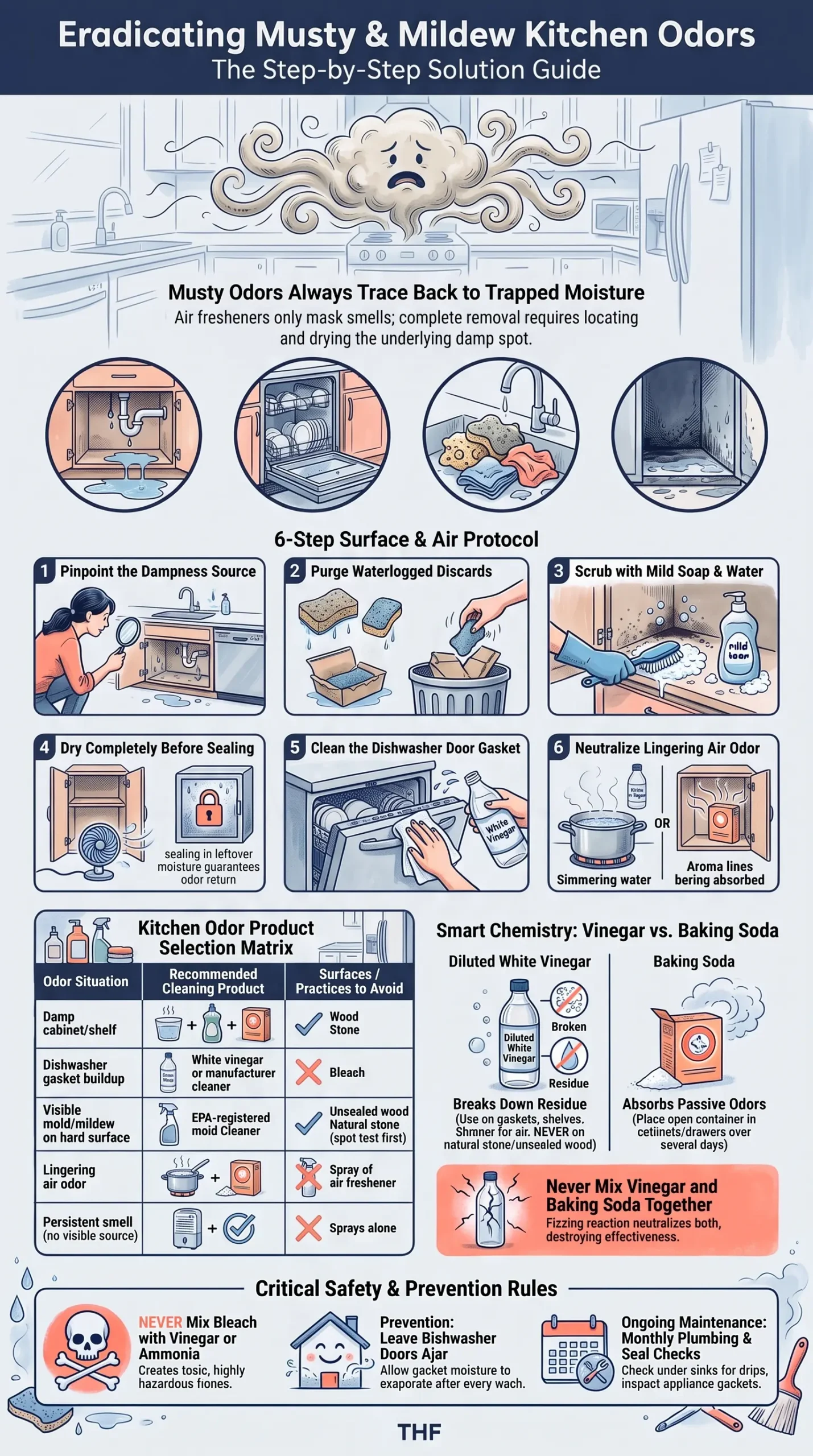
Photo Credit: Hobby Guidebook Editorial
Vinegar and Baking Soda for Musty and Mildew Odors
Vinegar and baking soda both have a role here, though they work best used at different stages rather than combined in one step. Vinegar's mild acidity helps break down some of the residue that mildew leaves behind on hard surfaces, so wiping down a damp cabinet shelf or the inside of a dishwasher gasket with diluted white vinegar can help with both cleaning and odor. Baking soda, on the other hand, works well as a passive odor absorber, placed in an open container inside a cabinet or drawer where musty smell tends to settle.
These two ingredients shouldn't be mixed together as a single cleaning paste for this purpose, since combining them causes a fizzing reaction that neutralizes both and doesn't add cleaning power. Used separately, in the right steps, they cover most everyday musty odor situations without needing anything stronger. Vinegar should be avoided on natural stone countertops or unsealed wood, since the acid can dull stone finishes and may affect certain wood sealants over time.
Best Product for Musty and Mildew Odors in the Kitchen
Different situations call for different products, and the right choice depends on how far the moisture problem has progressed.
|
Situation |
Best Product |
Where to Avoid |
|
Damp cabinet or shelf, mild smell |
Warm water and dish soap, then baking soda for lingering odor |
N/A, safe for most sealed surfaces |
|
Dishwasher gasket buildup |
Diluted white vinegar wipe, or dishwasher-safe cleaner per manufacturer instructions |
Bleach-based cleaners without checking manufacturer guidance first |
|
Visible mold or mildew on a hard surface |
EPA-registered mold and mildew cleaner, used per label instructions |
Unsealed wood or natural stone without testing first |
|
Lingering air odor after cleaning |
Stovetop vinegar simmer or activated charcoal/baking soda placed nearby |
Heavily scented sprays used as a substitute for actual cleaning |
|
Musty smell with no visible cause found |
Continued monitoring, dehumidifier if kitchen is prone to humidity |
Assuming a spray alone will resolve an unidentified source |
For any surface with visible mold or mildew growth rather than just a musty smell, a cleaner specifically labeled for mold and mildew, used according to its instructions, is generally more reliable than a natural approach alone. Always check the product label for surface compatibility, since some mold-specific cleaners aren't intended for wood, stone, or certain painted finishes without a rinse step afterward.
What Should You Avoid When Cleaning Musty Odor from the Kitchen?
A few habits commonly make this problem worse rather than better:
- Never mix bleach with vinegar or ammonia-based cleaners. This combination produces hazardous fumes and should never be used together, regardless of how strong the mildew smell is.
- Don't close up a cabinet or drawer while it's still damp. Sealing in moisture is one of the fastest ways to turn a mild musty smell into an actual mold problem.
- Avoid masking the smell with air freshener instead of cleaning the source. A scented spray covers the odor temporarily but does nothing for the moisture causing it.
- Don't ignore a dishwasher gasket that looks grimy or discolored. This is a very common, often overlooked source of musty kitchen smell that a general kitchen wipe-down won't fix.
- Skip using vinegar on natural stone countertops or unsealed wood without confirming the material can handle mild acid, since it can etch stone or affect certain wood finishes over time.

Photo Credit: Polina Zimmerman
How Can You Clean Musty Odor from the Kitchen Without Damaging Anything?
Start with the gentlest method, warm soapy water and thorough drying, before reaching for a stronger product. This handles the majority of everyday musty smell without any risk to cabinet finishes, countertops, or appliance seals. If a stronger mold or mildew cleaner is genuinely needed, test it on a small, hidden spot first, particularly on painted cabinet interiors or any surface you're not fully familiar with.
For surfaces where the material is unclear, such as an older cabinet with an unknown finish, sticking with mild soap and water and skipping vinegar or stronger commercial products is the safer default until you can confirm what the surface can handle. Drying thoroughly after every cleaning step matters just as much as the product used, since leftover moisture is often what allows the smell to return within a short time.
How Often Should You Clean Musty Odor from the Kitchen?
Musty odor is best addressed as soon as it's noticed rather than left to sit, since a mild dampness issue can develop into a more persistent mold problem if given enough time. Checking under the sink and around the dishwasher gasket on a monthly basis, even without an obvious smell, helps catch small leaks or trapped moisture early. Kitchens in humid climates, or homes with limited ventilation, may need this check more frequently, sometimes every couple of weeks, since ambient humidity alone can be enough to create the conditions mildew needs to develop.
Professional Cost to Clean Musty and Mildew Odors from the Kitchen
Most musty kitchen odors are resolved with routine cleaning and drying, without needing outside help. However, if the smell is tied to a plumbing leak, water damage behind a wall, or visible mold covering a larger area than a small cabinet shelf, bringing in a plumber or a mold remediation professional may be the more appropriate step. Pricing for this kind of service varies significantly based on the extent of the moisture problem, the materials affected, and your specific location, so getting a direct quote from a local professional is the most reliable way to understand actual cost for your situation. For everyday musty smell without visible damage or a known leak, the ongoing cost of managing it yourself is minimal, generally limited to dish soap, vinegar, and baking soda.

Photo Credit: Curtis Adams
Preventing Musty Odor from Returning
Once a musty smell has been cleared, a few habits help keep it from coming back:
- Wring out sponges and dish rags fully after each use, and replace sponges regularly rather than letting them sit damp for extended periods.
- Leave the dishwasher door slightly open after each cycle to let trapped moisture in the gasket evaporate rather than sit sealed inside.
- Check under the sink periodically for any signs of a slow leak, even a small drip, since this is one of the most common hidden sources of persistent musty smell.
- Keep cabinet interiors dry, especially in humid climates, and consider a small moisture absorber in cabinets that tend to stay damp.
For general kitchen freshness beyond addressing a specific problem, our guide on Natural Kitchen Air Fresheners covers simple, low-cost ways to keep the kitchen smelling clean day to day. And if the musty smell in your kitchen seems connected to a similar issue elsewhere in the home, our guide on Removing Musty Odor from a Closet addresses that specific situation, since closets and kitchens often share similar humidity-related causes.
Musty smells are sometimes confused with other strong kitchen odors, particularly lingering food smells that have settled into the air. If the odor you're dealing with seems more tied to cooking than dampness, our guide on Removing Onion & Garlic Smell from Hands and Kitchen covers that specific and very different odor source.
A Quick Note on Safety
Most musty odor situations in the kitchen involve simple dampness rather than serious mold growth, and dish soap, diluted vinegar, and baking soda are low-risk tools for handling them. If you use a commercial mold or mildew cleaner, follow the label's instructions for ventilation, contact time, and surface compatibility, since not all products are suited for every kitchen material. Never mix bleach with vinegar, ammonia, or other acidic cleaners, as this can produce hazardous fumes. If you find extensive mold growth, a persistent leak, or a musty smell that doesn't improve after thorough cleaning and drying, it's worth consulting a plumber or a mold remediation professional rather than continuing to treat it as a routine cleaning issue.
FAQ
How do you remove musty and mildew odors from the kitchen? Find and clean the source of moisture, such as a damp cabinet or dishwasher gasket, dry the area fully, then treat any lingering air odor with a vinegar simmer or baking soda.
How often should you clean musty and mildew odors from the kitchen? Address the smell as soon as it's noticed, and check common trouble spots like under the sink and the dishwasher gasket monthly, more often in humid climates.
What cleaning products are safe for musty and mildew odors from the kitchen? Dish soap, diluted white vinegar, and baking soda are generally safe, while an EPA-registered mold cleaner may be needed for visible mold growth.
What should you avoid when cleaning musty and mildew odors from the kitchen? Avoid mixing bleach with vinegar or ammonia, sealing up damp cabinets before they're dry, and masking the smell with air freshener instead of cleaning the source.
How can you clean musty and mildew odors from the kitchen without damaging anything? Start with mild soap and water, test any stronger product on a small hidden area first, and always dry surfaces fully after cleaning.
To explore more kitchen odor and cleaning solutions, go back to the complete kitchen cleaning guide for additional routines and troubleshooting help.



Leave a Reply