
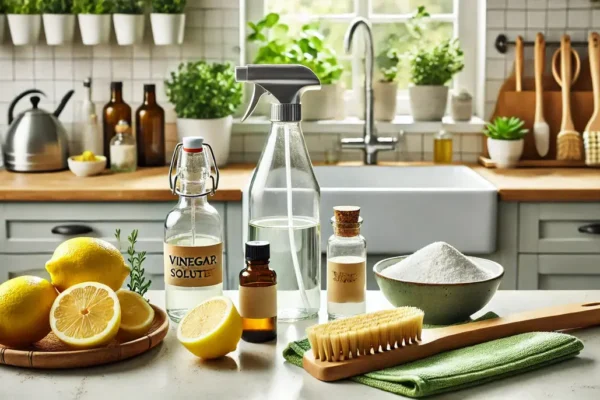
A surprising amount of kitchen cleaning can be handled with a handful of pantry staples rather than a cabinet full of specialty sprays. Natural kitchen cleaning ingredients like baking soda, white vinegar, and castile soap cover a wide range of everyday tasks, from cutting grease on a stovetop to freshening a cutting board, though each one has limits worth understanding before you rely on it.
This guide covers the core natural ingredients worth keeping on hand, what each one can and can't handle, and which combinations are genuinely useful versus which ones just cancel each other out. It's part of the Kitchen Cleaning Tools & Supplies Guide, which covers the full range of tools and products that make kitchen cleaning easier.
What Tools and Supplies Do You Actually Need for the Kitchen?
A basic natural cleaning setup for the kitchen typically includes:
- White vinegar for cutting grease and mineral deposits on many hard surfaces
- Baking soda for mild scrubbing and deodorizing
- Castile soap as a gentle, plant-based liquid soap for dishes and general wiping
- Lemon juice for light degreasing and freshening
- Coarse salt as a mild abrasive for stuck-on food
- Microfiber cloths and a soft-bristled brush to apply and work these ingredients without scratching surfaces
None of these require special storage beyond a cool, dry cabinet away from direct sunlight, and all are inexpensive compared to buying a separate commercial product for every task. That said, natural ingredients aren't a universal replacement for every kitchen cleaning job. Raw meat spills, mold, and situations that call for actual disinfection still need a product proven to kill the specific organism involved, which plain vinegar or baking soda cannot reliably do.
The Core Natural Ingredients and What They Actually Do
White Vinegar
White vinegar is a mild acid, and that acidity is exactly what makes it useful for cutting through grease film and dissolving mineral deposits left by hard water, like the cloudy buildup around a faucet or inside an electric kettle. It works well on sealed countertops, glass, and most glazed tile.
Vinegar has real limits, though. It shouldn't be used on natural stone like marble or granite, since the acid can etch and dull the surface, sometimes permanently. It's also not a disinfectant in the way bleach or an EPA-registered disinfecting product is, so it isn't a reliable choice after handling raw meat or when actual germ-killing is the goal rather than general cleaning.
Baking Soda
Baking soda is a mild abrasive and a natural deodorizer, which makes it useful for scrubbing stuck-on food from pots and pans, cleaning the inside of a refrigerator, or working into grout lines with a soft brush. Mixed into a paste with a small amount of water, it lifts grime gently without scratching most surfaces the way a harsher scouring powder can.
It works less well as a standalone degreaser for heavier grease buildup, where it typically needs to be paired with dish soap or a longer soak time to really cut through.
Castile Soap
Castile soap is a plant-oil-based liquid soap, often sold under names like Dr. Bronner's, though any similar plant-based castile formula works the same way. Diluted with water, it's gentle enough for everyday dish washing, wiping down countertops, or cleaning painted kitchen walls without stripping color or dulling a low-sheen finish.
Castile soap doesn't handle heavy grease as effectively as a degreaser formulated specifically for that job, and it can react poorly with vinegar or other acids, sometimes curdling into a filmy residue rather than rinsing clean. Keeping castile soap and acidic ingredients in separate cleaning steps avoids this issue entirely.
Lemon Juice
Lemon juice offers a milder acidity than vinegar, along with a natural fresh scent, making it a reasonable choice for cutting light grease on countertops or freshening a cutting board between deeper cleanings. Like vinegar, it shouldn't be used on natural stone, and it isn't a substitute for a real disinfectant when actual sanitizing is the goal.
Coarse Salt
Coarse salt works as a simple mechanical scrubber, useful for lifting burnt-on food from the bottom of a pan or scouring a cutting board. It's a physical abrasive rather than a chemical cleaner, so it doesn't cut grease or kill bacteria on its own, but it pairs well with a small amount of dish soap or lemon juice for extra scrubbing power on stubborn spots.
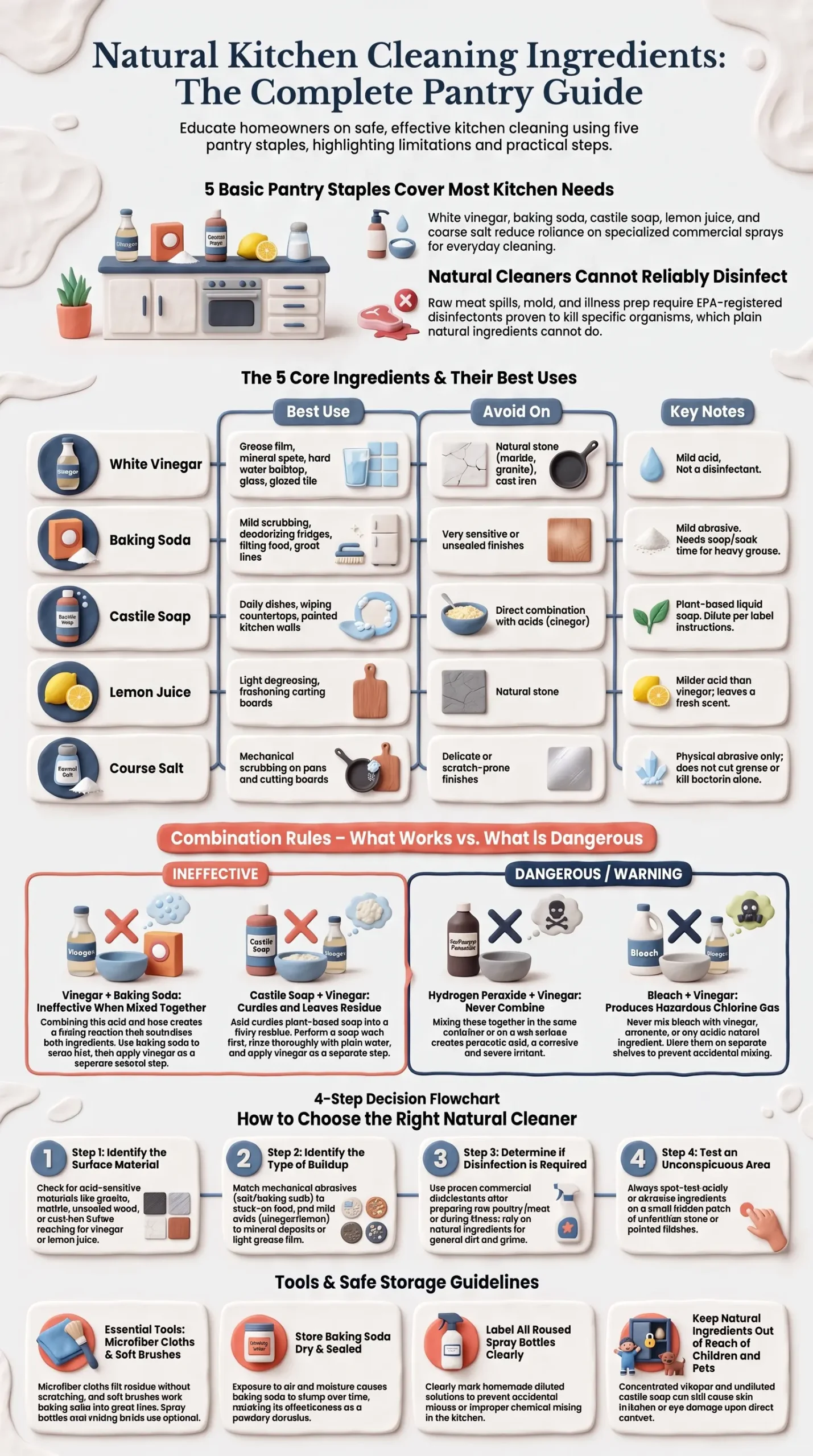
Photo Credit: Hobby Guidebook Editorial
Comparing Natural Ingredients by Use
|
Ingredient |
Best Use |
Avoid On |
Notes |
|
White vinegar |
Grease film, hard water spots, glass |
Natural stone, cast iron |
Not a disinfectant |
|
Baking soda |
Mild scrubbing, deodorizing, grout |
Very sensitive or unsealed finishes |
Works best combined with soap for grease |
|
Castile soap |
Dishes, countertops, painted walls |
Combining directly with vinegar |
Dilute per product label |
|
Lemon juice |
Light degreasing, freshening |
Natural stone |
Milder acid than vinegar |
|
Coarse salt |
Mechanical scrubbing on pans, boards |
Delicate or scratch-prone finishes |
Physical abrasive only |
This kind of side-by-side view makes it easier to reach for the right ingredient the first time, rather than guessing and potentially damaging a surface with the wrong one.
Safe and Unsafe Combinations
Vinegar and Baking Soda
This is probably the most commonly suggested natural cleaning combination, and it's also one of the least effective when mixed together in the same step. The fizzing reaction between an acid and a base neutralizes both ingredients fairly quickly, meaning most of the actual cleaning power is used up in the reaction itself rather than on the surface. Each ingredient works better used on its own, for its own specific purpose, such as baking soda for scrubbing and vinegar for cutting grease or mineral buildup afterward, applied as separate steps rather than combined at once.
Castile Soap and Vinegar
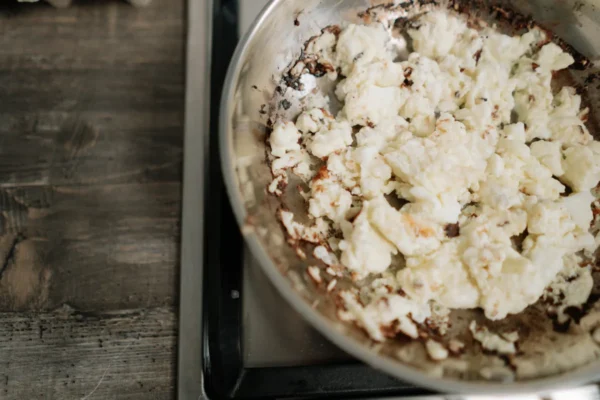
Castile soap and vinegar shouldn't be combined directly, since the acid in vinegar can cause the soap to curdle, leaving a filmy residue that's harder to rinse away than either ingredient would leave on its own. If a surface needs both a soap wash and a vinegar rinse, do them as two separate steps, rinsing thoroughly with plain water between the two.
Hydrogen Peroxide and Vinegar
Some households use diluted hydrogen peroxide as a mild natural disinfecting option alongside vinegar, but these two should never be combined in the same container or applied simultaneously to the same wet surface. Mixed together, they can form peracetic acid, which is more corrosive and irritating than either ingredient alone. If both are part of a cleaning routine, apply one, rinse or let it dry, and only then apply the other.
What Never Belongs in a Natural Cleaning Routine
Bleach should never be mixed with vinegar, ammonia, or any other acidic natural ingredient, since this combination produces hazardous chlorine gas. Bleach isn't typically grouped with natural ingredients, but it's worth stating clearly here because vinegar is common enough in kitchens that an accidental combination is a real risk if bleach is also being used nearby for a different task.
Photo Credit: Polina Tankilevitch
How Do You Choose Products That Are Appropriate for the Kitchen?
Choosing the right natural ingredient for a task comes down to matching the ingredient's strengths to the surface and the problem.
- Identify the surface material first. Natural stone, unsealed wood, and cast iron all have specific sensitivities that rule out certain natural ingredients, particularly acids like vinegar and lemon juice.
- Identify what you're actually trying to remove. Grease, mineral buildup, and stuck-on food each respond better to different ingredients, so matching the tool to the job saves time and avoids unnecessary scrubbing.
- Decide whether disinfection is actually needed. If you're cleaning after handling raw meat or poultry, or during illness in the household, a proven disinfectant is the more appropriate choice rather than a natural ingredient alone.
- Test on a small area if you're unsure. This is especially relevant for stone countertops, painted walls, or any finish where the exact material composition isn't fully known.
For more detailed recipes that combine these ingredients into ready-to-use sprays and pastes, our guide on Homemade Kitchen Cleaner Recipes walks through specific mixes for countertops, appliances, and sinks.
Which Tools Are Useful and Which Are Optional?
Not every natural ingredient needs a dedicated tool, but a few genuinely make the job easier:
- A spray bottle for diluted vinegar or castile soap solutions, useful but not strictly required if you're applying with a cloth directly.
- A soft-bristled brush for grout lines and textured surfaces, genuinely useful and worth having.
- A dedicated mixing bowl for baking soda paste, optional, since any clean small container works.
- Microfiber cloths, genuinely useful across nearly every natural cleaning task, since they apply and lift residue without scratching.
Skipping the optional extras doesn't hurt results much, but a soft brush and a supply of microfiber cloths make a noticeable difference in how easily these ingredients actually work.

Photo Credit: Cup of Couple
How Should These Products Be Stored Safely?
- Keep vinegar and lemon juice away from bleach-based products, ideally on separate shelves, to avoid any accidental mixing during use.
- Store baking soda in a sealed container to keep it dry and effective, since moisture causes clumping over time.
- Label any homemade diluted solutions clearly, especially if stored in a reused spray bottle, so no one mistakes a cleaning mixture for something else.
- Keep all cleaning ingredients out of reach of children and pets, even natural ones, since concentrated vinegar and undiluted castile soap can still irritate eyes or skin on contact.
Which Tasks Are Easy to Overlook With Natural Ingredients?
- Disinfecting after raw meat prep. Natural ingredients clean but don't reliably disinfect, and this is a task where a proven disinfectant matters more than ingredient preference. Our guide on Kitchen Disinfectants vs. Sanitizers Explained breaks down when each is actually necessary.
- Grout maintenance. Baking soda works well here but gets skipped often since it takes a bit more scrubbing time than a quick wipe.
- Refreshing sponges and cloths themselves. These tools pick up bacteria over time and need their own regular cleaning, not just the surfaces they're used on.
- Checking natural stone before using acidic ingredients. This step gets missed most often by people who assume all countertops handle vinegar the same way.
How Often Should You Use or Update This Approach?
A natural cleaning routine works best when it's reviewed occasionally rather than treated as fixed. Check every few months whether:
- Your usual ingredients are still handling the messes you're dealing with, since a household's cooking habits can shift what kind of residue builds up.
- Any surfaces have changed, such as a new stone countertop or a repainted wall, which may call for a different approach than before.
- Storage containers and labels are still clear and intact, particularly for any diluted homemade mixtures kept in spray bottles.
For a broader look at how natural ingredients fit alongside other rooms in the home, our guide on Natural Bathroom Cleaning Ingredients covers a similar approach for bathroom-specific surfaces and concerns.
A Quick Note on Safety
Natural ingredients are generally gentler than commercial chemical cleaners, but they still require some care. Never combine bleach with vinegar, ammonia, or other acids, and avoid mixing hydrogen peroxide and vinegar together in the same container. Always test an acidic ingredient like vinegar or lemon juice on a small area of any unfamiliar surface, particularly natural stone, before using it more broadly. Keep all cleaning ingredients, natural or otherwise, out of reach of children and pets, and ensure good ventilation when using any concentrated solution.
FAQ
What tools and supplies do you actually need for the kitchen? A basic setup includes white vinegar, baking soda, castile soap, lemon juice, coarse salt, microfiber cloths, and a soft-bristled brush. These cover most everyday cleaning tasks without requiring a full shelf of commercial products.
What are the essential tools or supplies for the kitchen? Microfiber cloths and a soft-bristled brush are the two tools that make the biggest difference, since they let natural ingredients work effectively without scratching surfaces.
How do you choose products that are appropriate for the kitchen? Match the ingredient to both the surface material and the specific problem, check whether disinfection is actually required, and test unfamiliar combinations on a small area first.
Which tools are useful and which are optional for the kitchen? Microfiber cloths and a soft brush are genuinely useful. A spray bottle and dedicated mixing bowl are convenient but optional, since a cloth and any clean container can substitute.
How should products or supplies for the kitchen be stored safely? Store vinegar and lemon juice away from bleach, keep baking soda sealed and dry, label any homemade solutions clearly, and keep everything out of reach of children and pets.
For more tools and product guidance across the kitchen, see the full kitchen cleaning guide for additional routines and recommendations.




Leave a Reply