
A pedestal sink stands on its own, with a slim column supporting the basin instead of a cabinet or counter underneath. That open design gives a bathroom a lighter, more visible look, but it also means the basin, the pedestal column, and the floor around its base all need attention, not just the bowl itself. Pedestal sink cleaning covers more surface area than people expect, since there's no cabinet hiding the plumbing or catching drips before they reach the floor.
This guide covers the best way to clean a pedestal sink, how often it needs attention, which products are safe for the basin and pedestal, and how to tell when a full clean is overdue. This article is Part of Bathroom Sink & Vanity Cleaning Guide, which covers sink and vanity care across every common style.
The Best Way to Clean a Pedestal Sink
- Rinse the basin with warm water to clear loose debris, toothpaste, and soap residue before applying any cleaner.
- Apply a mild dish soap or bathroom cleaner suited to your sink's material (usually porcelain) with a soft cloth or sponge, wiping the basin, faucet base, and drain area.
- Wipe down the pedestal column with the same mild soap and a soft cloth, working from top to bottom, since water tends to run down the column and collect dust and grime along the way.
- Check the base of the pedestal where it meets the floor, since this spot collects dust, hair, and moisture more than any other part of the sink, and it's easy to overlook during a quick wipe.
- Rinse thoroughly, making sure no cleaner residue is left on the basin or column.
- Dry the basin, column, and base with a soft towel rather than letting it air dry, which helps prevent water spots and reduces standing moisture where the pedestal meets the floor.
Because a pedestal sink has no cabinet to hide behind, water drips from the basin often land directly on the column or floor below. Wiping the column during routine cleaning, not just the basin, keeps the whole fixture looking consistent instead of clean on top and dusty underneath.
How Often Should You Clean a Pedestal Sink
|
Task |
Suggested Frequency |
|
Quick basin rinse |
Daily |
|
Full clean of basin, column, and base |
Weekly |
|
Floor area around the pedestal base |
Weekly, as part of the full clean |
|
Deeper mineral buildup treatment |
Every 2 to 4 weeks, depending on water hardness |
Households with hard water tend to see mineral spotting build up faster on both the basin and the column, since water runs down the exposed pedestal more than it would on an enclosed vanity. A bathroom with heavy daily use also tends to collect more dust and hair around the pedestal base, simply because there's no cabinet catching it first.
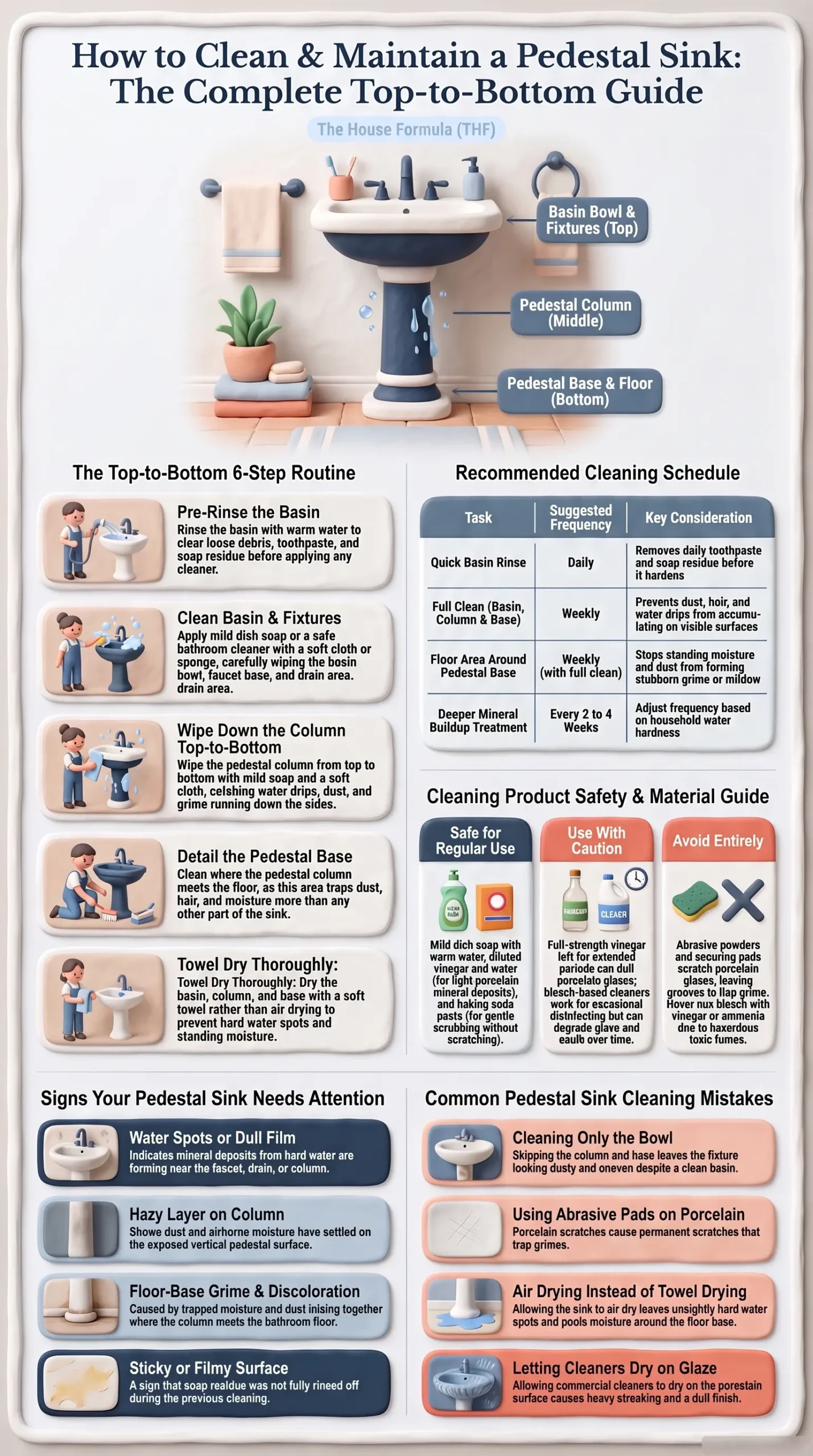
Photo Credit: Hobby Guidebook Editorial
How to Tell a Pedestal Sink Needs Cleaning
A pedestal sink shows signs of needing attention a little differently than a sink with a cabinet underneath, mainly because so much of it is visible at once.
- Water spots or a dull film on the basin, especially near the faucet and drain, usually mean mineral deposits have started building up from hard water.
- Dust or a hazy layer on the pedestal column, which is easy to miss since most people focus on the basin and forget the column gets dusty just like any other exposed surface.
- Grime or discoloration where the pedestal meets the floor, often from trapped moisture and dust mixing together in a spot that doesn't dry out quickly.
- A slightly sticky or filmy feel on the basin's surface, which usually points to soap residue that wasn't fully rinsed during the last cleaning.
- Visible soap scum around the drain or faucet base, which tends to build up faster in households with multiple people using the same sink daily.
Catching these signs early keeps a simple wipe-down effective, rather than letting buildup reach the point where it needs a deeper scrub or a stronger product.
What Cleaning Products Are Safe for a Pedestal Sink
Generally safe:
- Mild dish soap and warm water, suitable for the basin, faucet base, and pedestal column
- A vinegar and water solution, useful for light mineral deposits on porcelain basins
- A baking soda paste, effective for gentle scrubbing on stuck-on grime without scratching the glaze
Use with caution:
- Full-strength vinegar left to sit for extended periods, since prolonged acidic contact can dull certain porcelain glazes over time
- Bleach-based cleaners, which work occasionally for disinfecting but shouldn't be the default weekly cleaner, since frequent bleach exposure can affect some glazes and any nearby caulk at the floor connection
Avoid:
- Abrasive powders or scouring pads, which scratch porcelain and leave fine grooves that trap future grime
- Mixing bleach with vinegar or ammonia, which can release hazardous fumes in an enclosed bathroom space
- Harsh solvents on the pedestal column if it has a painted or specialty finish, since some finishes react poorly to strong chemicals
Manufacturer guidance should take priority for pedestal sinks with a specialty glaze or antique finish, since older or decorative pieces sometimes need gentler handling than a standard modern porcelain sink.
Cleaning a Pedestal Sink Without Scratching the Surface
Porcelain, the most common pedestal sink material, has a glossy glaze that scratches more easily than people tend to assume, especially with repeated use of the wrong tool. Once scratched, even lightly, grime settles into those tiny grooves, making the sink harder to keep looking clean with every pass afterward.
A soft cloth or sponge handles the vast majority of routine cleaning without any risk to the glaze, whether on the basin or the column. For stuck-on grime, a baking soda paste applied with gentle pressure is usually enough to lift it without scratching. If a stain doesn't respond to that approach, testing a stronger product on a small, hidden area first, such as the back of the basin or the base of the column, helps avoid damaging a visible surface.

Photo Credit: Vlada Karpovich
Metal or plastic scouring pads should be avoided entirely on a porcelain pedestal sink, since even pads labeled "non-scratch" can leave fine marks with repeated use. A worn-out toothbrush works well for tight spots like the drain edge or faucet base, since its bristles are soft enough to clean without harming the surrounding glaze. Small chips from dropped items, like a razor or a heavy bottle set on the basin's edge, are also worth watching for, since these spots collect grime faster than the smooth surrounding surface.
Common Mistakes When Cleaning a Pedestal Sink
- Cleaning only the basin and skipping the column. Dust and water spots build up on the pedestal just as they do on the bowl, and leaving it out of the routine makes the whole fixture look uneven.
- Ignoring the base where the pedestal meets the floor. This spot traps moisture and dust more than any other part of the sink and can develop mildew if left unattended.
- Using the same abrasive pad on porcelain that works on tougher surfaces elsewhere in the home. Porcelain scratches more easily than materials like stainless steel or cast iron, even though it looks similarly durable.
- Letting cleaner dry on the basin before rinsing. This often leads to streaking or a dull film, especially with stronger commercial products.
- Air drying instead of towel drying. This leaves the basin and column more prone to hard water spots, particularly in homes with harder water.
Cleaning a Pedestal Sink Without Damaging It
Because a pedestal sink has no cabinet or counter surrounding it, every surface is exposed and visible, which raises the stakes slightly compared to a sink tucked into a vanity. Sticking with a soft cloth and mild soap for routine cleaning protects the glaze on both the basin and column, and testing anything stronger on a hidden spot first avoids surprises on a surface that's always on display.
If your bathroom has a mix of fixtures, such as a glass basin paired with a pedestal base, keep in mind that glass shows fingerprints and water spots far more visibly than porcelain and needs its own approach to avoid streaking, covered in Glass Bathroom Sink Cleaning. That guide pairs well with the pedestal-specific care outlined here if your sink combines both elements.
The floor around the pedestal base also deserves a quick check during cleaning, since standing water here, even a small amount, can lead to grime or mildew forming faster than on the rest of the bathroom floor. A dry towel run along the base after the basin is cleaned takes only a few extra seconds and prevents that buildup from starting.

Photo Credit: Lorenzo Castellino
Pedestal Sinks and Nearby Surfaces
A pedestal sink often sits near other bathroom surfaces that need their own care, especially if the room includes a stone or granite ledge or shelf nearby for toiletries. Stone surfaces have very different cleaning needs than porcelain, particularly around acidic cleaners and sealant maintenance, which is covered in Stone & Granite Vanity Top Cleaning for anyone with that kind of surface in the same bathroom.
Because a pedestal sink skips the cabinet entirely, storage in these bathrooms usually depends on shelves, baskets, or nearby furniture instead. That layout challenge is addressed in Organizing a Pedestal Sink Bathroom With No Cabinet, which covers practical storage solutions that also make it easier to keep the sink area itself clean and clutter-free.
Frequently Asked Questions
What is the best way to clean a pedestal sink? Rinse the basin with warm water, clean it and the pedestal column with a mild soap and soft cloth, check the base where it meets the floor, then rinse and dry everything thoroughly with a towel.
How often should you clean a pedestal sink? A quick daily rinse and a full weekly clean of the basin, column, and base cover routine needs. A deeper mineral buildup treatment is usually needed every two to four weeks depending on water hardness.
What cleaning products are safe for a pedestal sink? Mild dish soap, diluted vinegar, and baking soda paste are generally safe for regular use on porcelain. Bleach can be used occasionally for disinfecting but shouldn't replace gentler daily cleaning.
What should you avoid when cleaning a pedestal sink? Avoid abrasive scouring pads, mixing bleach with vinegar or ammonia, and letting cleaner or hard water dry on the basin or column without rinsing and drying fully.
How can you clean a pedestal sink without damaging it? Use a soft cloth for the basin and column, keep the base area dry to prevent mildew, and test any stronger product on a small hidden spot before using it across the whole fixture.
Back to the complete bathroom cleaning guide for how pedestal sink care fits into full bathroom upkeep.
A Quick Safety Note
Pedestal sink cleaning sometimes involves vinegar, baking soda, or occasional bleach-based products. Never mix bleach with vinegar or ammonia, since this can release hazardous fumes in an enclosed bathroom space. Keep the area ventilated when using stronger cleaners, test new products on a small hidden area first, and consider professional restoration if a scratch, chip, or stain doesn't respond to regular cleaning methods.



Leave a Reply