

Onion and garlic are kitchen staples, but they leave behind one of the most stubborn smells around, one that clings to hands, cutting boards, and countertops long after the cooking is done. Removing onion and garlic smell from hands and kitchen surfaces takes a slightly different approach than most other kitchen odors, since the sulfur compounds responsible for the smell don't rinse away with plain water and soap alone.
This guide covers how to clear the smell from your hands right after chopping, how to handle it on kitchen surfaces, and which products are actually worth using versus which ones just move the smell around. It's part of the Kitchen Odor Removal Guide, which walks through a range of common kitchen smells and the best way to handle each one.
How Do You Remove Onion and Garlic Smell from Hands and Kitchen?
The fastest way to remove onion and garlic smell from hands is to rub them against a piece of stainless steel, like the bowl of a spoon or the sink basin, under cold running water for about 30 seconds, followed by a normal soap and water wash. For kitchen surfaces, wiping countertops and cutting boards with a mix of warm water and dish soap, then following up with a light vinegar rinse on surfaces that tolerate acid, clears most of the lingering smell. Simmering a small pot of water with lemon slices or vinegar for a few minutes afterward helps clear any smell that's settled into the air.
Why Onion and Garlic Smell Is Harder to Remove Than Other Food Odors
Onion and garlic release sulfur compounds when they're cut, and these compounds bind to the oils naturally present on skin and to porous surfaces like wood. That's part of why plain soap alone often isn't enough to fully clear the smell from hands, and why a wooden cutting board can hold onto the smell for a wash cycle or two longer than a plastic one would. Understanding this helps explain why the methods below lean on more than just soap, using mild acids, metal, or absorbent minerals to actually break down or bind the odor-causing compounds rather than just diluting them.
Step-by-Step: Removing Onion and Garlic Smell from Hands
- Rub your hands against something made of stainless steel under cold running water. A spoon, the sink basin, or a dedicated stainless steel bar all work the same way. Rub for about 20 to 30 seconds, letting the water rinse over your hands the entire time.
- Follow with a normal wash using dish soap or hand soap. This clears any remaining residue and grease left from the onion or garlic itself.
- For stronger lingering smell, rub your hands with a slice of lemon or a small splash of lemon juice, then rinse. The mild acidity helps neutralize some of the sulfur compounds that soap alone doesn't fully break down.
- Dry your hands and check the smell. If it's still noticeable, repeat the stainless steel rinse once more before moving on to other tasks, since a second short rinse often finishes the job that the first one started.
- Avoid using strong scented lotions to mask the smell immediately afterward. Combining a lingering onion smell with a heavy fragrance often creates an odd mixed scent rather than actually resolving anything.
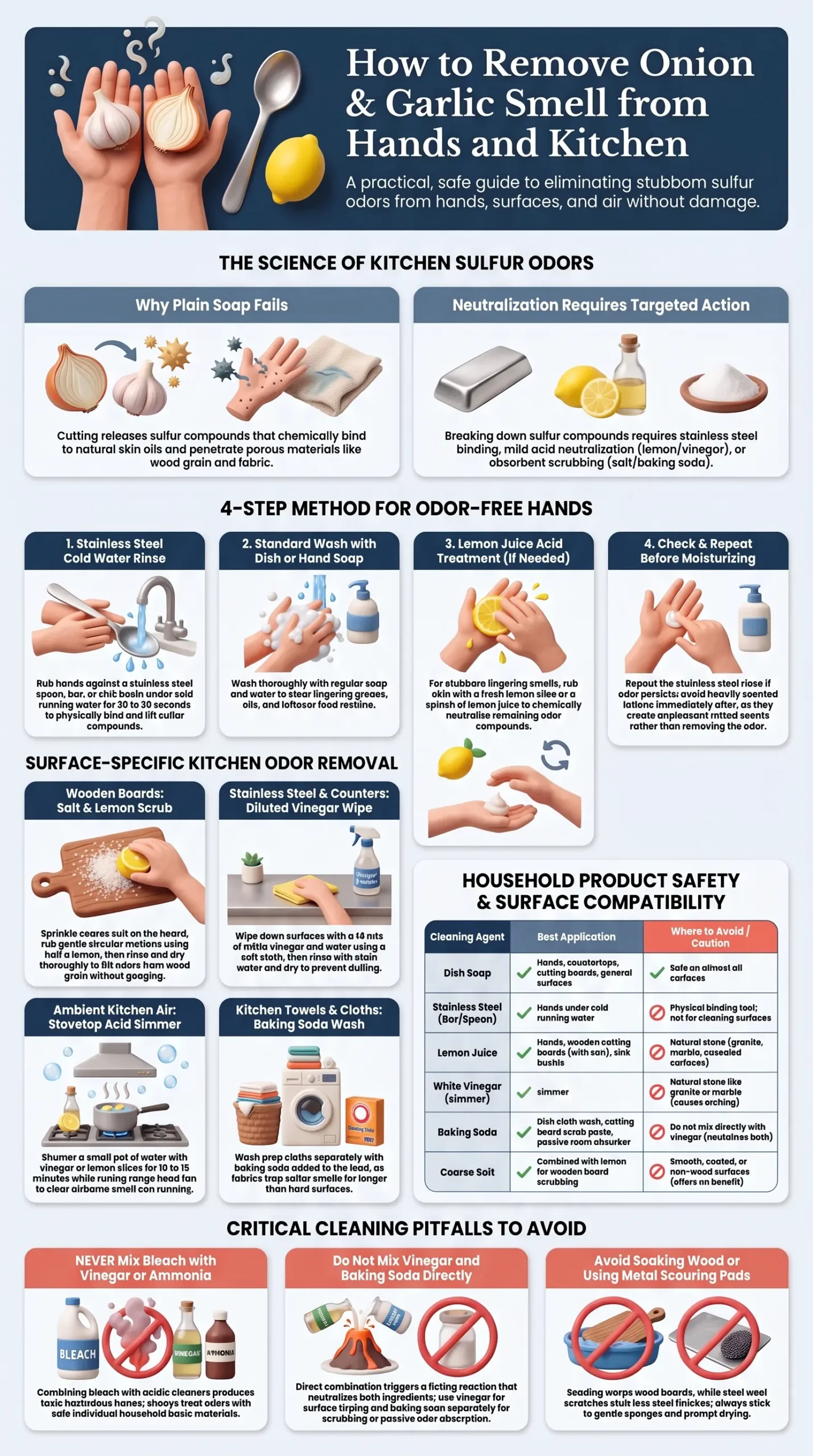
Photo Credit: Hobby Guidebook Editorial
Step-by-Step: Clearing Onion and Garlic Smell from the Kitchen
- Wipe down cutting boards and countertops with warm water and dish soap right after prepping onion or garlic. Don't let the residue sit, since the smell only gets more embedded in porous surfaces the longer it's left.
- For wooden cutting boards, follow the soap wash with a light rub of coarse salt and half a lemon. Squeeze the lemon over the salt, rub it across the board in circular motions, then rinse and dry thoroughly. This combination helps lift odor from wood grain more effectively than soap alone.
- Wipe stainless steel countertops or sinks with a diluted vinegar solution, roughly one part white vinegar to one part water, using a cloth rather than pouring directly. Rinse with plain water afterward and dry.
- Simmer a small pot of water with vinegar or lemon slices on the stove for 10 to 15 minutes to help clear any smell that's drifted into the air during chopping or cooking.
- Wash any dish towels or cloths used during prep separately, ideally with a small amount of baking soda added to the wash, since fabric holds onto onion and garlic smell longer than hard surfaces do.
- Ventilate the kitchen while chopping and for a while afterward. Running the range hood fan or opening a window during onion and garlic prep significantly reduces how much smell settles into the air in the first place.
Vinegar and Baking Soda for Onion and Garlic Smell
Vinegar and baking soda each play a useful role here, though they work better applied at separate steps rather than mixed together directly. Vinegar's mild acidity helps cut through the oily residue that onion and garlic leave on countertops and stainless steel, making it a solid choice for wiping surfaces after prep work. Baking soda works differently, acting as a mild abrasive for scrubbing cutting boards and as a passive odor absorber when left in an open container inside a cabinet or on a counter overnight.
Combining vinegar and baking soda directly causes a fizzing reaction that neutralizes both, so it's more effective to use vinegar for the wipe-down step and baking soda separately, either as a gentle scrub paste with a small amount of water or as an open absorber for lingering air smell. Vinegar should be avoided on natural stone countertops like granite or marble, since repeated acid exposure can dull or etch these surfaces over time. If you're not sure what your countertop is made of, a soap and water wipe-down is the safer default.
What Cleaning Products Are Safe for Onion and Garlic Smell?
A short list of household basics covers nearly every situation involving onion and garlic odor, and matching the product to the surface keeps things both effective and safe.
|
Product |
Best Use |
Where to Avoid |
|
Dish soap |
Hands, cutting boards, countertops, general surfaces |
N/A, safe for most kitchen surfaces |
|
Stainless steel (spoon, sink, bar) |
Hands, rinsed under cold water |
N/A, this is a physical method, not a chemical one |
|
Lemon juice |
Hands, wooden cutting boards (with salt), sink basin |
Unsealed natural stone, since acid can dull the surface |
|
White vinegar (diluted) |
Stainless steel counters, sinks, air freshening simmer |
Natural stone like granite or marble |
|
Baking soda |
Fabric wash, cutting board scrub, passive odor absorber |
N/A in reasonable amounts |
|
Coarse salt |
Combined with lemon for wooden cutting board scrub |
Non-wood surfaces, where it offers little benefit |
For hands specifically, the stainless steel method is worth understanding a little further, since it sounds unusual but has a straightforward explanation. Stainless steel is thought to bind with the sulfur compounds on the skin during rinsing, which is why plain spoons, sink basins, or dedicated steel bars all work similarly well. It's a physical process rather than a chemical reaction, so there's no safety concern involved, just cold water and a bit of rubbing.
Removing Onion and Garlic Smell Without Scratching the Surface
Cutting boards and countertops can pick up scratches quickly if the wrong tool or technique is used during odor removal, so it's worth being deliberate about pressure and material choice.
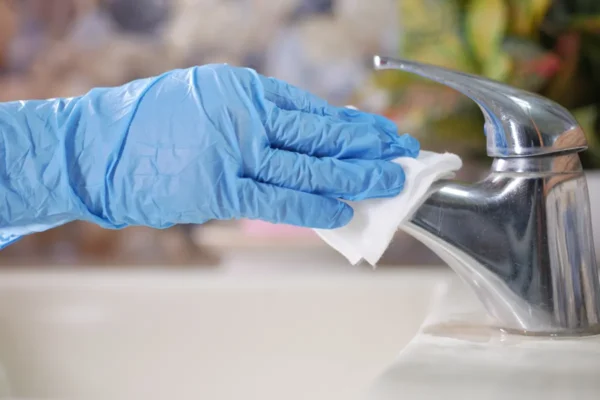
- Use a soft sponge or cloth on stainless steel surfaces, not a metal scouring pad, since steel wool can leave fine scratches that dull the finish over time even if it doesn't affect function.
- On wooden cutting boards, keep the salt-and-lemon scrub gentle. Light, even pressure lifts odor from the wood grain without gouging the surface, while heavy scrubbing can wear down the board's surface faster than normal use would.
- Avoid abrasive powders on coated or non-stick surfaces near the prep area, since these can scratch a finish permanently even if they successfully clear the odor.
- Test any new product on a small, hidden section of countertop first, particularly if you're unsure of the material or its sealant, before applying it across the whole surface.
- Dry surfaces fully after cleaning rather than leaving them damp, since lingering moisture on wood cutting boards can lead to warping or a musty smell layered on top of the onion and garlic odor.

Photo Credit: https://kaboompics.com/
What Should You Avoid When Cleaning Onion and Garlic Smell?
A handful of habits tend to make the smell linger longer or create other problems in the kitchen:
- Never mix bleach with vinegar or ammonia-based cleaners. This produces hazardous fumes and has no place in odor removal, regardless of how strong the smell is.
- Don't rely on scented sprays as a substitute for actually cleaning the surface. Masking the smell without removing the residue causing it means the odor typically returns within a short time.
- Avoid soaking wooden cutting boards for extended periods. Wood can warp or crack if left wet too long, and a quick wash and dry is both safer for the board and generally sufficient for clearing odor.
- Don't use vinegar or lemon juice on unsealed natural stone. The acid can etch or dull the surface, so stick with soap and water on stone countertops unless you've confirmed the sealant can handle it.
- Skip using the same cloth for hands and countertops without rinsing it in between. This can spread residue rather than remove it, extending how long the smell lingers around the kitchen.
How Can You Clean Onion and Garlic Smell Without Damaging Surfaces?
The safest general approach is to start gentle and only escalate if needed. Warm water and dish soap handle most everyday onion and garlic residue on countertops and hands without any risk to the surface underneath. If a stronger method like a vinegar wipe or a salt scrub is needed, matching it to the material, vinegar on sealed surfaces, salt and lemon specifically for wood, keeps the smell removal from becoming its own maintenance problem.
For anyone unsure about a countertop or cutting board's exact material, a plain soap and water wash followed by thorough drying is the safer default until the material is confirmed. This applies just as much to hands as it does to surfaces. Repeated washing with soap is always safe, while stronger methods like the stainless steel rinse or lemon rub are best reserved for smell that hasn't cleared with basic washing alone.

Photo Credit: Sora Shimazaki
How Often Should You Clean Onion and Garlic Smell from the Kitchen?
Onion and garlic smell is best addressed immediately after chopping or cooking, rather than left to settle into hands, boards, or the surrounding air. Washing hands and wiping down surfaces right after prep, plus running the range hood fan during cooking, keeps the smell from building up or spreading through the kitchen. Households that cook with onion and garlic frequently benefit from making these steps part of the regular post-cooking routine rather than an occasional deep clean, since the smell compounds are easier to manage fresh than once they've had time to settle into porous surfaces like wood or fabric.
Professional Cost to Clean Onion and Garlic Smell from the Kitchen
Onion and garlic odor is almost always manageable with basic household methods, and it's rare for this specific smell to require professional cleaning help on its own. The exception would be a kitchen where onion and garlic odor has combined with a larger, unresolved issue, like grease buildup that's gone unaddressed for a long period, or lingering smells across multiple rooms that suggest a bigger ventilation problem. In those cases, a professional deep cleaning service could help, and pricing for that kind of work varies by location, kitchen size, and scope, so a direct quote from a local provider is the most accurate way to know cost for your situation. For the everyday version of this problem, the ongoing cost is minimal, generally just dish soap, vinegar, lemon, and baking soda, all inexpensive staples most kitchens already have on hand.
Related Kitchen Odor Situations
Onion and garlic smell often shows up alongside other cooking odors, and it helps to know which guide fits your actual situation. If the smell in your kitchen seems broader than just onion and garlic, covering general cooking smells that linger after a meal, our guide on Removing Cooking Odors from the Kitchen covers that wider situation in more depth.
If you're dealing with a different but similarly stubborn food smell, particularly one tied to fish rather than onion or garlic, our guide on Removing Fish Odor from the Kitchen walks through that specific situation, since fish odor responds to a slightly different combination of methods.
And if the onion and garlic smell has spread beyond the kitchen itself, lingering on hands well after you've left the room or noticeable in nearby living spaces, our guide on Removing Garlic & Onion Odor from Hands and House addresses that broader version of the same problem.
A Quick Note on Safety
The methods covered here, dish soap, lemon juice, diluted vinegar, baking soda, and salt, are low-risk for everyday use on hands and most standard kitchen surfaces. Vinegar and lemon juice should be avoided on natural stone countertops and tested on a small area first if you're unsure of a surface's material or sealant. Never combine bleach with vinegar, ammonia, or other acidic cleaners, since this can produce hazardous fumes. If a strong odor persists despite thorough cleaning, or if it seems connected to a larger cleaning or ventilation issue in the kitchen, it may be worth looking into that underlying cause rather than continuing to treat it as a simple odor problem.
FAQ
How do you remove onion and garlic smell from hands and kitchen? Rub hands against stainless steel under cold water, then wash with soap, and wipe kitchen surfaces with dish soap followed by a vinegar rinse where appropriate for the material.
How often should you clean onion and garlic smell from hands and kitchen? Address it right after chopping or cooking rather than waiting, since the smell becomes harder to clear the longer it sits on skin or porous surfaces.
What cleaning products are safe for onion and garlic smell from hands and kitchen? Dish soap, lemon juice, diluted white vinegar, baking soda, and coarse salt are generally safe, though vinegar and lemon should be avoided on unsealed natural stone.
What should you avoid when cleaning onion and garlic smell from hands and kitchen? Avoid mixing bleach with vinegar or ammonia, soaking wooden cutting boards too long, and relying on scented sprays instead of actually cleaning the surface.
How can you clean onion and garlic smell from hands and kitchen without damaging them? Start with gentle soap and water, use soft sponges rather than abrasive pads on steel or coated surfaces, and keep any scrubbing light and even, especially on wood.
To find more solutions for everyday kitchen smells and cleaning tasks, explore the complete kitchen cleaning guide for additional guides and routines.



Leave a Reply