

A vinyl floor that once looked bright can slowly turn cloudy, flat or streaky. The good news is that restoring shine to a vinyl floor is usually possible without harsh products or expensive work. This guide shows how to find out why your floor looks dull, and how to bring the shine back safely. It is Part of Vinyl & Linoleum Kitchen Floor Cleaning, so you can use it with your regular floor care.
Why Vinyl Floors Lose Their Shine
Most vinyl floors have a clear top layer, called a wear layer, that protects the pattern underneath. A shiny look comes from this layer being smooth and clean. When something dulls it, light bounces off in all directions, and the floor looks flat or cloudy.
There are a few common causes:
- Residue. Soap, cleaner or mop water left behind forms a thin film. This is one of the most common reasons for dullness.
- Dirt and grit. Tiny bits of sand and dust scratch the surface as people walk across it.
- Old polish or wax buildup. Layers of floor finish can turn yellow or hazy over time.
- Grease. Kitchens collect cooking oil, which attracts dirt.
- Wear. In busy areas, such as in front of the sink and stove, the wear layer can slowly thin.
- Hard water spots. Minerals can leave a chalky look.
How can you tell what you are dealing with? A sticky, hazy or streaky floor often has residue or grease. Fine scratches that show in side light point to grit damage. A floor that is dull only in walkways may have worn spots. A yellowed, uneven look may be old finish buildup.
Many modern vinyl floors are called “no-wax” because the factory finish is meant to stay shiny without added wax. Others may take a polish made for vinyl. Check your floor maker’s care guide before you choose a method, since the right product depends on your floor.
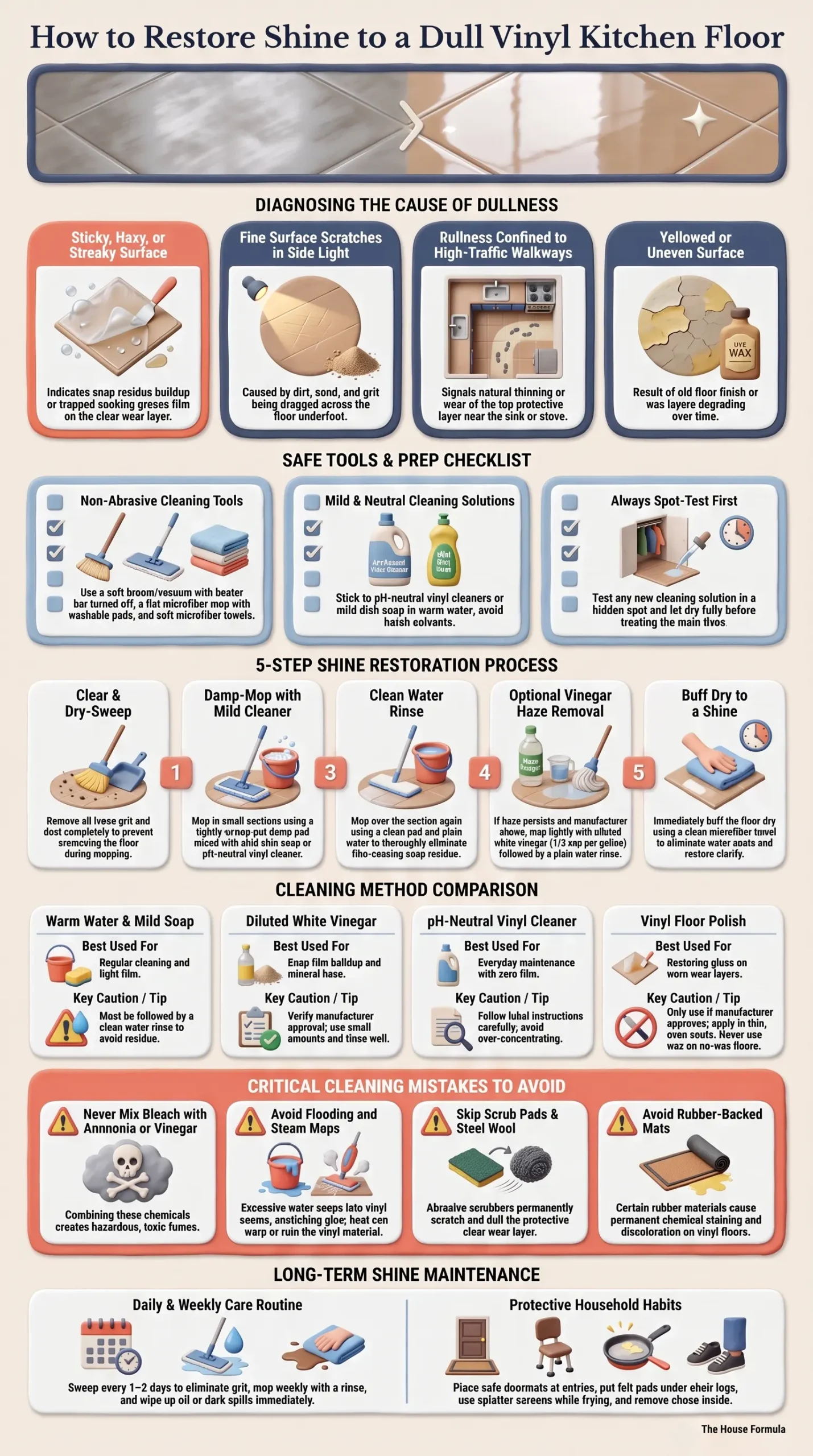
Photo Credit: Hobby Guidebook Editorial
Tools and Safe Products for Vinyl
You do not need much to start:
- A soft broom or a vacuum made for hard floors, with the beater bar turned off
- A flat microfiber mop with washable pads
- A bucket and a spray bottle
- Mild dish soap or a pH-neutral floor cleaner made for vinyl
- White vinegar (optional, diluted)
- Clean, soft cloths or towels
- A floor polish made for vinyl (only if the maker allows polish)
- Rubber gloves
What each does: A pH-neutral cleaner removes dirt without leaving much residue. Diluted vinegar can help cut soap film, and many vinyl makers allow it in small amounts, though some do not, so check first. A polish made for vinyl can add a thin protective layer and a glossy look, but not every floor needs one.
Eco-friendly option: Warm water, a small amount of mild soap and a microfiber mop is a low-waste way to clean. Washable pads reduce paper use.
Test any new product in a hidden spot, such as inside a closet or under an appliance, and wait for it to dry before judging the result.
How to Restore Shine to a Vinyl Kitchen Floor Step by Step
Set aside about an hour. Work in small sections.
- Clear the floor. Move rugs, mats and small items.
- Sweep or vacuum. Remove all grit first, since grit scratches the surface when you mop.
- Mix a mild cleaner. Add a few drops of dish soap to a bucket of warm water, or use a pH-neutral vinyl cleaner as the label directs.
- Mop with a damp pad. Wring the pad until it is only damp. Mop a small section at a time.
- Treat greasy spots. Rub gently with a soft cloth and a little soapy water.
- Rinse. Fill a second bucket with clean water, or use fresh water. Go over the floor again with a clean pad to remove soap film. This step matters more than most people think.
- Try a diluted vinegar rinse if the haze remains. If your maker allows it, mix a small amount of white vinegar into a bucket of warm water, such as a quarter cup per gallon, and mop lightly. Then rinse with plain water.
- Dry and buff. Use a clean, dry microfiber cloth or a dry mop pad to buff the floor. Buffing removes streaks and brings out the shine.
- Let the floor dry fully. Keep foot traffic off until it is dry.
- Check from a low angle. Look at the floor in side light. If hazy spots remain, repeat on those areas.
If you have a different floor type nearby, keep in mind that the method changes. Our guide on Laminate Kitchen Floor Cleaning explains how to care for laminate, which needs even less water.

Photo Credit: MART PRODUCTION
Commercial Cleaner or Natural Method?
Both can work. Here is how they compare:
|
Option |
Best for |
Things to watch |
|
Warm water and mild soap |
Regular cleaning and light film |
Needs a good rinse to avoid residue |
|
Diluted white vinegar |
Soap film and mineral haze |
Some makers do not allow it; use a small amount and rinse |
|
pH-neutral vinyl cleaner |
Everyday cleaning with little residue |
Follow the label; do not use too much |
|
Vinyl floor polish |
Dull wear and a glossy finish |
Only if the maker allows it; apply thin coats as directed |
The natural method is gentle and low in fumes, so it is a good first step. A polish made for vinyl may help restore a glossy look on floors that allow it. Read the label carefully, follow the directions and apply thin, even coats. Do not use wax on a “no-wax” floor, since it can leave a cloudy buildup.
If you are not sure which approach suits your floor, start with the mildest option and stop if you see any change in color or texture.
Common Mistakes When Cleaning Vinyl
Many dull floors are made dull by cleaning habits. Skip these:
- Never mix bleach with vinegar, ammonia or other cleaners. The mix can release dangerous fumes.
- Do not use too much soap. Extra soap leaves a film that dulls the floor.
- Do not skip the rinse. Residue is a top cause of cloudiness.
- Do not use steel wool, scouring pads or hard brushes. They scratch the wear layer.
- Do not flood the floor. Water can seep into the seams and loosen the edges.
- Do not use steam mops unless your maker allows them. Heat can damage some vinyl.
- Do not use oil soaps, wax or harsh solvents unless the label says they are safe for your floor.
- Do not leave rubber-backed mats on vinyl for long. Some rubber can stain or discolor vinyl.
- Do not drag heavy furniture or appliances. Use pads and lift.
Different floors need different care. If you also have stone in your home, our guide on Stone Kitchen Floor Cleaning explains why stone needs a very different approach from vinyl.

Photo Credit: Anna Shvets
How Often to Clean and How to Keep the Shine
A simple routine protects the shine. Sweep or vacuum every day or two, since grit is a main cause of dullness. Mop weekly with a damp pad and a mild cleaner, followed by a clean-water rinse. Wipe spills right away, especially oil, juice and coffee. Do a fuller clean every month or two. If your floor takes a polish, apply it only as often as the label directs, which is usually not very often.
A few habits keep floors bright:
- Put doormats at the door and washable mats near the sink and stove (with a backing that is safe for vinyl).
- Use felt pads under chair legs.
- Use a splatter screen or lid when frying.
- Take shoes off at the door when you can.
- Use only as much cleaner as the label says.
For more on keeping the shine, our guide on Restoring Shine to Vinyl Flooring covers related tips for other vinyl floors in the home.
If the floor stays dull after a thorough clean, the wear layer may be worn through, or the floor may have deep scratches. Cleaning cannot fix that. A flooring professional or the floor’s maker can tell you if a polish, a repair or replacement makes sense.
Frequently Asked Questions
What is the best way to restore shine to a dull vinyl kitchen floor?
Sweep first, mop with warm water and a mild cleaner using a damp pad, then rinse with clean water to remove residue. Buff dry with a clean microfiber cloth. If haze remains, try a small amount of diluted white vinegar if your maker allows it.
How often should you clean a vinyl kitchen floor to keep it shiny?
Sweep every day or two, mop weekly with a rinse and wipe spills right away. Do a fuller clean every month or two. Polish only as often as the label directs, and only if your floor allows it.
What cleaning products are safe for restoring shine to a vinyl kitchen floor?
Warm water with a little mild dish soap, a pH-neutral vinyl cleaner and a small amount of diluted white vinegar are safe for many vinyl floors. A polish made for vinyl may be used if your maker allows it. Check your care guide and test in a hidden spot.
What should you avoid when cleaning a dull vinyl kitchen floor?
Avoid mixing bleach with vinegar or ammonia, too much soap, skipping the rinse, steel wool, steam mops, flooding the floor, wax on no-wax floors and rubber-backed mats.
Final Thoughts
A dull vinyl floor is often just a dirty or residue-covered one. Sweep well, mop with a damp pad, rinse thoroughly and buff dry. Use only mild products, avoid wax unless your floor allows it and keep up a simple routine. To keep the rest of your kitchen in good shape, Explore the complete kitchen cleaning guide.
Safety note: A wet or freshly polished floor can be slippery, so keep people and pets off it until it is dry. Never mix bleach with vinegar, ammonia or other cleaners, because this can create harmful fumes. Wear gloves, ventilate the room when you use any cleaner or polish, and follow your floor maker’s care guide and the product label. Call a flooring professional if the floor is damaged or does not respond to cleaning.


Leave a Reply