

Shower doors and curtains take on a different kind of grime than the rest of the bathroom. Instead of just soap scum, they deal with constant water spots, soap film, mineral deposits, and in the case of fabric curtains, mildew that can set into the material itself. Because glass, plastic, and fabric all react differently to cleaning products, shower door and curtain cleaning needs its own approach rather than whatever cleaner is already open under the sink.
This guide covers everything you need to know about cleaning shower door and curtain, from daily habits that prevent buildup to a full step-by-step process for glass, plastic, and fabric. Whether you're just starting shower door and curtain cleaning for beginners or looking to fine-tune your routine, you'll find a clear, safe method here. If you want the full picture of bathroom care first, you can go Back to the complete bathroom cleaning guide.
The Best Way to Clean a Shower Door and Curtain
The most effective method depends slightly on whether you're cleaning glass or fabric, but the general order stays the same. Here is the short version for a shower door and curtain cleaning step-by-step guide:
- Remove or wipe away loose soap residue and hair.
- Wet the surface with warm water.
- Apply a cleaner suited to the material (glass, plastic, or fabric).
- Let it sit for a few minutes on stubborn spots.
- Wipe or scrub gently with a non-abrasive tool.
- Rinse thoroughly.
- Dry or squeegee to prevent new water spots and mildew.
This order matters because water spots and soap film harden the longer they sit. Letting cleaner sit before wiping breaks down that film so you're not scrubbing against a surface that's already dried hard. Drying at the end is just as important as the cleaning itself, since a damp door or curtain left overnight is exactly what allows mildew to take hold in the first place.
How Often You Should Clean Your Shower Door and Curtain
Shower doors and curtains stay wet longer than most bathroom surfaces, which makes them more prone to mildew and mineral buildup. A general schedule looks like this:
- After each shower: A quick squeegee pass on glass, or simply pulling a curtain fully open to let it dry, takes seconds and prevents most buildup before it starts.
- Weekly: A full clean of the door or curtain removes soap film, water spots, and any early mildew before it spreads.
- Monthly: Deep clean tracks, hinges, and curtain hems, where grime and mildew collect out of sight.
Homes with hard water tend to need more frequent glass cleaning, since mineral spots can form within just a few days. Bathrooms with poor airflow or no exhaust fan often see curtain mildew develop faster too, since the fabric stays damp longer between uses. If you notice a musty smell near the curtain or a hazy film that doesn't wipe off a glass door, that's usually a sign your current routine isn't keeping pace.

Photo Credit: Hobby Guidebook Editorial
What Products Are Safe for Shower Door and Curtain Cleaning
Glass, plastic, and fabric all respond differently to cleaning products, so it helps to match the cleaner to the material rather than using one product on everything.
|
Material |
Safe Options |
Avoid |
|
Glass shower door |
Glass cleaner, vinegar and water solution, mild dish soap |
Abrasive powders, razor blades on tinted or coated glass |
|
Metal frame or hardware |
Mild soap and water |
Acidic cleaners on brushed or coated finishes |
|
Plastic or vinyl curtain liner |
Mild dish soap, diluted vinegar solution |
Bleach on colored liners, abrasive scrubbers |
|
Fabric shower curtain |
Machine wash with mild detergent (check care label) |
Bleach unless the label confirms it's safe, fabric softener buildup on liners |
Important: Vinegar is generally safe on standard glass, but it should not be used on natural stone shower surfaces or certain coated or tinted glass finishes, since the acid can dull or damage some coatings over time. If your shower door has a special coating (often marketed as water-repellent or easy-clean), check the manufacturer's care instructions before using vinegar or any acidic cleaner, since these coatings can wear away faster with the wrong product.
For fabric curtains, always check the care label before washing. Some curtains are machine washable, while others need spot cleaning only. Bleach should never be used on a fabric curtain unless the label specifically confirms it's colorfast and bleach safe, since bleach can weaken or discolor fabric that isn't rated for it.
Tools That Make the Job Easier
A small set of tools covers nearly every situation for both glass doors and fabric curtains:
- A squeegee, ideally kept in the shower for a quick wipe-down after each use.
- A soft microfiber cloth, useful for both drying glass and wiping down metal hardware without scratching.
- A soft-bristle brush or old toothbrush, helpful for cleaning door tracks and hinges where grime builds up.
- A mesh laundry bag, useful if you're machine washing a fabric curtain, since it helps protect the fabric during the wash cycle.
- Rubber gloves, especially if you're using a stronger cleaner on tracks or dealing with mildew.
Keeping a squeegee within easy reach makes the single biggest difference in how much scrubbing you'll need later. A 20-second squeegee pass after each shower prevents most of the water spot buildup that otherwise takes real effort to remove during a weekly clean.
Step-by-Step: Cleaning a Glass Shower Door
Glass doors show water spots and soap film more visibly than almost any other bathroom surface, which is part of why they need consistent attention.
- Wet the glass with warm water to loosen any loose soap residue.
- Apply glass cleaner or a vinegar and water solution, spraying evenly across the surface.
- Let it sit for 2 to 3 minutes on areas with visible water spots or soap film buildup.
- Wipe with a soft cloth or non-abrasive sponge, working in sections rather than trying to cover the whole door at once.
- Rinse if you used a stronger cleaner, then dry immediately with a squeegee or microfiber cloth.
- Clean the track and bottom edge separately, since these areas collect standing water, soap residue, and sometimes mildew that the main glass surface doesn't.
Hard water spots that don't respond to a standard glass cleaner may need a longer soak with a vinegar solution or a product made specifically for mineral deposits. Avoid scraping glass with a razor blade unless you're certain the glass has no coating, since razor blades can permanently scratch coated or tempered glass. For more detail on hard water spots, soap film buildup, and daily glass care, see the full Glass Shower Door Cleaning guide.
Step-by-Step: Cleaning a Frameless Shower Door
Frameless glass doors are popular for their clean look, but the lack of a metal frame means water and soap residue often collect directly on exposed hinges and along the door's bottom edge instead of being contained by a track.
- Wipe down the glass daily with a squeegee, since frameless doors show water spots faster without a frame to help hide minor buildup.
- Clean the hinges and hardware with a soft cloth and mild soap, checking for any soap scum buildup around the connection points.
- Pay close attention to the bottom edge, where the door meets the shower floor or threshold, since this area holds standing water longer than the rest of the door.
- Use a non-abrasive cleaner only, since frameless doors are often tempered glass that can show scratches more visibly without a frame to draw the eye elsewhere.
- Dry the entire surface, including hinges, after each cleaning to prevent water spots and to keep hardware from developing rust or corrosion over time.
Because frameless doors rely on a tight seal at the hinges and bottom edge to prevent leaks, it's worth checking those areas periodically for mineral buildup that could affect the seal itself. For a closer look at hinge care, seal maintenance, and keeping a frameless door streak-free, see the Cleaning a Frameless Shower Door guide.

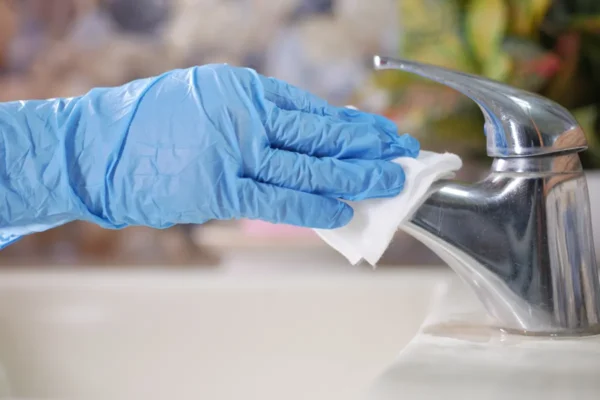
Photo Credit: Max Vakhtbovych
Step-by-Step: Cleaning a Shower Curtain and Liner
Fabric curtains and plastic liners need separate treatment, since they're different materials with different care needs.
- Check the care label on your fabric curtain before doing anything else, since this tells you whether it's machine washable.
- Machine wash fabric curtains in warm water with a mild detergent, using a gentle cycle if the label recommends it. Adding a couple of old towels to the load can help scrub away mildew without damaging the fabric.
- Air dry fabric curtains rather than using high heat in the dryer, unless the care label confirms it's dryer safe, since heat can shrink or warp certain fabrics.
- Wipe down plastic or vinyl liners with a mild soap solution or diluted vinegar, focusing on the bottom edge where mildew most often develops.
- Machine wash liners only if the label allows it, and always on a low or delicate setting to avoid cracking the plastic.
- Replace liners that have heavy, set-in mildew, since plastic that's absorbed mildew stains often can't be fully restored and may continue producing a musty smell even after cleaning.
Pulling the curtain fully closed after a shower actually traps moisture inside the folds, which encourages mildew. Leaving it pulled open, so air can reach the fabric, is a simple habit that prevents a lot of the buildup this section is designed to fix.
What to Avoid When Cleaning Shower Doors and Curtains
A few habits cause more harm than good, even with good intentions.
- Avoid abrasive scrubbers or razor blades on coated or tinted glass, since they can scratch or strip a protective coating.
- Avoid bleach on fabric curtains or colored liners unless the care label confirms it's safe, since bleach can weaken fibers or cause discoloration.
- Avoid mixing bleach with vinegar or ammonia-based cleaners, as this combination can release harmful fumes in the enclosed space of a shower.
- Avoid high heat when drying fabric curtains unless the label specifically allows it, since heat can shrink or warp certain materials.
- Avoid ignoring the door track or curtain hem, since these areas trap moisture and are often where mildew starts, even when the visible glass or fabric looks clean.
How to Clean Without Damaging Your Shower Door or Curtain
Most damage comes from using the wrong tool or product for the material, not from cleaning too often.
- Match your cleaner to the material: glass, coated glass, plastic, or fabric all have different needs.
- Use non-abrasive tools by default, and reserve firmer scrubbing for isolated spots rather than the whole surface.
- Test any new product on a small, hidden area first, especially on coated glass or colored fabric.
- Dry glass surfaces immediately after cleaning to prevent new water spots from forming.
- Replace curtain liners once mildew has set in deeply, rather than repeatedly trying to clean a liner that keeps producing odor.
Following the care label on a fabric curtain, or the manufacturer's guidance for coated glass, takes priority over general cleaning advice, since materials and finishes vary.
Common Mistakes to Avoid
Even careful homeowners fall into a few repeat mistakes:
- Skipping the daily squeegee pass. This single habit prevents more buildup than any weekly deep clean.
- Using one cleaner on both glass and fabric. A product safe for glass isn't always appropriate for a fabric curtain.
- Leaving a curtain pulled closed after showering. This traps moisture and speeds up mildew growth.
- Ignoring the door track and curtain hem. These areas hold the most moisture and are the first place mildew typically appears.
- Using bleach on a fabric curtain without checking the label first. This can weaken fibers or cause visible discoloration.
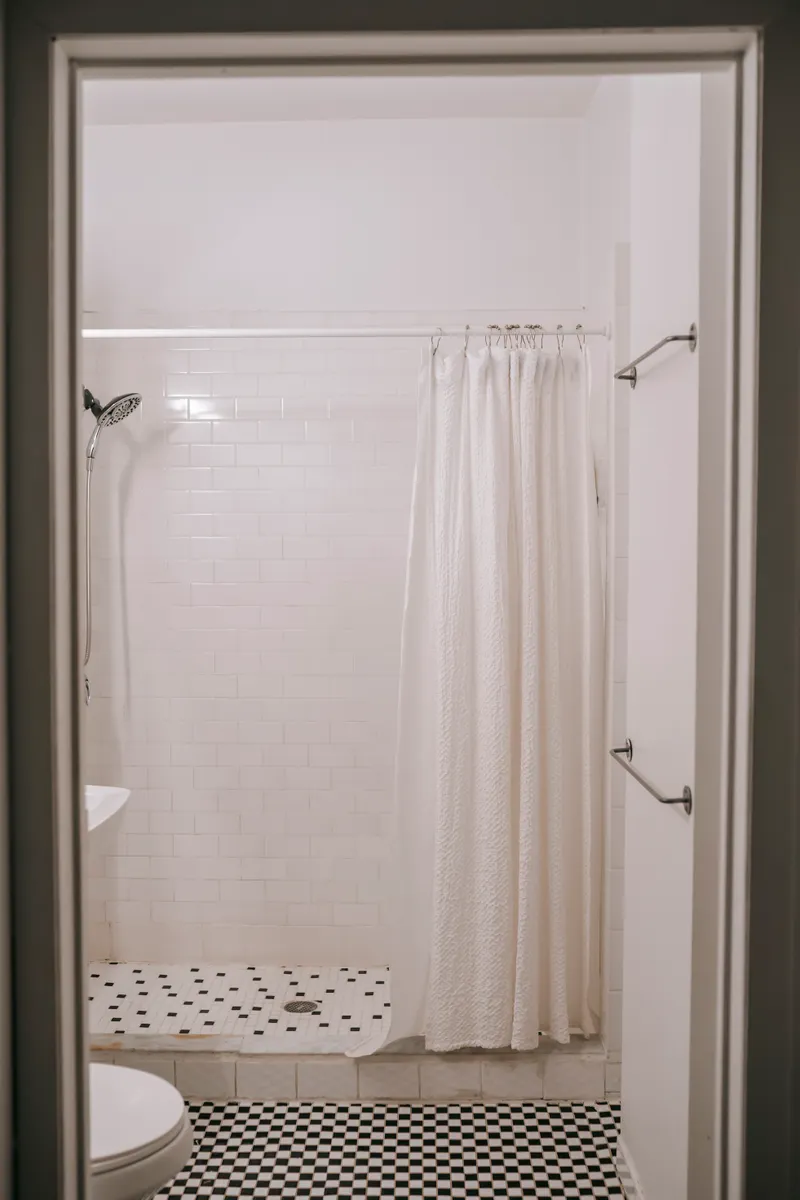
Photo Credit: Charlotte May
How Long a Full Shower Door and Curtain Clean Takes
A routine weekly clean of a glass shower door typically takes 5 to 10 minutes, including a short wait time for the cleaner to loosen water spots. Cleaning a fabric curtain takes longer since it usually involves a full wash cycle, plus drying time, though the hands-on effort is minimal. A frameless door with hinges and hardware to clean, or a liner with visible mildew, may add another 5 to 10 minutes to the process.
Frequently Asked Questions
What is the best way to clean shower door and curtain? Wet the surface, apply a cleaner matched to the material (glass cleaner for doors, mild detergent for fabric), let it sit briefly, wipe or wash, rinse if needed, then dry or squeegee to finish.
How often should you clean shower door and curtain? A quick squeegee or air-dry after each shower, a full clean weekly, and a deeper clean of tracks, hinges, and curtain hems monthly.
What cleaning products are safe for shower door and curtain? Glass cleaner or a vinegar and water solution works for standard glass, though coated glass may need a gentler product. Fabric curtains should be washed according to their care label, and liners typically tolerate mild soap or diluted vinegar.
What should you avoid when cleaning shower door and curtain? Avoid abrasive scrubbers or razor blades on coated glass, avoid bleach on fabric unless the label allows it, and avoid mixing bleach with vinegar or ammonia.
How can you clean shower door and curtain without damaging them? Match the cleaner to the material, use non-abrasive tools, test new products on a hidden spot first, and dry glass immediately after cleaning.
What common mistakes should you avoid with shower door and curtain? Skipping the daily squeegee, using one cleaner on every material, leaving curtains pulled closed after use, and ignoring the track or curtain hem.
For the full room-by-room approach to every bathroom surface, View the full bathroom cleaning guide.
A Quick Note on Safety
Most shower door and curtain cleaning involves mild, low-risk products, but a few precautions matter. Always check the product label before using a cleaner on coated glass, and check the fabric care label before washing or bleaching a curtain. Never mix bleach with vinegar, ammonia, or other acidic cleaners, since this can release harmful fumes in the enclosed space of a shower. Keep the bathroom ventilated while cleaning, and wear gloves if you're working with a stronger product or dealing with visible mildew.



Leave a Reply