
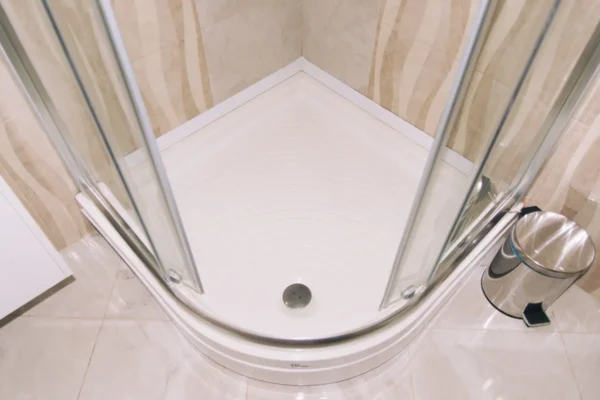
The shower pan is the floor of your shower, the low, sloped surface that catches every drop of water and channels it toward the drain. It takes more direct abuse than any other part of the shower: standing water, soap film, hair, skin oils, and constant foot traffic, often on bare skin. That combination makes shower pan cleaning a bit different from cleaning walls or glass, since the pan needs to handle moisture, grip, and daily contact all at once.
This guide covers how to clean a shower pan by material, how often it needs attention, and which products keep it clean without wearing down the surface or the finish. This article is Part of Bathtub & Shower Cleaning Guide, which covers tub and shower maintenance more broadly.
The Best Way to Clean a Shower Pan
A shower pan responds best to a routine that loosens buildup first, then works the surface without scrubbing too hard in one direction, and finishes with a full rinse and dry.
- Ventilate the bathroom by turning on the exhaust fan or opening a window before starting. This clears fumes and helps the pan dry faster once you're done.
- Wet the entire pan with warm water to loosen dried soap scum and light debris.
- Apply a cleaner matched to the pan's material (covered below), and let it sit for a few minutes if the label allows. This gives the product time to break down grime instead of relying on scrubbing alone.
- Scrub with a soft brush or non-abrasive sponge, working in small sections rather than one long pass across the whole pan.
- Give extra attention to the drain area and any textured or non-slip sections, since these spots trap more residue than smooth flat areas.
- Rinse thoroughly with warm water until no cleaner residue remains, especially in any grout lines or textured grip zones.
- Dry the pan with a towel or squeegee. This step matters more for a shower pan than almost any other surface in the shower, since standing water left on the floor speeds up both mildew growth and hard water buildup.
For the full bathroom cleaning sequence and how shower pan care fits into it, see the full bathroom cleaning guide.
Cleaning a Shower Pan by Material
Shower pans come in several different materials, and each one has its own sensitivities. Using the wrong method can dull a finish, wear down a coating, or leave permanent marks.
Fiberglass and Acrylic Shower Pans
Fiberglass and acrylic pans are common in prefabricated shower units. They're lightweight and generally easy to clean, but they scratch more easily than tile or stone.
- Stick to a soft sponge or microfiber cloth, never a scouring pad or abrasive powder.
- Mild dish soap and warm water handles most routine buildup.
- A diluted vinegar solution can help with soap scum or light hard water spots, but test it on a small hidden area first, since some acrylic coatings react poorly to repeated acid exposure.
- Avoid bleach-based cleaners on colored fiberglass or acrylic, since repeated use can fade the color over time.
Tile Shower Pans
Tile pans hold up well to regular cleaning, but the grout lines between tiles are porous and absorb moisture more readily than the tile itself, making them more prone to mildew.
- Use a pH-neutral cleaner or mild dish soap solution for the tile surface itself.
- For grout, a baking soda paste applied with a soft brush lifts mild buildup without harsh chemicals.
- Avoid vinegar or other acidic cleaners on natural stone tile, since acid can etch and permanently dull the surface.
- For grout mold that doesn't respond to gentler methods, a diluted bleach solution can help, but only on the grout itself, never on surrounding tile or metal fixtures, and always with the fan running.
Stone Composite and Solid Surface Pans
Stone composite and solid surface pans are increasingly common in newer installations. They're generally more resistant to scratching than acrylic, but manufacturer guidance varies more between brands than with tile or fiberglass.
- Check the manufacturer's care instructions first, since some solid surface coatings have specific product restrictions.
- Mild dish soap and warm water is a safe default for routine cleaning across most composite pans.
- Avoid abrasive pads even though the surface feels more durable, since repeated scrubbing can dull a glossy finish over time.

Photo Credit: Hobby Guidebook Editorial
How Often Should You Clean a Shower Pan
|
Task |
Suggested Frequency |
|
Quick rinse and squeegee |
After each use |
|
Full pan clean |
Weekly |
|
Deep clean of drain, grout, and grip zones |
Every 2 to 4 weeks |
|
Drain cover check |
Monthly |
Households with more frequent shower use, harder water, or a bathroom without strong ventilation may need to clean the pan more often than this baseline. A pan that dries quickly after each use generally builds up buildup more slowly than one that stays damp for hours.
Eco-Friendly Ways to Clean a Shower Pan
For anyone who prefers to limit commercial chemical use, a few simple ingredients cover most routine shower pan cleaning needs:
- White vinegar and water, roughly equal parts, for soap scum and light hard water spots on fiberglass, acrylic, and sealed tile
- Baking soda paste for grout lines and light scrubbing on tile or textured surfaces
- Plain dish soap for general cleaning across most pan materials
These options handle regular maintenance well, but they're usually less effective than commercial products against established mold or heavy mineral deposits. If a natural method isn't clearing buildup after a couple of tries, a targeted commercial cleaner suited to the specific material is a reasonable next step rather than scrubbing harder with the same approach.
Tools Needed for Shower Pan Cleaning
- Soft sponge or microfiber cloth for the main surface
- Soft-bristle brush for grout lines and textured grip zones
- Squeegee for daily water removal
- Old toothbrush for the drain cover and its edges
- Spray bottle for diluted cleaning solutions
- Towel for a final dry pass
Avoid steel wool or any scouring pad marked for heavy-duty kitchen use. These tools are too aggressive for fiberglass, acrylic, and most textured pan finishes.
What Cleaning Products Are Safe for a Shower Pan
Generally safe for routine cleaning:
- Mild dish soap diluted in warm water
- pH-neutral bathroom cleaners labeled for the specific pan material
- Baking soda paste for grout and light scrubbing
Use with caution, depending on material:
- White vinegar, safe on fiberglass, acrylic, and sealed tile, but not on natural stone
- Commercial soap scum removers, check the label against the specific pan material first
- Diluted bleach, useful for grout mold only, never on colored acrylic, fiberglass, or stone
Avoid on most shower pan surfaces:
- Abrasive powders or scouring pads, which scratch fiberglass, acrylic, and some solid surface finishes
- Undiluted bleach applied broadly across the pan
- Mixing bleach with ammonia, vinegar, or other acidic cleaners, which can release hazardous fumes
Manufacturer instructions should always take priority when they conflict with general guidance, especially for solid surface and composite pans, where finishes vary more between brands.

Photo Credit: https://kaboompics.com/
Cleaning a Shower Pan Without Scratching the Surface
A scratched shower pan is more than a cosmetic problem. Scratches trap soap residue and dirt, making the surface harder to keep clean going forward and giving mildew more places to take hold.
A few habits protect the surface over time:
- Test any new cleaner on a small hidden area first, especially acidic products like vinegar, since finishes react differently across brands and materials.
- Use soft tools only. Sponges, microfiber cloths, and soft-bristle brushes clean effectively without wearing down the surface.
- Scrub gently and let the cleaner do the work. Pressing hard with an abrasive tool is more likely to scratch the pan than a longer dwell time with a gentler product.
- Rinse products off completely. Leftover residue can attract more grime and, on some finishes, cause discoloration if left to dry repeatedly.
- Check caulk and seals around the pan's edges periodically. These keep water from getting underneath the pan or behind the walls, and aggressive scrubbing near them can wear the seal down faster than normal use. Cracked or peeling caulk usually needs replacement rather than more cleaning. For more detail on this specific task, see Bathtub Caulking & Sealant Cleaning.
Some bathrooms with a shower pan also include a steam shower setup, which adds heat and enclosed humidity to the mix. Steam showers need their own cleaning considerations beyond the pan itself, since the enclosed heat changes how quickly mold and mildew can develop. That process is covered separately in Steam Shower Cleaning.

Photo Credit: Suki Lee
Mistakes to Avoid When Cleaning a Shower Pan
- Skipping the daily squeegee or towel dry. Standing water left on the pan floor speeds up both hard water spotting and mildew growth more than any other single habit.
- Using the same cleaner on every material. Tile, grout, fiberglass, and composite pans each have different sensitivities, and a one-size-fits-all product often works poorly on at least one of them.
- Ignoring the drain cover. Hair and soap residue collect here quickly, and a clogged or grimy drain cover slows water drainage across the whole pan.
- Scrubbing hard instead of letting the cleaner sit. Aggressive scrubbing on a dry or barely wet surface is more likely to scratch than to actually lift buildup.
- Combining cleaning products without checking labels. This is especially risky with bleach, since mixing it with ammonia, vinegar, or other acidic products can create hazardous fumes.
Frequently Asked Questions
What is the best way to clean a shower pan? Wet the pan, apply a cleaner suited to its material, let it sit briefly, scrub gently with a non-abrasive tool, rinse thoroughly, and dry with a squeegee or towel.
How often should you clean a shower pan? A full clean once a week works for most households, with a deeper clean of the drain, grout, and grip zones every two to four weeks. Daily squeegeeing helps reduce how often deeper cleaning is needed.
What cleaning products are safe for a shower pan? Mild dish soap, pH-neutral cleaners, and baking soda paste are generally safe. Vinegar works well on fiberglass, acrylic, and sealed tile, but not on natural stone. Always check the label against your specific pan material.
What should you avoid when cleaning a shower pan? Avoid abrasive scouring pads on fiberglass or acrylic, acidic cleaners on natural stone, and combining bleach with ammonia, vinegar, or other acidic products, which can produce hazardous fumes.
How can you clean a shower pan without damaging it? Test new cleaners on a small hidden area first, use soft tools instead of abrasive ones, avoid pressing hard while scrubbing, and rinse all products off completely before letting the pan dry.
Read the full bathroom cleaning guide for how shower pan care fits into a complete bathroom routine.
A Quick Safety Note
Some shower pan cleaning involves bleach for grout mold. Always follow the product label, and never mix bleach with ammonia, vinegar, or other acidic cleaners, since this can release hazardous fumes. Keep the bathroom ventilated while cleaning, and if mold covers a large area or keeps returning despite regular cleaning, a professional mold assessment is a reasonable next step rather than relying on stronger and stronger products.


Leave a Reply