

A steam shower creates a completely different moisture environment than a regular shower. Instead of a quick burst of water followed by drying time, steam fills the enclosed space with heat and humidity that can linger for an hour or more after you've finished. That extended exposure to warm, moist air makes steam shower cleaning more demanding than standard shower care, since mold and mildew have far more opportunity to take hold in a space that stays damp for so long.
This guide covers how to clean a steam shower properly, how often it needs attention, and which products are safe to use around a steam generator and its components. This article is Part of Bathtub & Shower Cleaning Guide, which covers tub and shower maintenance more broadly.
Why Steam Showers Need a Different Cleaning Approach
A regular shower gets wet, then dries out fairly quickly once the water shuts off and the door or curtain opens. A steam shower behaves differently. The enclosure is sealed to trap heat and steam, which means warm moisture sits against every surface, tile, glass, seals, and grout, for a much longer stretch of time.
This extended humidity is exactly why mold and mildew show up faster and more often in steam showers than in standard ones. It also means drying time after each use matters more here than almost anywhere else in the bathroom. A steam shower that's wiped down and left to air out properly needs far less aggressive cleaning down the line than one that's sealed shut right after use, trapping moisture inside.
The Best Way to Clean a Steam Shower
Steam shower cleaning works best as a two-part habit: a quick routine after each use, and a more thorough clean on a regular schedule.
After Each Use
- Leave the door or vent open once you're finished, if your unit allows it, to let heat and moisture escape rather than sitting trapped inside.
- Squeegee the glass and tile walls to remove standing water before it has a chance to sit and evaporate slowly.
- Wipe down the bench and floor with a towel, since these horizontal surfaces hold moisture longer than vertical walls.
- Run the exhaust fan, if your bathroom has one, for at least 20 to 30 minutes after use to help clear residual humidity from the space.
Weekly Deep Clean
- Turn off and unplug the steam generator if accessible, or make sure the unit is fully off before cleaning, since you'll be working with water and cleaning solutions near electrical components.
- Wet all surfaces with warm water to loosen soap scum and mineral buildup.
- Apply a cleaner suited to the surface material (covered below), and let it sit briefly if the label allows.
- Scrub with a soft brush or non-abrasive sponge, paying close attention to grout lines, corners, and the bench, where moisture and buildup concentrate most.
- Rinse thoroughly with warm water until no cleaner residue remains.
- Dry every surface with a squeegee and towel, then leave the door open and the fan running for an extended period afterward.
For a simpler daily habit that complements this deeper routine, see the Daily Shower Cleaning Routine, which applies to steam showers as well as standard ones.

Photo Credit: Hobby Guidebook Editorial
How Often Should You Clean a Steam Shower
|
Task |
Suggested Frequency |
|
Squeegee and towel dry |
After each use |
|
Full surface clean |
Weekly |
|
Steam generator check (per manufacturer instructions) |
Monthly or as specified |
|
Seal and grout inspection |
Every 4 to 6 weeks |
Households that use a steam shower daily or several times a week should lean toward the more frequent end of this schedule, since the extended humidity exposure adds up faster than in a standard shower used the same amount. If the unit isn't used often, checking for moisture buildup or musty odor before each use is still worth doing.
Cleaning by Surface Type
Steam showers typically combine tile, glass, and sometimes stone or a specialty coated panel. Each material has different sensitivities, and the enclosed, humid environment makes it more important to get this right.
Tile and Grout
Tile handles regular cleaning well, but grout is porous and absorbs moisture faster than the tile itself, especially in a steam environment where humidity lingers. A baking soda paste applied with a soft brush works for routine grout maintenance. For established mildew, a diluted bleach solution can help, but only on the grout itself, never on natural stone tile nearby, and only with the door open and fan running for ventilation.
Glass Panels and Doors
Glass in a steam shower shows water spots quickly because of the constant condensation. A vinegar and water solution handles most mineral buildup effectively. Squeegeeing after every use is the single most useful habit for keeping steam shower glass clear, since it removes the moisture before it has time to dry into visible spots.
Natural Stone
Some steam showers use natural stone tile or a stone bench, which needs gentler handling than ceramic tile. Avoid vinegar and other acidic cleaners on stone, since they can etch and permanently dull the surface. A pH-neutral stone cleaner or plain mild soap and water is the safer choice here.
Steam Generator and Vents
The steam generator itself, along with its vents and controls, should only be cleaned according to the manufacturer's instructions. These components involve electrical parts and precise water delivery systems, and using the wrong cleaning approach can damage the unit or void its warranty. Wipe the exterior of visible vents with a dry or barely damp cloth, and avoid spraying cleaning solutions directly into any vent opening.

Photo Credit: Alex Tyson
Eco-Friendly Ways to Clean a Steam Shower
For households that prefer to limit commercial chemical use, a few simple ingredients handle most routine steam shower cleaning:
- White vinegar and water, roughly equal parts, for glass and tile mineral buildup
- Baking soda paste for grout lines and general scrubbing
- Plain dish soap for surfaces where vinegar isn't appropriate, such as natural stone
Commercial Cleaner vs Natural Method for a Steam Shower
Both approaches have a place, depending on what you're dealing with.
|
Factor |
Natural Method (Vinegar, Baking Soda) |
Commercial Steam Shower Cleaner |
|
Best use |
Routine upkeep, light buildup |
Established mildew, heavier mineral scale |
|
Material compatibility |
Safe for tile and glass, not stone |
Varies by product, check label against your surface |
|
Cost |
Low, common household items |
Moderate, ongoing product purchase |
|
Effort |
Slightly more scrubbing needed |
Often faster acting |
|
Limitations |
Less effective on heavy or set-in buildup |
May contain stronger chemicals needing more caution |
Natural methods work well for regular maintenance and are a reasonable default when you're unsure about a surface's compatibility. If buildup has become established, meaning it doesn't respond after a couple of cleaning attempts, a commercial product formulated for the specific surface is a reasonable next step, always checked against the material first.
What Cleaning Products Are Safe for a Steam Shower
Generally safe across most surfaces:
- Mild dish soap diluted in water
- pH-neutral cleaners labeled for the specific surface material
- Baking soda paste for grout and light scrubbing
Use with caution, depending on material:
- White vinegar, fine on tile and glass, not on natural stone
- Diluted bleach, useful for grout mold only, never on stone, glass, or any part of the steam generator
Avoid entirely in a steam shower:
- Spraying any cleaner directly into steam vents or generator openings
- Abrasive powders or scouring pads on glass, stone, or specialty tile coatings
- Mixing bleach with ammonia, vinegar, or other acidic cleaners, which can produce hazardous fumes
Manufacturer instructions for the steam generator and any specialty surfaces should always take priority over general cleaning guidance.
What to Avoid When Cleaning a Steam Shower
- Cleaning while the steam generator is running. Always confirm the unit is off before applying any water or cleaning solution near it.
- Using acidic cleaners on natural stone. Vinegar and similar products can etch stone permanently, even with just occasional use.
- Sealing the door immediately after cleaning or use. This traps moisture inside and undoes the benefit of drying the surfaces in the first place.
- Spraying cleaning products near vents or controls. Liquid getting into these components can cause damage not covered under warranty.
- Skipping ventilation during a bleach-based grout treatment. The enclosed space of a steam shower concentrates fumes more than an open bathroom area would.
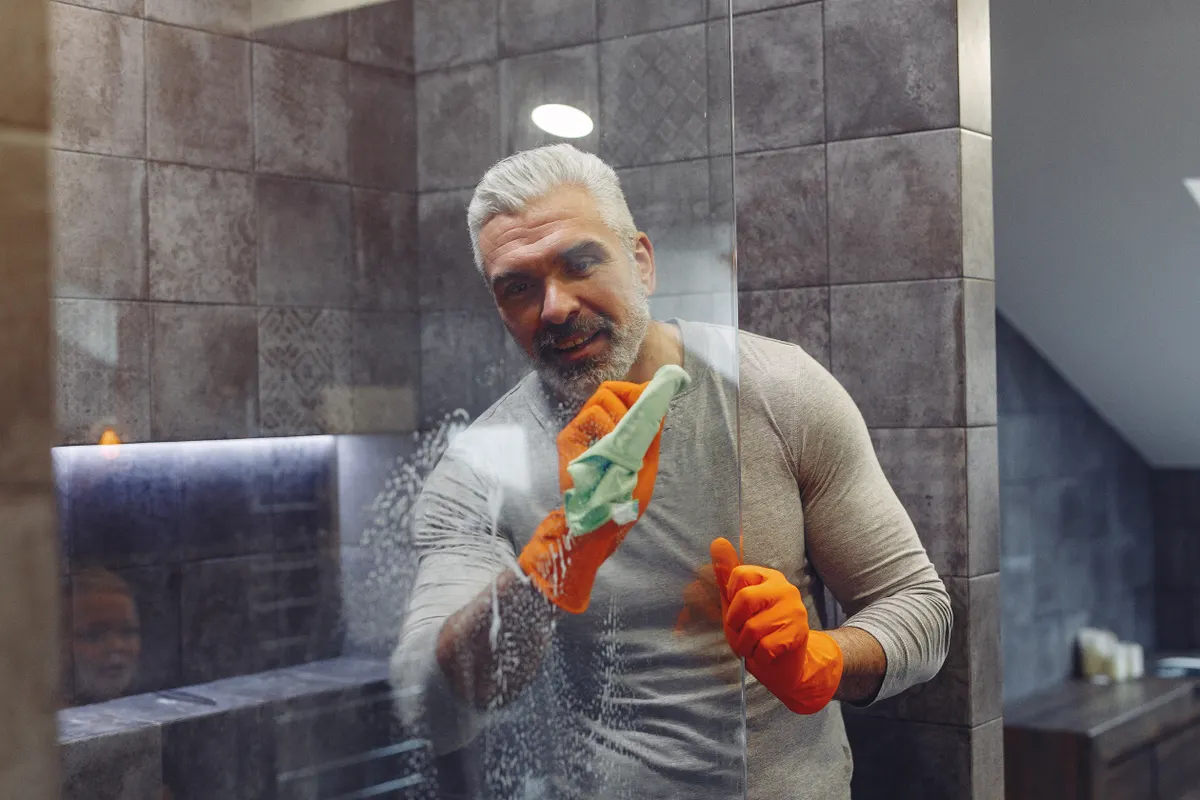
Photo Credit: Gustavo Fring
Cleaning a Steam Shower Without Causing Damage
Test any new cleaner, particularly acidic ones like vinegar, on a small hidden area first, since steam shower finishes and coatings vary between manufacturers. Stick to soft sponges and brushes rather than abrasive pads, since scratched glass or tile in a steam environment collects buildup even faster than a smooth surface would.
Check seals and caulking around the enclosure regularly. These keep steam and water from escaping into surrounding walls or flooring, and the constant heat and humidity in a steam shower can wear seals down faster than in a standard shower. Cracked or peeling caulk should be addressed rather than cleaned around repeatedly.
Steam showers also need proper disinfecting from time to time, not just surface cleaning, since the warm, humid environment can support bacteria as well as mold. That process involves different products and steps than routine cleaning, and is covered in Disinfecting a Bathtub or Shower.
Professional Cost to Clean a Steam Shower
Most steam shower cleaning is manageable as a DIY task using the surface-specific methods above. Professional cleaning services are sometimes hired for a deep clean of heavily built-up units, or when a homeowner wants the steam generator itself serviced alongside a surface clean. Costs for professional bathroom or steam shower cleaning vary widely depending on region, the size of the unit, and whether generator servicing is included, so getting a quote from a local service provider is the most reliable way to know what a specific job will cost.
Frequently Asked Questions
What is the best way to clean a steam shower? Squeegee and dry surfaces after each use, then do a full clean weekly: wet the surfaces, apply a cleaner suited to the material, scrub gently, rinse completely, and dry with a squeegee and towel before leaving the door open to air out.
How often should you clean a steam shower? A full clean once a week suits most households, with squeegeeing and drying after every use. Check seals and grout every four to six weeks, and follow the manufacturer's schedule for generator maintenance.
What cleaning products are safe for a steam shower? Mild dish soap, pH-neutral cleaners, and baking soda paste are safe for most surfaces. Vinegar works on tile and glass but not natural stone. Never spray any cleaner into steam vents or generator components.
What should you avoid when cleaning a steam shower? Avoid cleaning while the generator is running, using acidic cleaners on stone, spraying liquid near vents, and mixing bleach with ammonia, vinegar, or other acidic products.
How can you clean a steam shower without damaging it? Test new cleaners on a small area first, use soft tools instead of abrasive ones, follow manufacturer instructions for the generator, and keep the door open after cleaning to let the enclosure dry fully.
See the full bathroom cleaning guide for how steam shower care fits into complete bathroom upkeep.
A Quick Safety Note
Steam shower cleaning sometimes involves diluted bleach for grout mold and requires care around electrical steam generator components. Always confirm the unit is off before cleaning, follow the manufacturer's instructions for the generator and vents, and never mix bleach with ammonia, vinegar, or other acidic cleaners, since this can release hazardous fumes in an enclosed space. Keep the door open and ventilation running during and after cleaning, and if mold keeps returning despite regular care, a professional assessment is a reasonable next step.



Leave a Reply