
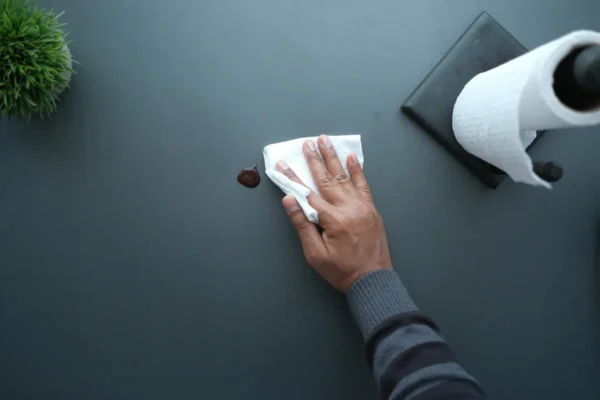
Sticky spill residue on kitchen surfaces is one of those small problems that seems to multiply overnight. A splash of juice, a drip of syrup, or a splatter of sauce dries into a tacky film that grabs dust, crumbs, and fingerprints. Wiping with a damp cloth alone often just smears it around instead of lifting it off.
This article is Part of Kitchen Spill & Residue Cleanup Guide, and it focuses specifically on dried, tacky spills, not fresh ones and not heavily burnt-on food, which each need a slightly different approach.
How to Remove Sticky Residue: Quick Steps
For most kitchen surfaces, this basic method works:
- Soften the residue. Lay a warm, damp cloth over the sticky area for 2 to 3 minutes.
- Apply a mild cleaner. Use warm water with a few drops of dish soap, or a light baking soda paste for tougher spots.
- Let it sit. Give the cleaner 3 to 5 minutes to loosen the sticky film.
- Wipe with the grain. Use a soft cloth or non-scratch sponge, working in one direction rather than scrubbing hard in circles.
- Rinse and dry. Wipe with a clean, damp cloth, then dry the surface fully to prevent water spots or streaking.
This sequence works well because sticky residue is usually a mix of sugar, oil, or starch that has dried and hardened. Softening it first, rather than attacking it dry, protects the finish underneath.
What Makes Kitchen Spills So Sticky
Most sticky buildup on countertops, cabinets, and appliances comes from sugary or oily spills: juice, soda, honey, syrup, sauces, and cooking oil splatters. Once these liquids dry, the sugar or fat left behind hardens into a thin, tacky layer. Heat from a nearby stove or oven can speed this up, which is why residue near cooktops often feels stickier than spills on the far side of the counter.
Humidity plays a role too. In a warm, humid kitchen, dried sugar residue can stay slightly tacky longer, which is why it seems to attract dust so easily. Understanding this helps explain why plain water sometimes isn't enough. You are not just wiping away liquid, you are breaking down a dried film that has bonded to the surface.
Not all sticky residue behaves the same way. Sugar-based residue usually softens well with warm water. Oil-based residue often needs a small amount of dish soap, since soap is designed to break down grease. Knowing which type you are dealing with helps you pick the right first step instead of guessing.
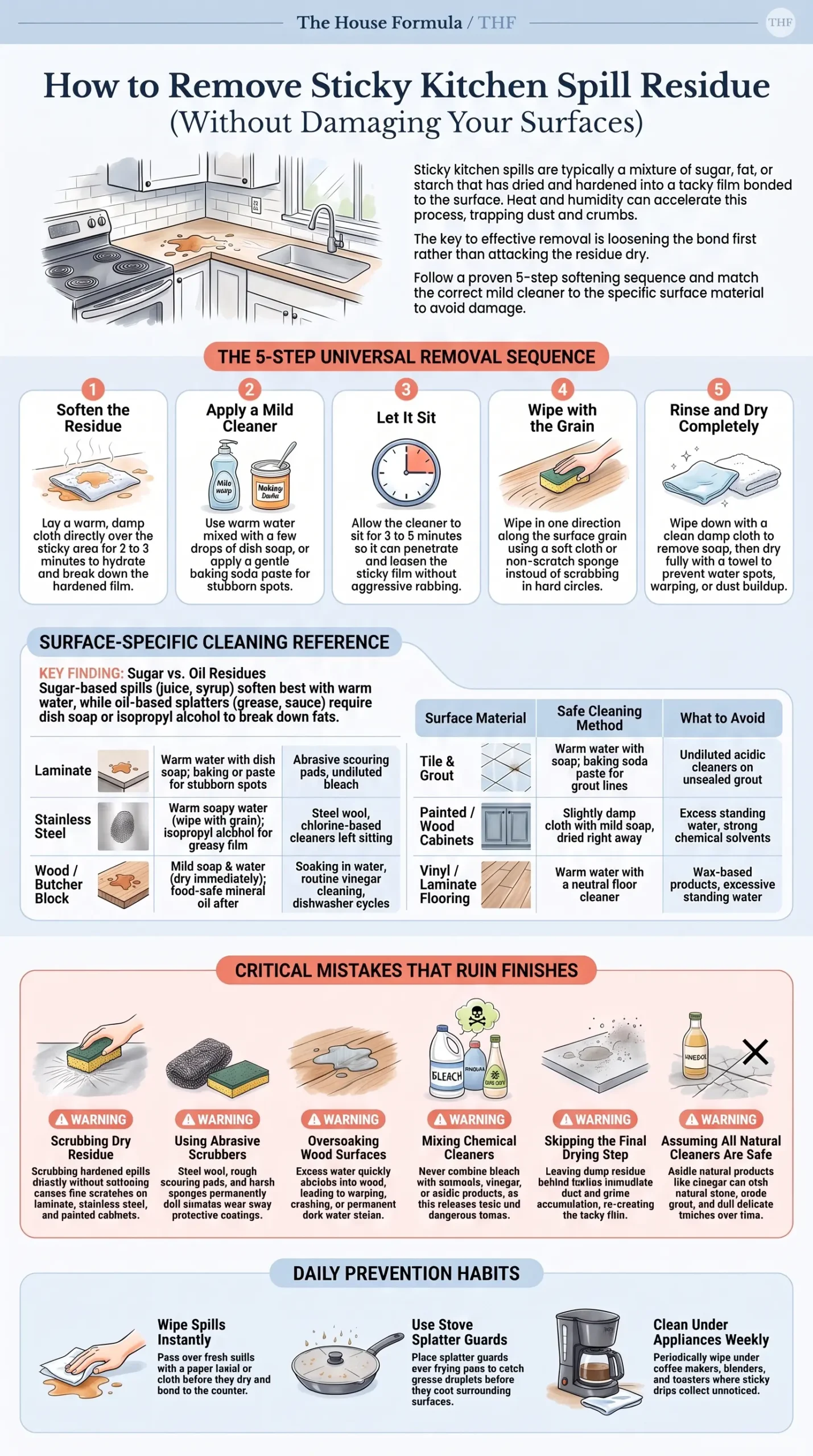
Photo Credit: Hobby Guidebook Editorial
Removing Sticky Residue by Surface Type
Different kitchen materials react differently to moisture, heat, and cleaning products. Using the wrong method on the wrong surface can dull a finish, discolor a material, or leave permanent marks, so it helps to match your approach to what you're actually cleaning.
|
Surface |
Safe Method |
Avoid |
|
Laminate countertops |
Warm water with dish soap; baking soda paste for stubborn spots |
Abrasive scouring pads, undiluted bleach |
|
Stainless steel |
Warm soapy water, wipe with the grain; isopropyl alcohol for greasy film |
Steel wool, chlorine-based cleaners left sitting |
|
Wood or butcher block |
Mild soap and water, dried immediately; food-safe mineral oil after cleaning |
Soaking, vinegar as a routine cleaner, dishwasher cycles |
|
Tile and grout |
Warm soapy water; baking soda paste worked into grout lines |
Undiluted acidic cleaners on unsealed grout |
|
Painted or wood cabinets |
Slightly damp cloth with mild soap, dried right away |
Excess water, strong solvents |
|
Vinyl or laminate flooring |
Warm water with a neutral floor cleaner |
Wax-based products, excessive standing water |
Countertops (Laminate, Solid Surface, Quartz)
Most laminate and solid surface counters handle warm, soapy water well. For dried, sticky spots, a paste of baking soda and a small amount of water can be gently rubbed on with a soft cloth, then rinsed. Quartz counters are durable but can be dulled by strong solvents or prolonged exposure to bleach, so stick to mild soap for routine sticky spots.
Stainless Steel Appliances and Surfaces
Stainless steel shows streaks easily, so always wipe in the direction of the grain lines you can see in the metal. For greasy, sticky film near a stove or on appliance handles, a cloth dampened with a small amount of rubbing alcohol can cut through residue without leaving scratches. Avoid steel wool or abrasive pads, which can scratch the surface permanently.
Wood and Butcher Block Surfaces
Wood is more sensitive to moisture than most kitchen materials. Use a barely damp cloth with mild soap, and dry the surface immediately afterward. Standing water or soaking can cause warping or dark stains over time. If the wood looks dry after cleaning, a food-safe mineral oil can help restore its surface, though this is a maintenance step rather than a cleaning one.
Tile, Grout, and Backsplash
Tile itself is fairly forgiving, but grout is porous and can absorb sticky residue if it sits too long. A baking soda paste worked gently into grout lines with an old soft-bristled brush usually lifts dried spills without damaging the grout. Avoid strong acidic cleaners on unsealed or colored grout, since they can cause fading or erosion over time.
Choosing a Safe Degreaser for Stubborn Stickiness
For stickiness caused mainly by oil or grease, such as splatters near the stovetop, plain soap and water sometimes isn't enough. A basic degreaser can help, but the right choice depends on the surface.
Dish soap diluted in warm water is the mildest and safest starting point for almost every kitchen surface. It's designed to break down fats and oils and rinses away cleanly. For tougher grease film on stainless steel or sealed countertops, a small amount of isopropyl alcohol on a cloth can help dissolve sticky residue, though it should be tested on a hidden spot first, since it can affect certain painted or coated finishes.
Commercial kitchen degreasers can be effective on heavily built-up grease, but always check the label for which surfaces they are safe on. Some are too harsh for wood, painted cabinets, or certain plastics. When in mind, manufacturer instructions for your specific countertop, cabinet finish, or appliance should always take priority over general cleaning advice.
Never mix cleaning products unless you know for certain the combination is safe. In particular, never combine bleach with ammonia, vinegar, or other acidic cleaners, since this can create dangerous fumes. If a spill has both sticky residue and a stain that needs deeper treatment, a dedicated resource on stain removal can offer more targeted guidance for the specific material involved.
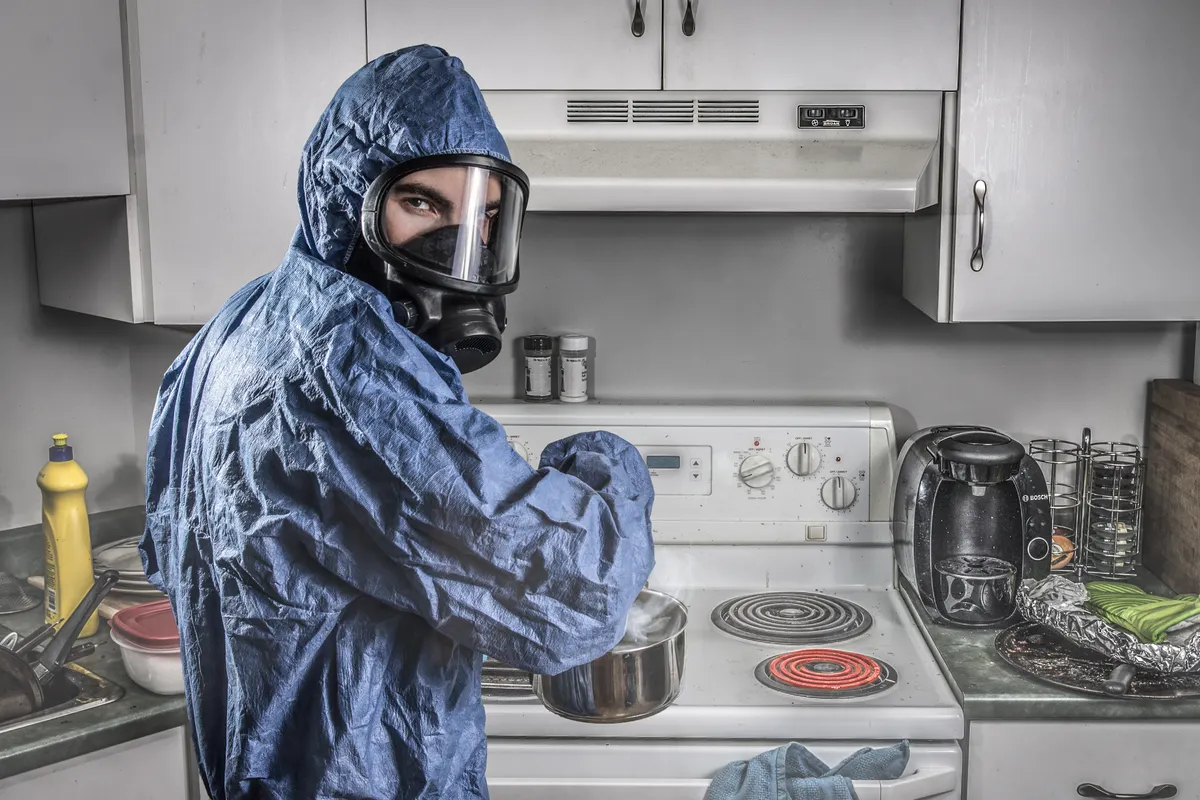
Photo Credit: Erik Mclean
How Often You Should Clean Sticky Spills
Sticky residue is easiest to remove within the first hour or so, before it fully hardens. As a general routine, wiping counters and stovetops after each meal prevents buildup from setting in overnight. For areas that see frequent spills, such as near a coffee maker or a kids' snack station, a quick daily wipe-down keeps sticky film from accumulating.
If a spill is discovered already dried, it's still very manageable, it just needs a bit more soak time with a damp cloth before wiping. Letting sticky spots sit for days or weeks makes them harder to remove and increases the chance that dust and grime bond to the residue, creating a stubborn combined layer.
For spills that happen close to cooking, such as sauce splatters that haven't dried yet, cleaning them up right away is far easier than waiting. A separate guide on Cleaning Fresh Kitchen Spills Before They Set walks through that immediate window in more detail, since fresh spills respond differently than dried, sticky ones.
Preventing Sticky Buildup on Kitchen Surfaces
Prevention is usually less work than removal. A few simple habits go a long way toward keeping kitchen surfaces from developing that tacky film in the first place.
- Wipe spills as soon as you notice them, even a quick pass with a dry paper towel before they dry.
- Use a splatter guard when frying or simmering sauces, which cuts down on grease landing on the stovetop and nearby counter.
- Clean around small appliances like toasters, coffee makers, and blenders weekly, since sticky drips often collect underneath and behind them unnoticed.
- Dry surfaces after cleaning rather than letting them air dry, since lingering moisture can attract dust that sticks to any leftover residue.
- Keep a designated cloth near the stove for quick wipe-ups during cooking, so spills don't get the chance to sit and dry.
These habits are especially useful in busy kitchens, and small routines matter even more when other messes are involved. If burnt-on food is part of your regular cleanup, it behaves differently from sticky spills and often needs a soak-based approach; a dedicated guide on Removing Burnt Food Residue covers that specific challenge.
Photo Credit: RDNE Stock project
Common Mistakes to Avoid
A few habits tend to make sticky residue worse instead of better:
- Scrubbing dry residue immediately. This can scratch finishes, especially on stainless steel, laminate, and painted cabinets. Soften first, then wipe.
- Using abrasive pads on soft finishes. Steel wool, scouring pads, and rough sponges can permanently dull laminate, stainless steel, and painted surfaces.
- Oversoaking wood surfaces. Wood absorbs water quickly, which can lead to warping, cracking, or dark water stains.
- Mixing cleaning chemicals. Never combine bleach with vinegar, ammonia, or other acidic products. This can produce harmful fumes.
- Skipping the drying step. Leaving surfaces damp can attract more dust and grime, undoing the cleaning you just did.
- Assuming all "natural" products are automatically safe. Vinegar, for example, is fine on many sealed surfaces but can etch natural stone and dull certain finishes over time.
Avoiding these mistakes protects both the surface and the time you've already spent cleaning it.
Frequently Asked Questions
How do you remove sticky spill residue from kitchen surfaces? Soften the area with a warm, damp cloth, apply mild soap and water or a baking soda paste, let it sit a few minutes, then wipe gently with the grain and dry the surface completely.
How often should you clean sticky spill residue from kitchen surfaces? Ideally, wipe spills the same day they happen. High-traffic spots like the stovetop and counters near food prep benefit from a quick daily check.
What cleaning products are safe for sticky spill residue from kitchen surfaces? Dish soap and warm water are safe for nearly all kitchen surfaces. Baking soda paste works well for tougher spots, and a small amount of isopropyl alcohol can help with greasy residue on hard, sealed surfaces after a spot test.
What should you avoid when cleaning sticky spill residue from kitchen surfaces? Avoid abrasive scrubbers on finished surfaces, soaking wood, and mixing bleach with vinegar or ammonia. Always check the surface material before using a stronger cleaner.
How can you clean sticky spill residue without damaging the surface? Test any new cleaner on a small, hidden area first, use the mildest method that works, wipe with the grain rather than in hard circles, and dry the surface right after cleaning.
Removing sticky spill residue doesn't require anything fancy, just the right order of steps and a method that fits the surface you're cleaning. Back to the complete kitchen cleaning guide for more routine and deep-cleaning tasks across every part of the kitchen.
A quick safety note: always check the manufacturer's care instructions for your specific countertop, cabinet finish, or appliance before using a new cleaning product. Never mix bleach with ammonia, vinegar, or other acidic cleaners, since this can release harmful fumes. Work in a well-ventilated space when using alcohol-based cleaners or commercial degreasers, and test any new product on a small, hidden area first. If a stain or residue seems unusually stubborn or you're unsure what caused it, a professional cleaner may be the safer option.



Leave a Reply