
The toilet bowl is one of the few bathroom surfaces that's almost always wet, which changes how buildup forms compared to a sink or countertop. Mineral deposits from water, bacteria below the waterline, and the ring that forms right at the water's edge all need a slightly different approach than wiping down a dry surface. Getting toilet bowl cleaning right means understanding where grime actually collects and using the right tool and product for each spot.
This guide covers the best way to clean a toilet bowl, how often it needs attention, and the common mistakes that leave bowls looking dingy even after regular cleaning. This article is Part of Toilet Cleaning Guide, which covers full toilet care from the seat to the base.
The Best Way to Clean a Toilet Bowl
- Turn off the water supply valve if you plan to let the bowl drain lower than usual, though this step is optional for a standard clean.
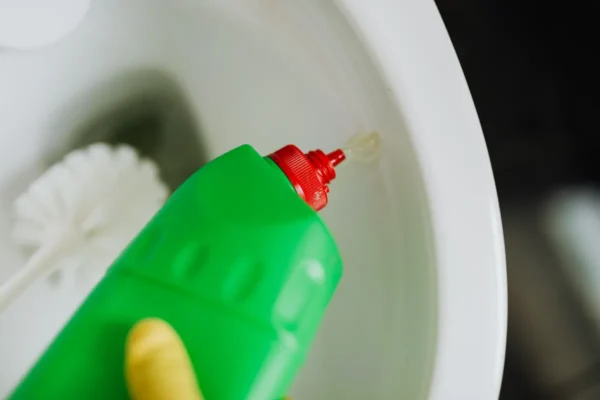
- Apply toilet bowl cleaner under the rim first, working it around the entire circumference. This lets it start breaking down buildup while you prepare the rest of your cleaning.
- Let the cleaner sit for the time listed on the label, usually a few minutes, so it has time to loosen mineral deposits and grime before you start scrubbing.
- Scrub the entire bowl with a toilet brush, working from the rim downward, paying extra attention to the waterline ring and the area just below it where buildup concentrates most.
- Reach into the trap (the curved area at the bottom of the bowl) as far as the brush allows, since this spot holds water and buildup that's easy to overlook.
- Flush to rinse the bowl and check your work. If the ring or stains are still visible, a second application of cleaner with a longer sit time usually finishes the job.
- Wipe the outer rim and underside of the seat area with a separate cloth or disinfecting wipe, since bowl cleaner alone doesn't reach these spots.
If the ring at the waterline doesn't lift after a couple of standard cleaning attempts, it's likely bonded to the porcelain rather than sitting as loose surface grime, and a more targeted method covered in Removing Toilet Bowl Rings will work better than repeated scrubbing with regular bowl cleaner.
How to Tell When a Toilet Bowl Needs Cleaning
A few signs point to a bowl that needs attention sooner rather than later:
- A visible ring at the waterline, which usually means mineral deposits or bacteria have started building up where the water sits.
- A dull or cloudy appearance to the porcelain, even where there's no obvious ring, which often signals early mineral buildup from hard water.
- A lingering odor that doesn't go away after flushing, which can point to buildup below the waterline or in the trap that a quick brush pass isn't reaching.
- Visible discoloration below the rim, often a light brown or yellow tint, which tends to form faster in households with hard water.
If any of these show up between regular cleanings, it's worth addressing right away rather than waiting for the next scheduled clean, since buildup becomes harder to remove the longer it sits.
How Often Should You Clean a Toilet Bowl
|
Task |
Suggested Frequency |
|
Quick brush and flush |
Every 2 to 3 days |
|
Full bowl clean with cleaner |
Weekly |
|
Under-rim deep clean |
Every 2 to 4 weeks |
|
Trap and waterline check |
Monthly |
Households with hard water tend to need more frequent attention to the waterline ring specifically, since mineral deposits form faster under those conditions. A quick brush pass between full cleans helps keep buildup from accumulating to the point where it needs extra scrubbing time.
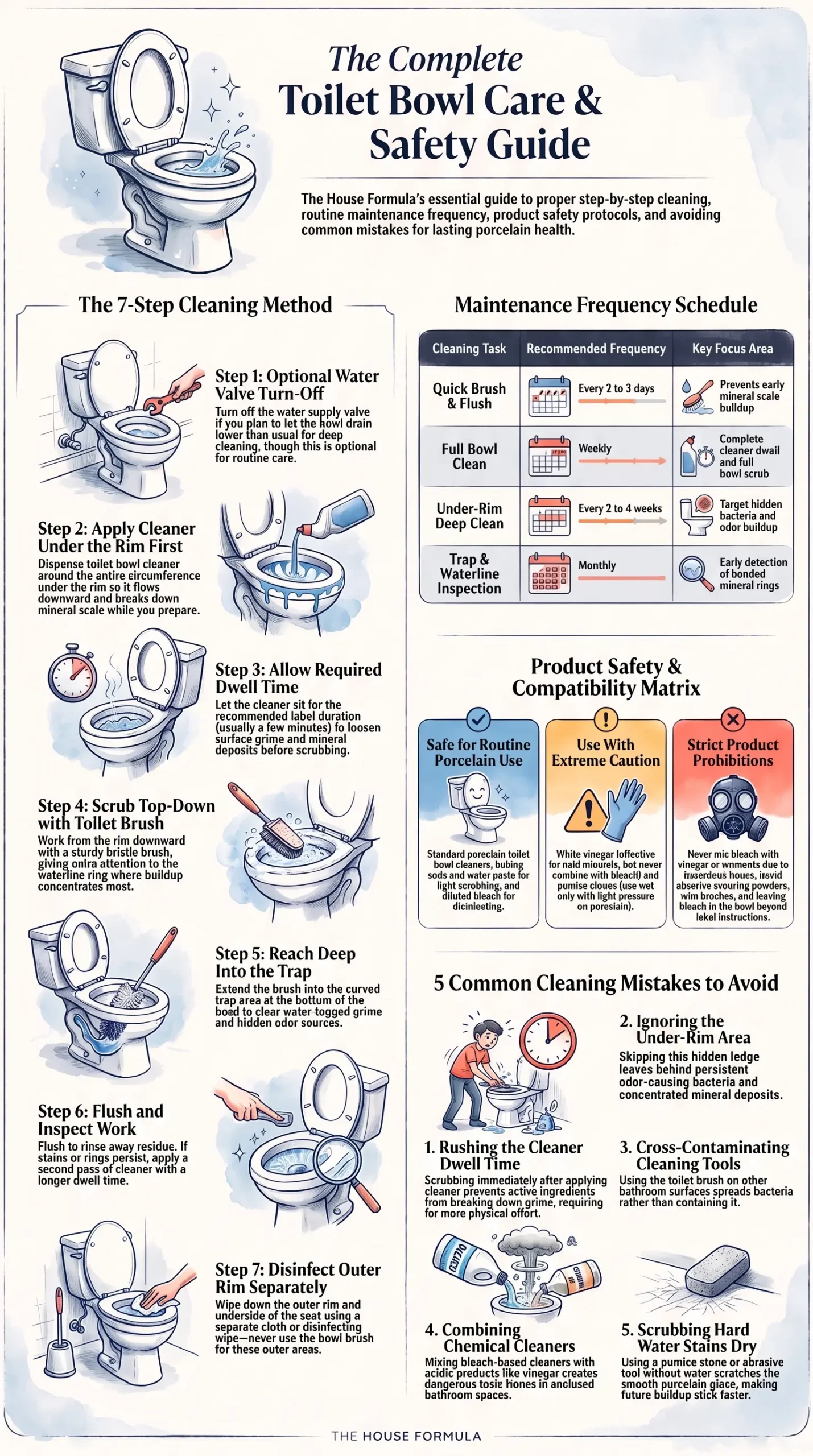
Photo Credit: Hobby Guidebook Editorial
Tools Needed for Toilet Bowl Cleaning
- A toilet brush with sturdy bristles that can reach under the rim and into the trap
- Toilet bowl cleaner, chosen based on whether you're doing routine maintenance or treating a specific stain
- Rubber gloves to protect skin during scrubbing and product application
- A separate cloth or disinfecting wipe for the outer rim, never the same tool used inside the bowl
- A pumice stone, for hard water stains only, used carefully and only on porcelain, never on other bowl materials
Keep the toilet brush stored in a holder that allows it to drip dry between uses, since a brush left wet in a closed container can grow bacteria and mildew rather than staying ready for the next clean.
What Cleaning Products Are Safe for a Toilet Bowl
Generally safe for routine cleaning:
- Standard toilet bowl cleaner, formulated specifically for porcelain and safe for regular use
- A baking soda and water paste for light scrubbing between full cleanings
- Diluted bleach, effective for disinfecting and whitening, safe for porcelain specifically
Use with caution:
- White vinegar, useful for mild mineral buildup, but shouldn't be combined with bleach or bleach-based bowl cleaners
- Pumice stones, effective on hard water stains but only when used wet and with light pressure, since dry or forceful use can scratch porcelain
Avoid in a toilet bowl:
- Mixing bleach with vinegar, ammonia, or other acidic cleaners, which can release hazardous fumes in an enclosed bathroom space
- Abrasive scouring powders, which can dull or scratch the porcelain glaze over time
- Leaving bleach-based cleaner in the bowl for extended periods beyond what the label recommends, since prolonged exposure isn't more effective and can be harder on certain bowl finishes
Manufacturer guidance on your specific bowl cleaner should take priority over general advice, particularly for specialty formulas designed for septic systems or low-flow toilets, where certain ingredients may need to be avoided.

Photo Credit: Alex Tyson
Common Mistakes When Cleaning a Toilet Bowl
- Not letting the cleaner sit long enough. Scrubbing immediately after applying cleaner means it hasn't had time to break down buildup, so more scrubbing effort is needed to get the same result.
- Skipping under the rim. This hidden area collects buildup and odor-causing bacteria, and a quick swipe around the visible bowl surface misses it entirely.
- Using the toilet brush for other bathroom surfaces. This spreads bacteria rather than containing it to the bowl, and a brush used elsewhere should never go back into the toilet without being properly cleaned first.
- Mixing bleach-based bowl cleaner with a separate acidic cleaner. This is one of the more common hazardous combinations in bathroom cleaning and should always be avoided.
- Scrubbing hard water stains dry. A pumice stone or any abrasive tool used without water increases the risk of scratching porcelain, which then makes future buildup stick even more easily.
Cleaning a Toilet Bowl Without Damaging It
Porcelain is durable, but it isn't scratch-proof, and once the glossy surface gets scratched, buildup collects in those grooves faster than before. Stick to a standard toilet brush and avoid wire brushes or metal scouring pads, which can leave marks that are impossible to fully clean out afterward.
If you're using a pumice stone for hard water stains, always keep the stone and the bowl surface wet during use, and apply light pressure rather than pressing hard. A dry pumice stone or one used with too much force is far more likely to scratch porcelain than to safely lift the stain. This matters especially for chalky, crusted buildup from mineral scale, which behaves differently than an organic ring and often needs the specific approach described in Removing Hard Water Stains from a Toilet Bowl.
Avoid combining chemical cleaners inside the bowl. If you've just used a bleach-based cleaner, flush and rinse the bowl completely before switching to a different product, rather than applying a second cleaner on top of the first. This keeps you from accidentally creating a hazardous chemical reaction in an enclosed space.
For toilets with a septic system, some bowl cleaners are formulated specifically to be septic-safe, since not every household cleaner is appropriate for a septic tank's bacterial balance. Checking the product label for septic system compatibility is worth doing if this applies to your home.
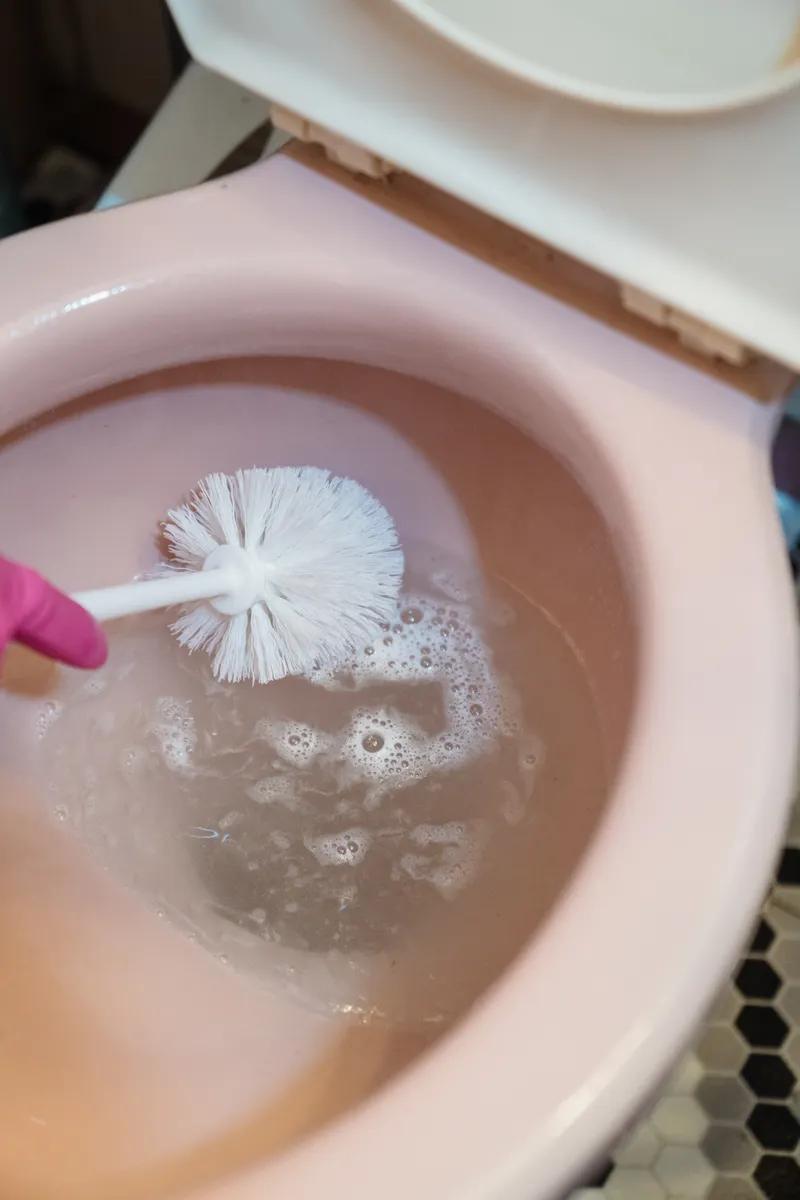
Photo Credit: Liliana Drew
Frequently Asked Questions
What is the best way to clean a toilet bowl? Apply bowl cleaner under the rim, let it sit for the time listed on the label, scrub the entire bowl including the trap, flush to rinse, and wipe the outer rim separately with a cloth or disinfecting wipe.
How often should you clean a toilet bowl? A full clean weekly works for most households, with a quick brush pass every two to three days. Check the waterline and trap monthly, especially in homes with hard water.
What cleaning products are safe for a toilet bowl? Standard toilet bowl cleaner and diluted bleach are safe for porcelain. Baking soda paste works for light scrubbing. Vinegar is fine for mild buildup but should never be combined with bleach-based cleaners.
What should you avoid when cleaning a toilet bowl? Avoid mixing bleach with vinegar or ammonia, using abrasive scouring powders, scrubbing hard water stains dry with a pumice stone, and skipping the area under the rim.
How can you clean a toilet bowl without damaging it? Use a standard toilet brush rather than metal or wire tools, keep a pumice stone wet during use, apply light pressure while scrubbing, and rinse the bowl completely before switching to a different cleaning product.
Browse the complete bathroom cleaning guide for how bowl care fits into full toilet and bathroom upkeep.
A Quick Safety Note
Toilet bowl cleaning often involves bleach-based products for disinfecting and stain removal. Always follow the product label for contact time and dilution, and never mix bleach with vinegar, ammonia, or other acidic cleaners, since this can release hazardous fumes in the enclosed space of a bathroom. Wear gloves during cleaning, keep the area ventilated, and rinse the bowl completely before switching between different cleaning products.



Leave a Reply