
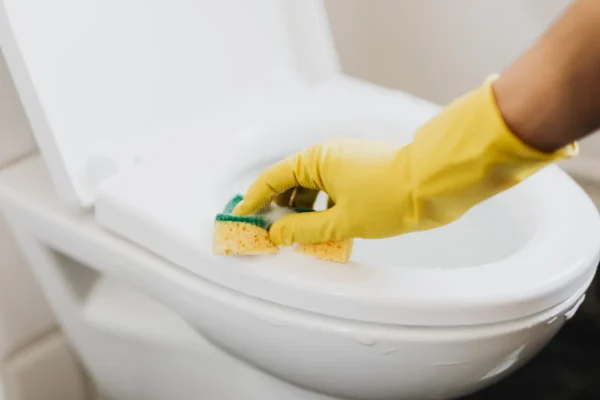
The toilet seat and lid get touched more often than almost any other surface in the bathroom, yet they're frequently the most rushed part of toilet cleaning. Most people focus their effort on the bowl and forget that the seat and lid need their own routine, since they're a high-contact surface that picks up bacteria, skin oils, and splash residue every single day.
This guide covers the best way to clean a toilet seat and lid, how often it needs attention, and which products are safe depending on whether your seat is plastic or a wood veneer finish. This article is Part of Toilet Cleaning Guide, which covers full toilet care from top to bottom.
The Best Way to Clean a Toilet Seat and Lid
Cleaning a toilet seat and lid properly means cleaning both sides of each part, not just the top surface people see.
- Put on gloves before starting, since you'll be handling a high-touch, high-bacteria surface directly.
- Lift the lid and seat so you can access the underside of both, along with the hinges where they connect to the bowl.
- Apply a cleaner suited to the seat's material (covered in detail below) to a cloth or paper towel, rather than spraying directly onto the seat, which can let liquid run into the hinges.
- Wipe the top of the lid first, then the underside of the lid, then the top of the seat, and finally the underside of the seat. Working in this order keeps you moving from cleaner areas to dirtier ones.
- Pay close attention to the hinges, since these tight spots trap moisture and grime that a quick wipe often misses.
- Let the cleaner sit for a minute or two if the label recommends it, which gives it time to break down buildup before wiping it away.
- Wipe everything dry with a clean cloth or paper towel, and leave the lid open for a few minutes to let any remaining moisture air out.
For the surfaces around the seat and lid, including the base and exterior of the bowl, see Toilet Base & Exterior Cleaning, which covers the rest of the toilet's outer surfaces in detail.
Cleaning by Seat Material
Most toilet seats are plastic, but wood veneer and painted finishes need a gentler approach.
Plastic Seats
Plastic is the most common material and the easiest to clean. It holds up well to most household disinfectants and doesn't require much special care beyond avoiding abrasive scrubbing pads, which can scratch the surface and create tiny grooves where bacteria can hide.
Wood Veneer or Painted Seats
Wood veneer seats have a protective coating that can wear down with repeated use of harsh chemicals or abrasive tools. Stick to a mild cleaner and a soft cloth, and avoid soaking the surface, since excess moisture can seep into seams and cause the veneer to warp or peel over time. Test any new cleaner on a small, hidden section first if you're unsure how the finish will react.

Photo Credit: Hobby Guidebook Editorial
How Often Should You Clean a Toilet Seat and Lid
|
Task |
Suggested Frequency |
|
Quick wipe-down |
Every 2 to 3 days |
|
Full clean of both sides and hinges |
Weekly |
|
Disinfecting pass |
Weekly, or more often if someone in the household is sick |
Households with children, multiple daily users, or anyone currently ill benefit from cleaning the seat and lid more frequently than this baseline. A quick wipe between full cleans goes a long way toward keeping bacteria from building up on a surface that gets this much direct contact.
What Cleaning Products Are Safe for a Toilet Seat and Lid
Generally safe for plastic seats:
- Mild dish soap diluted in warm water
- Household disinfecting wipes labeled safe for hard plastic surfaces
- A diluted bleach solution for disinfecting, used occasionally and rinsed off afterward
Generally safe for wood veneer or painted seats:
- Mild dish soap diluted in warm water
- A vinegar and water solution for light buildup, tested on a hidden area first
Avoid on any toilet seat:
- Abrasive scouring pads or powders, which scratch plastic and can wear through a veneer's protective coating
- Undiluted bleach left sitting for extended periods, which can degrade plastic over time and damage wood finishes
- Mixing bleach with ammonia, vinegar, or other acidic cleaners, which can release hazardous fumes
Manufacturer care instructions, if available for your specific seat, should take priority over general guidance, particularly for wood veneer or specialty finishes where product tolerance varies more between brands.
Vinegar and Baking Soda for a Toilet Seat and Lid
Vinegar and baking soda are two of the most useful natural ingredients for toilet seat cleaning, though they work differently and aren't meant to be combined into one solution for this task.
White vinegar diluted with water works well as a light disinfecting wipe-down for plastic seats and cuts through soap film and mild grime effectively. It's gentle enough for regular use but should be tested first on wood veneer, since repeated acid exposure can dull some protective coatings.
Baking soda paste, made with a small amount of water, works well for spot-treating stuck-on residue or light discoloration. Apply it with a soft cloth, let it sit briefly, then wipe clean and rinse.
Using vinegar and baking soda separately, for different jobs, is a reasonable approach. Combining them into one mixture creates a fizzing reaction that neutralizes both ingredients' cleaning properties fairly quickly, so it doesn't add cleaning power beyond what either does on its own.
Commercial Cleaner vs Natural Method for a Toilet Seat and Lid
Both approaches have a place depending on what the seat needs.
|
Factor |
Natural Method (Vinegar, Baking Soda) |
Commercial Disinfecting Wipes or Spray |
|
Best use |
Routine wipe-downs, light buildup |
Disinfecting after illness, heavier grime |
|
Material compatibility |
Safe for plastic, test first on wood veneer |
Check label, most are safe for plastic |
|
Disinfecting power |
Limited, not a substitute for true disinfecting |
Formulated to kill germs when used as directed |
|
Cost |
Low, common household items |
Moderate, ongoing product purchase |
|
Convenience |
Requires mixing a solution |
Ready to use |
Natural methods are a solid choice for everyday wipe-downs and light cleaning. When actual disinfecting matters, such as after an illness in the household, a product specifically labeled as a disinfectant is more reliable than vinegar alone, since vinegar isn't classified as an effective disinfectant against the range of germs a household product is tested against.
Eco-Friendly Ways to Clean a Toilet Seat and Lid
For routine cleaning without relying on commercial products every time, a few simple ingredients cover most needs:
- White vinegar and water for regular wipe-downs on plastic seats
- Baking soda paste for light spot-treating and stuck-on residue
- Plain dish soap as a gentle option safe for both plastic and wood veneer
These natural methods handle everyday maintenance well. For weekly disinfecting, especially in households with kids or anyone who's been sick, pairing a natural routine with an occasional disinfecting wipe or diluted bleach pass (on plastic only) offers a more complete approach than relying on natural methods alone.
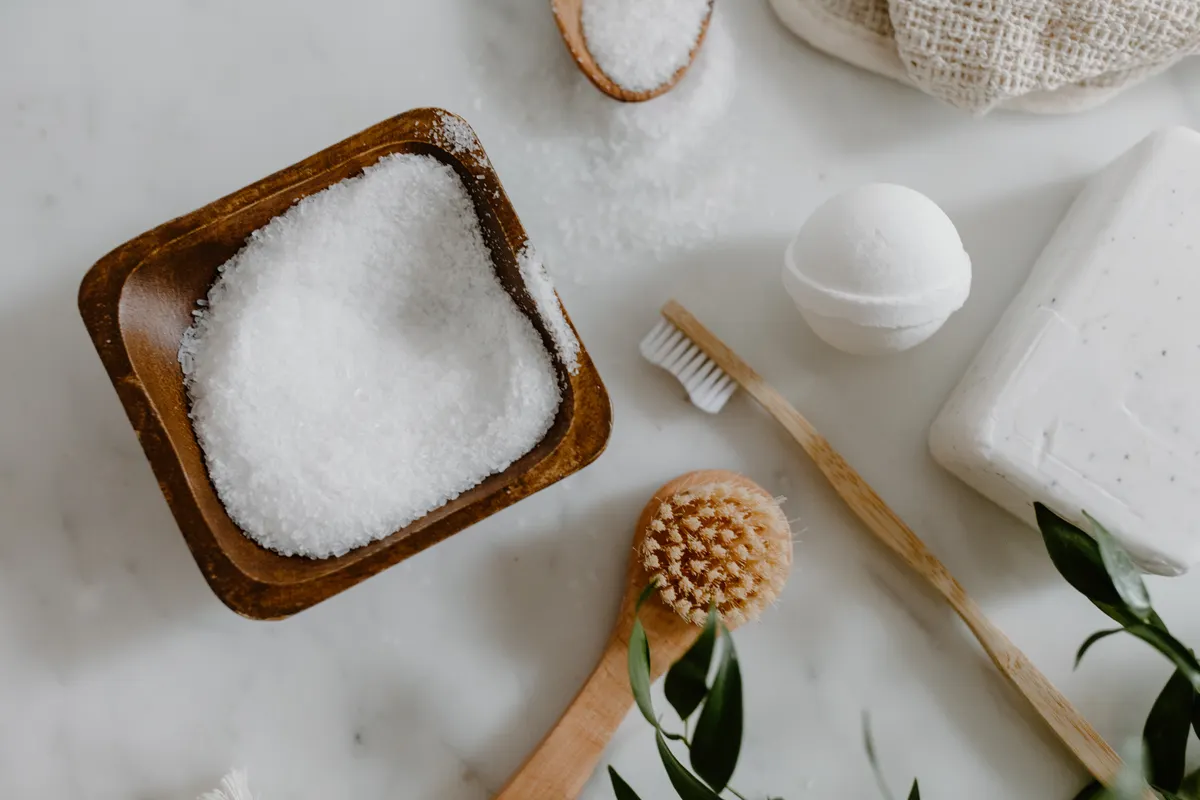
Photo Credit: Tara Winstead
Cleaning a Toilet Seat and Lid Without Damaging Them
A few habits help protect the seat's surface and hinges over the long run.
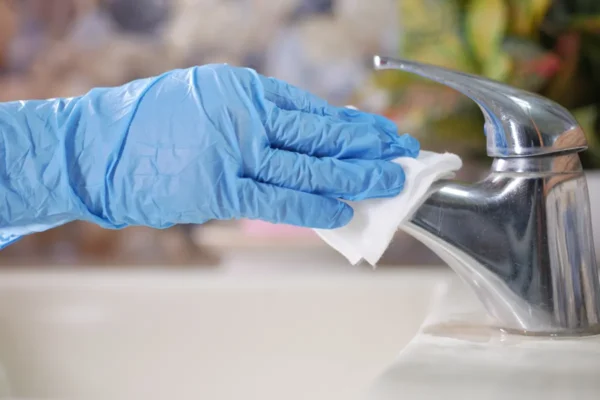
Test any new cleaner on a small hidden area first, especially on wood veneer or painted finishes, since coatings vary between manufacturers and some react poorly to repeated exposure. Apply cleaner to a cloth rather than spraying it directly onto the seat, since liquid can seep into the hinges and cause them to loosen or rust over time.
Avoid abrasive pads on any seat material. Plastic scratches more easily than it looks like it would, and those scratches become places where grime and bacteria settle in more easily going forward. Dry the seat and lid fully after cleaning, particularly around the hinges, since trapped moisture here can lead to a musty smell or early rust on metal hardware.
Check the hinges periodically for looseness or corrosion. A wobbly seat is often a hinge problem rather than a cleaning problem, and no amount of cleaning fixes hardware that's worn out or rusted through.

Photo Credit: David Brown
Common Mistakes When Cleaning a Toilet Seat and Lid
- Only cleaning the top surface. The underside of the seat and lid, along with the hinges, collect just as much grime and bacteria as the visible top.
- Spraying cleaner directly onto the seat. This lets liquid run into the hinges, where it can cause rust or loosen the hardware over time.
- Using the same cleaner on wood veneer as on plastic. Veneer finishes are more sensitive, and a product that's fine on plastic can dull or damage a wood coating.
- Skipping regular disinfecting in favor of natural methods alone. Vinegar handles routine grime well but isn't a substitute for an actual disinfectant when real disinfecting is needed.
- Letting moisture sit in the hinges after cleaning. This is one of the more common causes of a squeaky or rusted hinge over time.
For the tool used to clean the bowl itself, proper care matters just as much as the seat and lid. A toilet brush that isn't cleaned and dried between uses can reintroduce bacteria every time it's used. That maintenance routine is covered separately in Toilet Brush & Holder Cleaning.
Frequently Asked Questions
What is the best way to clean a toilet seat and lid? Lift both the seat and lid, apply a cleaner suited to the material to a cloth, wipe the top of the lid, underside of the lid, top of the seat, and underside of the seat in that order, pay extra attention to the hinges, then dry everything fully.
How often should you clean a toilet seat and lid? A quick wipe-down every two to three days works well, with a full clean of both sides and the hinges weekly. Households with kids or anyone who's ill should disinfect more often.
What cleaning products are safe for a toilet seat and lid? Mild dish soap and diluted disinfecting wipes are safe for plastic seats. Wood veneer seats do better with mild soap and water, and any new product should be tested on a hidden area first.
What should you avoid when cleaning a toilet seat and lid? Avoid abrasive scouring pads, undiluted bleach left sitting for long periods, spraying cleaner directly onto the seat where it can reach the hinges, and mixing bleach with ammonia, vinegar, or other acidic cleaners.
How can you clean a toilet seat and lid without damaging them? Apply cleaner to a cloth instead of spraying directly, use soft tools only, dry the hinges fully after cleaning, and test any new product on a small hidden area first, especially on wood veneer.
Return to the complete bathroom cleaning guide for how seat and lid care fits into full toilet and bathroom upkeep.
A Quick Safety Note
Toilet seat cleaning sometimes involves diluted bleach for disinfecting. Always follow the product label, and never mix bleach with ammonia, vinegar, or other acidic cleaners, since this can release hazardous fumes. Wear gloves when cleaning, keep the bathroom ventilated, and rinse any bleach solution off the seat afterward rather than letting it sit longer than the label recommends.


Leave a Reply