

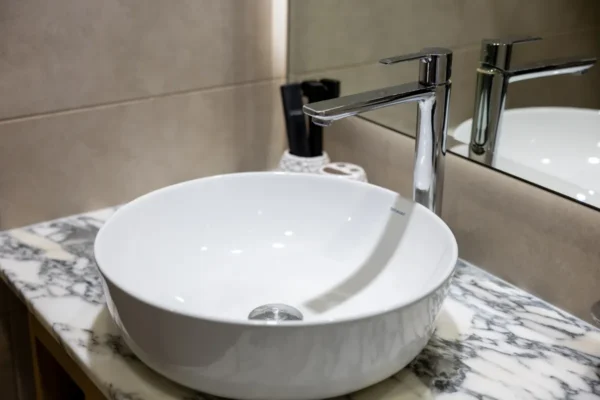
A vessel sink sits on top of the counter rather than being set into it, which gives a bathroom a distinctive look but also changes how it needs to be cleaned. The exposed sides, the visible base ring where it meets the counter, and the wide range of materials used to make vessel sinks (glass, ceramic, stone, metal, or concrete) all mean vessel sink cleaning isn't quite the same as caring for a standard drop-in or undermount sink.
This guide covers the best way to clean a vessel sink, how often it needs attention, which products work for different vessel sink materials, and what to avoid so the sink keeps its finish and shape. This article is Part of Bathroom Sink & Vanity Cleaning Guide, which covers sink and vanity care across every common style and material.
The Best Way to Clean a Vessel Sink
- Identify the sink's material first, since glass, ceramic, stone, metal, and concrete vessel sinks each respond differently to cleaning products, and using the wrong one can dull or damage the finish.
- Rinse the basin with warm water to clear loose debris and soap residue before applying any cleaner.
- Apply a mild soap or a cleaner suited to the specific material with a soft cloth or sponge, wiping the interior basin, the exterior sides, and the base ring where the sink meets the counter.
- Pay extra attention to the base ring, since this narrow gap collects water, soap scum, and grime more than any other part of a vessel sink, and it's often overlooked during a quick wipe-down.
- Rinse thoroughly, making sure no cleaner residue is left in the basin or along the base seam.
- Dry the entire sink with a soft towel, including the exterior sides and base ring, rather than letting it air dry, which helps prevent water spots and reduces moisture sitting at the base seam.
Because vessel sinks sit above the counter with exposed sides, they show water spots, fingerprints, and soap residue more visibly than a sink set into the counter. A quick daily wipe of the exterior, not just the basin, keeps the sink looking clean between full cleaning sessions.
Unlike a sink set into the counter, a vessel sink's base ring is its own small maintenance zone. This is the seam most people forget, and it's also the spot most likely to develop mildew or grime buildup if it's only rinsed and never dried by hand.
How Often Should You Clean a Vessel Sink
|
Task |
Suggested Frequency |
|
Quick basin rinse |
Daily |
|
Full clean of basin, sides, and base ring |
Weekly |
|
Base ring seam check for grime or moisture |
Weekly, as part of the full clean |
|
Deeper mineral buildup treatment |
Every 2 to 4 weeks, depending on water hardness |
A vessel sink's exposed exterior means it picks up fingerprints and water spots faster than a standard sink, especially in a shared bathroom. Homes with hard water may also notice mineral spotting on the exterior sides faster than on the basin itself, since water often runs down the outside as it's used.
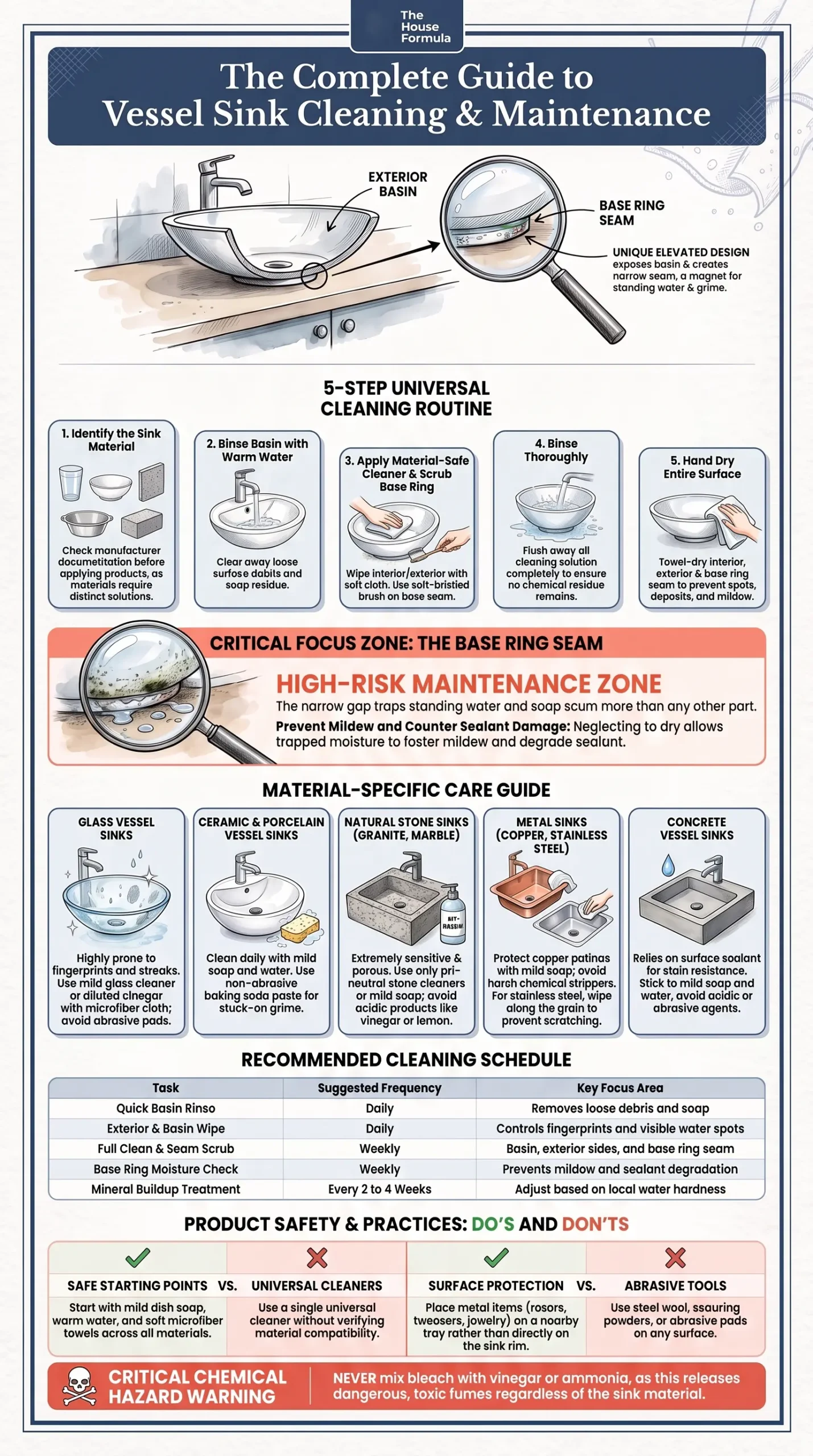
Photo Credit: Hobby Guidebook Editorial
Cleaning a Vessel Sink by Material
Vessel sinks aren't one material, they're a sink style, which is exactly why the cleaning approach needs to match what your specific sink is made of.
Glass vessel sinks show fingerprints, water spots, and streaks more visibly than any other material. A mild glass cleaner or a vinegar and water solution works well, applied with a soft cloth and followed by a dry microfiber cloth to avoid streaking. Avoid abrasive pads entirely, since glass scratches easily and any scratch becomes far more visible on a transparent or translucent surface than on an opaque one.
Ceramic and porcelain vessel sinks behave similarly to standard porcelain fixtures. Mild soap and water handle daily cleaning, while a baking soda paste can lift stuck-on grime without scratching the glaze. Abrasive scouring pads should be avoided here too, since they leave fine scratches that trap future grime.
Stone vessel sinks (granite, marble, or similar) need the most caution of any vessel sink material. Many natural stones are porous and sensitive to acidic cleaners, so vinegar, lemon-based products, and other acids should generally be avoided unless the sink has been specifically sealed and the manufacturer confirms it's safe. A pH-neutral stone cleaner or plain mild soap and water is the safer default, and sealant should be checked periodically according to the manufacturer's recommendation, since a worn sealant leaves the stone more vulnerable to staining and water damage.
Metal vessel sinks (often copper or stainless steel) each have their own finish considerations. Copper often develops a natural patina over time, and using harsh chemical cleaners can strip that patina unevenly, so many copper sink manufacturers recommend a mild soap and soft cloth only, with specific patina-care products if a particular look needs to be maintained. Stainless steel handles mild soap and water well, but should avoid steel wool or anything that could leave visible scratch marks going against the grain of the metal's finish.
Concrete vessel sinks are typically sealed, similar to natural stone, and depend heavily on that sealant to resist staining. Mild soap and water is the safest routine choice, and acidic or abrasive cleaners should generally be avoided unless the manufacturer's sealing product specifically states it can handle them.
If you're not sure what material your vessel sink is made from, checking the manufacturer's documentation or the original purchase listing is worth doing before committing to a cleaning routine, since using the wrong product on the wrong material is one of the more common ways a vessel sink's finish gets damaged.
If your bathroom has an undermount sink alongside a vessel-style one, keep in mind that its edge and mounting seam need a different approach than the exposed base ring covered here, which is addressed separately in Undermount Bathroom Sink Cleaning.
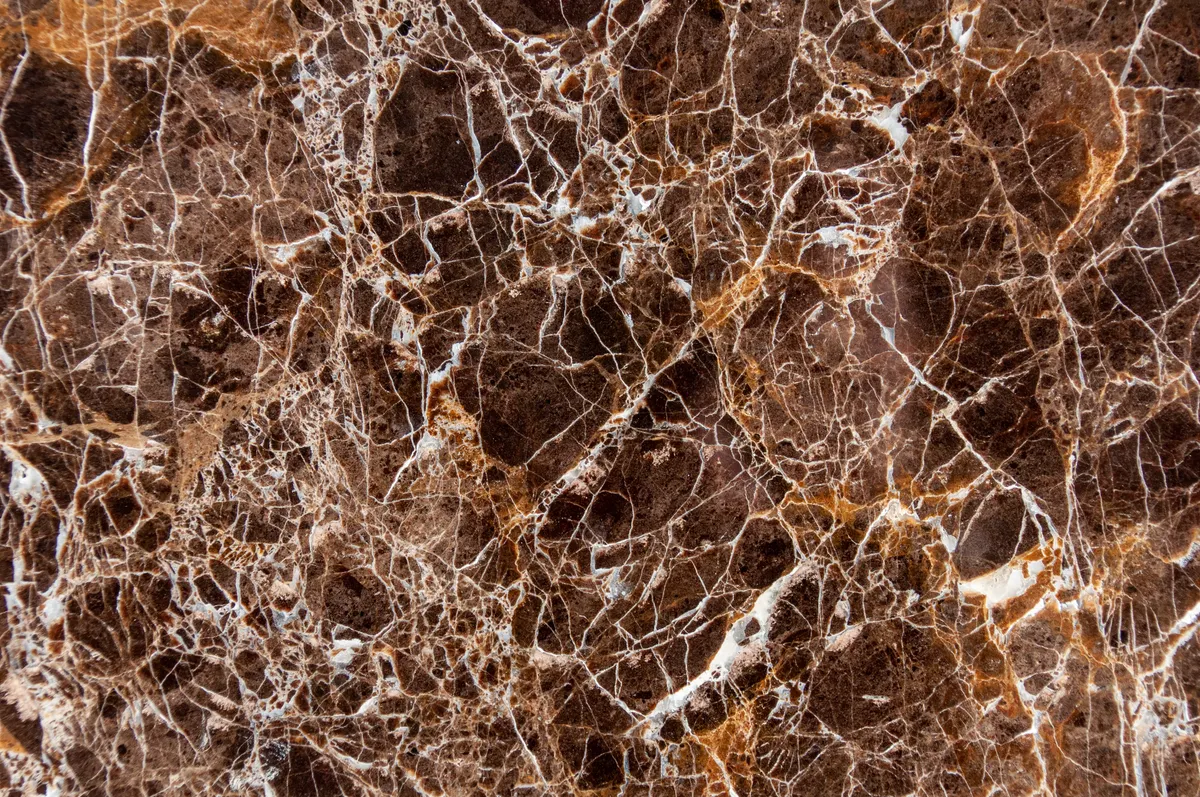
Photo Credit: wal_ 172619
Best Products for Vessel Sink Cleaning
Generally safe across most materials:
- Mild dish soap and warm water, a safe starting point for glass, ceramic, and metal vessel sinks
- A soft cloth or microfiber towel, essential for avoiding scratches on any vessel sink material
- A soft-bristled brush (like an old toothbrush) for the base ring seam, where grime tends to collect
Material-dependent, use with caution:
- Vinegar and water, safe for glass and most ceramic finishes, but generally unsuitable for unsealed or improperly sealed natural stone
- Baking soda paste, effective on ceramic and porcelain, but should be tested on a small area first for stone or metal finishes, since it can be mildly abrasive
- Specialty metal cleaners, appropriate only for the specific metal type they're designed for (copper cleaners for copper, stainless steel cleaners for stainless)
Avoid across all vessel sink materials:
- Abrasive scouring pads or powders, which scratch glass, dull ceramic glaze, and damage most metal finishes
- Mixing bleach with vinegar or ammonia, which can release hazardous fumes regardless of the sink material involved
- Harsh acidic cleaners on natural stone or concrete unless the manufacturer has specifically confirmed the sealant can handle them
When in doubt about which product fits your specific vessel sink, starting with plain mild soap and water and testing anything stronger on a small, hidden area is the safer approach, since it avoids permanent damage while you confirm what works.
What to Avoid When Cleaning a Vessel Sink
- Using one universal cleaning approach for every vessel sink, without first checking what material the sink is actually made from.
- Ignoring the base ring seam, which collects moisture and grime more than any other part of the sink and can develop mildew if left unattended.
- Letting water sit at the base overnight, since prolonged moisture at the seam where the sink meets the counter can eventually affect the counter's sealant or the sink's own finish, depending on the materials involved.
- Using abrasive tools on glass or polished stone, which scratches these surfaces more easily than most other bathroom fixtures.
- Applying acidic cleaners to natural stone without confirming the sealant can handle them, since this can lead to etching or dulling that isn't easily reversed.
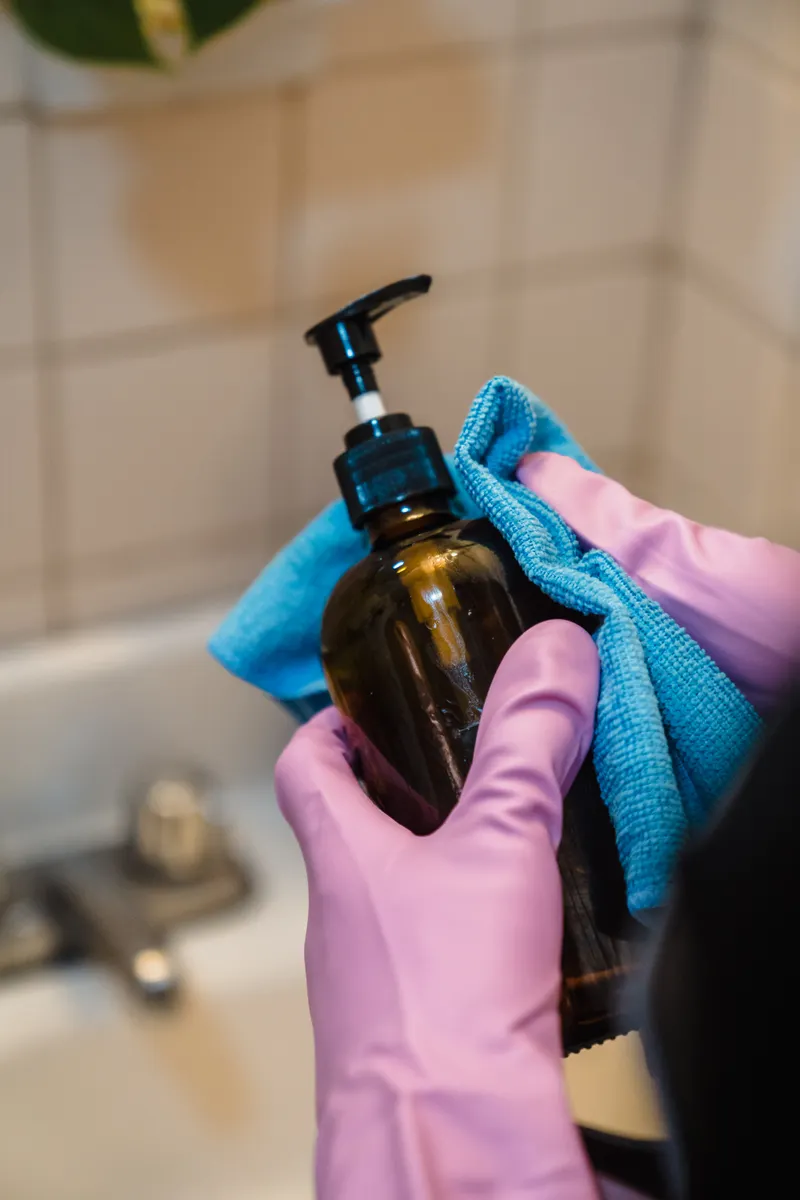
Photo Credit: Liliana Drew
Cleaning a Vessel Sink Without Damaging It
Because a vessel sink's sides and base are fully exposed rather than hidden beneath a counter, small issues like scratches, water spots, or dulling are far more noticeable than they would be on a standard sink. A soft cloth or sponge should be the default tool for the exterior sides, basin, and base ring on every material type, with anything stronger reserved for testing on a hidden area first.
The base ring deserves particular attention, not just for cleaning but for drying. Since this seam sits directly against the counter, trapped moisture here can lead to mildew or, over time, affect the counter's own sealant depending on what it's made from. Wiping this area dry after each full cleaning, rather than letting it air dry, helps prevent that buildup.
For sinks with a polished or glossy finish, whether glass, ceramic, or polished stone, avoid setting metal objects like razors, jewelry, or tweezers directly on the rim, since these can leave small scratches with repeated contact over time. A small dish or tray nearby for these items protects the sink's finish without much extra effort.
Professional Cost to Clean a Vessel Sink
Routine vessel sink cleaning is something almost every household manages on its own, using basic supplies matched to the sink's material. Professional cleaning services typically don't offer vessel sink cleaning as a standalone service, and when it's included, it's usually part of a broader bathroom cleaning package rather than priced separately.
Where professional help becomes more relevant is with natural stone or concrete vessel sinks that need resealing, or with any vessel sink that has developed etching, staining, or scratching beyond what routine cleaning can address. Stone resealing and finish restoration are specialized services, and pricing depends on the material, the extent of the damage, and the provider handling the work.
Comparing Vessel Sinks to Other Bathroom Sink Styles
Vessel sinks aren't the only sink style with a base seam or standalone footprint that needs its own attention. A pedestal sink, which stands on its own base rather than sitting on a counter at all, has a similar concern around where the pedestal meets the floor, along with its own considerations for the exposed column beneath the basin. That specific routine is covered in Pedestal Sink Cleaning, which addresses the pedestal base in much the same way this guide addresses the vessel sink's base ring.
Knowing which sink style you're working with, and matching the cleaning approach to both its shape and its material, makes the difference between a routine that actually protects the finish and one that slowly wears it down over time.
Frequently Asked Questions
What is the best way to clean a vessel sink? Identify the sink's material first, rinse with warm water, clean the basin, sides, and base ring with a product suited to that material, then rinse and dry thoroughly, paying close attention to the base seam.
How often should you clean a vessel sink? A quick daily rinse of the basin and a full weekly clean of the basin, sides, and base ring keeps most vessel sinks in good shape. Deeper mineral buildup treatment is usually needed every two to four weeks depending on water hardness.
What cleaning products are safe for a vessel sink? Mild soap and water work across most materials. Vinegar suits glass and most ceramic finishes but should generally be avoided on unsealed natural stone. Always match the product to the specific material your sink is made from.
What should you avoid when cleaning a vessel sink? Avoid abrasive pads on any material, acidic cleaners on stone or concrete without confirming sealant compatibility, and neglecting the base ring seam where moisture and grime collect.
How can you clean a vessel sink without damaging it? Use a soft cloth for all surfaces, dry the base ring thoroughly after cleaning, avoid setting metal objects directly on the rim, and test any new product on a small hidden area before using it on the whole sink.
Return to the complete bathroom cleaning guide for how vessel sink care fits into full bathroom maintenance.
A Quick Safety Note
Vessel sink cleaning can involve vinegar, baking soda, or occasional stronger products depending on the sink's material. Never mix bleach with vinegar or ammonia, since this can release hazardous fumes. Always confirm a product is safe for your specific sink material before applying it, test anything new on a small hidden area first, and consult the manufacturer or a stone care professional if your sink shows etching, staining, or damage that routine cleaning doesn't resolve.



Leave a Reply