

Walk-in showers look simple to clean because there's no tub to scrub around, but the open design brings its own challenges. Water splashes farther, glass panels show every water spot, and without a curb to contain moisture, floors and nearby walls stay damp longer than in a standard tub-shower combo. That extra exposure to moisture means walk-in shower cleaning needs a routine built around drying time and drainage, not just scrubbing.
This guide covers how to clean a walk-in shower properly, how often it needs attention, and which products work safely across the different surfaces you'll typically find in one. This article is Part of Bathtub & Shower Cleaning Guide, which covers the wider category of tub and shower care.
The Best Way to Clean a Walk-In Shower
The most effective method follows a set order: loosen buildup, clean top to bottom, then dry thoroughly. Skipping the drying step is one of the most common reasons walk-in showers develop mildew faster than enclosed ones.
- Turn on the bathroom exhaust fan before starting. Good airflow helps clear cleaning product fumes and speeds up drying once you're done.
- Wet the walls, glass, and floor with warm water to loosen dried soap scum and light buildup.
- Apply a cleaner suited to the surface (covered by material below) and let it sit for a few minutes if the label allows. This dwell time lets the product work instead of just being pushed around.
- Scrub from the top down, using a non-abrasive sponge or soft brush, so dirty water runs onto areas you haven't cleaned yet, not ones you have.
- Give extra attention to the floor and any drain area, since walk-in showers often rely on floor slope alone to move water out, and soap residue builds up faster here than on vertical surfaces.
- Rinse everything completely. Leftover cleaner residue can leave streaks on glass and dull grout over time.
- Squeegee the glass and dry the floor with a towel. This is the step that matters most for a walk-in shower specifically, since there's no shower curtain or door edge to contain lingering moisture.
For a broader look at how this fits into full bathroom upkeep, the full bathroom cleaning guide covers sequencing across every fixture in the room.
How Often Should You Clean a Walk-In Shower
|
Task |
Suggested Frequency |
|
Squeegee glass and dry floor |
After each use |
|
Full wall and floor clean |
Weekly |
|
Grout, seams, and drain check |
Every 2 to 4 weeks |
|
Glass panel hardware and hinges |
Monthly |
Because walk-in showers lack a curb or door to contain water, humidity from the shower spreads more easily into the surrounding bathroom air. Homes with poor ventilation or heavy daily use may need to clean weekly rather than stretch to every ten days or two weeks.
Tools Needed for Walk-In Shower Cleaning
A basic kit covers most routine cleaning needs:
- Soft sponge or microfiber cloth
- Soft-bristle brush for grout lines and corners
- Squeegee, ideally kept in the shower for daily use
- Spray bottle for diluted cleaning solutions
- Old toothbrush or narrow brush for glass tracks and hinges
- Microfiber towel for drying glass and hardware
Avoid steel wool, abrasive scouring pads, or any tool marked "heavy duty" on packaging meant for kitchens. These can scratch glass, acrylic, and even some tile finishes.
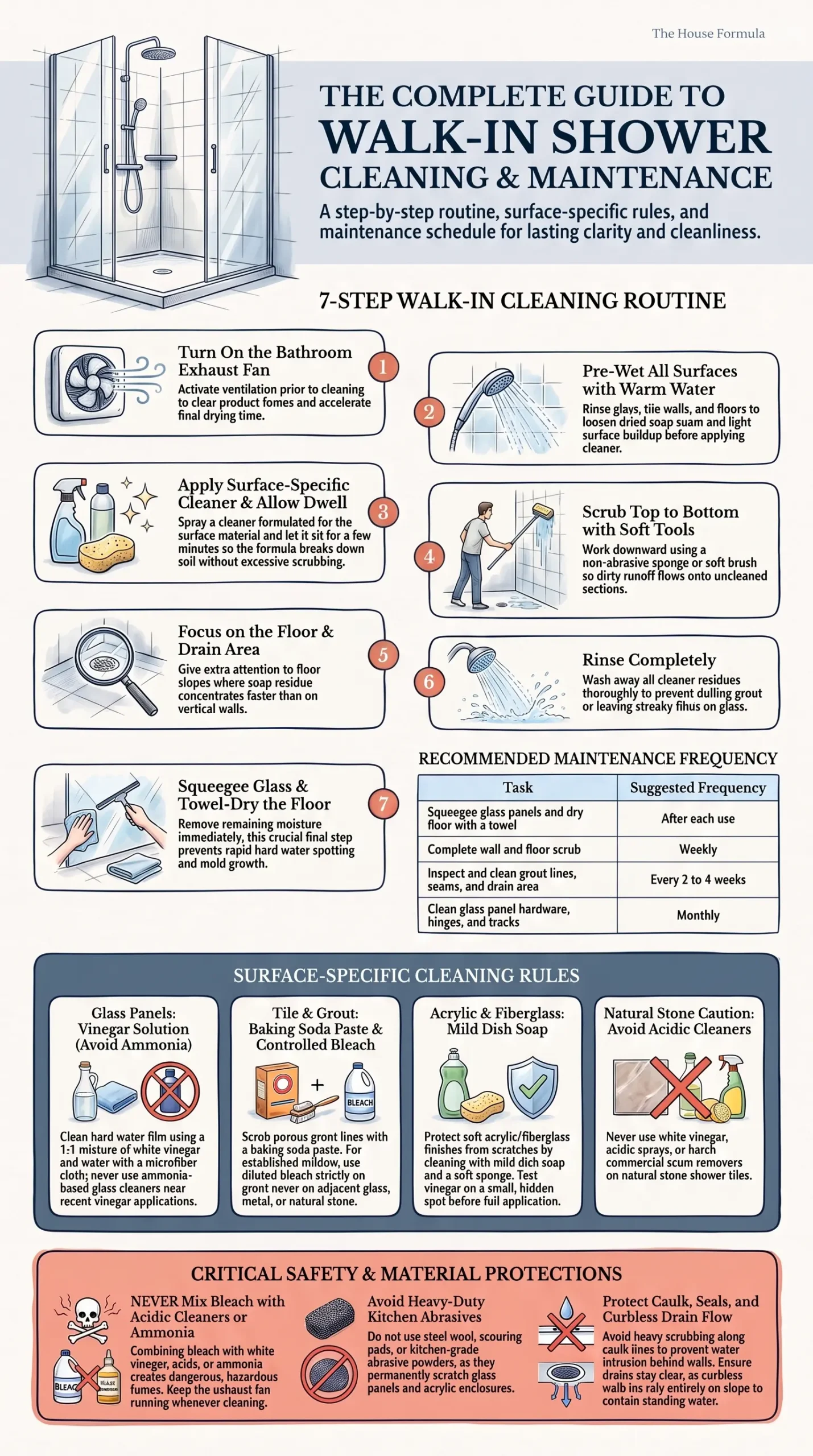
Photo Credit: Hobby Guidebook Editorial
Cleaning by Surface Type
Walk-in showers usually combine a few different materials in one space, glass panels, a tiled or acrylic wall, and a floor that may be tile, stone, or a solid pan. Each one responds differently to cleaning products.
Glass Panels
Glass shows water spots more than any other surface in a walk-in shower. A mix of white vinegar and water, applied with a spray bottle and wiped with a microfiber cloth, handles most hard water film effectively. Avoid ammonia-based glass cleaners if you've recently used a vinegar solution nearby, since combining acidic and ammonia-based products can release irritating fumes.
Tile and Grout
Tile floors and walls hold up well to regular scrubbing, but grout is porous and traps moisture, making it more prone to mildew than the tile itself. A baking soda paste applied with a soft brush works for routine grout maintenance. For established mildew, a diluted bleach solution can help, but only on grout, never on nearby glass, metal fixtures, or natural stone, and always with the fan running.
Acrylic or Fiberglass Panels
Some walk-in showers use molded acrylic or fiberglass instead of tile. These surfaces scratch more easily, so stick to mild dish soap and a soft sponge for routine cleaning. Vinegar solutions work for light buildup, but test on a small area first since not every finish reacts the same way.
Curbless Designs
Curbless walk-in showers, which have no raised edge separating the shower floor from the rest of the bathroom, rely entirely on floor slope and drain placement to keep water contained. This design needs more attention to drain cleaning, since any buildup there affects how well water clears from the whole floor. For a closer look at the specific care this layout needs, see Cleaning a Curbless Walk-In Shower.
Some walk-in shower spaces also include a separate jetted or whirlpool tub nearby. Jet systems need their own cleaning approach, since residue can build up inside the jets themselves, not just on visible surfaces. That process is covered separately in Jetted Tub & Whirlpool Tub Cleaning.

Photo Credit: Curtis Adams
Eco-Friendly Ways to Clean a Walk-In Shower
For households that prefer to limit commercial chemical use, a few simple ingredients cover most routine walk-in shower cleaning:
- White vinegar and water (roughly equal parts) for glass, tile, and light hard water buildup
- Baking soda paste for grout lines and light scrubbing on tile or acrylic
- Plain dish soap for general surface cleaning across most materials
These options work well for regular maintenance but are generally less effective against established mold or heavy mineral deposits than commercial products formulated for those specific problems. If a natural method isn't clearing buildup after a couple of attempts, a targeted commercial cleaner suited to the surface is a reasonable next step, rather than repeating the same method with more force.
What Cleaning Products Are Safe for a Walk-In Shower
Product choice depends heavily on the surface involved:
Generally safe across most surfaces:
- Mild dish soap diluted in water
- pH-neutral bathroom cleaners labeled for the specific material
- Baking soda paste for grout and light scrubbing
Use with caution, depending on material:
- White vinegar, fine on glass, tile, and most acrylic, but not on natural stone
- Diluted bleach, useful for grout mold only, never on glass, metal, or stone
- Commercial soap scum removers, check the label against your surface first
Avoid:
- Abrasive powders or scouring pads on glass, acrylic, or fiberglass
- Mixing bleach with ammonia, vinegar, or other acidic cleaners, which can produce hazardous fumes
- Undiluted bleach applied broadly across large surface areas
Manufacturer instructions for glass coatings, acrylic panels, or specialty tile finishes should always take priority over general guidance if the two conflict.
Common Mistakes When Cleaning a Walk-In Shower
- Skipping the squeegee step. Without a curb or curtain to hold moisture back, standing water on glass and floors speeds up both hard water spotting and mildew growth.
- Using kitchen-strength abrasives. Tools meant for pots and pans are often too rough for shower glass and acrylic.
- Ignoring the drain. Walk-in showers depend more heavily on drain function than tub-shower combos, since there's no barrier holding water in place while it clears.
- Treating every surface the same. Glass, tile, grout, and acrylic each have different sensitivities, and a one-size-fits-all cleaner often works poorly on at least one of them.
- Combining products without checking labels. This is especially risky with bleach, which should never be mixed with ammonia, vinegar, or other acidic cleaners.
Cleaning a Walk-In Shower Without Causing Damage
Test any new cleaner, especially acidic ones like vinegar, on a small hidden area before using it across the whole shower. This matters more in walk-in showers than enclosed units, since glass coatings, specialty tile sealants, and acrylic finishes vary widely between manufacturers.
Check caulk and seals around glass panels and the floor edge periodically. These seals keep water from getting behind walls or under flooring, and aggressive scrubbing near them can wear them down faster than normal use would. Cracked, peeling, or discolored caulk usually needs replacement rather than more cleaning.

Photo Credit: Curtis Adams
Rinse all products off completely before the surface dries. This is particularly important if you switch between different cleaners over time, since dried residue from one product can react unpredictably with another applied later.
Frequently Asked Questions
What is the best way to clean a walk-in shower? Wet the surfaces, apply a cleaner suited to the material, let it sit briefly, scrub from top to bottom with a non-abrasive tool, rinse completely, and dry with a squeegee and towel.
How often should you clean a walk-in shower? A full clean once a week suits most households, with grout, seams, and the drain checked every two to four weeks. Daily squeegeeing after use helps reduce how often deeper cleaning is needed.
What cleaning products are safe for a walk-in shower? Mild dish soap, pH-neutral cleaners, and baking soda paste are safe for most surfaces. Vinegar works well on glass, tile, and acrylic, but not natural stone. Always match the product to the specific material.
What should you avoid when cleaning a walk-in shower? Avoid abrasive scouring pads on glass or acrylic, and never mix bleach with ammonia, vinegar, or other acidic cleaners, since this can release hazardous fumes.
How can you clean a walk-in shower without damaging it? Test new cleaners on a small area first, use soft tools instead of abrasive ones, avoid harsh scrubbing near caulk and seals, and rinse products off completely before the surface dries.
Check out the full bathroom cleaning guide for how walk-in shower care fits into a complete bathroom routine.
A Quick Safety Note
Some walk-in shower cleaning involves bleach for grout mold. Always follow the product label, and never combine bleach with ammonia, vinegar, or other acidic cleaners, since doing so can release hazardous fumes. Keep the exhaust fan running while cleaning, and if mold keeps returning despite regular care, a professional mold assessment is a reasonable next step rather than relying on stronger products.



Leave a Reply