
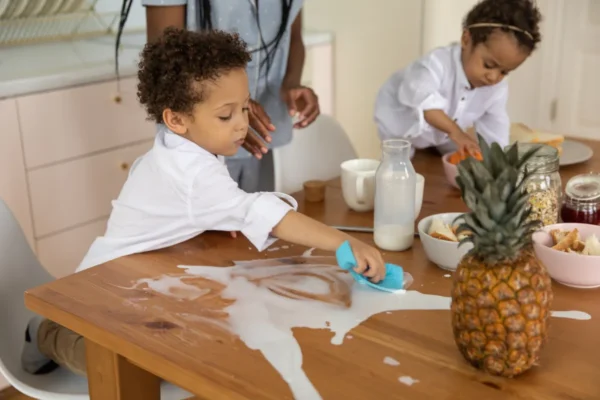
If you have young kids in the house, the kitchen gets touched, licked, and crawled on more than almost any other room. Countertops become teething surfaces. Cabinet doors get grabbed with sticky hands. Floors catch dropped food that goes straight back into a toddler's mouth. That is why non-toxic kitchen cleaning kids-focused routines matter so much: the goal is not just a clean kitchen, but one where the products you use will not cause harm if a small hand or mouth comes into contact with them.
This guide is part of Eco-Friendly & Non-Toxic Kitchen Cleaning, and it focuses on practical, lower-impact ways to keep a family kitchen clean without relying on harsh fumes or ingredients that need a warning label to explain.
Why Non-Toxic Matters More in a Family Kitchen
Kids interact with kitchen surfaces differently than adults do. Toddlers touch counters and then put their fingers in their mouths. Babies chew on highchair trays. Young children sit or crawl on kitchen floors where spills and cleaning residue can linger. This is not about being fearful of every bottle under the sink. It is about being intentional with what touches the surfaces your kids touch, especially anything that comes near food prep areas, highchairs, or floors where crawling happens.
The goal of a non-toxic approach is to reduce unnecessary exposure to fragrances, strong solvents, and residue-heavy products, while still getting the kitchen genuinely clean. A clean kitchen and a low-toxin kitchen are not opposites. They just require picking the right method for each surface.
Are Natural or Homemade Cleaners Automatically Safer for the Kitchen?
No. "Natural" does not automatically mean safe or gentle for every kitchen surface. Vinegar is natural, but its acidity can etch natural stone counters and dull certain finishes. Undiluted essential oils are plant-derived, but they can irritate a child's skin or airways in concentrated form. Being non-toxic is about how a product is used and where it is used, not just where its ingredients came from.
That said, many homemade and naturally derived methods are genuinely lower-risk than harsh commercial sprays, especially when it comes to fumes and unnecessary fragrance. The key is knowing which surfaces they work well on, and which ones they don't.

Photo Credit: Hobby Guidebook Editorial
What to Check on a Cleaning Product Label for the Kitchen
Whether you buy a commercial "green" cleaner or stick with homemade options, the label (or the ingredient list) tells you what you actually need to know. Look for:
- Ingredient transparency. A product that lists its actual ingredients, rather than just "proprietary blend," is easier to evaluate.
- Signal words. Words like "danger," "corrosive," or "poison" indicate a stronger product that needs careful handling and storage away from kids, even if it is marketed as eco-friendly.
- Fragrance-free options. Fragrance-free cleaners for a kids kitchen reduce the chance of skin or respiratory irritation from added scent chemicals, which are rarely necessary for actual cleaning power.
- Mixing warnings. Some labels specifically warn against combining with bleach or ammonia-based products. Take these seriously; never combine cleaning chemicals unless you know for certain the combination is safe.
- Child-resistant packaging. Not all "natural" brands include this, so check separately if young kids can reach under-sink storage.
Recognized programs, such as the EPA's Safer Choice label, can help you identify commercial products that have been reviewed for safer ingredient profiles. This is a useful starting point if you prefer store-bought over homemade.
Non-Toxic Kitchen Cleaning Methods That Work
Different kitchen surfaces respond to different low-toxin methods. Here is how to approach the areas kids interact with most.
Countertops and Cabinet Fronts
For sealed laminate, quartz, or solid surface counters, a simple mix of warm water and a few drops of unscented castile soap works for daily wiping. Apply with a damp cloth, wipe, then dry with a second cloth to avoid streaking. For cabinet fronts marked by small handprints, the same solution works; avoid soaking wood cabinet finishes, since standing water can damage the seal over time.
Skip vinegar on natural stone (granite, marble, soapstone). The acidity can dull the surface or damage the sealant. If you have stone counters, a pH-neutral stone cleaner or plain warm water is the safer non-toxic route.
Sink and Faucet
Baking soda makes a mild, non-toxic scrub for stainless steel and porcelain sinks. Sprinkle a small amount, scrub gently with a damp sponge, and rinse thoroughly. For faucet fixtures, a vinegar-water soak (roughly equal parts) can loosen mineral buildup on chrome, but rinse it off promptly rather than letting it sit, since prolonged acid contact can dull some finishes.
Stovetop
For everyday spills on a glass or ceramic cooktop, warm soapy water and a soft cloth usually handle it. For baked-on residue, a baking soda paste (baking soda mixed with a little water) left on for a few minutes before wiping can lift grease without harsh fumes. Always confirm your cooktop's care instructions first, since some ceramic glass surfaces are sensitive to abrasive scrubbing.
Highchair Trays and Kid-Height Surfaces
These need the most frequent, gentlest cleaning since kids put their mouths directly on them. Warm water with a small amount of unscented dish soap, followed by a thorough rinse, is usually enough after each meal. Avoid leaving any cleaner residue; always finish with a plain water wipe-down before a child uses the tray again.
Floors
For sealed hardwood, tile, or vinyl floors, a mix of warm water and a small amount of castile soap works for routine mopping. Avoid excess water on hardwood, and always dry-mop or towel-dry afterward so kids aren't crawling on a damp, slippery surface.
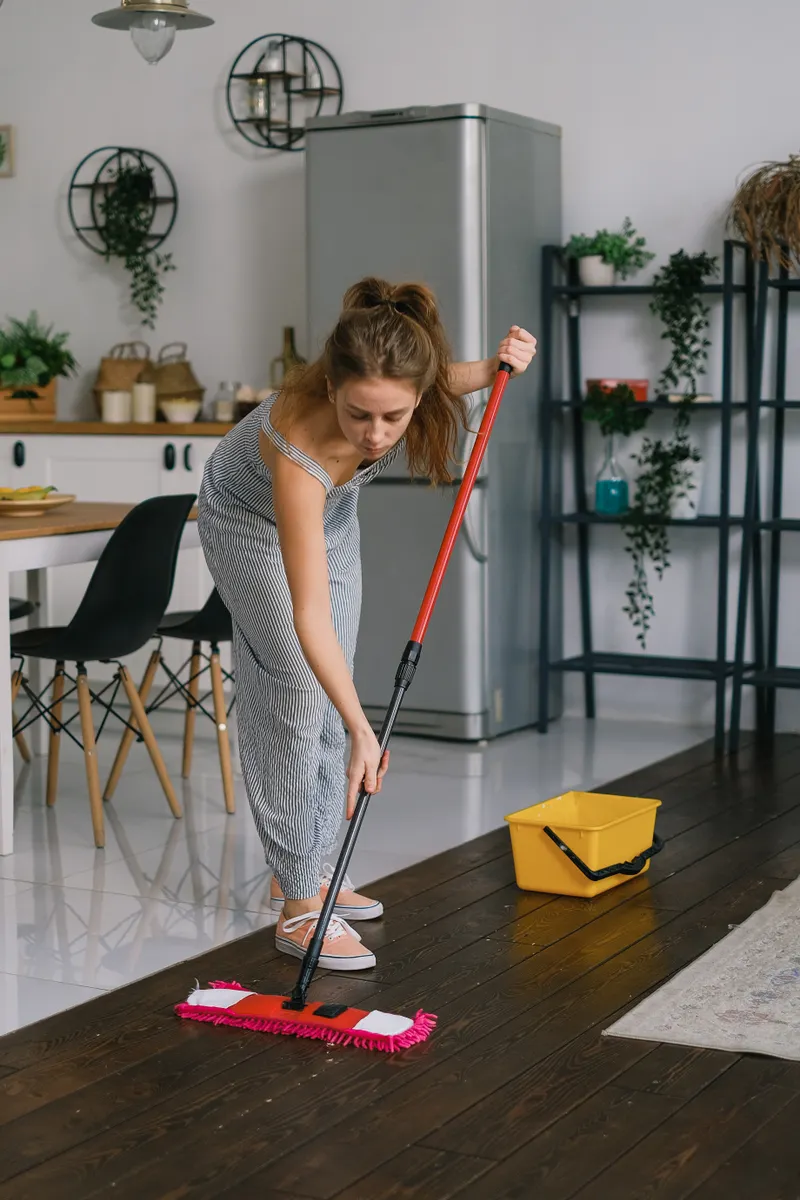
Photo Credit: SHVETS production
Can a Homemade Cleaner Damage the Kitchen?
Yes, in certain situations. This is the trade-off worth understanding before you commit to an all-natural routine:
|
Homemade Method |
Works Well On |
Can Damage |
Notes |
|
Vinegar-water |
Glass, chrome, sealed tile |
Natural stone, cast iron, some wood finishes |
Rinse promptly; don't let it sit on metal |
|
Baking soda paste |
Stainless steel, ceramic cooktops, porcelain |
Some high-gloss finishes if scrubbed hard |
Use light pressure, not heavy scrubbing |
|
Castile soap solution |
Laminate, sealed wood, most everyday surfaces |
Rarely damaging, but can leave residue if over-concentrated |
Dilute per bottle instructions |
|
Essential oil blends |
Adds scent, mild degreasing |
Can irritate skin/airways if too concentrated |
Keep concentration low around kids |
If you're not sure what your countertop or appliance surface is made of, a safer default is a mild, pH-neutral soap and water rather than anything acidic or abrasive. When surfaces need deeper stain treatment, that level of detail belongs with the site's dedicated stain and material guidance rather than a routine kitchen wipe-down.
If your household also includes pets, cleaning frequency and product choice may need extra adjustment, since pets interact with lower surfaces differently than kids do; see our guide on Non-Toxic Kitchen Cleaning for Pet Owners for that specific situation.
Keeping Cleaning Supplies Safe Around Kids
A non-toxic ingredient list does not remove the need for safe storage. Keeping cleaning supplies away from kids is still essential, even with gentler products.
- Store all cleaning products, including homemade mixes, on a high shelf or in a cabinet with a child safety latch.
- Never transfer cleaners into unlabeled bottles, especially anything that resembles a drink container.
- Keep spray bottles capped and out of reach between uses, not left on the counter mid-task.
- Have the Poison Control number saved or posted somewhere visible, even for "natural" products; concentrated vinegar or essential oils can still cause irritation if ingested or splashed in eyes.
Reducing Waste While You Reduce Toxins
Many non-toxic routines pair naturally with lower-waste habits. Reusable cloths instead of disposable wipes cut down on trash while still getting counters and highchairs clean. Refillable glass or durable plastic spray bottles let you mix your own diluted solutions instead of buying a new plastic bottle every time. Concentrated castile soap, bought once, can be diluted into dozens of batches of all-purpose cleaner over time. If you want to build out a more complete low-waste kitchen kit, our guide to Zero-Waste Kitchen Cleaning Supplies covers reusable tools and refill options in more depth.

Photo Credit: Alexey Demidov
Common Mistakes to Avoid With Non-Toxic Kitchen Cleaning
- Assuming "natural" means safe on every surface. Test acidic mixes like vinegar on a small, hidden spot before using them on stone, metal finishes, or wood.
- Skipping the label entirely. Even homemade recipes benefit from checking concentration guidance (like proper vinegar dilution) rather than guessing.
- Overusing essential oils. A few drops go a long way; concentrated oil left on surfaces kids touch can cause skin irritation.
- Not rinsing residue off kid-contact surfaces. Highchair trays, counters, and cabinet handles should get a plain water wipe after any soap-based cleaning.
- Mixing products without knowing the interaction. Never combine bleach with vinegar, ammonia, or other acids, even in small amounts; this can release hazardous fumes. Stick to one product at a time.
- Ignoring appliance manuals. Dishwashers, ovens, and stovetops often have specific cleaner recommendations from the manufacturer; a homemade method that's fine on a counter isn't automatically fine inside an appliance.
If you're applying the same non-toxic approach in other rooms, the same principles carry over well to Non-Toxic Bathroom Cleaning for Families with Kids, where similar surface and storage considerations apply.
A Simple Weekly Non-Toxic Routine
You don't need a complicated system to keep a family kitchen both clean and low-toxin. A workable rhythm looks like this:
- Daily: Wipe counters, highchair tray, and cabinet handles with a mild soap-and-water solution; dry with a clean cloth.
- Every few days: Spot-treat the stovetop with a baking soda paste if grease has built up.
- Weekly: Mop floors with a diluted castile soap solution, drying thoroughly after.
- Weekly: Check under-sink storage to confirm bottles are capped, labeled, and out of easy reach.
- As needed: Deep clean the sink with baking soda and rinse well.
Frequently Asked Questions
Are natural or homemade cleaners automatically safer for the kitchen? Not automatically. They're often lower in fumes and added fragrance, but ingredients like vinegar can still damage certain surfaces, and undiluted essential oils can irritate skin. Safety depends on the surface and the concentration used, not just the ingredient source.
Which lower-impact cleaning methods work well for the kitchen? Warm water with diluted castile soap handles most daily wiping. Baking soda paste works well for stovetops and sinks. Diluted vinegar is useful on glass and chrome, but should be avoided on natural stone and some metals.
What should you check on a cleaning product label for the kitchen? Look for ingredient transparency, fragrance-free options, clear mixing warnings (especially around bleach), and child-resistant packaging. Recognized labels like EPA Safer Choice can help narrow down commercial options.
Can a homemade cleaner damage the kitchen? Yes. Acidic mixes like vinegar can etch natural stone and dull certain metal finishes. Abrasive pastes can scratch high-gloss surfaces if scrubbed too hard. Always match the method to the material, and test in a small spot first if you're unsure.
What common mistakes should you avoid with the kitchen? The biggest ones are assuming natural equals safe for every surface, skipping labels or dilution guidance, leaving soap residue on kid-contact areas, and mixing products without knowing how they interact. Sticking to one product at a time and rinsing thoroughly avoids most of these issues.
A Quick Safety Note
Even non-toxic and homemade cleaning methods deserve a bit of caution. Always check manufacturer instructions for your specific countertop, appliance, or flooring material before applying a new method, and test acidic or abrasive mixes on a small, hidden area first. Never combine cleaning products, including "natural" ones, unless you know the combination is confirmed safe; mixing bleach with vinegar, ammonia, or other acids can release harmful fumes. Store all cleaning supplies, homemade or store-bought, well out of reach of kids, and keep the room ventilated when using any spray or paste. If a surface or appliance issue seems more serious than routine cleaning can handle, it's worth checking with the manufacturer or a professional before proceeding.
For more routine kitchen tasks beyond this family-focused approach, see our complete kitchen cleaning guide.


Leave a Reply