

A bathroom sink and vanity see more daily contact than almost any other surface in the house. Toothpaste splatter, soap residue, makeup, hair products, and hard water all land here multiple times a day. Because the sink area combines a water fixture with a furniture-like surface (the vanity top, cabinet, and mirror), it needs a slightly different approach than either a kitchen sink or a piece of furniture on its own.
This guide covers bathroom sink cleaning for beginners through to more detailed care for specific sink types, along with vanity countertop and cabinet maintenance. You'll find a full step-by-step process, a breakdown of safe products by material, and a simple bathroom sink and vanity cleaning checklist you can return to each week. If you want the full picture of bathroom care beyond the sink, you can go Back to the complete bathroom cleaning guide first.
The Best Way to Clean a Bathroom Sink and Vanity
The most effective approach moves from the fixture outward, cleaning the sink basin first, then the countertop, then the cabinet and mirror. Here is the short version:
- Clear the counter of toiletries and personal items.
- Rinse the sink basin with warm water.
- Apply a cleaner suited to your sink material.
- Scrub gently, focusing on the drain area and faucet base.
- Rinse and dry the basin and faucet.
- Wipe down the countertop with an appropriate cleaner.
- Clean the cabinet exterior and mirror last.
This order keeps water and cleaner from dripping onto surfaces you've already finished. Starting with the basin also means any splash from rinsing lands on a countertop you haven't cleaned yet, rather than one you just dried.
How Often You Should Clean a Bathroom Sink and Vanity
The sink area gets used constantly, so buildup happens faster here than in less-touched parts of the bathroom. A general schedule looks like this:
- Daily: A quick wipe of the basin and faucet after brushing teeth or washing your face keeps toothpaste and soap residue from drying onto the surface.
- Weekly: A full clean of the basin, countertop, faucet, and cabinet front removes buildup before it hardens.
- Monthly: Deep clean the drain, cabinet interior, and any grout or seams around the sink where grime tends to collect unseen.
Households with more people sharing one sink will need the daily wipe-down more consistently, since toothpaste and soap scum accumulate faster with more use. Homes with hard water may also notice mineral spots on the faucet and basin within just a few days, which can call for more frequent wiping in that specific area.

Photo Credit: Hobby Guidebook Editorial
What Products Are Safe for Bathroom Sink and Vanity Cleaning
Not every sink or countertop material tolerates the same products. Before reaching for a familiar cleaner, it helps to know what surface you're actually working with.
|
Surface |
Safe Options |
Avoid |
|
Porcelain or ceramic sink |
Mild dish soap, baking soda paste, non-abrasive bathroom cleaner |
Abrasive powders, steel wool |
|
Stainless steel sink |
Mild dish soap, non-abrasive cleaner |
Chlorine-based cleaners left to sit, abrasive pads |
|
Glass or stone vessel sink |
pH-neutral cleaner, mild soap and water |
Vinegar or acidic cleaners on natural stone |
|
Laminate or cultured marble countertop |
Mild all-purpose cleaner |
Abrasive scrubbers, strong solvents |
|
Natural stone countertop (granite, marble) |
pH-neutral stone cleaner only |
Vinegar, lemon juice, or any acidic product |
|
Wood cabinet exterior |
Mild soap and water, wood-safe cleaner |
Excess water, harsh solvents |
Important: Natural stone, whether it's the sink, the countertop, or both, should never be cleaned with vinegar or other acidic products. Acid can etch and permanently dull a stone finish. If you're not sure what material your countertop or sink is made from, test any new product on a small, hidden area first and wait a few minutes to check for discoloration or a dull spot before treating the full surface.
For faucets and metal fixtures, check whether the finish is chrome, brushed nickel, or another coated metal. Some finishes scratch easily with abrasive pads, even ones marketed as gentle. A soft cloth is usually the safer default for any faucet finish you're not fully certain about.
Tools That Make the Job Easier
A short list of tools covers most sink and vanity cleaning needs without requiring anything specialized:
- A soft cloth or non-abrasive sponge for the basin, countertop, and faucet.
- An old toothbrush for the drain area, faucet base, and any tight seams where the sink meets the counter.
- A squeegee or dry cloth for the mirror, used after cleaning to avoid streaks.
- Microfiber cloths for the cabinet exterior, since they pick up dust and residue without leaving lint.
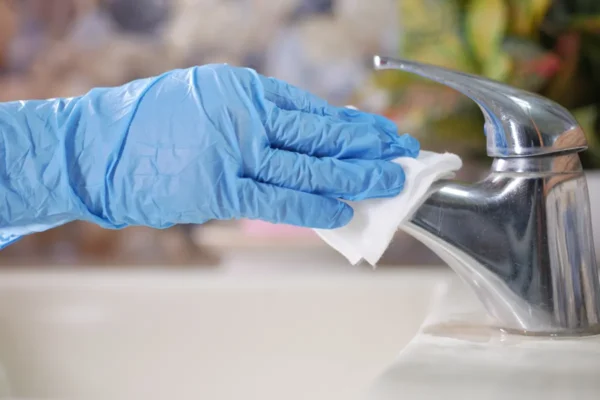
- Rubber gloves if you're using a stronger cleaner or have sensitive skin.
Keep separate cloths for the sink basin and the mirror if possible. A cloth that's picked up soap residue or toothpaste can leave streaks behind when used on glass.
Step-by-Step: Cleaning the Sink Basin
The basin takes the most direct contact, so it needs the most frequent attention.
- Clear and rinse. Remove any items from the basin and rinse with warm water to loosen surface residue.
- Apply cleaner. Use a mild dish soap solution or baking soda paste for porcelain and ceramic. A non-abrasive all-purpose cleaner works for stainless steel.
- Let it sit briefly. Give the cleaner 2 to 3 minutes to loosen toothpaste film and soap scum, especially around the drain.
- Scrub gently. Use a soft cloth or sponge, paying extra attention to the drain opening and the area right around the faucet base, where product buildup tends to collect.
- Rinse thoroughly. Warm water clears cleaner and loosened residue from the basin and drain.
- Dry the basin. A quick wipe with a dry cloth prevents water spots, especially important with hard water.
Porcelain sinks are durable but can chip or stain if treated roughly, particularly around the drain where cleaning products and water sit longest. For material-specific guidance on stains, hairline cracks, and keeping a porcelain finish looking new, see the full Porcelain Bathroom Sink Cleaning guide.
Step-by-Step: Cleaning the Countertop and Faucet
The countertop and faucet see near-constant contact from hands, toiletries, and splashed water, which makes them one of the fastest areas to collect grime.
- Clear the countertop of toothbrushes, soap dispensers, and other items.
- Apply the appropriate cleaner based on your countertop material, following the same guidance used for stone, laminate, or cultured marble.
- Wipe down in sections, working from the back of the counter toward the front edge.
- Clean the faucet separately with a soft cloth, since faucets often need a slightly different cleaner than the counter itself, especially if the finish is a coated or brushed metal.
- Dry the countertop and faucet to prevent water spots, which show up quickly on darker stone and polished metal finishes.
- Return items to the counter only once the surface is fully dry, to avoid trapping moisture underneath bottles and dispensers.
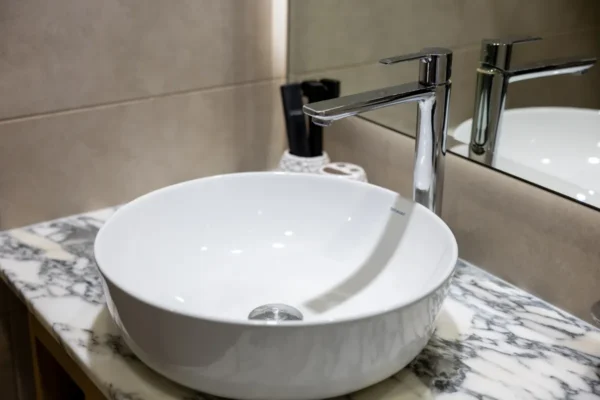
Vessel sinks, which sit on top of the counter rather than being set into it, need a slightly different cleaning approach because water and product can pool at the base where the sink meets the countertop. If you have this style of sink, the Vessel Sink Cleaning guide covers how to clean around that seam without letting moisture sit and cause damage.
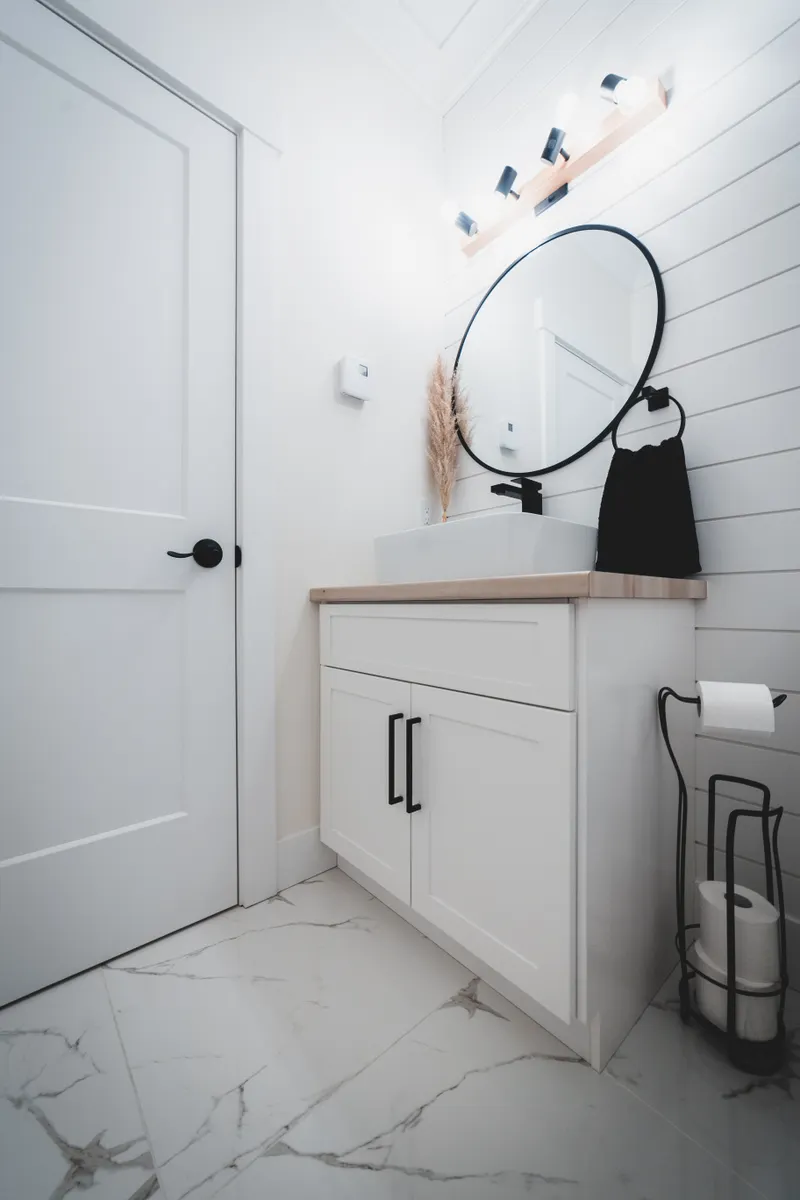
Photo Credit: Erik Mclean
Cleaning the Cabinet and Mirror
The cabinet exterior and mirror don't need cleaning as often as the sink and counter, but skipping them lets dust, fingerprints, and toothpaste splatter build up over time.
- Wipe the cabinet exterior with a soft cloth and mild soap and water, or a wood-safe cleaner if the cabinet is wood.
- Avoid soaking the cabinet surface, since excess water can warp wood or damage certain finishes over time.
- Clean cabinet hardware (knobs and handles) with a soft cloth, since these are touched constantly and collect oils from hands.
- Clean the mirror with a glass cleaner or a vinegar and water solution, applied to a cloth rather than sprayed directly, to avoid drips onto the vanity below.
- Dry the mirror with a squeegee or lint-free cloth to avoid streaks.
If your vanity has open shelving or limited cabinet space, keeping the countertop and cabinet area organized makes daily cleaning faster, since there's less to move and wipe around each time. For layout and storage ideas specific to a smaller vanity setup, see Organizing a Pedestal Sink Bathroom With No Cabinet.
What to Avoid When Cleaning a Bathroom Sink and Vanity
A few habits cause more harm than good, even when the goal is a deeper clean.
- Avoid abrasive scrubbers on porcelain, stainless steel, or vessel sink materials, since they can scratch and dull the finish.
- Avoid vinegar or acidic cleaners on natural stone, whether it's the sink or the countertop, since acid can etch the surface permanently.
- Avoid leaving cleaner on too long, particularly on metal faucets and fixtures, where extended contact can affect certain coated finishes.
- Avoid soaking wood cabinets with water-heavy cleaning methods, which can cause warping or finish damage over time.
- Avoid skipping the drain area, since this is where soap scum and hair buildup collect fastest, even if the rest of the basin looks clean.
How to Clean Without Damaging Your Sink or Vanity
Damage usually comes from mismatching product to material, not from cleaning too often. A few habits protect your surfaces long term:
- Identify your sink and countertop material before choosing a cleaner, rather than assuming one product works everywhere.
- Use soft cloths and non-abrasive sponges as your default tool.
- Test new cleaning products on a small, hidden spot first.
- Dry surfaces after cleaning, especially in areas prone to hard water spots.
- Wipe up splashes daily rather than letting soap and toothpaste residue sit and harden.
Following manufacturer instructions on any cleaning product label takes priority over general guidance, since formulas vary between brands.
Common Mistakes to Avoid
Even careful homeowners fall into a few repeat mistakes:
- Using the same cleaner on every surface. A product safe for stainless steel isn't always safe for natural stone or a vessel sink.
- Ignoring the seam where a vessel sink meets the countertop. Moisture trapped here can lead to buildup or, in some cases, water damage to the counter underneath.
- Skipping the daily wipe-down. Toothpaste and soap scum are far easier to remove fresh than after they've dried and hardened.
- Cleaning the mirror last with a dirty cloth. Residue from the sink or counter can transfer to the mirror and cause streaking.
- Forgetting cabinet hardware. Knobs and handles are touched constantly but often get missed during a standard wipe-down.

Photo Credit: Ron Lach
How Long a Full Bathroom Sink and Vanity Clean Takes
A routine weekly clean of the sink basin, countertop, and faucet typically takes 10 to 15 minutes. Adding the cabinet exterior, hardware, and mirror brings a full clean to about 20 to 25 minutes. Homes with hard water or vessel sinks with more surface seams to clean may need a few extra minutes to fully dry and wipe every area.
Bathroom Sink and Vanity Cleaning Checklist
Use this quick checklist for a fast weekly clean:
- Clear the counter of toiletries.
- Rinse and clean the sink basin.
- Scrub the drain area and faucet base.
- Wipe the countertop from back to front.
- Clean the faucet with a soft cloth.
- Dry the basin, counter, and faucet.
- Wipe the cabinet exterior and hardware.
- Clean and dry the mirror.
- Return items to a dry, clean counter.
Frequently Asked Questions
What is the best way to clean bathroom sink and vanity? Rinse and clean the sink basin first, then the countertop, faucet, cabinet, and mirror, working from the fixture outward so drips don't land on surfaces you've already cleaned.
How often should you clean bathroom sink and vanity? A quick daily wipe of the basin and faucet, a full weekly clean of the basin, counter, and cabinet front, and a monthly deep clean of the drain and cabinet interior.
What cleaning products are safe for bathroom sink and vanity? It depends on the material. Mild dish soap works for porcelain and stainless steel, but natural stone sinks and countertops need a pH-neutral cleaner and should never be cleaned with vinegar or acidic products.
What should you avoid when cleaning bathroom sink and vanity? Avoid abrasive scrubbers on porcelain or stainless steel, avoid vinegar on natural stone, and avoid soaking wood cabinets with excess water.
How can you clean bathroom sink and vanity without damaging them? Identify the sink and countertop material first, use non-abrasive tools, test new products in a hidden spot, and dry surfaces thoroughly after cleaning.
What common mistakes should you avoid with bathroom sink and vanity? Using one cleaner on every surface, ignoring the seam around a vessel sink, skipping daily wipe-downs, and forgetting cabinet hardware.
For the full room-by-room approach to bathroom care, See the full bathroom cleaning guide.
A Quick Note on Safety
Most bathroom sink and vanity cleaning involves mild, low-risk products, but a few precautions still matter. Always check the product label for the correct use and any material warnings, since formulas vary between brands. Never mix bleach-based cleaners with ammonia, vinegar, or other acidic products, as this can release harmful fumes. If you're unsure what material your sink or countertop is made from, test any new cleaner on a small, hidden area first, and choose a pH-neutral option if in doubt. Keep the bathroom ventilated when using stronger cleaning products, and wear gloves if you have sensitive skin.



Leave a Reply