

A toilet gets more daily use than almost any other fixture in your home, yet it's often cleaned the fastest and thought about the least. Because a toilet holds standing water, deals with mineral buildup, and needs regular disinfecting, it requires a different approach than wiping down a counter or mirror. Skipping steps or using the wrong product can leave bacteria behind or damage the bowl's finish over time.
This guide walks through toilet cleaning for beginners and experienced cleaners alike, covering the bowl, tank, seat, and base in a clear, step-by-step order. You'll also learn which products are safe, which combinations to avoid, how often a toilet actually needs cleaning, and the tools that make the job faster without risking damage. If you want the bigger picture first, you can go Back to the complete bathroom cleaning guide for a full room-by-room plan.
The Best Way to Clean a Toilet
The most effective method works from the inside of the bowl outward, since the outer surfaces get touched far more often and need to stay dry between steps. Here is the short version:
- Apply toilet bowl cleaner under the rim and let it sit.
- Scrub the bowl, including under the rim and around the waterline, with a toilet brush.
- Flush to rinse the bowl.
- Wipe down the tank, lid, and handle with a disinfecting cleaner.
- Clean the seat, top and bottom, along with the hinges.
- Wipe the outer bowl, base, and floor around the base.
- Finish with a final flush and a dry wipe of the seat and lid.
This order matters. Letting bowl cleaner sit while you work on other surfaces saves time and gives the product a chance to loosen mineral deposits and grime before you scrub. Working from the cleanest areas (tank and handle) toward the dirtiest (base and floor) also keeps you from spreading germs onto surfaces you already cleaned.
Think of the process in two parts: disinfecting and de-scaling. Disinfecting removes bacteria from touch points like the seat, handle, and lid. De-scaling removes the mineral buildup that forms inside the bowl and sometimes inside the tank. Both matter, but they call for different products and different amounts of time, which is why a rushed once-over with a single wipe rarely gets a toilet fully clean.
How Often You Should Clean a Toilet
A toilet isn't just visually dirty when it needs cleaning. It's also a surface that collects bacteria with every flush, especially if the lid stays open. A general schedule looks like this:
- Weekly: A full clean of the bowl, seat, tank exterior, and base keeps buildup and bacteria from accumulating.
- Every few days: A quick wipe of the seat and handle, especially in busy households or homes with young children.
- As needed: Spot cleaning splashes or spills right away prevents stains from setting and odors from building up.
Several factors can push this schedule tighter. Larger households naturally generate more use and more splashes, which means the seat and floor around the base need attention more often than once a week. Homes with hard water build mineral rings faster, sometimes within just a few days of a full clean. Bathrooms with limited ventilation can also see mildew develop inside the tank more quickly than in a well-aired space.
If you notice a ring forming at the waterline faster than usual, that's often a sign of hard water minerals building up, which may call for a slightly more frequent deep clean or a switch to a mineral-specific product. A persistent odor even after cleaning can also point to buildup in the trap or under the rim that a quick wipe isn't reaching.

Photo Credit: Hobby Guidebook Editorial
What Products Are Safe for Toilet Cleaning
Different parts of a toilet call for different products, and it helps to know what's safe before you start scrubbing, since the bowl, tank, and exterior don't always tolerate the same ingredients.
|
Area |
Safe Options |
Avoid |
|
Bowl interior |
Toilet bowl cleaner, diluted bleach solution (bowl only) |
Mixing bleach with other cleaners or bowl tablets |
|
Bowl exterior, base |
Mild all-purpose disinfectant cleaner |
Abrasive powders on colored porcelain |
|
Tank exterior and lid |
Mild disinfectant wipe or spray |
Cleaners with strong solvents on painted or textured finishes |
|
Seat and hinges |
Disinfectant wipe or mild cleaner with a soft cloth |
Abrasive scrubbers, which can scratch plastic seats |
|
Metal fixtures (hinges, bolts) |
Mild cleaner, dry after cleaning |
Prolonged contact with acidic cleaners, which can corrode metal over time |
Important: Toilet bowl cleaners, automatic bowl tablets, and disinfectant sprays can contain different active ingredients, including bleach or acids. Never mix a bleach-based bowl cleaner with a separate acidic or ammonia-based product, since this can release hazardous fumes in a small, enclosed bathroom space. If you use a drop-in tank tablet, check that it's compatible with any bowl cleaner you use regularly, since some combinations are not intended to be used together.
For hard water rings or rust-colored stains at the waterline, a product labeled for mineral or hard water buildup is usually more effective than a standard bowl cleaner. These stains come from minerals in the water rather than actual dirt, so scrubbing alone often isn't enough to remove them. A longer soak, sometimes overnight, tends to work better than repeated scrubbing with a standard cleaner.
Tools That Make the Job Easier
You don't need a large collection of supplies to clean a toilet properly. A short list of the right tools covers nearly every situation:
- A toilet brush with sturdy bristles, replaced every few months once the bristles start to splay or wear down.
- A separate cloth or sponge for the exterior, never reused inside the bowl, to avoid spreading bacteria to other surfaces.
- An old toothbrush for hinges, bolts, and tight corners around the base that a standard brush can't reach.
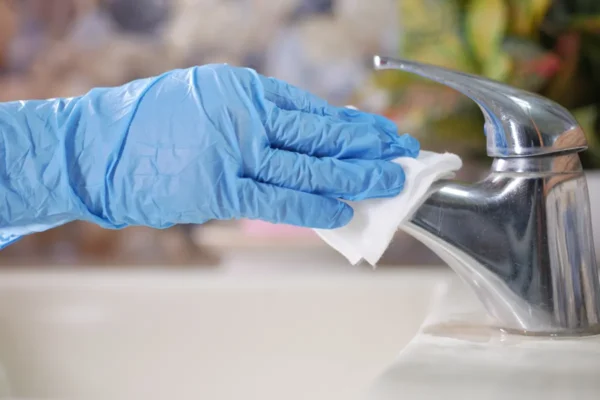
- Disposable disinfecting wipes, useful for quick daily touch-point cleaning on the seat and handle.
- Rubber gloves, especially when using stronger bowl cleaners or hard water removers.
Keeping the bowl brush and holder clean matters too. Rinse the brush thoroughly after each use and let it air dry before returning it to the holder, since a wet brush sitting in a closed container can grow bacteria and develop odors of its own.
Step-by-Step: Cleaning the Toilet Bowl
The bowl holds the most bacteria and the most visible buildup, so it gets the most attention and the longest sit time.
- Apply cleaner. Squeeze toilet bowl cleaner under the rim, moving around the entire bowl so it drips down the sides.
- Let it sit. Give the cleaner 5 to 10 minutes to break down grime and loosen mineral deposits, especially near the waterline.
- Scrub thoroughly. Use a toilet brush to scrub under the rim, down the sides, and into the trap at the bottom of the bowl.
- Check the waterline ring. If a stain remains after scrubbing, it may be hard water buildup rather than surface dirt, and could need a longer soak or a mineral-specific cleaner.
- Flush to rinse. This clears the cleaner and loosened debris in one step.
- Inspect the result. If stains remain, repeat the cleaner application rather than switching to an abrasive tool, which can scratch porcelain.
Avoid using steel wool or metal scrapers inside the bowl. Porcelain is durable, but repeated abrasive scrubbing can dull the glaze and make future buildup stick more easily, turning a one-time shortcut into a long-term problem. If a hard water ring doesn't respond after two attempts with a mineral-specific cleaner, it may be worth checking whether the water level or float mechanism in the tank is set correctly, since a low water level can leave more of the bowl surface exposed to mineral deposits. For a closer look at bowl-specific stains, mineral rings, and stubborn buildup, see the full Toilet Bowl Cleaning guide.
Step-by-Step: Cleaning the Toilet Tank
The tank is often skipped entirely, but it collects dust, mineral deposits, and sometimes mold or mildew inside, especially in humid bathrooms with little air circulation.
- Wipe the exterior first. Use a disinfectant spray or wipe on the tank lid, sides, and handle.
- Check the tank interior occasionally. Lift the lid every few months to look for mineral buildup, discoloration, or a black or pink film, which can indicate mold or mildew.
- Clean the interior if needed. A mild all-purpose cleaner or a small amount of distilled white vinegar can help with mineral deposits inside the tank, but check that this won't affect any rubber seals or mechanical parts.
- Avoid dropping cleaning tablets loosely into the tank unless they're designed for that use, since some tablets can degrade rubber flappers and seals over time.
- Dry the exterior after wiping to prevent water spots on the tank lid.
Tank interiors are part of the plumbing system, not just a cleaning surface, so it's worth being cautious about what goes inside. If you notice a pink or orange film building up inside the tank, this is usually a type of bacteria that thrives in moist environments rather than mold, but either way it's worth cleaning out with a mild solution rather than ignoring it. Tank interiors generally need far less frequent cleaning than the bowl, often just a few times a year unless buildup is visible. For more detail on identifying tank buildup, mold, and safe interior cleaning methods, see the Toilet Tank Cleaning guide.

Photo Credit: Miriam Alonso
Cleaning the Seat, Base, and Surrounding Floor
These areas get touched constantly and are often the source of lingering odors if skipped, even when the bowl itself looks spotless.
- Wipe the seat top and bottom with a disinfectant cleaner, paying attention to the hinges where grime tends to collect.
- Clean the outer bowl and base, working from the tank down to the floor.
- Wipe the floor around the base, including behind the toilet where splashes and dust commonly build up.
- Check the bolts and caps at the base for buildup, and clean gently with a soft cloth or old toothbrush if needed.
- Dry all wiped surfaces to prevent water spots and to keep moisture from sitting on painted or finished surfaces.
Cleaning the base and floor last, after the bowl and tank, keeps you from spreading cleaner or debris onto surfaces you've already finished. The seat hinges are one of the most commonly missed spots during a routine clean, and they can collect a surprising amount of grime given how small they are. A cotton swab or the corner of a cloth wrapped around a fingertip can reach into the hinge area more effectively than a flat wipe.
What to Avoid When Cleaning a Toilet
A few habits cause more harm than good, even when the intention is a deeper clean.
- Avoid mixing bleach with other bowl cleaners, ammonia, or acidic products. This combination can release harmful fumes in an enclosed bathroom.
- Avoid abrasive scrubbers or steel wool on porcelain, since they can scratch the glaze and make future stains harder to remove.
- Avoid leaving cleaner in the bowl far longer than the label recommends, particularly acidic hard water removers, which can affect certain finishes with extended contact.
- Avoid dropping incompatible tablets into the tank, since some products aren't designed for direct tank contact and can wear down rubber parts over time.
- Avoid skipping ventilation when using stronger disinfectants or bowl cleaners in a small bathroom.
How to Clean a Toilet Without Damaging It
Toilets are durable, but certain habits protect the finish and mechanical parts over the long run.
- Use a soft-bristle toilet brush rather than anything abrasive or metal.
- Match your cleaner to the surface, since bowl cleaners, tank cleaners, and exterior disinfectants aren't always interchangeable.
- Dry the exterior after wiping to avoid water spots on tank lids and seats.
- Check tank tablets and drop-in products for compatibility with your specific toilet model before regular use.
- Address hard water rings early with a mineral-specific product rather than letting them set for months.
- Replace worn toilet brushes rather than continuing to use bristles that have gone stiff or splayed, since a damaged brush can scratch the bowl surface.
Following the instructions on any cleaning product label takes priority over general advice, since formulas and safe usage vary between brands.
Common Mistakes to Avoid
Even careful homeowners fall into a few repeat mistakes:
- Cleaning only the visible bowl and skipping the tank, hinges, and base. These areas collect just as much grime, even if they're less visible.
- Using one all-purpose cleaner everywhere. A product safe for the exterior isn't always the right choice for inside the tank.
- Scrubbing hard water rings instead of soaking them. Mineral deposits usually respond better to a longer sit time than aggressive scrubbing.
- Forgetting to dry the exterior after cleaning. Left-behind moisture on tank lids and seats can encourage mildew over time.
- Skipping ventilation with stronger cleaners. A small bathroom with the door closed can trap fumes quickly.
- Reusing the same cloth on the toilet and other bathroom surfaces. This can spread bacteria to the sink, counter, or door handle without realizing it.
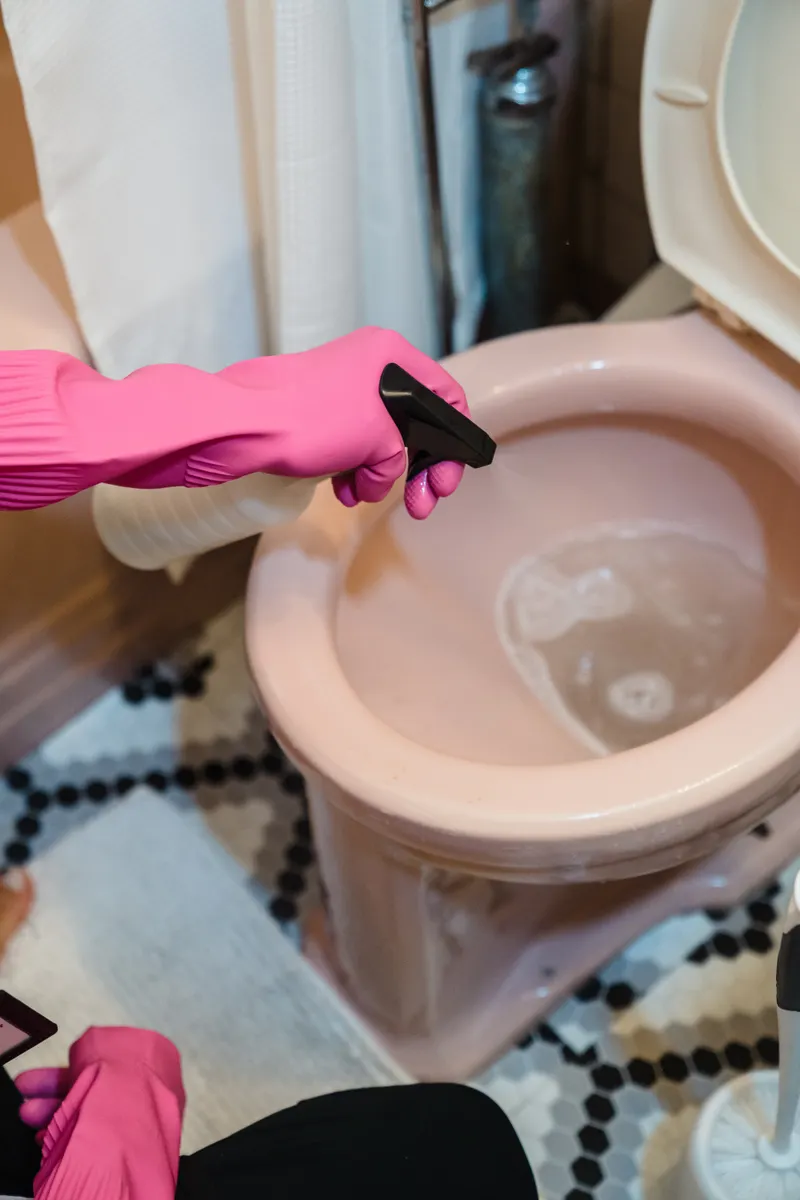
Photo Credit: Liliana Drew
How Long a Full Toilet Clean Takes
A routine weekly clean of the bowl, seat, tank exterior, and base typically takes 10 to 15 minutes, including the time the bowl cleaner needs to sit. A deeper clean that includes the tank interior, hinges, and base bolts can take closer to 20 to 25 minutes. Toilets with heavy hard water buildup or a first-time deep clean after neglect may need extra soaking time or a repeat application to fully clear mineral stains, which can add another 10 to 15 minutes to the process.
Frequently Asked Questions
What is the best way to clean toilet? Apply bowl cleaner under the rim and let it sit, scrub with a toilet brush, flush to rinse, then wipe down the tank, seat, and base with a disinfecting cleaner, working from cleanest to dirtiest.
How often should you clean toilet? A full clean weekly, with a quick wipe of the seat and handle every few days in busier households, and spot cleaning of any splashes right away.
What cleaning products are safe for toilet? Toilet bowl cleaner works well inside the bowl, while a mild disinfectant is better for the exterior, seat, and tank lid. Avoid mixing bleach-based products with other bowl cleaners or acidic products.
What should you avoid when cleaning toilet? Avoid mixing bleach with ammonia or acidic cleaners, avoid abrasive scrubbers on porcelain, and avoid dropping incompatible tablets into the tank.
How can you clean toilet without damaging it? Use a soft-bristle brush, match cleaners to the specific surface, dry surfaces after cleaning, and check tank tablets for compatibility with your toilet model.
What common mistakes should you avoid with toilet? Skipping the tank and hinges, using one cleaner everywhere, scrubbing hard water rings instead of soaking them, and cleaning without ventilation.
For the full room-by-room approach to every bathroom surface, go Back to the complete bathroom cleaning guide.
A Quick Note on Safety
Toilet bowl cleaners, tank tablets, and disinfectants can contain bleach, acids, or other active ingredients that shouldn't be combined. Always follow the instructions and dilution guidance on the product label, since formulas vary between manufacturers. Never mix bleach-based cleaners with ammonia, acidic bowl cleaners, or other chemical products, as this can release harmful fumes. Keep the bathroom ventilated while cleaning, and wear gloves if you have sensitive skin. If your toilet has a persistent leak, mechanical issue, or mold growth that doesn't respond to regular cleaning, it's worth having it checked by a professional.


Leave a Reply